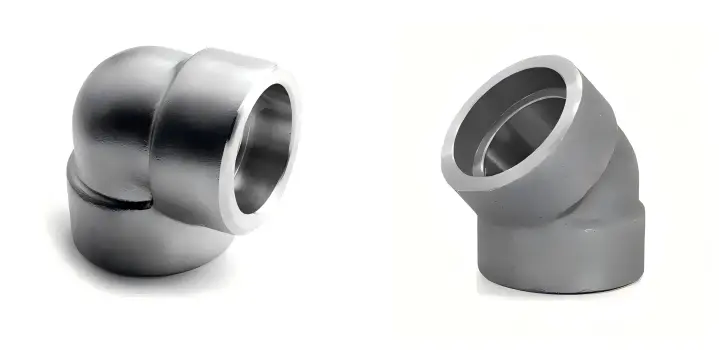
The key basic highlight that makes ASME B16.11 socket weld elbows solid is their interesting socket design. This bright setup permits channels to be embedded and welded safely, making a solid association with uncommon strength. The socket weld plan essentially decreases the chance of spillage, making these elbows especially well-suited for small-diameter pipelines where keenness is fundamental. By giving a consistent move and vigorous joints, ASME B16.11 socket weld elbows guarantee the life span and security of channeling frameworks over different businesses, from oil and gas to chemical processing. Their unwavering quality stems from the combination of exact design, adherence to strict guidelines, and the inalienable quality of the socket weld connection.
Understanding the Design and Construction of ASME B16.11 Socket Weld Elbows
The Anatomy of Socket Weld Elbows
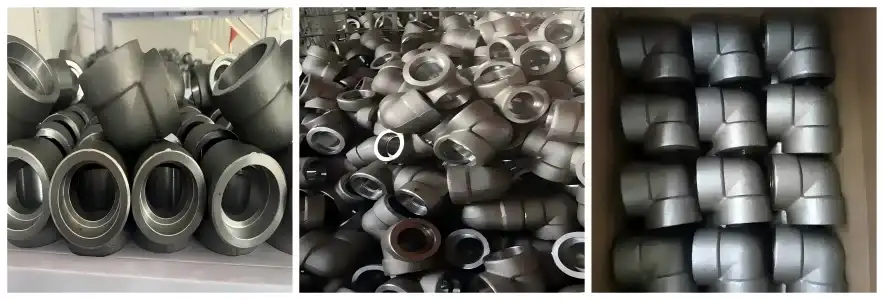
ASME B16.11 socket weld elbows are fastidiously outlined components that play a vital part in channeling frameworks. These elbows comprise a carefully created socket that gets the pipe end, making a secure and leak-resistant connection. The socket profundity is accurately calculated to guarantee ideal weld entrance and strength.
The elbow's body is ordinarily fashioned from high-quality materials such as carbon steel, stainless steel, or combination steel, depending on the application necessities. This fashioning handle improves the basic strength of the elbow, making it safe to lift heavy weights and temperatures.
One of the key highlights of these elbows is the smooth inner bore, which minimizes turbulence and weight drop in the liquid stream. This plan is thought to be especially vital in small-diameter pipelines where proficiency is paramount.
Manufacturing Process and Quality Control
The fabrication of ASME B16.11 socket weld elbows includes an arrangement of exact steps to guarantee consistency and unwavering quality. The handle starts with fabric determination, where, as it were, high-grade metals that meet or surpass ASTM guidelines are chosen. These materials experience thorough testing to confirm their chemical composition and mechanical properties.
The producing handle is carried out beneath controlled conditions, with careful consideration to temperature and weight parameters. This comes about in a homogeneous grain structure that contributes to the elbow's quality and strength. After manufacturing, the elbows are machined to correct dimensions, with specific center on the socket measurements and surface finish.
Quality control is a fundamental portion of the manufacturing process. Each elbow experiences intensive assessment, including dimensional checks, fabric confirmation, and non-destructive testing such as ultrasonic or radiographic examination. This fastidious approach guarantees that each ASME B16.11 socket weld elbow meets the rigid prerequisites of the standard.
Compliance with ASME B16.11 Standards
Adherence to ASME B16.11 guidelines is what sets these socket weld elbows separated. The standard indicates exact prerequisites for measurements, resistances, and fabric properties. This guarantees tradable and consistency over diverse producers, which is significant for the unwavering quality of channeling systems.
The standard covers different viewpoints, including divider thickness, attachment depth, and bore breadth. It also manages the admissible pressure-temperature appraisals, which are fundamental for selecting the right elbow for particular working conditions. By complying with these guidelines, producers ensure that their socket weld elbows will perform dependably beneath the assigned benefit conditions.
Furthermore, ASME B16.11 requires legitimate documentation and traceability. Each elbow must be stamped with the manufacturer's title or trademark, fabric assignment, and rating. This data is imperative for quality affirmation and makes a difference for end-users to confirm the genuineness and reasonableness of the components they are using.
The Advantages of Socket Weld Connections in Small-Diameter Pipelines
Enhanced Joint Strength and Leak Resistance
Socket weld associations, as utilized in ASME B16.11 elbows, offer predominant joint quality compared to other joining strategies for small-diameter channels. The plan permits a full-penetration weld that envelops the whole circumference of the pipe, making a strong and secure association. This full-circumference weld disseminates push equally, diminishing the chance of disappointment at the joint.
The spill resistance of socket weld associations is especially vital. The exact fit between the pipe and the socket, combined with the welding preparation, makes a seal that is profoundly viable against both fluid and gas spillage. This is particularly vital in businesses where minor spills can lead to noteworthy security dangers or environmental concerns.
Moreover, the socket weld plan gives great resistance to bowing and torsional strength. This is especially advantageous in applications where vibration or warm cycling is shown, as the joint keeps up its astuteness under these energetic conditions.
Space Efficiency and Ease of Installation
In small-diameter pipelines, space is regularly at a premium. Socket weld elbows offer a compact arrangement that maximizes the utilization of accessible space. The plan disposes of the requirement for ribs or strung associations, which can be bulky and require extra clearance for gathering and maintenance.
The establishment handle for socket weld elbows is clear and productive. The pipe is basically embedded into the socket until it bottoms out, guaranteeing legitimate arrangement. This straightforwardness diminishes the probability of establishment blunders and speeds up the general gathering process. Moreover, the need for strong associations implies there's no requirement for string sealants or gaskets, encouraging rearranging establishment and upkeep procedures.
For support and assessment purposes, socket weld associations are profitable. The smooth profile of the joint permits simple cleaning and diminishes the hazard of erosion or defilement collection at the joint. This contributes to the long-term unwavering quality and security of the channeling system.
Cost-Effectiveness and Long-Term Performance
While the introduction taken a toll of socket weld fittings may be higher than a few choices, their long-term cost-effectiveness is critical. The solidness and unwavering quality of these associations result in fewer substitutions and repairs over the life of the channeling framework. This translates to diminished downtime and support costs, which are basic components in mechanical applications.
The prevalent spill resistance of socket weld associations also contributes to taking a toll on investment funds by minimizing item misfortune and decreasing the require for spill location and repair exercises. In businesses where the transported liquids are profitable or unsafe, this viewpoint can lead to considerable financial and security benefits.
Furthermore, the reliable execution of ASME B16.11 socket weld elbows beneath different working conditions guarantees unsurprising behavior of the channeling framework. This consistency is important for the framework plan and operation, permitting more exact stream calculations and weight drop estimations. It moreover encourages superior planning for support plans and framework upgrades.
Applications and Considerations for Using ASME B16.11 Socket Weld Elbows
Industry-Specific Applications
ASME B16.11 socket weld elbows discover broad utilization across different businesses due to their unwavering quality and execution characteristics. In the oil and gas division, these elbows are basic components in high-pressure channeling frameworks, offshore platforms, and refineries. Their capacity to withstand extraordinary weights and temperatures makes them perfect for taking care of rough oil, natural gas, and refined petroleum products.
The chemical preparation industry depends intensely on socket weld elbows for small-diameter pipelines carrying corrosive or reactive substances. The leak-tight nature of the socket weld association is significant in anticipating the elude of unsafe chemicals, guaranteeing both security and environmental compliance.
In control era plants, ASME B16.11 socket weld elbows are utilized in steam lines, feedwater frameworks, and cooling circuits. Their toughness beneath high-temperature cycling and resistance to warm weakness make them well-suited for these demanding applications. Essentially, in the atomic control industry, these elbows meet the rigid security and unwavering quality necessities vital for reactor coolant systems.
Material Selection and Compatibility
Choosing the right fabric for ASME B16.11 socket weld elbows is pivotal for guaranteeing long-term execution and compatibility with the liquid being transported. Carbon steel elbows are commonly utilized for general-purpose applications and are cost-effective for non-corrosive situations. In any case, when dealing with corrosive liquids or high temperatures, stainless steel or nickel amalgam elbows may be necessary.
For instance, 316L stainless steel elbows offer amazing resistance to a wide range of chemicals and are frequently utilized in food processing and pharmaceutical businesses. In more forceful situations, such as those containing tall chloride concentrations, duplex stainless steels or nickel amalgams like Inconel may be preferred.
It's vital to consider not as it were the erosion resistance but also the mechanical properties of the fabric at working temperatures. A few amalgams keep up their quality way better at raised temperatures, which is pivotal for high-temperature applications. Moreover, the fabric ought to be consistent with the welding prepare to guarantee a solid and strong joint.
Installation Best Practices and Maintenance
Proper establishment of ASME B16.11 socket weld elbows is basic for accomplishing their full unwavering quality potential. The to begin with step is guaranteeing that the pipe closures are appropriately arranged. This incorporates cutting the pipe square, expelling burrs, and cleaning the surfaces to be welded. The pipe ought to be embedded into the socket until it contacts the foot, but a little crevice (regularly 1/16 inch) ought to be kept up to permit for warm expansion amid welding.
Welding ought to be performed by qualified welders following approved procedures. The weld ought to completely enter the joint and be free of absconds such as breaks, porosity, or deficient combination. Post-weld warm treatment may be required for certain materials or benefit conditions to soften and improve the joint's properties.
Regular assessment and support are basic for guaranteeing the proceeded unwavering quality of socket weld elbows. Non-destructive testing strategies such as ultrasonic testing or radiography can be utilized to distinguish any inner imperfections or disintegration over time. Visual assessments ought to be conducted to check for signs of outside erosion or mechanical damage.
In frameworks where disintegration is a concern, such as those dealing with rough liquids, occasional thickness estimations ought to be taken to screen wear rates. This proactive approach permits for opportune substitution of components, should some disappointment happen, keeping up the efficiency of the channeling system.
Conclusion
ASME B16.11 socket weld elbows stand out as solid components in small-diameter channeling frameworks due to their special basic features. The socket plan, coupled with full-penetration welding, makes a vigorous and leak-resistant association that exceeds expectations in demanding mechanical applications. These elbows offer improved joint quality, space productivity, and long-term cost-effectiveness. Their flexibility over different businesses, from oil and gas to chemical handling, underscores their significance in present-day channeling frameworks. By following legitimate fabric choice, establishment methods, and support strategies, engineers and administrators can completely utilize the unwavering quality and execution benefits of ASME B16.11 socket weld elbows in their basic channeling applications.
FAQs
What makes ASME B16.11 socket weld elbows different from other types of pipe fittings?
ASME B16.11 socket weld elbows feature a unique socket design that allows for a strong, leak-resistant connection in small-diameter pipelines. They offer superior joint strength, space efficiency, and reliability compared to other fittings.
In which industries are these elbows commonly used?
These elbows are widely used in oil and gas, chemical processing, power generation, and other industries requiring high-pressure, high-temperature, or corrosive fluid handling in small-diameter piping systems.
How do I ensure proper installation of ASME B16.11 socket-weld elbows?
Proper installation involves careful pipe preparation, correct insertion into the socket, and welding by qualified professionals following approved procedures. Regular inspections and maintenance are also crucial for long-term reliability.
Your Trusted Source for ASME B16.11 Socket Weld Elbows | QinSteel
As a leading manufacturer and supplier of ASME B16.11 socket weld elbows, QinSteel offers high-quality, reliable products that meet international standards. With our 20 years of industry expertise, we provide durable, precision-engineered fittings for various applications. Trust QinSteel for competitive pricing, timely delivery, and exceptional customer service. Contact us at info@sxqinsteel.com for all your socket weld elbow needs.

References
ASME B16.11-2016: Forged Fittings, Socket-Welding and Threaded. American Society of Mechanical Engineers, 2016.
Nayyar, M. L. Piping Handbook, 7th Edition. McGraw-Hill Education, 2000.
Smith, P. Piping Materials Guide: Selection and Applications. Elsevier, 2005.
Antaki, G. A. Piping and Pipeline Engineering: Design, Construction, Maintenance, Integrity, and Repair. CRC Press, 2003.
Kannappan, S. Introduction to Pipe Stress Analysis. Wiley, 1985.
American Welding Society. AWS D10.4/D10.4M:2014 Guide for Welding Austenitic Chromium-Nickel Stainless Steel Piping and Tubing. AWS, 2014.