- English
- French
- German
- Portuguese
- Spanish
- Russian
- Japanese
- Korean
- Arabic
- Greek
- German
- Turkish
- Italian
- Danish
- Romanian
- Indonesian
- Czech
- Afrikaans
- Swedish
- Polish
- Basque
- Catalan
- Esperanto
- Hindi
- Lao
- Albanian
- Amharic
- Armenian
- Azerbaijani
- Belarusian
- Bengali
- Bosnian
- Bulgarian
- Cebuano
- Chichewa
- Corsican
- Croatian
- Dutch
- Estonian
- Filipino
- Finnish
- Frisian
- Galician
- Georgian
- Gujarati
- Haitian
- Hausa
- Hawaiian
- Hebrew
- Hmong
- Hungarian
- Icelandic
- Igbo
- Javanese
- Kannada
- Kazakh
- Khmer
- Kurdish
- Kyrgyz
- Latin
- Latvian
- Lithuanian
- Luxembou..
- Macedonian
- Malagasy
- Malay
- Malayalam
- Maltese
- Maori
- Marathi
- Mongolian
- Burmese
- Nepali
- Norwegian
- Pashto
- Persian
- Punjabi
- Serbian
- Sesotho
- Sinhala
- Slovak
- Slovenian
- Somali
- Samoan
- Scots Gaelic
- Shona
- Sindhi
- Sundanese
- Swahili
- Tajik
- Tamil
- Telugu
- Thai
- Ukrainian
- Urdu
- Uzbek
- Vietnamese
- Welsh
- Xhosa
- Yiddish
- Yoruba
- Zulu
ASME B16.9 Lateral Tee: Uses, Advantages, and Design Guidelines
Jul 10 2026
The ASME B16.9 lateral tee is a special kind of pipe part that is designed to make 45-degree branch links in industrial pipeline systems. Standard equal or reducing tees make 90-degree curves. Lateral tees, on the other hand, allow angular flow redirection while lowering pressure losses and turbulence. These parts come in sizes from 1/2" to 48" and are made of different types of steel, such as A234 WPB carbon steel and A403 stainless steel. They must meet strict ASME B16.9 dimensional standards. Their butt-welded end links make sure that they can be used safely in high-pressure situations in the oil and gas, chemical processing, and power generation industries.
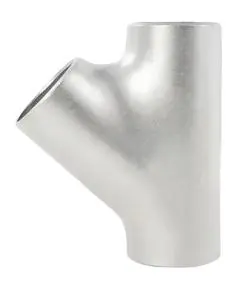
Understanding ASME B16.9 Lateral Tee – Specifications and Design Standards
The lateral tee is different from other pipe fittings because of its unique angled shape and exact engineering requirements. When standard perpendicular connections don't work or aren't enough, this unique part meets the needs for certain flow patterns.
Fundamental Design Characteristics and Dimensional Standards
The ASME B16.9 standard sets out detailed limits for sizes that make sure all pipeline systems can work together. The measurements from center to end of these fits are based on standard methods, and the wall thicknesses range from Schedule 5s to XXS to meet different pressure needs. The 45-degree branch angle keeps the geometry the same no matter what the standard pipe size is. This makes it easier to predict the flow features and do the stress analysis calculations.
Precision standards for manufacturing allow for margins of ±0.3mm. This is made possible by CNC machining methods that ensure a seamless fit with current pipeline infrastructure. Engineers can use standard formulas for pressure drop analysis and structural load distribution because the dimensions are always the same. This means that they don't have to do custom engineering studies for each installation.
Material Specifications and Metallurgical Properties
Most general-purpose uses involve carbon steel types. ASTM A234 WPB has great mechanical qualities and can be welded at temperatures up to 800°F. Alloy steel types like WP5, WP9, and WP22 make it possible to work at temperatures up to 1200°F while keeping the structure's stability during thermal cycles. Normalized heat treatments are used on these materials to improve their toughness and physical stability by making the grain structure better.
Austenitic types of stainless steel include 304, 316, and 321, and each has a different level of protection to corrosion. Grade 316 has molybdenum added to it, which makes it much more resistant to chloride stress corrosion. This makes it perfect for use in marine settings and chemical processes. Duplex stainless steels, like UNS 31803 have the power of ferritic structures and the corrosion protection of austenitic structures. This makes them better for use in sour gas environments.
Comparative Analysis with Related ASME Standards
ASME B16.9 is very different from B16.5 flange standards and B16.28 short radius elbow guidelines when it comes to how measurements are made and what kinds of things can be used with them. B16.5 talks about flanged connections and their bolt circle widths and gasket seating surfaces. B16.9, on the other hand, is all about butt-weld fitting dimensions and wall thickness figures. This difference affects how people buy things because B16.9 parts fit right into welded pipeline systems without needing extra hardware for sealing or entry for upkeep.
When you connect B16.9 lateral pipe tee and B16.28 elbows, they work together to control flow paths in complicated pipe layouts. These parts are often put together by engineers to get the best hydraulic performance while reducing the number of joints and possible leak spots in high-stakes service situations.
Applications and Advantages of ASME B16.9 Lateral Tee in Industrial Settings
Components for industrial uses need to work the same way in a variety of operating environments and support cost-effective installation and upkeep methods. Lateral tees meet these needs by having improved flow properties and a range of material choices.
Oil & Gas and Petrochemical Industry Applications
In wellhead manifold systems where multiple flow lines need to be consolidated at certain angles to make room, upstream production sites use lateral tees. The 45-degree shape cuts down on the number of elbow fits that are needed to create the flow paths that are wanted. This cuts down on pressure losses and possible leak points. This design makes good use of room, which is especially helpful for offshore platforms because fewer fittings mean lighter installations and fewer support needs.
In refineries, lateral tees are used in hydrotreating units and catalytic cracking systems, which need materials that can handle high temperatures and pressures, such as A234 WP22 or duplex stainless steels. Furthermore, these metals' better resistance to corrosion makes them last longer in places where hydrogen sulfide, chlorides, and other harsh chemicals are common, like in oil handling.
Power Generation and Energy Infrastructure
Thermal power plants depend on lateral tees in their steam distribution systems to keep the turbines running efficiently and avoid thermal shock. When compared to sharp 90-degree turns, 45-degree branches make the direction change more smooth, which lowers flow-induced vibrations. This helps equipment last longer and require less upkeep. In nuclear power plants, these parts are used in extra cooling systems. Materials like A403 WP316 keep the parts from rusting, and the low carbon content keeps them from becoming sensitive during welding.
In salt handling systems for renewable energy projects, especially geothermal installations, lateral tees are used. Duplex stainless steels are used because they don't rust when exposed to chloride and keep their structural integrity when temperatures change. Engineers can make the best use of materials while still meeting specific pressure tank code standards when they can change the thickness of the walls.
Chemical Processing and Water Treatment Applications
Chemical factories use lateral tees in their process pipes where harsh media need special materials and exact control over the dimensions. Accurate stress analysis estimates are needed to make sure that pressure vessel codes are followed, and the standard sizes make that possible. Material traceability paperwork helps make sure that quality assurance requirements are met in controlled industries.
Chemical dosing systems in water treatment plants use ASME B16.9 lateral tee made of stainless steel because they don't rust and are reliable for a long time. When compared to mechanical joints, welded links require less upkeep because they don't need to have gaskets replaced, which means that service doesn't have to be interrupted.
Design Guidelines and Welding Standards for ASME B16.9 Lateral Tee
Incorrect fitting methods make sure that lateral tees work as designed and keep their structural integrity for the duration of their service life. Stress analysis, welding processes, and quality verification routines are all engineering issues that need to be thought about.
Stress Analysis and Structural Considerations
Because lateral tees are angled, they create complicated stress patterns that need to be carefully studied during the system design stages. When you connect branches, you add stress concentration factors that need to be checked using standard methods, such as ASME B31.3 for process pipes or B31.4 for liquid transport systems. The 45-degree angle usually leads to lower stress amplification factors than the 90-degree angle, which means that less support is needed and the costs of the materials used are lower.
It is very important to do thermal expansion analysis in high-temperature situations where the difference in expansion between the main run and branch pipes could cause too much stress. Engineers usually use finite element analysis tools to model these situations and make sure that the stresses they calculate stay within acceptable limits for the whole expected working range.
Welding Procedures and Quality Requirements
As per ASME B16.9, lateral tees need to be welded using approved methods that take into account the unique properties and shapes of each material grade. Most carbon steel fittings use low-hydrogen electrodes or gas metal arc welding to stop cracking caused by hydrogen, especially in wall parts that are heavier. The preheat temperatures needed depend on the carbon equivalent formulas and the temperature of the environment. For alloy steel types, the normal preheat temperatures are between 200°F and 400°F.
Controlling the amount of heat used in stainless steel welding is important to keep carbide precipitation to a minimum and keep the metal's corrosion-resistant qualities. It's important to pay close attention to the interpass temperatures and post-weld heat treatment requirements for austenitic grades. On the other hand, duplex stainless steels need precise heat input control to keep the right ferrite-austenite balance that's needed for mechanical properties.
Non-Destructive Testing and Quality Verification
Multiple inspection methods are used in quality assurance processes for lateral tee setups to make sure the welds are solid and the dimensions are correct. Radiographic testing is still the best way to go for critical service uses because it gives a full detailed look at the weld zone and areas that have been affected by heat. Ultrasonic testing is an option for situations where thickness limits or nuclear safety issues are a problem, though the requirements for becoming an operator may be stricter.
Before welding starts for a B16.9 lateral pipe tee, dimensional checks make sure that everything fits together correctly and is aligned correctly. This is important because rotational misalignment can cause stress concentrations that hurt long-term dependability. Magnetic particle or penetrant testing can find surface-breaking flaws that you might not be able to see with the naked eye. This is especially important for stainless steel uses where chloride contamination could cause stress corrosion cracking.
Comparing ASME B16.9 Lateral Tee with Alternative Solutions
Choosing the right materials and fittings has a big effect on both the original costs of the project and its long-term costs of running it. Knowing the pros and cons of lateral tees compared to other options helps you make smart buying choices.
Cost-Effectiveness and Material Optimization
When looking at the total cost of installation, lateral tees are often more cost-effective than manufactured branch links or multiple elbow combinations. Standardized manufacturing methods lead to economies of scale that lower unit costs, and streamlined installation steps cut down on the need for field workers. Material efficiency is especially important in high-alloy situations, where duplex stainless steels offer the same level of strength as carbon steel at a much lower weight compared to austenitic options.
The 45-degree configuration cuts down on the number of fittings needed to make complicated flow lines. This means that less inventory is needed and managing extra parts is easier. This benefit stands out more in big projects where attempts to standardize parts focus on reducing the number of different types while keeping the design flexible.
Performance Comparison with Equal Tees and Fabricated Alternatives
Standard equal tees change the flow at 90 degrees, which usually leads to more turbulence and higher pressure losses than lateral tee designs. 45-degree branches provide a slow change in direction, which lowers the amount of energy needed in pumping systems and lowers the chance of erosion in high-velocity situations. Flow modeling studies show that when compared to similar 90-degree configurations, pressure loss is 15–25% lower in normal working situations.
Fabricated branch connections give you endless angular freedom, but they need a lot of welding in the field and stress analysis checks, which adds to the cost and time of the project. Because ASME B16.9 lateral tees are standardized, these technical standards are not needed. They also have predictable performance traits that help with designing the best system.
Procurement and Supplier Guidance for ASME B16.9 Lateral Tee
Effective buying strategies for ASME B16.9 lateral tee find a mix between lowering costs and meeting quality standards, all while making sure that deliveries happen on time to meet project deadlines. Knowing what suppliers can do and how the market works helps you make smart decisions about where to buy things.
Supplier Evaluation and Certification Requirements
Suppliers who are qualified keep their licenses up to date, such as ASME U-stamp authorization, ISO 9001 quality management systems, and, if necessary, API Q1 standard compliance. With these certifications, you can be sure that the manufacturing methods meet industry standards and that the quality paperwork will meet the needs of the project. For global projects, being able to distribute goods geographically is becoming more and more important, since the location of products in different regions can have a big effect on shipping times and logistics costs.
Documents for material traceability must show that the grades and heat treatment standards have been met. These must be backed up by mill test certificates and dimensional inspection records. Third-party review services add another layer of security to important applications, but they usually cost more and take longer to deliver. During the buying planning stages, it is important to carefully consider how to balance the need for quality assurance with the cost of the project.
Lead Time and Inventory Management Strategies
Standard material types and popular sizes usually have shorter lead times because makers and dealers keep more goods on hand and make more of them. For unusual metal grades or big circle sizes, it might take 12 to 16 weeks for major manufacturing centers to get them, so you need to start buying things early to keep your project on schedule. When you need something quickly, regional warehouse networks can save you a lot of time, but inventory spots may only be available in common size and grade combos.
Bulk order plans can save you a lot of money by hedging your raw material costs and making production more efficient. This is especially useful for big projects with long building schedules. But these plans need careful thought about how much space is needed, how much it costs to keep an inventory, and what changes to the specifications might have an effect on how quickly materials are used up.
QinSteel: Your Trusted ASME B16.9 Lateral Tee Manufacturer
QinSteel is the world's biggest manufacturer and supplier of high-quality B16.9 lateral pipe tee. It has a wide range of products to meet the needs of industries like oil and gas, power generation, and chemical processing. Our dedication to greatness goes beyond our manufacturing skills and includes full technology help and custom solutions that solve the problems that each project brings.
Manufacturing Excellence and Quality Assurance
We have been in this business for 20 years and use cutting edge CNC machining tools and automatic welding systems to make sure that the ±0.3mm limits required by ASME B16.9 standards are met. Before being shipped, every part goes through a thorough dimensional check, hydrostatic testing, and non-destructive examination. This makes sure that it meets foreign standards like API, PED, NACE, and GOST approvals.
Our programs for getting materials keep smart partnerships with top steel makers, which lets us get approved grades like A234 WPB, A403 WP316, and UNS 31803 duplex stainless steels. As needed for each application, heat treatment facilities provide normalized, solution-annealed, and stress-relieving conditions. Material traceability systems keep full paperwork chains from the raw material to the final review.
Global Supply Chain Capabilities and Technical Support
Regional warehouse networks in Houston, Dubai, and Singapore make it possible to ship standard grades and sizes within 72 hours, meeting the needs of pressing projects in all major industrial markets. Through our logistics partners, we get RFID-tracked shipping containers with shock-resistant packing to protect parts while they're being sent to faraway installation sites. Real-time tracking tools let us see where the packages are at all times during the delivery process.
As part of technical support services, stress analyses are checked, help with choosing materials is given, and welding procedures are suggested based on the needs of the application. Our engineering team works with project teams to make sure that all relevant codes and standards are met, that material costs are kept low, and that system designs are optimized. OEM and ODM customization options can be used to meet specific needs, such as changing the size, using different materials, or adding protection coats like 3PE or FBE systems.
Conclusion
The ASME B16.9 lateral tee is an important part of modern industrial plumbing systems because it provides special benefits in situations where 45-degree branch connections are needed. These fittings make cost-effective solutions possible in many fields, such as oil and gas, power generation, and chemical processing, thanks to their standard sizes, wide range of materials, and proven performance. The unique angular shape lowers pressure losses, lowers turbulence, and makes fitting easier than other options, all while keeping the structural integrity needed for high-pressure, high-temperature uses. The right choice of materials, skilled welding techniques, and thorough quality control methods make sure that these parts work reliably for the entire time they are supposed to, supporting safe and efficient industrial operations.
FAQ
What are the key dimensional specifications for ASME B16.9 lateral tees?
The center-to-end dimensions of ASME B16.9 lateral tees are always the same and are estimated using standard methods. The branch outlet is always 45 degrees from the main run. Dimensional tolerances must be within 0.3 mm of the standard for all specified pipe sizes, from 1/2" to 48". Wall widths match standard schedule numbers like 5s, 10s, 40s, standard, 60, 80, XS, 120, 160, and XXS. This means they can work with current pipeline infrastructure and meet certain pressure rating needs.
How do material grades affect performance in corrosive environments?
The choice of material has a big effect on how well it resists rust and how long it lasts in harsh settings. Carbon steel types like A234 WPB work well in mild settings, but they need coatings or cathodic protection when they are exposed to corrosive conditions. 304, 316, and 321 types of stainless steel are better at resisting rust. The 316 grade is even better at resisting chloride because it has molybdenum added to it. Duplex stainless steels, like UNS 31803 have higher strengths and better resistance to rust. This makes them perfect for use in offshore and sour gas uses where both strength and chemical resistance are important.
What welding considerations apply to lateral tee installation?
When welding, the steps must take into account the unique properties of each type of metal and shape, while also making sure they follow the rules set by pipe codes. To keep hydrogen from breaking carbon steel parts, most welding methods need to be low-hydrogen and use the right preheat temperatures. For welding stainless steel, controlling the amount of heat used is important to keep the metal's corrosion-resistant qualities. On the other hand, for duplex grades, careful thermal management is needed to keep the microstructural balance at its best. For important service applications, qualified welding methods, certified welders, and thorough non-destructive testing techniques make sure that the weld is solid and will last for a long time.
Partner with QinSteel for Superior ASME B16.9 Lateral Tee Solutions
QinSteel offers great value by carefully crafting lateral tees that meet strict ASME B16.9 requirements, all while offering low prices and dependable delivery times. Our wide range of materials, modern manufacturing skills, and global distribution network help projects all over the world with high quality products and quick expert support. Email our skilled purchasing team at info@sxqinsteel.com to talk about your unique needs and find out how our knowledge as an ASME B16.9 lateral tee maker can improve the performance of your pipeline system.

References
ASME B16.9-2018, Factory-Made Wrought Buttwelding Fittings, American Society of Mechanical Engineers Standards Committee
ASTM A234/A234M-19a, Standard Specification for Piping Fittings of Wrought Carbon Steel and Alloy Steel for Moderate and High Temperature Service
ASTM A403/A403M-19, Standard Specification for Wrought Austenitic Stainless Steel Piping Fittings
ASME B31.3-2018, Process Piping Code, American Society of Mechanical Engineers Boiler and Pressure Vessel Committee
API 598-2016, Valve Inspection and Testing, American Petroleum Institute Upstream Segment
NACE MR0175/ISO 15156-2015, Petroleum and Natural Gas Industries - Materials for Use in H2S-Containing Environments in Oil and Gas Production
Learn about our latest products and discounts through SMS or email