- English
- French
- German
- Portuguese
- Spanish
- Russian
- Japanese
- Korean
- Arabic
- Greek
- German
- Turkish
- Italian
- Danish
- Romanian
- Indonesian
- Czech
- Afrikaans
- Swedish
- Polish
- Basque
- Catalan
- Esperanto
- Hindi
- Lao
- Albanian
- Amharic
- Armenian
- Azerbaijani
- Belarusian
- Bengali
- Bosnian
- Bulgarian
- Cebuano
- Chichewa
- Corsican
- Croatian
- Dutch
- Estonian
- Filipino
- Finnish
- Frisian
- Galician
- Georgian
- Gujarati
- Haitian
- Hausa
- Hawaiian
- Hebrew
- Hmong
- Hungarian
- Icelandic
- Igbo
- Javanese
- Kannada
- Kazakh
- Khmer
- Kurdish
- Kyrgyz
- Latin
- Latvian
- Lithuanian
- Luxembou..
- Macedonian
- Malagasy
- Malay
- Malayalam
- Maltese
- Maori
- Marathi
- Mongolian
- Burmese
- Nepali
- Norwegian
- Pashto
- Persian
- Punjabi
- Serbian
- Sesotho
- Sinhala
- Slovak
- Slovenian
- Somali
- Samoan
- Scots Gaelic
- Shona
- Sindhi
- Sundanese
- Swahili
- Tajik
- Tamil
- Telugu
- Thai
- Ukrainian
- Urdu
- Uzbek
- Vietnamese
- Welsh
- Xhosa
- Yiddish
- Yoruba
- Zulu
How to Select 180Deg Elbows for chemical Chemical Plant Piping?
Jul 12 2026
To choose the correct 180Deg elbow for chemical plant pipes, you need to carefully think about the surroundings, the pressure ratings, and the compatibility of the materials. These important pipe valves change the direction of flow while keeping the system's integrity in harsh chemicals and temperatures. To make sure that chemical processing conditions are safe and work well, engineers have to look at things like ASME B16.9 compliance, wall thickness requirements, and corrosion resistance.

Understanding 180 Degree Elbows and Their Role in Chemical Plant Piping
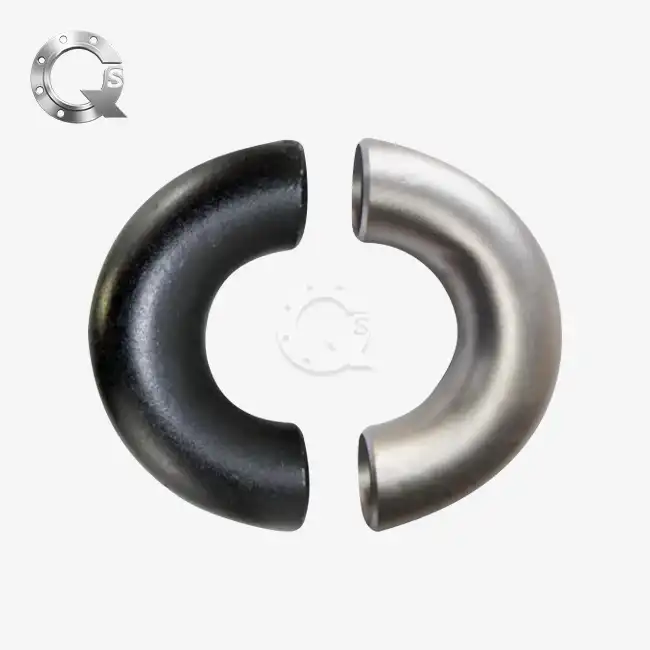
The 180Deg elbow is an important part of chemical plant pipe systems because it lets the flow direction be changed completely without affecting the pressure. In places with limited room where regular pipe layouts can't handle gradual changes in direction, these special fittings come in very handy.
Types and Classifications of Return Bend Fittings
There are different types of elbow configurations used in chemical plants, each made for a specific set of working needs. Long radius elbows have a centerline radius that is 1.5 times the standard pipe diameter. This lowers the pressure drop and the amount of turbulence. Short radius versions, whose centerline radius is the same as the pipe diameter, take up less room but lose more pressure.
Another type is U-bend configurations, which allow flow to be switched smoothly in heat exchanges and serpentine pipe layouts. Whether you choose seamless or welded construction depends on the amount of pressure you need and your budget. For high-pressure applications, seamless choices are stronger.
Material Selection for Chemical Environments
When choosing 180 degree elbows for chemical processing jobs, material fit is still the most important thing to think about. Some types of stainless steel, like A403 WP304, WP316, and WP321, don't rust when exposed to most organic compounds or moderately acidic circumstances. Duplex alloys, such as UNS 31803 have better strength and protection to chloride stress corrosion in saltwater and other high-chloride environments.
Carbon steels like A234 WPB work well in non-corrosive situations, while A234 WP5, WP9, WP11, WP12, and WP22 are specialized alloys that can handle high-temperature chromium-molybdenum service conditions. The A420 WPL6 standard is for low-temperature uses where impact toughness is very important.
Dimensional Standards and Pressure Ratings
The main measurement standard for factory-made wrought steel butt-welding fittings is ASME B16.9. This makes sure that they are compatible around the world and work reliably. In this standard, there are different schedules for wall thickness, from SCH5s to SCH160. Each schedule has its own pressure and temperature limits.
Pipes ranging in size from 1/2 inch to 48 inches can meet a wide range of needs in a chemical plant, from small monitoring lines to large process streams. The ASME B16.9-required butt-welded end joints make full-penetration welds that match the strength of the parent pipe.
Key Criteria for Selecting 180 Degree Elbows in Chemical Plant Applications
The conditions in chemical plants are very different from other places, so they need a full evaluation of many success factors. As part of the decision process, operational conditions, material properties, and long-term reliability factors must be looked at to make sure the system works safely and efficiently.
Temperature and Pressure Considerations
Operating temperature ranges have a big effect on the choice of material and the thickness of the walls that need to be built. Stainless steel 316L keeps its good qualities from very cold temperatures to 1500°F, while carbon steel is usually only used at temperatures up to 800°F. Temperature affects pressure values; higher temperatures lower the pressures that can be used.
The specifications for wall thickness directly link to the ability to contain pressure. Schedule 40 is a standard weight construction that can be used for moderate pressure uses. Schedule 80 and 160, on the other hand, offer extra-heavy wall thickness for high-pressure service. ASME Section VIII rules say how temperature, pressure, and allowable stress numbers should be related.
Chemical Compatibility Assessment
To test for corrosion protection, you need to know the exact chemicals, concentrations, and conditions of exposure that are used in each case. Stainless steel 316L works well in oxidizing conditions and doesn't react with most organic compounds. Other metals, on the other hand, can handle more aggressive chemicals like concentrated acids and caustic solutions.
When two different metals touch each other in the presence of liquids, galvanic corrosion potential exists. To keep fittings from rusting faster, engineers have to think about the whole pipe system's metalwork. By choosing the right materials, these matching problems can be avoided and long-term dependability is ensured.
Flow Dynamics and Pressure Drop Analysis
Flow characteristics and pressure losses through 180-degree bends are greatly affected by the radius design. Long radius 180 Deg elbows cause about 30% less pressure drop than short radius options. This lowers the cost of pumps and lowers the chance of erosion in high-velocity situations.
In some chemical conditions, the elbow's turbulence patterns can help with erosion and corrosion. Knowing Reynolds numbers and flow speeds helps engineers choose the right setups that keep operations running smoothly while minimizing these effects.
Practical Guide to Procuring 180 Degree Elbows for Chemical Plant Projects
To successfully buy pipe fittings for chemical uses, you need to carefully look at suppliers, specs, and quality control programs. Because chemical plants have a lot of different needs, they need suppliers with a lot of different certifications and proven knowledge.
Supplier Qualification and Certification Requirements
Quality sellers keep up with certifications like ISO 9001, ASME marks, and compliance with the Pressure Equipment Directive for use in Europe. These certifications show that the company follows well-known quality management methods and has the technical know-how to make pressure-containing parts.
Material traceability is very important in chemical uses where a broken part could cause safety problems or damage to the environment. For every part they sell, qualified sellers give full mill test certificates, heat number traceability, and positive material identification paperwork.
Project schedules and tactics for managing inventory are affected by how much can be produced and delivered. Suppliers who keep enough common specifications in stock can meet pressing needs quickly, and those who can do custom fabrication can meet the specific needs of a project.
Specification Development and Technical Requirements
Detailed specifications get rid of confusion and make sure that providers know exactly what is needed. The full list of requirements includes the type of material, the plan for wall thickness, the standard for dimensions, the testing needs, and any special markings or certifications that are needed.
The standards for non-destructive examination depend on the type of service and the code. Liquid penetrant testing is common for finding flaws on the surface, and x-rays are used for more important tasks. According to ASME guidelines, hydrostatic testing checks the integrity of the pressure.
Cost Optimization and Procurement Strategies
There are big savings to be had when you buy in bulk, especially for big jobs or buildings that need regular maintenance. When you place an order for more than the minimum amount, suppliers often give you a discount, especially for standard specs.
To lower the risk in the supply chain, you need to qualify multiple sources and keep strategic inventory levels for key parts. With dual sourcing methods, projects don't get held up and prices stay low because suppliers compete with each other.
QinSteel: Your Trusted 180Deg Elbow Manufacturer and Supply Partner
QinSteel brings two decades of specialized expertise in manufacturing precision-engineered pipe fittings for chemical plant applications worldwide. Our comprehensive product portfolio encompasses the complete range of 180 Deg elbow specifications demanded by chemical processing facilities.
Advanced Manufacturing Capabilities and Quality Assurance
Our manufacturing facilities utilize state-of-the-art equipment including CNC machining centers and automated welding systems to ensure dimensional accuracy and consistent quality. Every 180Deg elbow undergoes comprehensive testing including dimensional verification, material analysis, and pressure testing to guarantee compliance with specified requirements.
Quality control procedures include laser scanning for dimensional accuracy within ±1.5% tolerance, X-ray inspection for weld integrity verification, and ASTM G48 corrosion resistance testing. These rigorous procedures ensure reliable performance in demanding chemical environments.
Material certifications encompass the complete range of specifications including A234 WPB, A234 WP5/WP9/WP11/WP12/WP22, A420 WPL6, and stainless steel grades A403 WP304/316/321. Specialized alloys including duplex UNS 31803 and super-duplex materials accommodate the most challenging chemical processing applications.
Customization Services and Technical Support
Our engineering team provides comprehensive technical support including material selection guidance, pressure drop calculations, and application-specific recommendations. Custom fabrication capabilities accommodate unique specifications including non-standard dimensions, special materials, and modified configurations.
OEM and ODM services enable equipment manufacturers to incorporate our fittings into their systems with confidence in quality and delivery performance. Sample services allow customers to evaluate our products before committing to large quantity purchases.
Global distribution capabilities ensure timely delivery to projects worldwide, with strategically located warehouses in Houston, Rotterdam, and Dubai. Our 15-day delivery commitment applies even to urgent orders requiring up to 10,000 units, supporting critical project schedules.
Conclusion
Selecting appropriate 180Deg elbows for chemical plant piping requires comprehensive understanding of material properties, dimensional standards, and application requirements. The ASME B16.9 standard provides the foundation for reliable performance, while material selection must address specific chemical compatibility and operating conditions. Successful procurement involves partnering with qualified suppliers who demonstrate technical expertise, quality certifications, and reliable delivery capabilities. Through careful specification development and supplier evaluation, chemical plant operators can ensure long-term reliability and safety in their piping systems.
FAQ
What distinguishes 180-degree elbows from U-bends in chemical applications?
While both components reverse flow direction, 180-degree elbows typically feature standardized dimensions according to ASME B16.9, ensuring predictable pressure drops and flow characteristics. U-bends may incorporate custom dimensions optimized for specific heat exchanger or equipment configurations. The standardized elbow design simplifies procurement and maintenance procedures.
How do I determine the appropriate wall thickness schedule for my application?
Wall thickness selection depends on design pressure, temperature, and safety factors specified in applicable codes. ASME B31.3 provides calculation methods for determining minimum required thickness based on these parameters. Common schedules include Schedule 40 for moderate pressure service and Schedule 80 for higher pressure applications.
Can you provide custom-sized 180Deg elbows for unique project requirements?
Yes, our manufacturing capabilities include custom fabrication for non-standard sizes, special materials, and modified configurations. Our engineering team collaborates with customers to develop specifications that meet unique project requirements while maintaining code compliance and quality standards.
Partner With QinSteel for Your Chemical Plant Piping Solutions
QinSteel stands ready to support your chemical plant piping requirements with precision-engineered 180Deg elbow solutions that meet the highest industry standards. Our comprehensive inventory includes seamless and welded options in materials from carbon steel A234 WPB to specialized stainless steel and duplex alloys. Contact our technical specialists at info@sxqinsteel.com to discuss your specific requirements and receive detailed quotations for your next project.

References
American Society of Mechanical Engineers. ASME B16.9-2018: Factory-Made Wrought Buttwelding Fittings. New York: ASME Press, 2018.
Mohitpour, M., Golshan, H., and Murray, A. Pipeline Design & Construction: A Practical Approach, Third Edition. New York: ASME Press, 2007.
Singh, R.K. "Corrosion Control in Chemical Process Industries." Chemical Engineering Progress, vol. 115, no. 8, 2019, pp. 42-48.
Nayyar, M.L. Piping Handbook, Seventh Edition. New York: McGraw-Hill Professional, 2000.
Antaki, G.A. Piping and Pipeline Engineering: Design, Construction, Maintenance, Integrity, and Repair. New York: CRC Press, 2003.
American Petroleum Institute. API 570: Piping Inspection Code: In-Service Inspection, Rating, Repair, and Alteration of Piping Systems. Washington: API Publishing Services, 2016.
Learn about our latest products and discounts through SMS or email