- English
- French
- German
- Portuguese
- Spanish
- Russian
- Japanese
- Korean
- Arabic
- Greek
- German
- Turkish
- Italian
- Danish
- Romanian
- Indonesian
- Czech
- Afrikaans
- Swedish
- Polish
- Basque
- Catalan
- Esperanto
- Hindi
- Lao
- Albanian
- Amharic
- Armenian
- Azerbaijani
- Belarusian
- Bengali
- Bosnian
- Bulgarian
- Cebuano
- Chichewa
- Corsican
- Croatian
- Dutch
- Estonian
- Filipino
- Finnish
- Frisian
- Galician
- Georgian
- Gujarati
- Haitian
- Hausa
- Hawaiian
- Hebrew
- Hmong
- Hungarian
- Icelandic
- Igbo
- Javanese
- Kannada
- Kazakh
- Khmer
- Kurdish
- Kyrgyz
- Latin
- Latvian
- Lithuanian
- Luxembou..
- Macedonian
- Malagasy
- Malay
- Malayalam
- Maltese
- Maori
- Marathi
- Mongolian
- Burmese
- Nepali
- Norwegian
- Pashto
- Persian
- Punjabi
- Serbian
- Sesotho
- Sinhala
- Slovak
- Slovenian
- Somali
- Samoan
- Scots Gaelic
- Shona
- Sindhi
- Sundanese
- Swahili
- Tajik
- Tamil
- Telugu
- Thai
- Ukrainian
- Urdu
- Uzbek
- Vietnamese
- Welsh
- Xhosa
- Yiddish
- Yoruba
- Zulu
What Is a Hot Forged Flange and When Should You Specify One?
Sep 22 2026
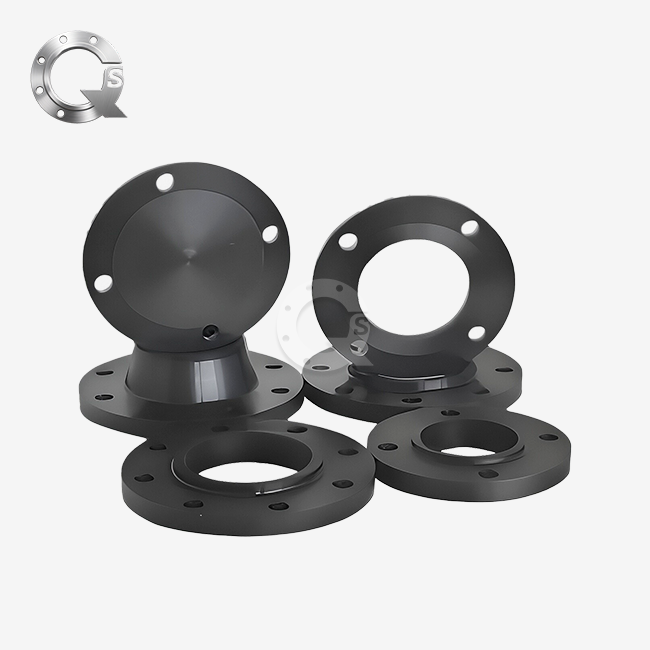
Hot Forged Flange is a flange shaped from a heated steel billet under compressive force, so the metal's grain follows the part's contour instead of running straight through it. We see this method chosen when a joint has to survive pressure, impact, or repeated temperature swing without cracking at the bore. The forging raises the material's strength where the flange meets the pipe, which is exactly the zone that fails first in a cast part. Buyers who handle sour service or offshore tie-ins usually ask for forged over cast for that reason alone. In this piece we walk through what the process changes, where it beats other options, and how we at Xi'an QinSteel handle stock and made-to-order runs for export.

How the Hot Forging Process Changes the Grain
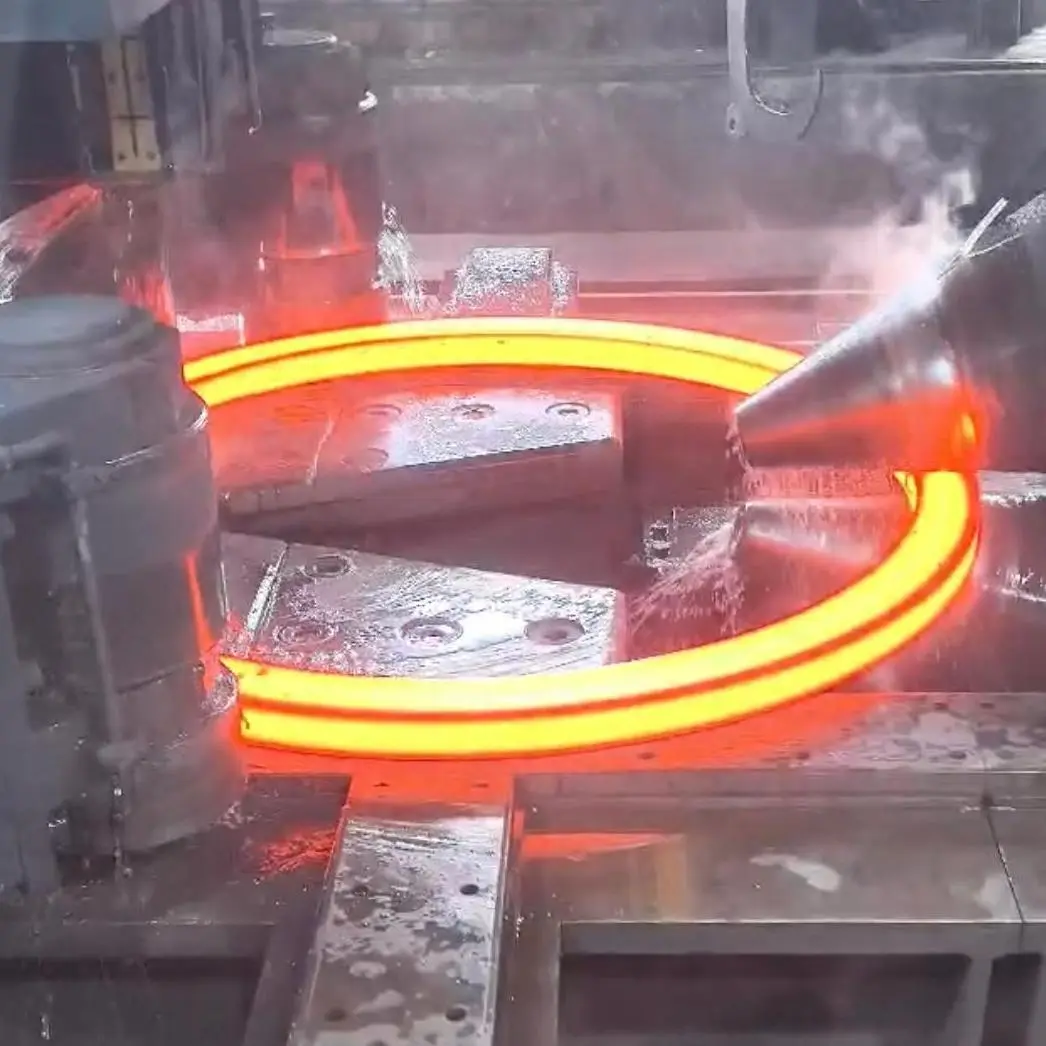
forged flange A forged flange starts as a solid bar or billet cut to weight, heated to roughly 1,100 to 1,250 degrees C, then pressed or hammered into shape. The key point is grain flow: instead of cutting across the metal's natural lines, the forging bends them to wrap the flange profile. That wrapped grain is why a forged flange resists splitting at the hub and the bolt circle. We have sectioned rejected cast pieces on the shop floor and the difference is visible even to a non-metallurgist. The forging also closes any internal voids that casting can leave behind, so a buyer gets fewer surprise failures after hydrotest.
When we receive a drawing, the first check is whether the size sits inside our forging envelope. Small and mid sizes forge cleanly, while very large diameters need a bigger press and a longer queue. We tell the customer that up front so the lead time estimate stays honest rather than optimistic.
Packing for a long sea voyage is part of the product, not an afterthought, and we treat the bundle as something that has to survive a container, a crane, and a customs yard before it reaches the fitter. Edge protectors go on every stack, and the cert sits in a sealed waterproof sleeve so the paper is readable the day the box opens. A Southeast Asian buyer told us our packs arrived cleaner than locally sourced stock, which is the quiet test of a real export desk. Good packing is the difference between a part that fits on arrival and a part you have to rework because the face got knocked in transit.
Where a Hot Forged Flange Beats a Cast Option
Hot Forged Flange A hot forged flange wins on soundness whenever the joint sees shock loading or thermal cycling. Cast iron and cast steel can hide shrinkage porosity that only shows once the line is pressurized. Forged stock starts dense and stays dense, which is why refineries and compressor stations spec it for block valves and pump suction. We supplied a Gulf maintenance crew with replacement forged flanges after their cast spares cracked during a shutdown. The forged set went in, held through the next turnaround, and the plant dropped cast from the spare list. That kind of field result is what builds the case for forging over casting.
Typical Sizes and Pressure Classes We Keep
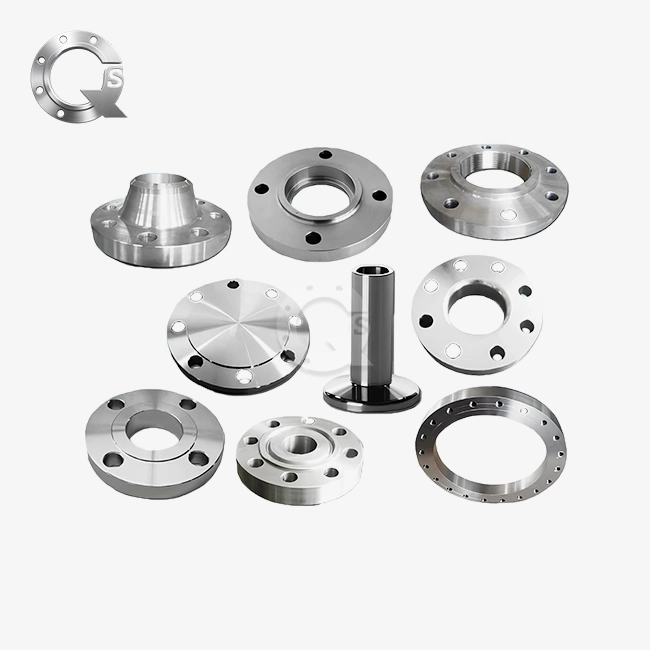
forged steel flange Our standard forged steel flange range covers NPS 1/2 through 24 and Class 150 through 2500, with the common 300 and 600 moving fastest. Slip-on, weld-neck, blind, and socket types all come out of the same forging line after machining. For export we pre-stock the sizes that show up most in EPC bids so a container can be built without waiting on a fresh run. If a project needs a size outside that range, we forge to order and the extra days are mostly in the heat and press slot, not the machining. The trick is to confirm the class early because a 600 bore is not a 150 bore with thicker faces.
Material Grades That Suit the Job
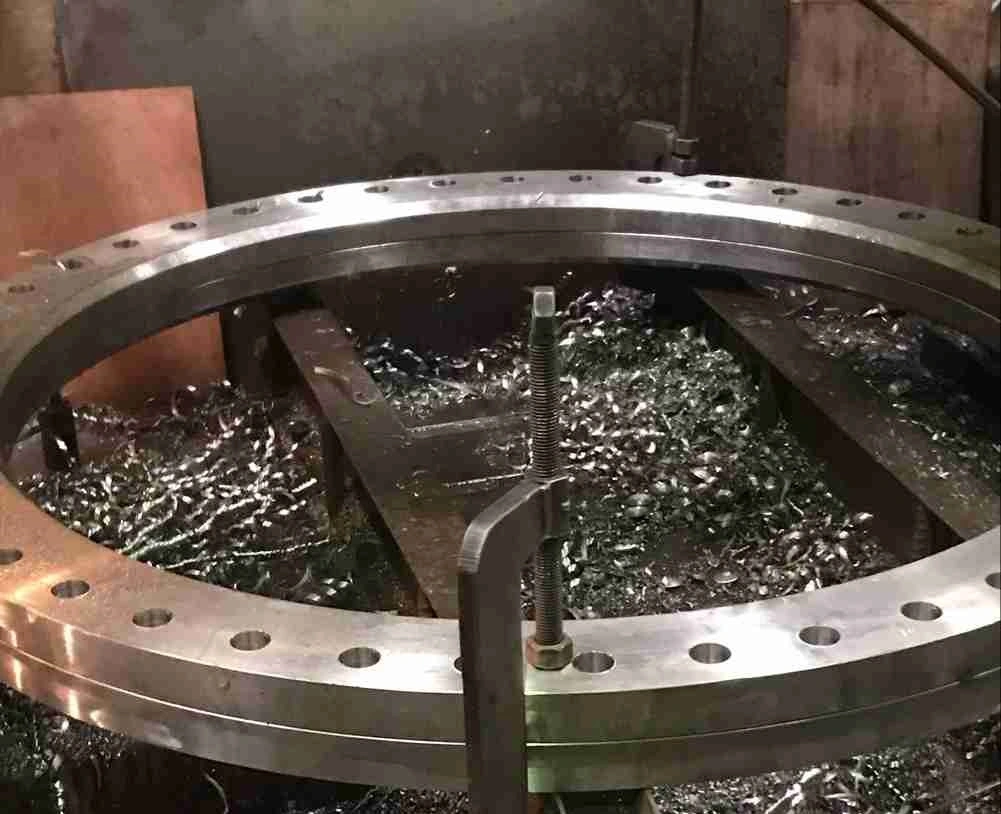
Hot Forged Flange Carbon grades like A105 and LF2 cover most utility and hydrocarbon lines, while 304 and 316 series stainless handle corrosion or hygiene needs. A hot forged flange in F316L is common for desal and pharma where chloride bite is the real risk. We always pair the grade with the right heat number so the mill cert tracks back to the exact melt. A buyer once asked us to swap A105 for LF2 on a cold-climate line and we flagged it before cutting, because the impact spec at low temperature is not the same. That five-minute call saved a winter rejection.
At the receiving end, the goods-in check is where a wrong grade or a missing cert gets caught, and we make that check easy by sending the marking photo with the shipment. The inspector can match the stamp to the bundle before the crane lifts it, which removes the guesswork that causes delays. A West African water authority cleared a full container from our photos without opening every box, and that saved them a half day on a tight tie-in. The flange is only useful if the proof travels with it, and we build the proof into the ship, not the follow-up email.
A Pipeline Repair Case in the Gulf
hot forged flanges A contractor in the Gulf called us after a cast blind failed at a tie-in during a night shutdown. They needed matched forged flanges before the next shift or the whole train stayed down. We pulled Class 300 weld-neck and blind pieces from stock, checked the heat certs, and had them on a courier within a day. The crew swapped the failed cast part for a forged blind and the line held through the turnaround with no recurrence. The buyer later told us the forged option became their default for any joint that cannot afford a second failure. Cases like this are why we keep forged stock deep rather than thin.
Why Choose Xi'an QinSteel for Your Flange Supply
Hot Forged Flange A hot forged flange is only as good as the cert and the packing behind it, and that is where our export desk earns repeat orders. We attach the EN 10204 3.1 mill certificate in a waterproof sleeve, label each bundle by heat number, and photograph the stack before it leaves the yard. A Southeast Asian skid builder told us our cert pack cut their goods-in inspection from a half day to an hour. When you buy from a supplier who forges, documents, and ships as one job, the flange arrives ready to fit instead of ready to question.
Lead time is the part of a flange order that breaks promises, so we state stock versus forged-to-order before you commit, and we hold the order open for your confirmation rather than rushing the cut. A Latin American miner used that window to correct a facing error that his own PO had missed, and we changed it before steel moved. The few days a confirmation buys are cheaper than the weeks a return costs. We would rather ship the right part a little later than the wrong part on time, because the wrong part is just scrap with a fast label.
E-mail info@sxqinsteel.com or open www.sxqsteel.com.
How We Handle Small and Large Runs
hot-forged flange A hot-forged flange order can be five pieces or five thousand, and the workflow changes with the count. Small runs get pulled from stock or a quick forge slot and machined on a flexible line. Large runs move to a scheduled press plan with in-process checks at heat, forge, and final machine. We quote both paths and show the break point where volume buying beats piece pricing. For a Southeast Asian skid builder we set a monthly call-off so they never held dead stock yet always had flanges when a skid shipped. That steady cadence suits both sides better than one giant batch.
Lead Time and Shipping for Export
Hot Forged Flange Most standard hot forged flange sizes leave our yard within a week if stocked, and forged-to-order runs land in three to five weeks depending on press load. We pack for sea with edge protectors and separate certs in a waterproof sleeve so documents survive the voyage. For time-critical shutdowns we can air-freight a small batch ahead of the sea container. A West African water authority used that split shipment to keep a tie-in on schedule while the bulk container followed by boat. Planning the transport with the forge slot, not after it, is what keeps the promise date real.
Payment and paperwork close the loop, and we keep both simple so the part does not sit in a port over a document. Proforma, cert, and packing list go out together, and we flag the HS code early so customs is not a surprise. A Gulf trader said our document pack cleared faster than suppliers who treated paper as an afterthought. The flange and the file should arrive as one shipment, and we plan them that way from the first inquiry rather than stitching them together at the dock.
| Parameter | Hot forged flange | Cast flange (reference) |
|---|---|---|
| Grain structure | Flows with contour | Random, can be porous |
| Internal soundness | Dense, voids closed | Risk of shrinkage |
| Common standard | ASME B16.5 / B16.47 | MSS or foundry spec |
| Typical class | 150 to 2500 | 150 to 300 |
| Best duty | Pressure, fatigue, impact | Low-stress, static |
| Traceability | Heat number + 3.1 cert | Varies by foundry |
| Relative cost | Higher | Lower |
Frequently Asked Questions
1.Is a forged flange stronger than a cast one?
In most pressure and fatigue cases yes, because the grain follows the shape and internal voids are closed during forging. Cast parts can hide porosity that only appears under test or service load, which is why critical joints spec forged.
2.Can I get a hot forged flange in stainless?
Yes. Grades such as 304, 316, and F316L forge well and are common for corrosion-sensitive or hygienic lines. The cert should name the exact melt and heat number so the material can be traced back to the pour.
3.How do I confirm the class before ordering?
Match the class to your line's design pressure and the facing to your gasket. We return a confirmation sheet listing standard, class, facing, and material so you can catch errors before the steel is cut.
Contact Xi'an QinSteel for Hot Forged Flange Solutions
For pricing and lead time on Hot Forged Flange stock or a made-to-order run, email info@sxqinsteel.com or open www.sxqsteel.com. Our team checks your drawing, confirms the material and pressure class, and replies with a firm quote the same business day for standard sizes.
References
- ASTM A105 / A105M - Standard Specification for Carbon Steel Forgings for Piping Applications.
- ASME B16.5 - Pipe Flanges and Flanged Fittings, NPS 1/2 through 24.
- ASME B16.47 - Large Diameter Steel Flanges, Series A and B.
- ASTM A350 / A350M - LF2 forgings for low-temperature service.
- ASTM A182 / A182M - forged stainless flanges, fittings, and valves.
- API 6A - Wellhead and Christmas Tree Equipment, flange and connection requirements.
- ISO 10474 / EN 10204 - Inspection documents for steel products, 3.1 and 3.2 certs.
Learn about our latest products and discounts through SMS or email