- English
- French
- German
- Portuguese
- Spanish
- Russian
- Japanese
- Korean
- Arabic
- Greek
- German
- Turkish
- Italian
- Danish
- Romanian
- Indonesian
- Czech
- Afrikaans
- Swedish
- Polish
- Basque
- Catalan
- Esperanto
- Hindi
- Lao
- Albanian
- Amharic
- Armenian
- Azerbaijani
- Belarusian
- Bengali
- Bosnian
- Bulgarian
- Cebuano
- Chichewa
- Corsican
- Croatian
- Dutch
- Estonian
- Filipino
- Finnish
- Frisian
- Galician
- Georgian
- Gujarati
- Haitian
- Hausa
- Hawaiian
- Hebrew
- Hmong
- Hungarian
- Icelandic
- Igbo
- Javanese
- Kannada
- Kazakh
- Khmer
- Kurdish
- Kyrgyz
- Latin
- Latvian
- Lithuanian
- Luxembou..
- Macedonian
- Malagasy
- Malay
- Malayalam
- Maltese
- Maori
- Marathi
- Mongolian
- Burmese
- Nepali
- Norwegian
- Pashto
- Persian
- Punjabi
- Serbian
- Sesotho
- Sinhala
- Slovak
- Slovenian
- Somali
- Samoan
- Scots Gaelic
- Shona
- Sindhi
- Sundanese
- Swahili
- Tajik
- Tamil
- Telugu
- Thai
- Ukrainian
- Urdu
- Uzbek
- Vietnamese
- Welsh
- Xhosa
- Yiddish
- Yoruba
- Zulu
What Is a Carbon Steel Blank Flange and Where Does the Name Come From?
Oct 14 2026
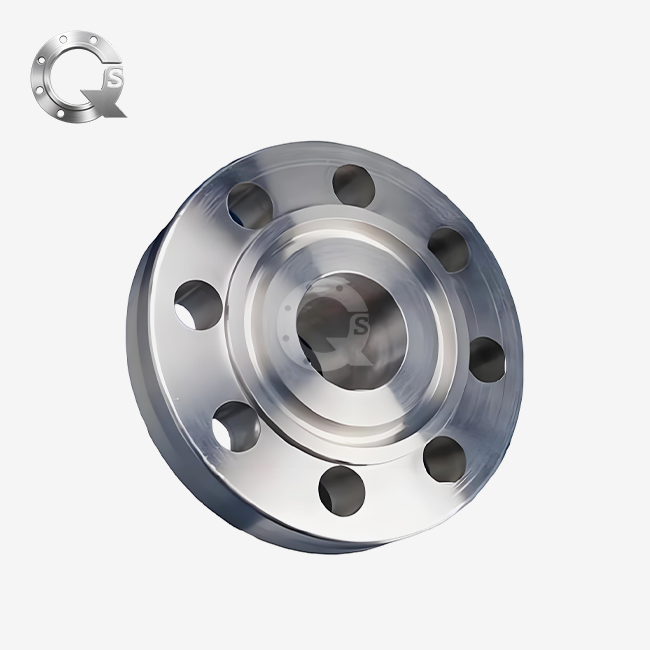
Carbon Steel Blank Flanges are solid steel discs with a bolt circle and no bore, bolted between or onto flanges to close a line, isolate a section or blank off a spare nozzle. The part is simple and the name causes most of the confusion: blank, blind, spade and paddle all get used for objects that differ in shape and purpose. We cut and machine these discs every day, in sizes from half an inch to sixty, and the buying mistakes we see are almost all terminology. Here is what the names mean, what the part does, and how it differs from the neighbouring products.

Where the Name Comes From
Blank and blind come from the same idea and went different ways. A blind flange is the term used in the American standards for a solid disc with a bolt circle, made to a flange standard such as ASME B16.5. A blank flange, or blank, is the older British and Commonwealth workshop word for a plate made to close an opening, which may or may not follow a flange standard exactly. Carbon steel is simply the material most of them are made from, because they usually close utility and process lines rather than aggressive chemicals. Carbon Steel Blank Flanges take their name from the workshop habit of blanking off an opening rather than from any standard.
Spade and paddle describe shapes within the same family. A spade is a blank used between two flanges to isolate a section during maintenance, usually with a handle or tag hole so the crew can see at a glance that a line is positively isolated. A paddle is a blank with an extension that reaches outside the flange pair, often drilled so it can be locked off. The word blank covers the disc itself, whatever it is called on site.
What the Part Actually Does
A blank has three jobs. It closes a line end, so a pipe can be terminated without a valve. It isolates a section, so work can proceed on one side of a joint while the other side stays live, which is the duty that gives it its importance in safety systems. And it protects a spare nozzle or branch, keeping the flange face clean and the line sealed until a future connection is made. Positive isolation is the duty that turns Carbon Steel Blank Flanges from consumables into documented pressure boundaries.
The second duty is the one that governs how these parts are bought. Positive isolation usually requires a documented thickness, a certificate, and in many plants a tag number, because the plate is standing between a person and a live system. A carbon steel blank used for isolation is not a consumable in the way a gasket is; it is a pressure boundary with a maintenance history.
Plate, Forging or Casting
Blanks are produced three ways. Cutting from rolled plate is the most common, especially in the larger diameters and in the thicker sections, because plate is available in a wide range of thicknesses and the cut disc needs only facing, drilling and a chamfer. Forging gives a denser, more uniform structure and is preferred where the plate will see cycling or low temperature. Casting is rare for this product and usually a sign of an old pattern or a very awkward shape. Carbon Steel Blank Flanges are cut from plate, forged from billet, or in unusual cases cast from an old pattern.
The practical difference for a buyer is documentation rather than appearance. Plate has a rolling direction, which matters for impact properties in thick sections, and the certificate follows the plate rather than the part. A forging carries its own heat number and mechanical results. Both are acceptable under most specifications provided the certificate matches what was ordered, which is why we state the product form on every quotation.
Carbon Steel Grades You Will See
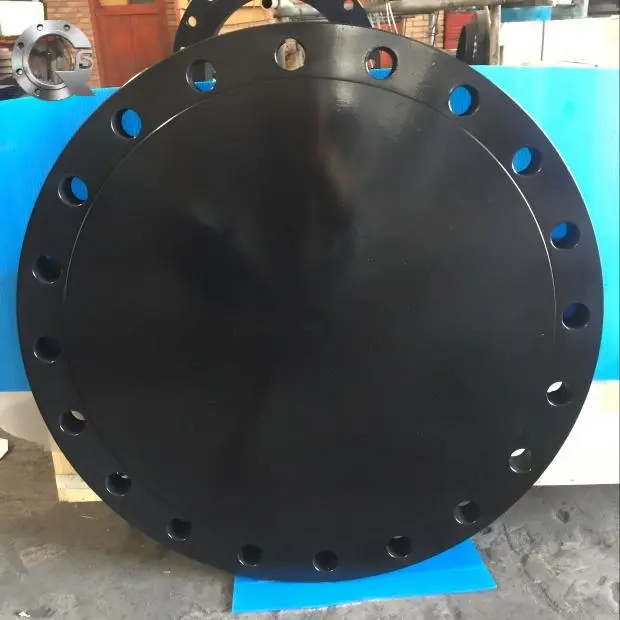
Four grades cover nearly all of it. ASTM A105 is the forging grade used for flanged blanks and is the most common in export trade. ASTM A36 is a structural plate grade that appears on non-critical blanks and should never be assumed equivalent for pressure duty. A516 Grade 70 is a pressure vessel plate with better toughness and is what we recommend for thick blanks and cold service. European work often specifies P265GH or S355JR, and the two systems map onto each other closely enough for most inspectors. The phrase carbon steel is not a grade, and Carbon Steel Blank Flanges should arrive with one named on the certificate.
The mistake to avoid is buying a blank described only as carbon steel. That phrase covers a range of yield strengths, toughness levels and weldabilities wide enough to matter. Ask for the grade, put it on the certificate, and check that the grade suits the design temperature when the part is going anywhere cold.
How a Blank Differs From Its Neighbours
A blind flange is a blank made to a flange standard, with the thickness the standard dictates. A spectacle blind is two discs joined by a web, one solid and one open, so a line can be switched without unbolting the joint. A spacer is an open ring used to make up the gap when the solid part of a spectacle plate is swung out. A paddle blind is a blank with a handle. A pipe cap is a welded closure, permanent by nature and awkward to reverse. Choosing between Carbon Steel Blank Flanges and their neighbours is a question of how often the line is opened.
Choosing between them is a question of how often the line is opened and whether the isolation has to be visible. A spare nozzle that will be connected once in ten years wants a plain blank. A line spaded every turnaround wants a spectacle arrangement or a handled paddle, because those are the shapes a permit system can see and lock.
What to Put on the Enquiry
Six facts close an order for carbon steel blank flanges: the nominal size, the flange standard and pressure class the plate must match, the plate thickness or design pressure, the steel grade, the quantity, and the certificate type. Add the bolt hole requirement if the blank has to match an existing drilling, and add the surface protection if the part is going into store rather than onto a line. Six facts close an order for Carbon Steel Blank Flanges, and the handle dimension matters when the plate is a spade.
Where the blank is a spade or a paddle, send the handle or tag hole dimension and say which end the handle goes on, because a handled plate drilled on the wrong side is a plate that cannot be fitted in a trench. That is a two line note on the drawing and it prevents a remake.
Bolting, Gaskets and Joint Fit-Up
We size the studs to the plate thickness and quote the gasket family the facing takes, because a blank is usually thicker than the gasket it displaces and the old studs rarely reach. On spade and paddle plates we ask which end the handle sits on before drilling.
Certification, Traceability and Goods-In Checks
Certificates name the grade, the heat number and the product form, with the mill document attached. For isolation blanks we add a dimensional record of the plate thickness, because that is the figure a permit system and an auditor both want to see documented.
Packing, Coating and Export Logistics
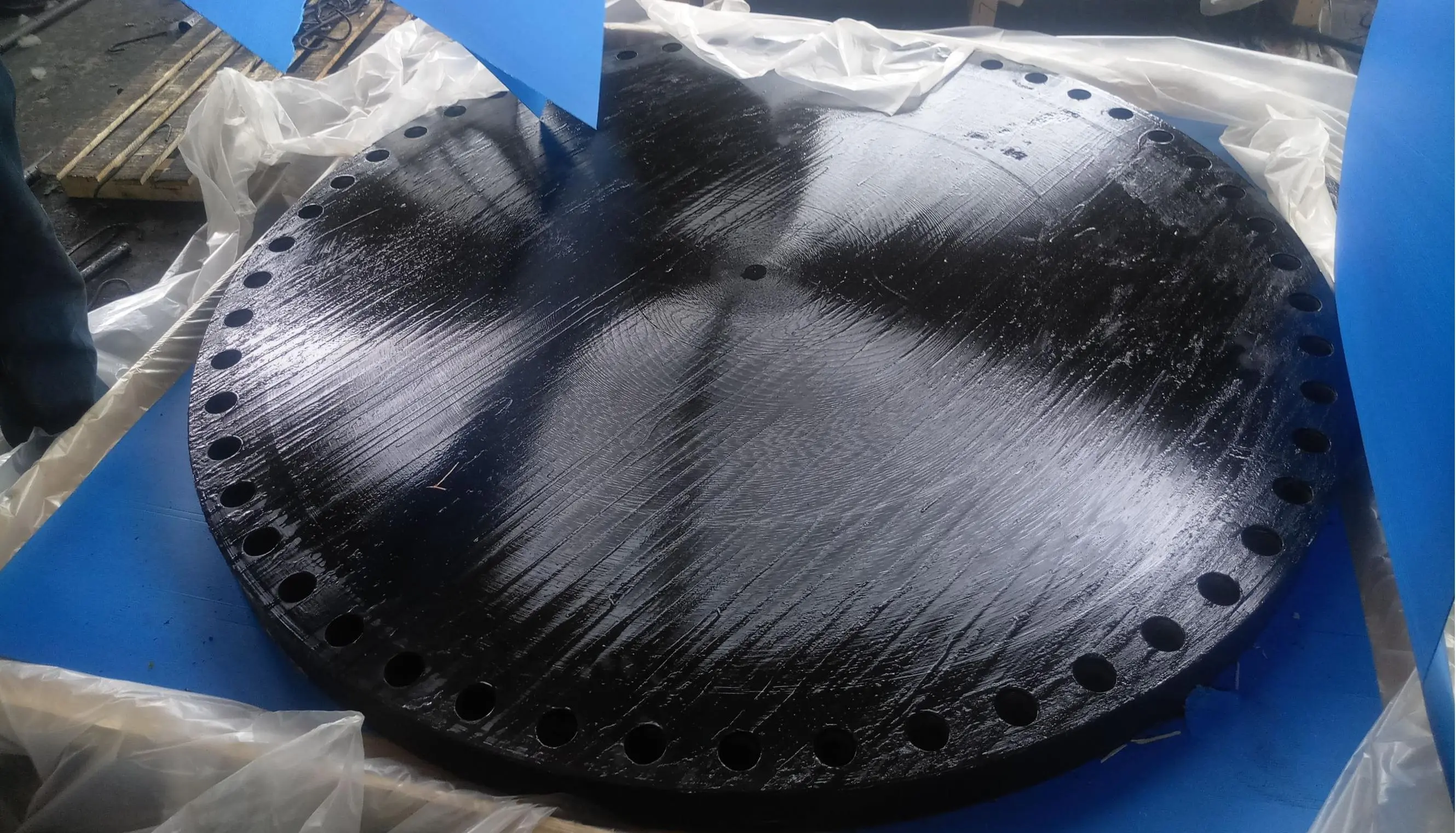
Blanks ship with the machined face protected and the rim marked with size, grade and heat number. A handled paddle is crated so the handle cannot bend the plate, which is a packaging detail we learned from a customer whose order arrived as a banana.
Stock, Repeat Orders and Phased Release
We hold common plate thicknesses rather than finished sizes, so a repeat order in a new diameter is a cutting job rather than a mill enquiry. Plants working to a turnaround plan can take a single release and hold the balance with certification issued per release.
How We Confirm the Specification Before We Cut
Before cutting we check the thickness against the design pressure and the standard you named, and we say so when the two disagree. A plate that is thinner than the joint it closes is the kind of substitution nobody wants to defend after an incident.
Terminology Worth Settling Before the Order
The word blank is used loosely in the trade and it costs money. A store that orders a blank and receives a spade will find the plate correct and the handle missing, and a site that orders a blind flange and receives a plate cut to a workshop drawing may find the rim marking does not satisfy an inspector. Neither outcome is a manufacturing fault; both are vocabulary.
Our habit is to read the description back on the order acknowledgement in our own words, and to ask if anything still looks ambiguous. It takes one line and it has prevented more wrong shipments than any technical check we run.
Why Choose Xi'an QinSteel for Carbon Steel Blank Flange Supply
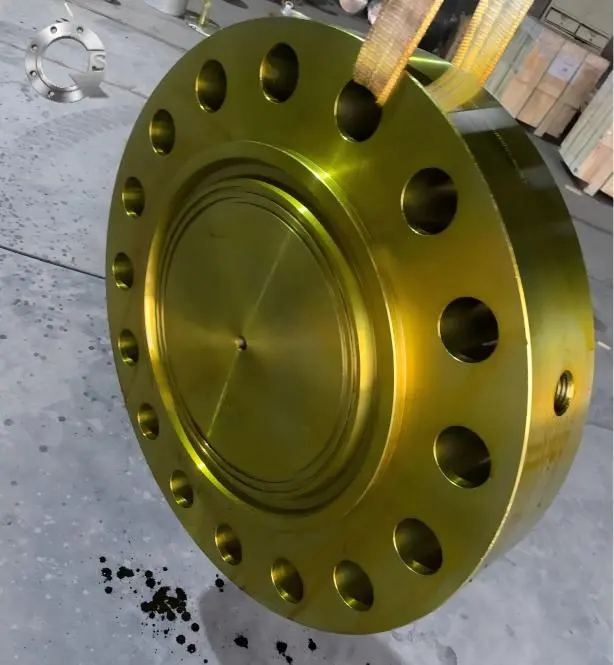
We ask what the plate is for before quoting, because a blank for a spare nozzle and a blank for positive isolation are different orders. The second needs a documented thickness and a tied certificate, and we treat the two differently from the quotation onwards. That distinction changes how we document the order rather than how we cut it.
We keep plate in the thicknesses that most often appear on this work, so a replacement cut to a measured diameter is a short job rather than a mill lead time. Where a handled plate is involved we confirm the handle side before drilling rather than after. It also means a second plate for the same joint is quoted from the first quotation's figures.
We read every description back in plain words on the acknowledgement, which is the cheapest way we know to catch a terminology error. Write to info@sxqinsteel.com or open www.sxqsteel.com with the service and the size, and the same desk will name the part you need. Send a photograph of the flange the plate has to close and the description usually settles itself. That single line of clarity is the difference between a documented plate and a delivery note.
| Name | Shape | Typical purpose | Reusable in place? |
|---|---|---|---|
| Blank or blind flange | Solid disc, bolt circle | Close a line end or nozzle | Yes, bolts out |
| Spade | Solid disc with handle | Positive isolation at a flange pair | Yes |
| Paddle blind | Disc with locking extension | Isolation with a lock-off point | Yes |
| Spectacle blind | Two discs joined by a web | Switch between open and closed | Yes |
| Spacer | Open ring | Fill the gap when the solid disc is swung | Yes |
| Pipe cap | Welded closure | Permanent termination | No |
Frequently Asked Questions
1.Is a blank flange the same as a blind flange?
Functionally yes, and the two words are used interchangeably on site. The difference is documentary: a blind flange is made to a recognised flange standard with its table thickness, while a blank may be cut to a workshop drawing. For anything that has to satisfy an inspector, name the standard.
2.What grade should carbon steel blanks be made from?
A105 for forged blanks, and A516 Grade 70 or a European equivalent for plate in thick sections or cold service. A36 plate appears in non-critical work and should not be assumed suitable for pressure duty. Put the grade on the enquiry and check that it matches the design temperature.
3.Can you supply spade blanks with a handle?
Yes, and we need the handle length, the thickness and the side it must sit on. A handled plate drilled on the wrong side cannot be turned round in a trench, so we confirm the orientation with the customer before the holes are put in.
Contact Xi'an QinSteel for Carbon Steel Blank Flange Solutions
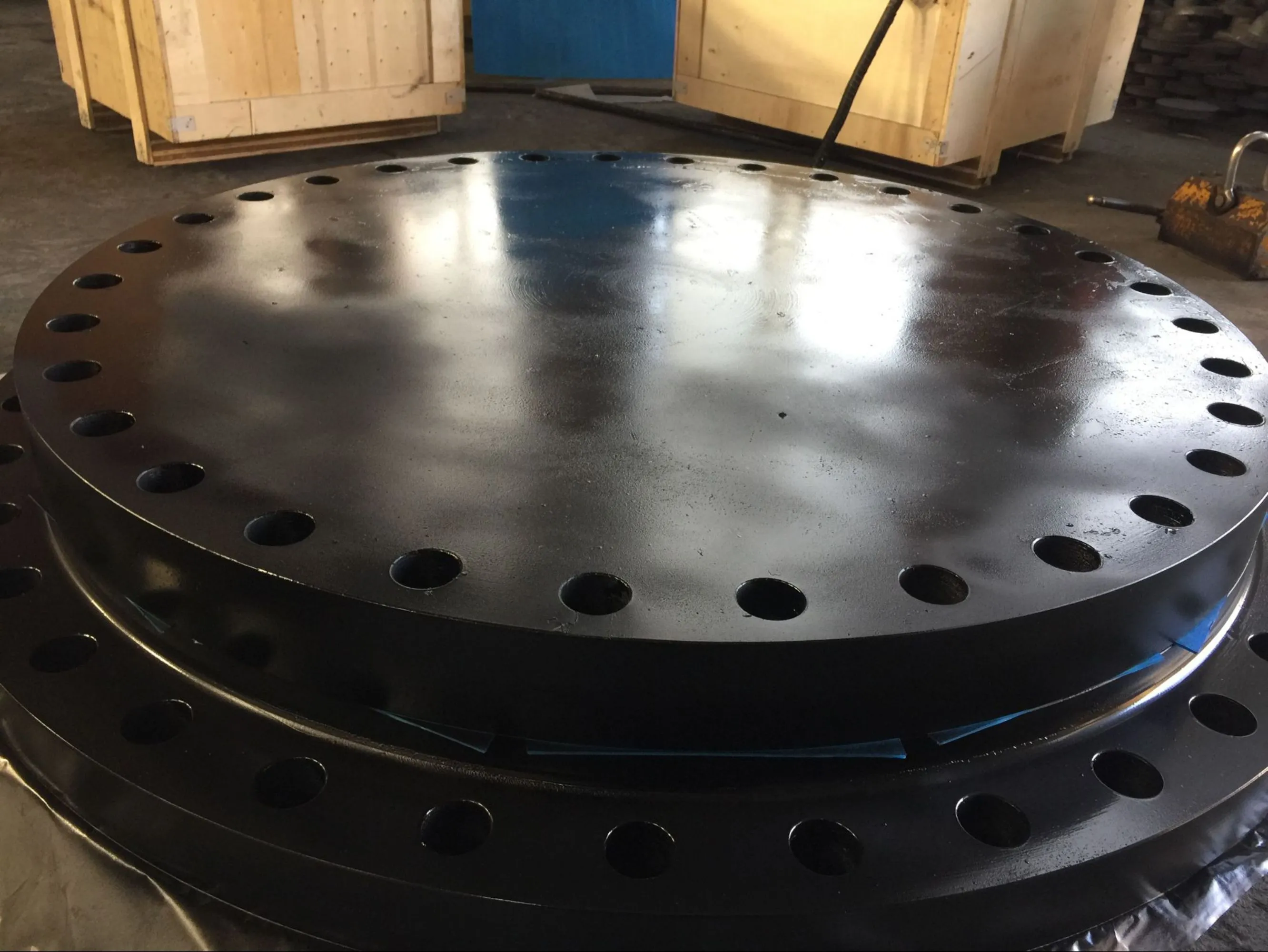
Send the size, the standard the plate must match and the service it will see to info@sxqinsteel.com and we will quote a set of Carbon Steel Blank Flanges with the thickness, grade and handling detail written out. Plate thickness charts and standard extracts are published at www.sxqsteel.com.
References
1.ASME B16.5 - Pipe flanges and flanged fittings, NPS 1/2 through NPS 24.
2.ASME B16.48 - Steel line blanks.
3.ASME B31.3 - Process piping, including the calculation of blind and blank thickness.
4.ASME PCC-1 - Guidelines for pressure boundary bolted flange joint assembly.
5.ASTM A105 / A105M - Carbon steel forgings for piping applications.
6.ASTM A36 / A516 - Carbon steel plate for structural and pressure applications.
7.EN 10204 - Metallic products, types of inspection documents.

Learn about our latest products and discounts through SMS or email