- English
- French
- German
- Portuguese
- Spanish
- Russian
- Japanese
- Korean
- Arabic
- Greek
- German
- Turkish
- Italian
- Danish
- Romanian
- Indonesian
- Czech
- Afrikaans
- Swedish
- Polish
- Basque
- Catalan
- Esperanto
- Hindi
- Lao
- Albanian
- Amharic
- Armenian
- Azerbaijani
- Belarusian
- Bengali
- Bosnian
- Bulgarian
- Cebuano
- Chichewa
- Corsican
- Croatian
- Dutch
- Estonian
- Filipino
- Finnish
- Frisian
- Galician
- Georgian
- Gujarati
- Haitian
- Hausa
- Hawaiian
- Hebrew
- Hmong
- Hungarian
- Icelandic
- Igbo
- Javanese
- Kannada
- Kazakh
- Khmer
- Kurdish
- Kyrgyz
- Latin
- Latvian
- Lithuanian
- Luxembou..
- Macedonian
- Malagasy
- Malay
- Malayalam
- Maltese
- Maori
- Marathi
- Mongolian
- Burmese
- Nepali
- Norwegian
- Pashto
- Persian
- Punjabi
- Serbian
- Sesotho
- Sinhala
- Slovak
- Slovenian
- Somali
- Samoan
- Scots Gaelic
- Shona
- Sindhi
- Sundanese
- Swahili
- Tajik
- Tamil
- Telugu
- Thai
- Ukrainian
- Urdu
- Uzbek
- Vietnamese
- Welsh
- Xhosa
- Yiddish
- Yoruba
- Zulu
What Is a Butt Weld 90 Degree Elbow and Where Does It Belong?
Oct 14 2026
A Butt Weld 90 Degree Elbow is a wrought fitting with a square-turn bend, welded end to end into a line so the joint becomes part of the pipe itself. It takes a run through a right angle in one piece rather than two mitred cuts, and because both ends are bevelled instead of threaded, the joint holds the same pressure class as the pipe it sits in. Above two inch nominal this is the ordinary way to turn a corner on a process plant, and the reason is practical: a full penetration weld leaks less often than a thread and it can be radiographed. What follows is a plain account of what the fitting is, what the figures in an enquiry mean, and where it earns its place on a line.
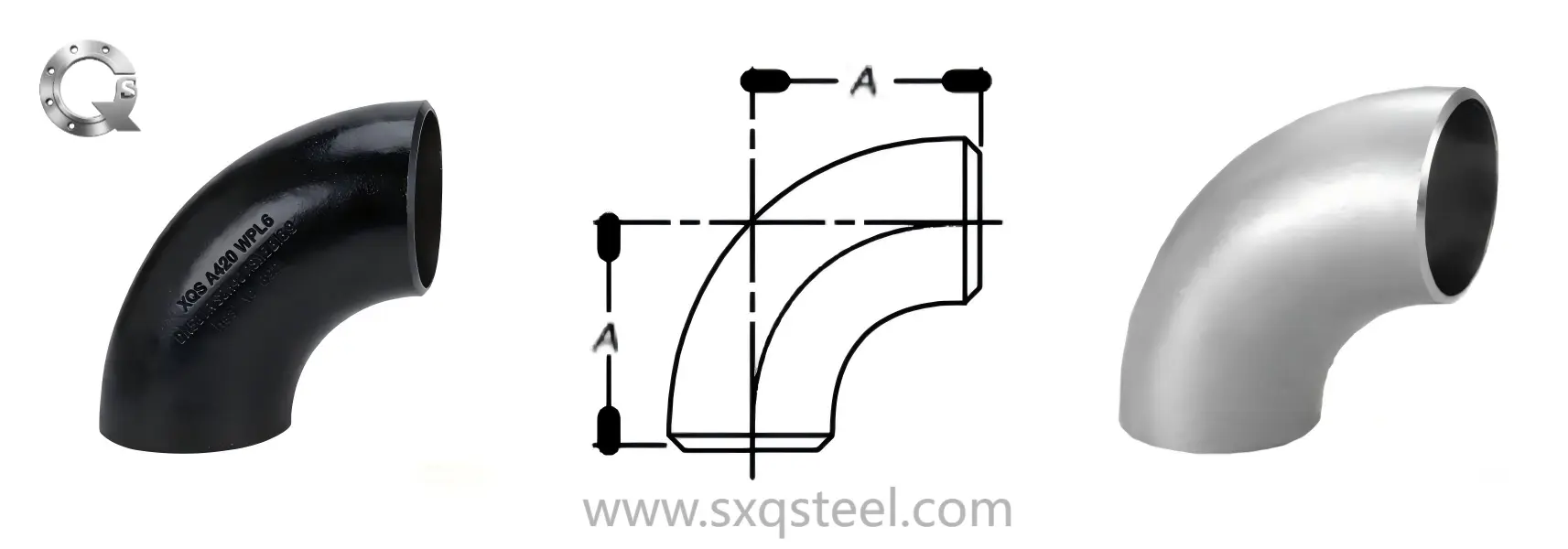
The Butt Weld End and Why It Matters
The end of a Butt Weld 90 Degree Elbow is bevelled at roughly 37.5 degrees with a small root face, and machined to the same outside diameter as the pipe it will meet. That shared diameter is the point of the design. A welder can align two like profiles, run a root pass that penetrates the full wall, and have the finished joint examined. Nothing is cut into the wall to make the connection, so the fitting does not thin the pipe where bending stress is highest. A threaded elbow takes metal away at the thread root, and a socket welded joint leaves an annular gap that holds fluid.
Butt welding also shapes the way the part is bought. Outside diameter cannot be worked around, because it is checked against the pipe with a tape or a gap gauge before anyone strikes an arc. Nominal size tells you which pipe the elbow matches and nothing at all about the wall. Two elbows of the same nominal size in different schedules look alike on a pallet and behave very differently at the joint, which is why schedule belongs on the enquiry beside the size.
Why Ninety Degrees, and What the Turn Costs
A right-angle change of direction is the most common on a plant, so this pattern carries more pipework than any other fitting. It is also the most expensive turn in energy terms. Flow separates off the inner wall, a low pressure zone forms against the outer wall, and the pump has to make up the difference for every hour the line runs. A Butt Weld 90 Degree Elbow in long radius keeps that loss lower than a short radius one, and that is the practical reason long radius became the default choice.
The reckoning is not only hydraulic. A tight turn concentrates bending and thermal stress at the inner wall, so the elbow is among the first places an engineer looks when a line thins or cracks. Two 45 degree elbows set a short distance apart turn the flow more gently and can cost less than one long radius ninety in a crowded rack, though they add a weld and consume space along the run. Which of those three costs matters most is a question about the line rather than about the fitting.
Long Radius and Short Radius in the Same Standard
Ninety degree elbows are made in two centreline radii. Long radius turns in one and a half times the nominal size, short radius in one times. Both are covered by the same dimensional standard, both are stocked, and they are not interchangeable on a spool. A Butt Weld 90 Degree Elbow in short radius buys space inside a skid or on a rack, and pays for it with a harder turn and a higher pressure drop.
Short radius sizes stop earlier than long radius ones in most catalogues. That gap matters when a drawing calls for a size that nobody makes in short radius, and the honest answer may be two 45 degree fittings or a fabricated bend rather than a part that does not exist. Hearing that at quotation is a nuisance. Hearing it during fit-up is a programme problem with a crane standing by.
What the Nominal Size Does Not Tell You
Buyers send a size and expect a figure back the same day. Size alone will not support a price, because a Butt Weld 90 Degree Elbow is defined by five things at once: nominal size, centreline radius, wall or schedule, material grade, and end preparation. Give us four of the five and we will ask for the missing one rather than assume it.
The wall is the figure that goes missing most often, usually because it is written somewhere else on the drawing. On a small line the schedule may be implied by a line class, and on a large one it may be given as a millimetre thickness with a tolerance. Both are workable. What is not workable is a fitting made to a nominal size and an assumed wall, because the bore at the bevel is what the pipe has to match and it is the last thing anybody re-measures.
Where These Elbows Are Used
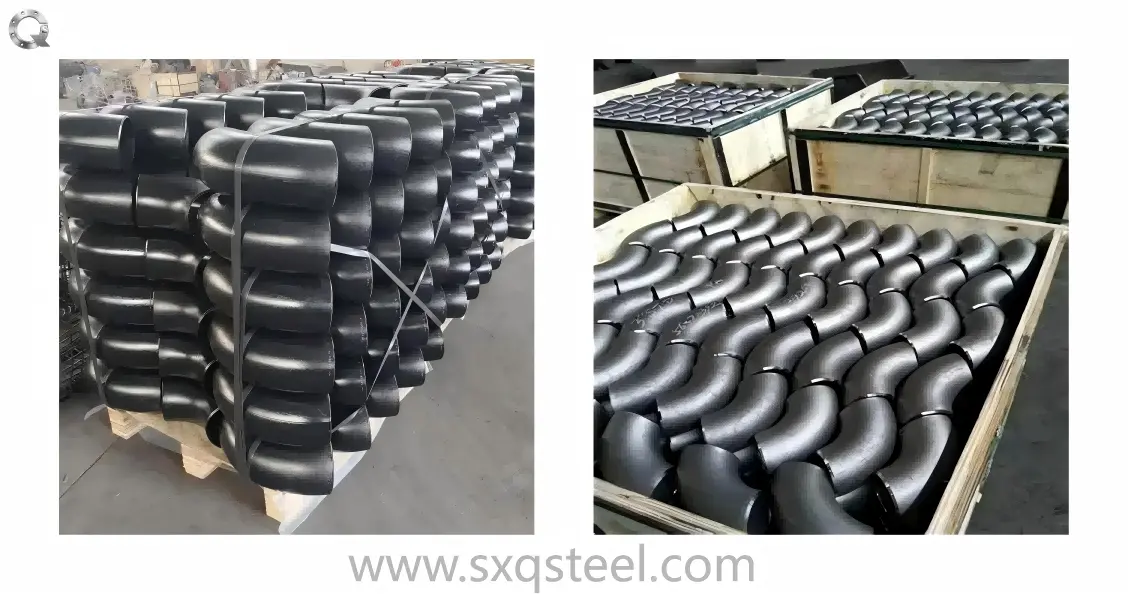
Process pipework, steam headers, cooling water mains, slurry lines, firewater rings and buried gas mains all lean on the same fitting, and what separates them is grade and wall rather than shape. A Butt Weld 90 Degree Elbow in a mill slurry line wants a heavier wall, because solids scour the outer curve, while the same pattern in a treated water main is a plain carbon part that will outlast the building around it.
Service also settles the finish. Stainless elbows for a food or pharmaceutical line are ordered with a stated internal surface and protected bevels. Carbon elbows for a buried main are ordered with a coating, and the drawing usually carries a note about coating repair at the weld. The shape is identical in both cases. The paperwork and the surface treatment are not.
What to Send Us Before We Quote
A quotation for a Butt Weld 90 Degree Elbow is built from the size, the radius, the wall, the grade and the quantity, with the standard and any inspection level attached. Send those and the price usually comes back the same working day. Send a size on its own and the reply will be a question, which costs both sides a day before anything has been made.
A marked-up drawing is worth more than a paragraph of description. A sketch that shows the bevel, the radius and the take-out removes the two or three assumptions sitting behind most wrong shipments. Photographs of the existing pipe end are the next best thing, and for a repair they are often better, because a spool that has been in service for twenty years rarely matches its original drawing.
Fit-Up, Bevels and Weld Preparation
We cut the bevel to suit the wall on the purchase order rather than to a generic profile, because a fitting finished for Schedule 40 leaves a step against a Schedule 80 pipe that shows up as high-low at the root. Both ends are gauged before the part is racked.
When a customer sends a short length of the pipe he intends to weld to, we set the bevel from that sample. It takes a few days and removes the single most common reason a ninety degree elbow comes back to us.
Certification, Traceability and Goods-In Checks
The test certificate travelling with the fitting names the heat number stamped on it, so a goods-in inspector can tie the paper to the steel in his hand at a glance. Where a project asks for witnessed testing we book the third party against the mill programme, not after it.
Marking follows the same logic: size, schedule, grade, heat number and our own symbol, applied before coating so it cannot be painted over. Photographs of the marking are filed against the despatch note, which settles most disputes about what was sent without a return visit.
Packing, Coating and Export Logistics
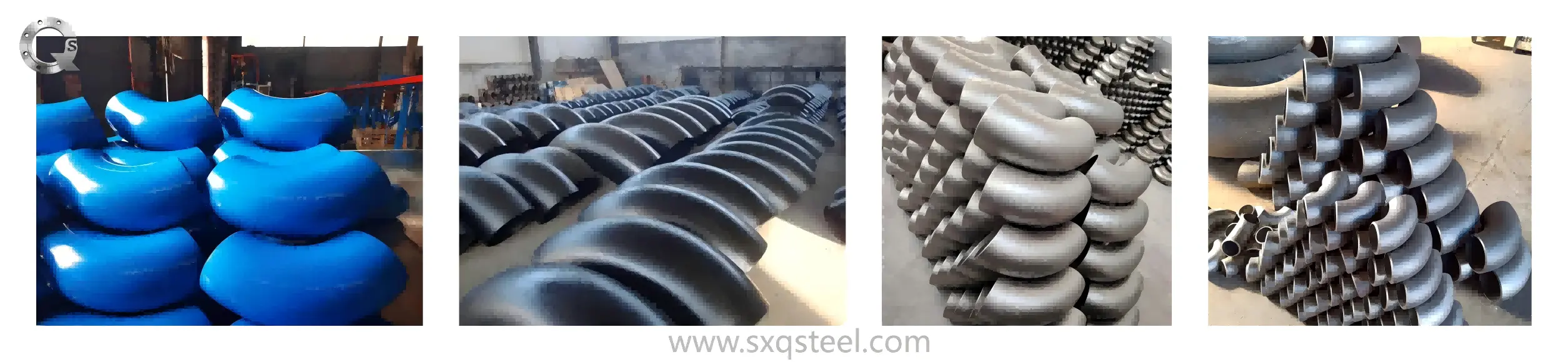
Ninety degree elbows are crated by size and schedule, never by order line. Two parts of the same nominal size in different walls nest together on a pallet and are separated only by a label, which is the mistake a mixed crate invites.
Bevels are capped and the ends sit clear of the crate floor, because a chipped bevel on a heavy fitting means a repair or a replacement and never a small matter. Stainless travels wrapped and stencilled, well away from carbon steel, so the grade can be read without opening the bundle.
Stock, Repeat Orders and Phased Release
Long radius ninety degree elbows in carbon and in 304 or 316 stainless are the parts we keep in depth, from NPS half to NPS twelve and in Schedule 40 and 80 as standard. That covers most of the repair calls that reach us.
Repeat customers can leave a balance with us against a call-off, so a site store does not have to absorb the whole order at once. Price and heat number are fixed when the order is placed, which is what makes a phased release useful rather than merely tidy.
How We Confirm the Specification Before We Quote
We ask what the elbow will carry and where the line runs before we discuss money, because the same size and angle in a sour refinery service and in a cooling water header are different purchases. That question is cheaper than a weld repair.
Where a take-off sheet and a drawing disagree, both are quoted back with the difference flagged in writing. A buyer who is told about the conflict can settle it with his engineer; a buyer who is not told finds out at the spool, with a fitter waiting.
Stock, Mill Order and the Difference in Lead Time
Common long radius sizes in carbon and stainless sit on our racks from NPS half to NPS twelve, so a breakdown call can be answered in the same week. Anything outside that range, in short radius or in an unusual wall, comes from a mill and moves at the mill programme rather than ours.
Knowing which side of that line a size falls on is useful before a shutdown is planned. If a part is a mill order, the date is negotiable at the point of enquiry and much less so afterwards. We would rather say in March that a November delivery needs a decision in September than confirm a date we cannot hold.
Why Choose Xi'an QinSteel for Butt Weld 90 Degree Elbow Supply
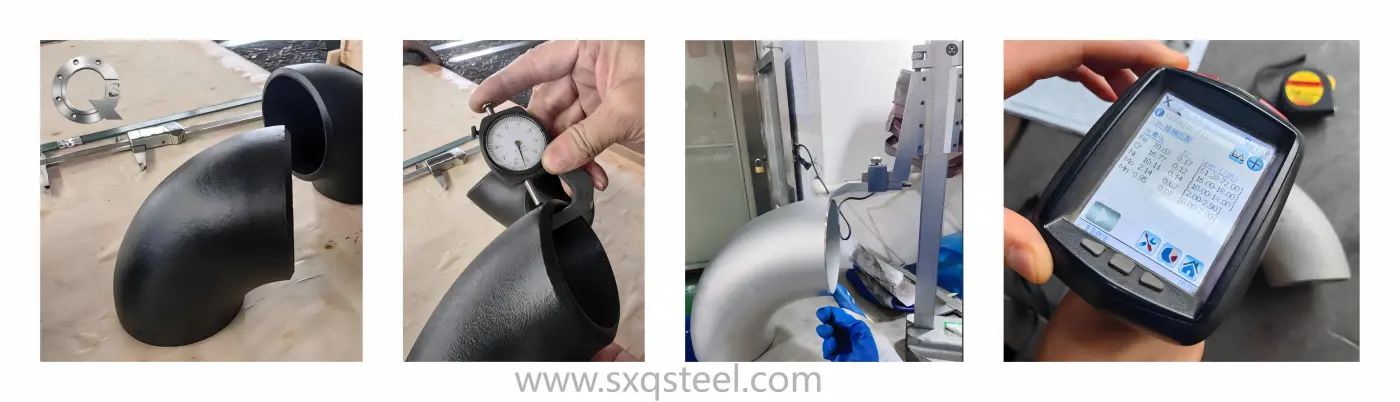
We have been exporting butt welding fittings long enough to know that most complaints turn out to be dimensional rather than metallurgical, and that is why the take-out figure and the bevel are checked on the bench before a pallet is closed. A part that measures correctly here does not become a telephone argument three weeks later, and the check costs us a few minutes per batch.
We keep a length of pipe in each common schedule beside the rack, because the only test of an elbow that really matters is whether it seats on the pipe it will be welded to. Catalogue compliance and a comfortable fit-up are two different things, and we would rather find the difference here than have a fitter find it on a Friday afternoon with the spool already tacked. It is a small routine and it has never once been wasted.
We would rather be asked an awkward question about a bevel than process a return, so this desk will send a photograph, a measurement and the clause behind it instead of a reassurance that the part is fine. Write to info@sxqinsteel.com or open www.sxqsteel.com and the same engineer answers, usually the same day.
| Nominal size | Long radius C-to-E | Short radius C-to-E | Long radius take-out | Short radius take-out |
|---|---|---|---|---|
| NPS 1 | 38 mm | 25 mm | 1.5 x NPS | 1.0 x NPS |
| NPS 2 | 76 mm | 51 mm | 1.5 x NPS | 1.0 x NPS |
| NPS 4 | 152 mm | 102 mm | 1.5 x NPS | 1.0 x NPS |
| NPS 6 | 229 mm | 152 mm | 1.5 x NPS | 1.0 x NPS |
| NPS 8 | 305 mm | 203 mm | 1.5 x NPS | 1.0 x NPS |
| NPS 12 | 457 mm | 305 mm | 1.5 x NPS | 1.0 x NPS |
Frequently Asked Questions
1.a butt weld 90 degree elbow the same thing as an ASME B16.9 elbow?
Not quite. ASME B16.9 is the dimensional standard that most of them are made to, and it is the specification a buyer normally names. The words butt weld and 90 degree describe the joint and the angle instead of the document, which is why the same fitting can also be supplied to EN 10253-2 or JIS B2311 with the same nominal size and a slightly different dimensional table.
2.Should I order long radius or short radius?
Long radius unless something forces the other answer. It gives a lower pressure drop, a gentler change of direction and the widest choice of sizes from stock. Short radius is for tight racks, small skids and situations where the space saving outweighs a harder turn.
3.Can a butt weld elbow be welded to a pipe of a different grade?
Yes, with a qualified procedure and the right filler. Carbon to stainless is common in transitions and needs a procedure written for that combination, plus a decision on whether the joint will be heat treated. We state the grade of the fitting on the certificate so the welding engineer can plan the joint properly.
Contact Xi'an QinSteel for Butt Weld 90 Degree Elbow Solutions
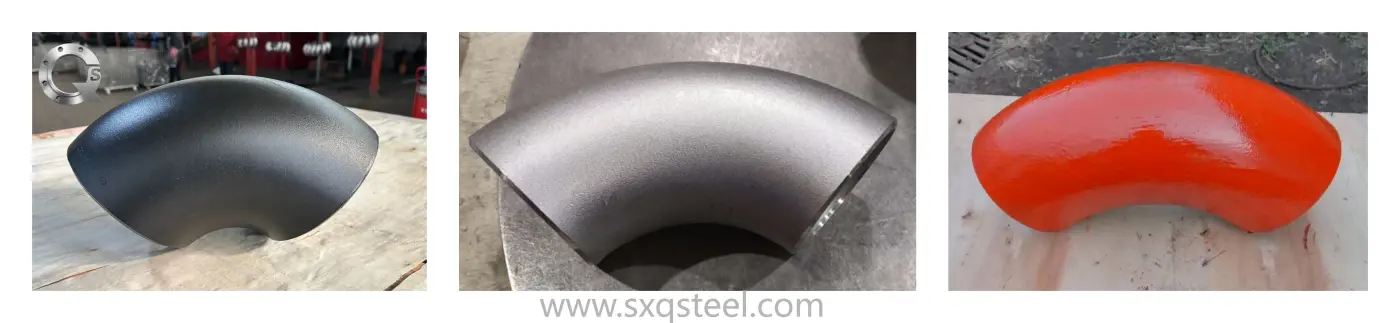
Give us the nominal size, the centreline radius, the wall and the grade for a Butt Weld 90 Degree Elbow and the reply carries a price, a lead time and the two or three certificate levels we can offer against it. Email info@sxqinsteel.com or go through www.sxqsteel.com; a marked drawing attached to the enquiry usually removes a whole exchange of messages.
References
- ASME B16.9-2018, Factory-Made Wrought Buttwelding Fittings, American Society of Mechanical Engineers.
- ASME B16.25-2017, Buttwelding Ends, American Society of Mechanical Engineers.
- ASME B36.10M-2018, Welded and Seamless Wrought Steel Pipe.
- ASTM A234/A234M-23, Piping Fittings of Wrought Carbon Steel and Alloy Steel for Moderate and High Temperature Service.
- ASME B31.3-2022, Process Piping.
- EN 10253-2:2021, Butt-welding pipe fittings - Part 2: Non alloy and ferritic alloy steels with specific inspection requirements.
Learn about our latest products and discounts through SMS or email