- English
- French
- German
- Portuguese
- Spanish
- Russian
- Japanese
- Korean
- Arabic
- Greek
- German
- Turkish
- Italian
- Danish
- Romanian
- Indonesian
- Czech
- Afrikaans
- Swedish
- Polish
- Basque
- Catalan
- Esperanto
- Hindi
- Lao
- Albanian
- Amharic
- Armenian
- Azerbaijani
- Belarusian
- Bengali
- Bosnian
- Bulgarian
- Cebuano
- Chichewa
- Corsican
- Croatian
- Dutch
- Estonian
- Filipino
- Finnish
- Frisian
- Galician
- Georgian
- Gujarati
- Haitian
- Hausa
- Hawaiian
- Hebrew
- Hmong
- Hungarian
- Icelandic
- Igbo
- Javanese
- Kannada
- Kazakh
- Khmer
- Kurdish
- Kyrgyz
- Latin
- Latvian
- Lithuanian
- Luxembou..
- Macedonian
- Malagasy
- Malay
- Malayalam
- Maltese
- Maori
- Marathi
- Mongolian
- Burmese
- Nepali
- Norwegian
- Pashto
- Persian
- Punjabi
- Serbian
- Sesotho
- Sinhala
- Slovak
- Slovenian
- Somali
- Samoan
- Scots Gaelic
- Shona
- Sindhi
- Sundanese
- Swahili
- Tajik
- Tamil
- Telugu
- Thai
- Ukrainian
- Urdu
- Uzbek
- Vietnamese
- Welsh
- Xhosa
- Yiddish
- Yoruba
- Zulu
What Are the Main Types of ASME B16.20 Spiral Wound Gaskets?
Aug 7 2026
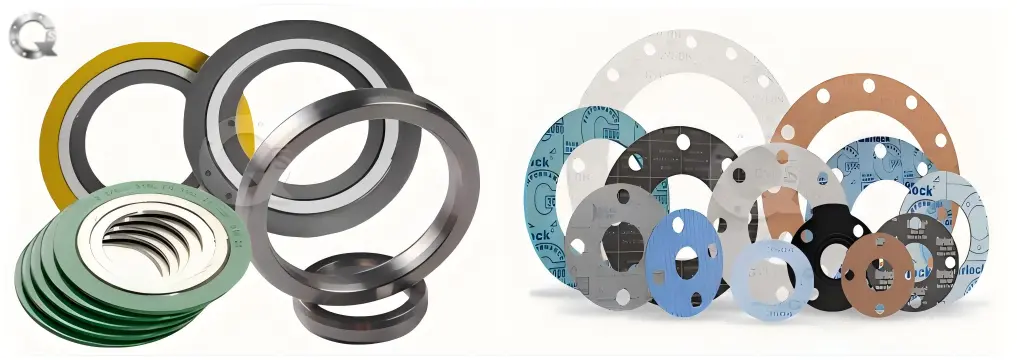
ASME B16.20 Spiral Wound Gasket is a standardized metallic sealing component widely adopted in industrial piping, pressure vessels, and flange connection systems. Governed by the American Society of Mechanical Engineers standard, this gasket delivers reliable compression resistance, high-temperature stability, and excellent sealing performance, making it a core sealing solution for petroleum, chemical, power generation, and metallurgical industries. Classified by structural design, ring configuration, and application scenarios, it covers multiple standardized types to match diverse flange forms and working conditions.
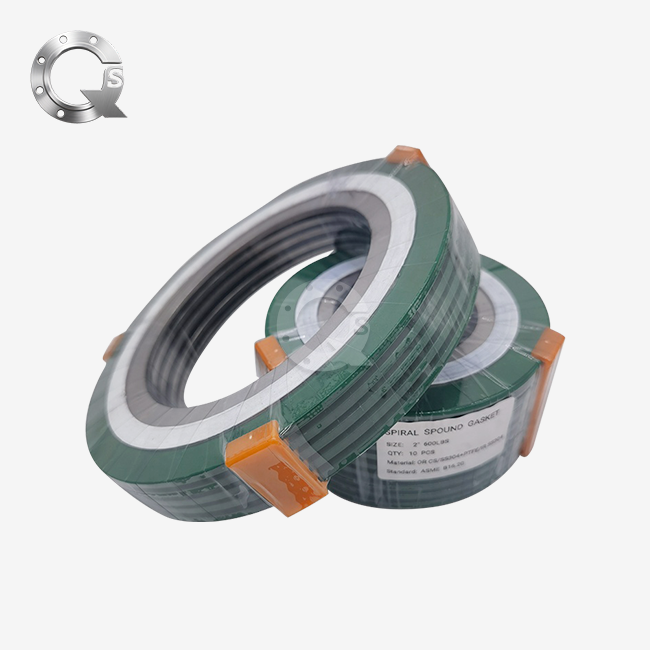
Core Classification Standards for Standard Gaskets
The classification of ASME B16.20 Spiral Wound Gasket strictly follows the specifications of this authoritative industrial standard. The standard defines unified dimensional tolerances, material selection criteria, and structural design requirements for industrial sealing gaskets, eliminating specification chaos in industrial assembly. All categorized types comply with international pressure class standards, adapting to low, medium, and high-pressure operating environments, and can perfectly match ASME B16.5 flange systems for seamless industrial installation.
Common Structural Types of Spiral Wound Gaskets
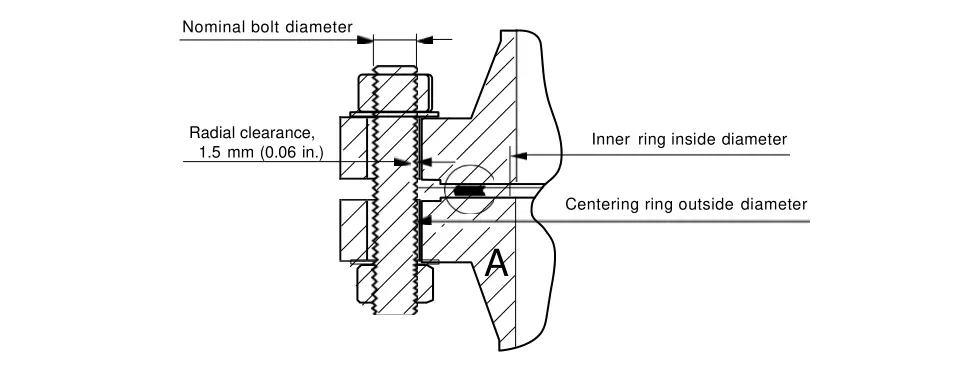
Based on internal and external ring configurations and structural forms, mainstream standardizedASME B16.20 Spiral Wound Gasket products are divided into four categories, each with exclusive application scenarios and performance characteristics.
1. Basic Type (D Type) Without Inner and Outer Rings
This pure winding structure consists only of alternating metal strips and flexible filler materials, with no auxiliary metal rings on the inner and outer sides. It features high flexibility and low compression resistance, suitable for tongue-and-groove and male-female flange connections with limited installation space. It is mostly used in low-pressure, normal-temperature industrial pipelines with stable operating conditions.
2. Outer Ring Type (DR Type) With Positioning Outer Ring
Equipped with a carbon steel or stainless steel outer centering ring on the basis of the basic winding body, this type realizes rapid positioning during installation and avoids excessive compression deformation of the gasket. The outer ring acts as a compression limiter to protect the core sealing structure. It is the most widely used type for raised face flanges in medium-pressure industrial systems.
3. Inner Ring Type (DI Type) With Protective Inner Ring
Added with an inner metal protective ring inside the winding body, this structure effectively prevents the gasket inner edge from being eroded by corrosive, high-speed flowing media, and avoids winding layer loosening. It is mandatory for high-pressure pipelines above Class 900 per standard requirements, improving the overall durability of the sealing system.
4. Double Ring Type (DRI Type) With Inner and Outer Rings
Integrating the advantages of inner and outer ring structures, this gasket has dual protection and precise positioning functions. It adapts to extreme working conditions of high temperature, high pressure, and strong corrosion, and is the preferred type for toxic, flammable, and high-risk medium pipelines. Its fully standardized design completely meets professional technical indicators for heavy-duty industrial sealing scenarios.
Main Filler Material Classification & Application Matching
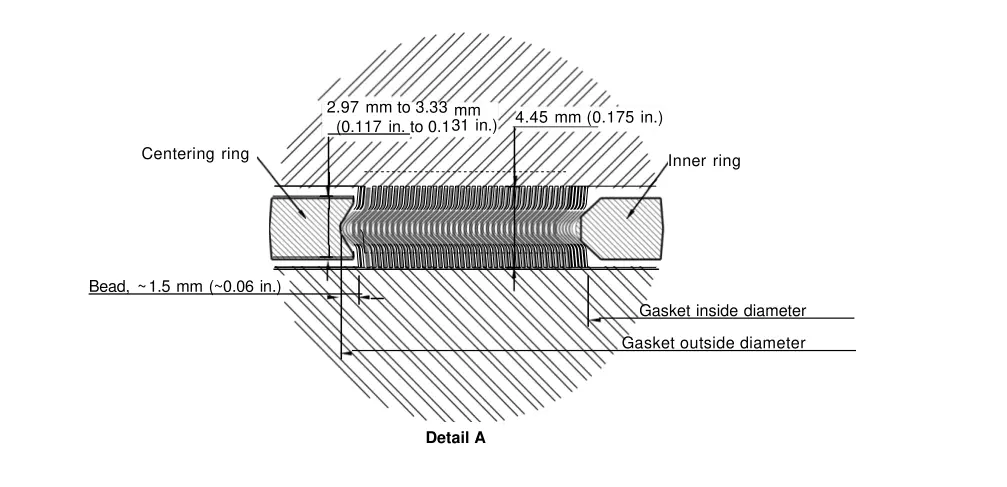
In addition to structural classification, ASME B16.20 Spiral Wound Gasket can also be classified according to filler materials, whose properties directly determine the gasket’s temperature resistance and corrosion resistance. Common fillers include flexible graphite, PTFE, and ceramic fiber. Graphite-filled gaskets suit high-temperature environments up to 870°C, while PTFE-filled ones are ideal for strong corrosive chemical media, covering most industrial working condition requirements.
FAQs
1. What is the core application scope of these standardized gaskets?
They are mainly used for sealing flange connections in industrial pipelines, pressure vessels, valves, and heat exchange equipment, covering conventional and high-risk working conditions in petrochemical, electric power, natural gas, and pharmaceutical industries.
2. How to select the correct gasket type?
The selection depends on flange type, pipeline pressure class, operating temperature, and medium characteristics. Low-pressure conventional flanges adopt outer ring type, while high-pressure and corrosive working conditions require double ring type with inner protection.
3. Do all types meet international standard specifications?
All products are manufactured in strict accordance with the corresponding industrial standards, with unified dimensional tolerances, material standards, and marking specifications, supporting global industrial equipment matching and engineering acceptance.
Contact QinSteel for Premium ASME B16.20 Spiral Wound Gasket Solutions
QinSteel is a professional manufacturer and supplier of standardized industrial sealing products, with mature production processes and strict quality inspection systems for all types of spiral wound gaskets. We can provide customized structural design, material matching, and size processing services according to customer engineering needs, and support batch customized production and global supply. For product parameters, quotation details, technical support, and sample testing services, please feel free to contact our professional team via email: info@sxqinsteel.com. We provide one-stop sealing solution support for industrial pipeline engineering projects worldwide.
References
[1] ASME B16.20-2017, Metallic Gaskets for Pipe Flanges[S]. The American Society of Mechanical Engineers, 2017.
[2] Industrial Flange Sealing Technology and Application Manual[M]. Mechanical Industry Press, 2021.
[3] Durlon Technical Specification for Spiral Wound Gaskets[R]. Durlon Industrial Sealing Research Institute, 2021.
Learn about our latest products and discounts through SMS or email