- English
- French
- German
- Portuguese
- Spanish
- Russian
- Japanese
- Korean
- Arabic
- Greek
- German
- Turkish
- Italian
- Danish
- Romanian
- Indonesian
- Czech
- Afrikaans
- Swedish
- Polish
- Basque
- Catalan
- Esperanto
- Hindi
- Lao
- Albanian
- Amharic
- Armenian
- Azerbaijani
- Belarusian
- Bengali
- Bosnian
- Bulgarian
- Cebuano
- Chichewa
- Corsican
- Croatian
- Dutch
- Estonian
- Filipino
- Finnish
- Frisian
- Galician
- Georgian
- Gujarati
- Haitian
- Hausa
- Hawaiian
- Hebrew
- Hmong
- Hungarian
- Icelandic
- Igbo
- Javanese
- Kannada
- Kazakh
- Khmer
- Kurdish
- Kyrgyz
- Latin
- Latvian
- Lithuanian
- Luxembou..
- Macedonian
- Malagasy
- Malay
- Malayalam
- Maltese
- Maori
- Marathi
- Mongolian
- Burmese
- Nepali
- Norwegian
- Pashto
- Persian
- Punjabi
- Serbian
- Sesotho
- Sinhala
- Slovak
- Slovenian
- Somali
- Samoan
- Scots Gaelic
- Shona
- Sindhi
- Sundanese
- Swahili
- Tajik
- Tamil
- Telugu
- Thai
- Ukrainian
- Urdu
- Uzbek
- Vietnamese
- Welsh
- Xhosa
- Yiddish
- Yoruba
- Zulu
Which Flange Standards Are Compatible with ASME B16.20 Gasket
Aug 7 2026
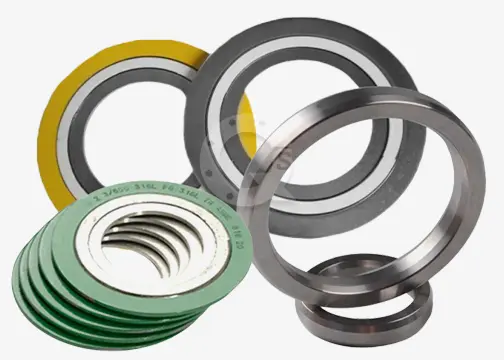
ASME B16.20 Gasket is a globally authoritative industrial specification that standardizes dimensional tolerance, structural design, material criteria and permanent marking requirements for all metallic flange sealing gaskets used in industrial piping systems. Serving as a critical sealing component for high-temperature, high-pressure and corrosive fluid pipelines, the precise compatibility between gaskets and mating flanges directly governs joint tightness, operational reliability and long-term system safety. In petrochemical processing, natural gas transmission, thermal power generation, offshore engineering and general fluid handling industries, mismatched flange and gasket combinations are a leading cause of joint leakage, unplanned equipment shutdowns and field safety risks. This article systematically sorts out all compatible flange standards, clarifies applicable service conditions, interprets key standard differences, and delivers professional selection and installation guidance for engineering designers, procurement specialists and on-site construction teams.
Overview and Core Application Scope of ASME B16.20 Standard
Developed and updated by the American Society of Mechanical Engineers, the ASME B16.20 standard exclusively regulates metallic sealing gaskets for carbon and stainless steel pipe flanges. It covers three mainstream industrial gasket types suitable for heavy-duty service: spiral-wound metallic gaskets, solid metal ring joint gaskets, and precision-machined grooved metal gaskets. A key technical note is that this standard only defines gasket-related parameters, including inner diameter, outer diameter, thickness, cross-section dimensions, tolerance ranges and identification rules, without specifying any flange dimensional data. All size specifications of ASME B16.20 Gasket are calibrated to match unified American flange standards, ensuring optimal sealing performance only when paired with qualified compatible flanges. Arbitrary cross-standard assembly often results in gasket misalignment, insufficient compression, uneven stress distribution and micro-gap leakage, severely compromising the overall safety and stability of piping systems.
Beyond dimensional specifications, the standard also establishes strict requirements for common gasket materials such as carbon steel, austenitic stainless steel, duplex stainless steel and high-alloy steel, along with standardized surface treatment and anti-corrosion measures. It applies to static flange sealing for industrial pipelines operating at temperatures from cryogenic levels up to 650℃ and pressure classes ranging from Class150 to Class2500, covering nearly all conventional and high-grade industrial piping service scenarios worldwide.
Fully Compatible Mainstream American Standard Flange Standards
ASME B16.5 Standard Flanges (NPS 1/2 – NPS 24)
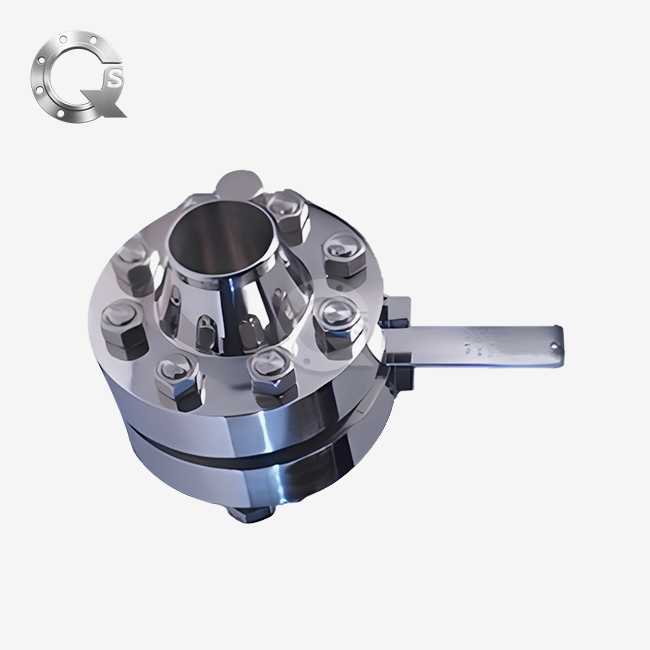
ASME B16.5 is the most universally applicable flange standard matched with ASME B16.20 Gasket, covering small and medium-sized pipe flanges and flanged fittings with nominal sizes from NPS 1/2 to NPS 24. This standard accommodates multiple pressure classes including Class150, Class300, Class600, Class900, Class1500 and Class2500, and supports three mainstream flange face types: Raised Face (RF), Flat Face (FF), and Ring Type Joint (RTJ). All spiral-wound and octagonal ring gaskets stipulated in the ASME B16.20 specification are precisely dimensioned for perfect fitting with ASME B16.5 flanges.
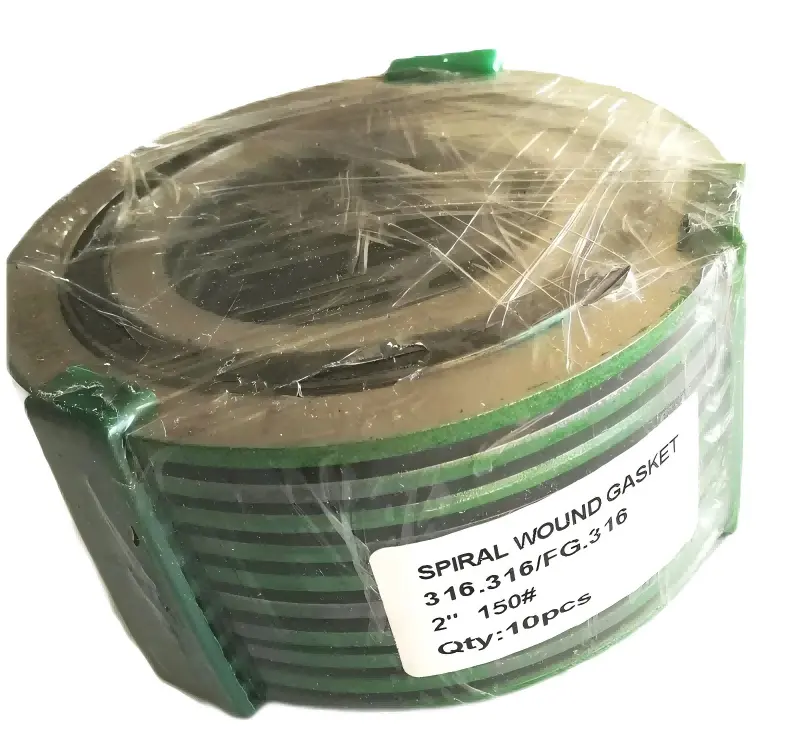
In practical industrial engineering, over 90% of conventional flange sealing systems adopt the matched combination of ASME B16.5 flanges and ASME B16.20 Gaskets. This classic matching solution features reliable sealing stability, mature installation procedures, convenient spare part procurement and low field maintenance costs, making it the dominant standard configuration for global industrial piping projects.
ASME B16.47 Standard Large-Diameter Flanges (NPS 26 – NPS 60)
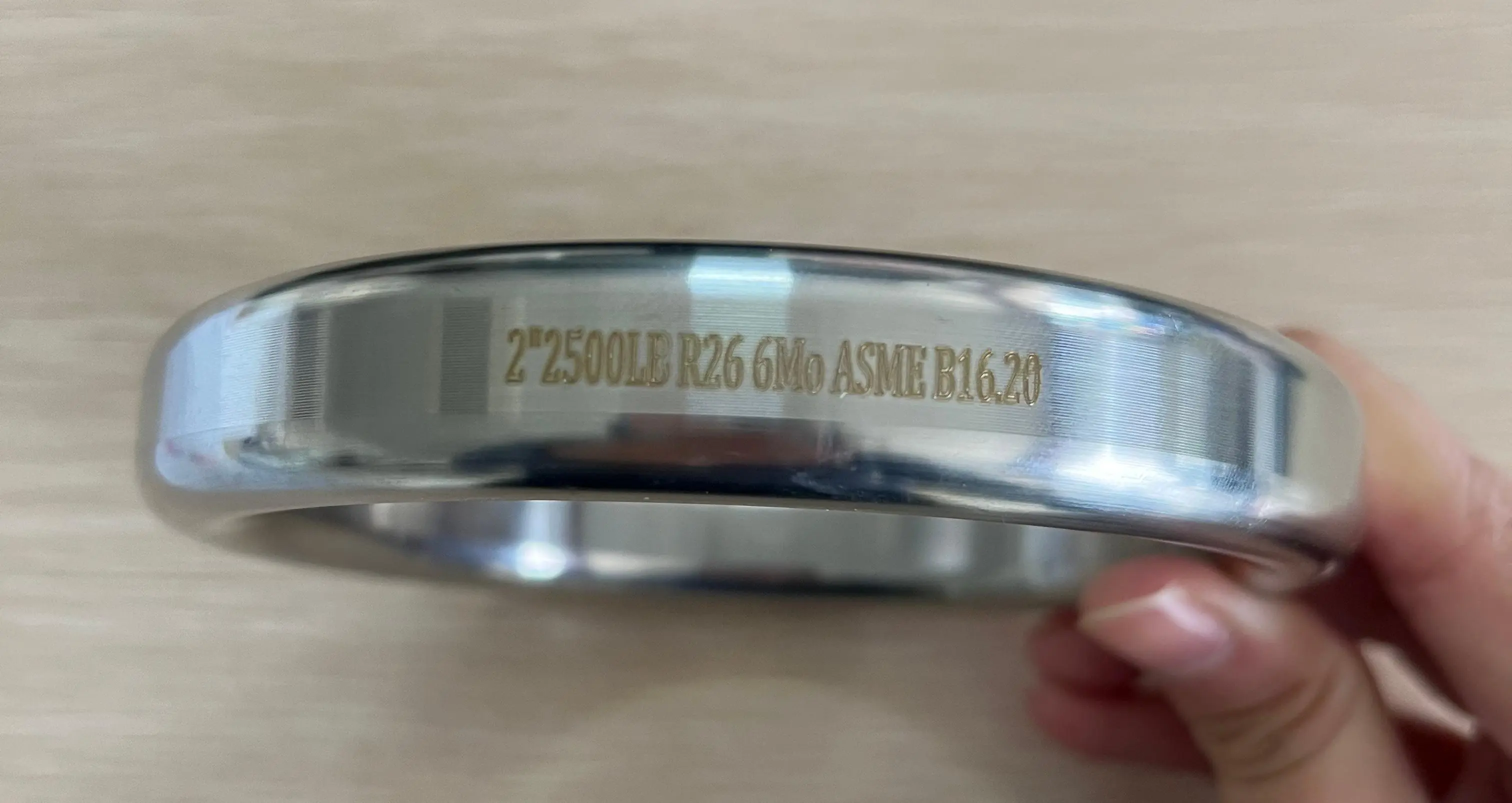
For large-diameter industrial pipelines with nominal sizes above NPS 24, ASME B16.47 replaces ASME B16.5 as the governing flange standard, and it fully supports customized large-size ASME B16.20 Gasket. This standard is divided into Series A and Series B, with distinct differences in flange outer diameter, bolt circle diameter, bolt hole quantity and overall thickness, even under identical nominal size and pressure class parameters.
Technical practitioners must strictly distinguish between Series A and Series B flanges during gasket selection to avoid dimensional mismatch and sealing failure. Large-size gaskets compliant with ASME B16.20 can perfectly adapt to RTJ and RF sealing surfaces of ASME B16.47 flanges, meeting high-strength sealing demands for large-caliber water delivery, crude oil transportation and natural gas trunk pipelines.
API 6A Wellhead Flange Standard
API 6A is the dedicated industry standard for oilfield wellhead and Christmas tree equipment, governing high-pressure and ultra-high-pressure flanges for petroleum exploration and production operations. Standard RTJ ring gaskets manufactured per ASME B16.20 are compatible with conventional API 6A flange sealing grooves, yet cross-use with BX-type specialized ring gaskets is prohibited. BX gaskets are exclusive supporting components for API 6BX high-pressure flanges and cannot be universally applied to conventional ASME-standard flanges.
In oilfield field construction, strict standard verification for gaskets and mating flanges is essential to prevent medium leakage under extreme downhole high-pressure conditions and maintain long-term safe and stable operation of wellhead facilities.
Incompatible Standard Types and Engineering Avoidance Guidelines
In international procurement and on-site engineering construction, cross-standard matching errors frequently occur between American-standard gaskets and European or Japanese-standard flanges. It is critical to clarify that ASME B16.20 Gasket is not compatible with DIN European standard flanges, JIS Japanese standard flanges or GB Chinese national standard flanges. These independent standard systems adopt completely different dimensional design logic, resulting in inconsistent sealing groove dimensions, flange sealing surface diameters and bolt positioning parameters.
Blind cross-standard assembly will lead to incomplete gasket fitting, localized compression deformation and medium leakage under operating pressure. For projects requiring connection of different standard flanges, custom non-standard gaskets or transition flange joints are mandatory, with all dimensional parameters fully verified by professional technical teams before on-site installation.
Professional Installation and Application Optimization Suggestions
Even with fully matched flange and gasket standards, non-standard installation operations will still trigger sealing failure. Before installing ASME B16.20 Gaskets, construction personnel must thoroughly inspect flange sealing surfaces to eliminate scratches, corrosion spots, rust and oil contaminants, ensuring a smooth, clean and qualified sealing base. During bolt tightening, symmetrical cross torquing procedures must be followed to achieve uniform gasket stress, avoiding local over-compression or insufficient compression that affects sealing performance.
Meanwhile, engineers shall select gasket materials scientifically based on actual service conditions: carbon steel gaskets for normal-temperature conventional media, stainless steel and duplex steel gaskets for high-temperature and corrosive environments, and high-alloy gaskets for ultra-high-pressure harsh working scenarios. This targeted selection strategy effectively extends the service life of flange joints and stabilizes long-term pipeline sealing performance.
FAQs
Q1: Can ASME B16.20 Gasket be used interchangeably for ASME B16.5 and ASME B16.47 flanges?
A1: Interchangeable use is not permitted. ASME B16.5 applies to small and medium-diameter flanges below NPS24, while ASME B16.47 is exclusively for large-diameter flanges above NPS26. The supporting gasket dimensions for the two standards are completely different and non-interchangeable. Users must select matched gaskets strictly according to the actual flange standard and nominal pipe size.
Q2: What is the difference between ASME B16.20 spiral wound gaskets and ring joint gaskets in application?
A2: Spiral wound gaskets specified by ASME B16.20 are widely used for medium and low-pressure RF flange sealing, featuring strong adaptability and cost-effectiveness for general industrial service. In contrast, ring joint gaskets are specialized for high-pressure RTJ flange connections, designed to withstand extreme high-temperature and high-pressure working conditions with superior sealing safety coefficients and operational stability.
Q3: Is on-site customized processing of ASME B16.20 Gaskets allowed?
A3: On-site arbitrary modification and processing are strongly not recommended. Custom cutting or processing will destroy the standard dimensional tolerance and structural integrity of qualified ASME B16.20 Gaskets, causing potential sealing failure risks. It is essential to purchase finished gaskets that fully comply with the official ASME B16.20 specification for engineering applications.
Q4: Do different pressure classes of flanges affect the selection of ASME B16.20 Gasket?
A4: Yes, pressure class is a core selection parameter. Flanges of different pressure grades feature distinct sealing groove depths and compression stroke ranges. To ensure matched compression volume and stable sealing performance, ASME B16.20 Gasket must be selected strictly in accordance with the flange’s rated pressure class.
Contact QinSteel for Expert ASME B16.20 Gasket Solutions
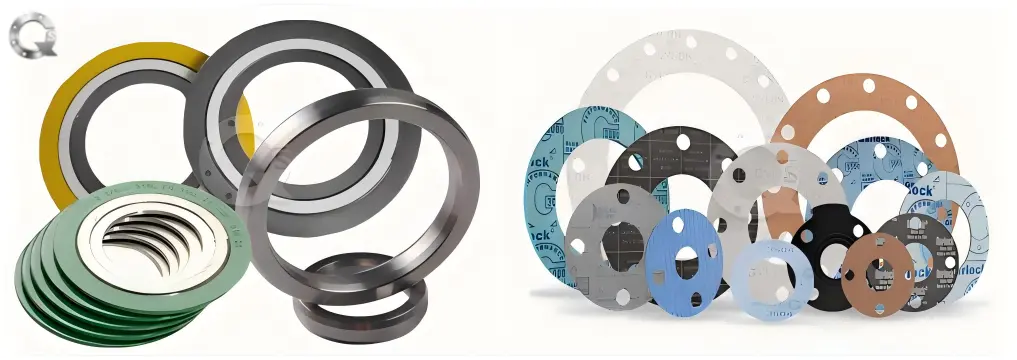
As a professional manufacturer and global supplier of American-standard flanges, gaskets and pipeline accessories, QinSteel boasts extensive technical experience in standard matching verification, product model selection, custom processing and engineering supporting services for industrial sealing products. We supply full-range standard-compliant ASME B16.20 Gasket products, accompanied by complete material test certificates, dimensional inspection reports and professional after-sales technical support for global industrial clients. For product consultation, precise quotation, standard compatibility verification or customized sealing solution demands, please submit your detailed project parameters and technical drawings to our official email: info@sxqinsteel.com. Our professional technical team will provide rapid responses and tailor-made one-stop piping sealing solutions for your projects.
References
1. ASME B16.20-2023, Metallic Gaskets for Pipe Flanges: Ring-Joint, Spiral-Wound, and Grooved, American Society of Mechanical Engineers
2. ASME B16.5-2020, Pipe Flanges and Flanged Fittings (NPS 1⁄2 through NPS 24 Metric/Inch Standard)
3. ASME B16.47-2017, Large Diameter Steel Flanges (NPS 26 through NPS 60)
4. API 6A-2022, Specification for Wellhead and Christmas Tree Equipment, American Petroleum Institute
5. ASME PCC-1-2021, Guidelines for Pressure Boundary Bolted Flange Joint Assembly
Learn about our latest products and discounts through SMS or email