- English
- French
- German
- Portuguese
- Spanish
- Russian
- Japanese
- Korean
- Arabic
- Greek
- German
- Turkish
- Italian
- Danish
- Romanian
- Indonesian
- Czech
- Afrikaans
- Swedish
- Polish
- Basque
- Catalan
- Esperanto
- Hindi
- Lao
- Albanian
- Amharic
- Armenian
- Azerbaijani
- Belarusian
- Bengali
- Bosnian
- Bulgarian
- Cebuano
- Chichewa
- Corsican
- Croatian
- Dutch
- Estonian
- Filipino
- Finnish
- Frisian
- Galician
- Georgian
- Gujarati
- Haitian
- Hausa
- Hawaiian
- Hebrew
- Hmong
- Hungarian
- Icelandic
- Igbo
- Javanese
- Kannada
- Kazakh
- Khmer
- Kurdish
- Kyrgyz
- Latin
- Latvian
- Lithuanian
- Luxembou..
- Macedonian
- Malagasy
- Malay
- Malayalam
- Maltese
- Maori
- Marathi
- Mongolian
- Burmese
- Nepali
- Norwegian
- Pashto
- Persian
- Punjabi
- Serbian
- Sesotho
- Sinhala
- Slovak
- Slovenian
- Somali
- Samoan
- Scots Gaelic
- Shona
- Sindhi
- Sundanese
- Swahili
- Tajik
- Tamil
- Telugu
- Thai
- Ukrainian
- Urdu
- Uzbek
- Vietnamese
- Welsh
- Xhosa
- Yiddish
- Yoruba
- Zulu
SANS 1123 Flanges on Mining Slurry and Pump Lines
Oct 9 2026
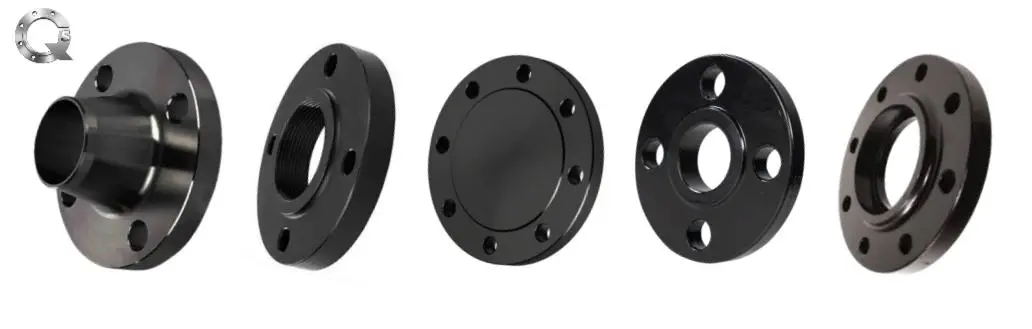
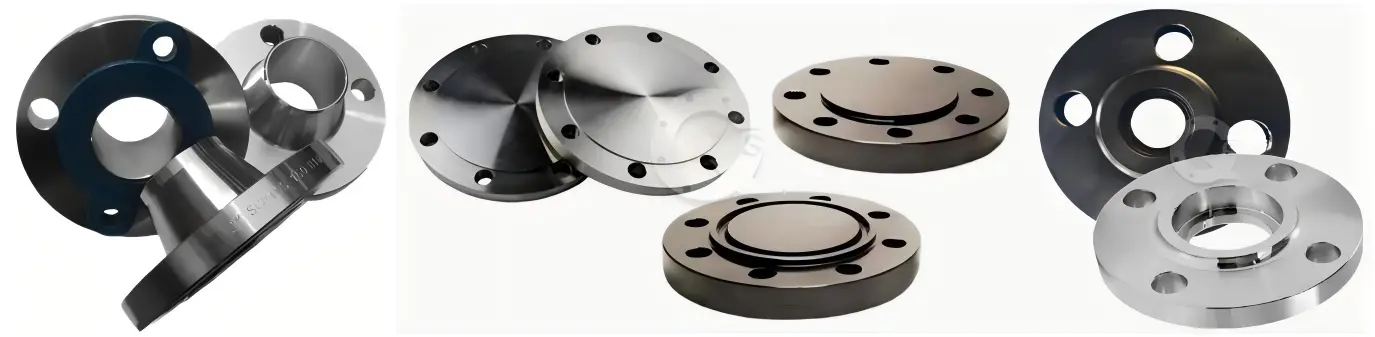
A SANS 1123 Flange on a slurry line lives a harder life than its pressure rating suggests. The fluid is abrasive, the pump cycles constantly, the pipe is often changed out section by section and the joint is broken and remade far more often than on a process line in a building. Mining customers in South Africa order these flanges in large numbers, and what they need from a supplier is different from what a plant engineering department needs.
What Mining Service Does to a Bolted Joint
Three things wear a flange joint in mining service. The first is abrasion at the bore, where the slurry scours the inside face and the first few millimetres of the flange face. The second is vibration transmitted from the pump and the pipeline, which works bolts loose over weeks rather than hours. The third is the sheer number of assembly and disassembly cycles on a line that is repaired in sections. SANS 1123 Flange joints in mining service fail from abrasion, vibration and repeated assembly far more often than they fail from pressure.
None of those three is a pressure problem, and yet all three cause leaks that get attributed to the pressure rating. A joint that is correctly rated for the line can still fail on a mining site because it was never designed for being taken apart twice a month in a muddy trench.
Abrasion Rather Than Pressure Drives the Choice
On the discharge of a mill or a cyclone feed pump, the abrasive wear at the bore is far more aggressive than the pressure duty. That is why slurry lines are often built to a heavier table than the pressure alone would need: the extra thickness at the bore and at the face buys service life, not strength. Slurry lines are often built to a heavier table than the pressure needs, because a SANS 1123 Flange with more metal at the bore and the face lasts longer.
The face is the part most often overlooked. A raised face that has been scoured flat will not seal against a new gasket, and the flange is then replaced long before its pressure capability has been used. Choosing a heavier table makes the face thicker and therefore longer lived under the same scouring. A face that has been scoured becomes the limit on the joint rather than the plate thickness, and it is worth measuring the remaining face depth at every replacement so that the wear rate is known rather than guessed.
Pump Suction and Discharge Flanges
Suction and discharge flanges on a slurry pump are not the same joint and should not be specified as though they were. The suction side sees a pressure close to atmospheric and is the place where air entrainment causes problems, while the discharge side sees the full pump head plus surge every time the pump stops or a valve moves. Suction and discharge flanges on a slurry pump are different joints, and a heavier SANS 1123 Flange on the discharge side reflects the surge rather than the head.
It is common practice to use a heavier table on the discharge than on the suction for this reason, and to use a longer radius fitting on the suction to keep the flow even. Both decisions appear on the drawing as a flange specification, and both belong on it rather than in somebody's memory of how the last installation was done.
Slurry Lines, Wear Spools and Section Replacement
A slurry line is normally built in sections with a wear spool or a wear plate at the point of greatest impingement. Those sections are replaced on a schedule, and every replacement means two flange joints opened and re-made. Over the life of a line that adds up to a great deal of assembly work on the same flanges. A line replaced in sections opens two flanges at every wear spool, so a SANS 1123 Flange on slurry duty is assembled far more often than one on a process line.
That pattern favours flanges with heavy machined faces and a bolt pattern that survives repeated torquing. It also favours standardisation: a mine that uses one table and one bolt size across the plant can hold studs, gaskets and flanges as a single line item rather than as a library of parts that only fits one pump.
Materials and Coating Underground
Underground and in wet plant areas, corrosion adds to the abrasion. Carbon steel flanges are usually protected with a coating, and where the joint is in a wet sump or a return water line, galvanizing is not enough on its own because the coating is damaged every time the joint is opened. Coating protects a SANS 1123 Flange from corrosion underground, but the coating is damaged every time the joint is opened and cannot be relied on alone.
For highly abrasive and corrosive duty, some sections are supplied in a wear resistant material or with a hardened insert at the bore. That is a specialist decision and it should be made alongside the flange specification rather than after it, because an insert changes the face geometry and therefore the gasket that has to be used. Where an insert is used, the gasket has to suit the insert material as well as the flange, and the two are usually supplied together so that the pair is known to match before the joint is assembled.
Maintenance Practice That Extends Joint Life
Re-torquing after the first hours of running is the single most effective maintenance habit on a slurry line, because vibration loosens bolts fastest in the first shift. A second check after a week catches what the first one missed, and after that the joint is usually stable until it is opened. Re-torquing after the first shift and fitting a new gasket every time is what keeps a SANS 1123 Flange joint dry on an abrasive line.
New gaskets at every reassembly are not negotiable on abrasive service, because a gasket that has been compressed against a scoured face will not seal a second time. Supplying gaskets in the same quantities as flanges rather than as an afterthought is what makes that practice possible on site, where the alternative is reusing whatever is in the crib.
Bolting, Gaskets and Joint Fit-Up
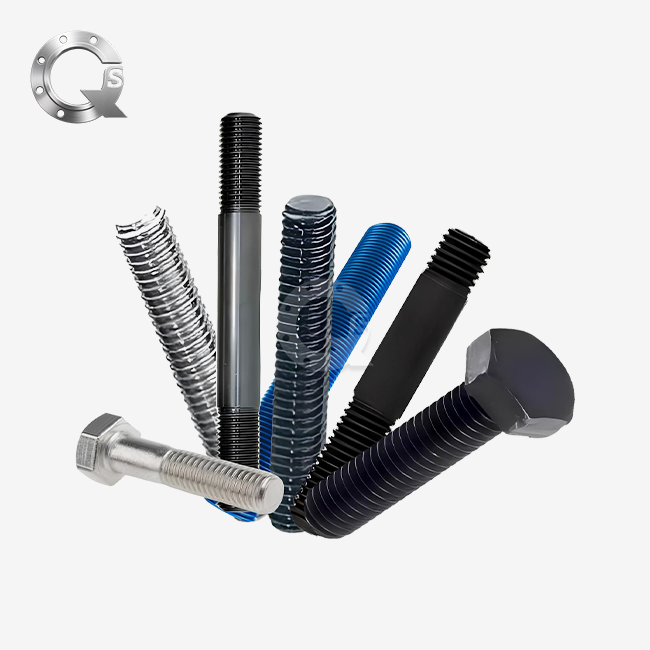
We supply the gasket with the flange on mining orders, because a joint opened twice a month needs a new gasket each time and the store should not have to order them separately.
Certification, Traceability and Goods-In Checks
Certificates name the table, the size and the heat, which matters where a mine has to show traceability for equipment going underground.
Packing, Coating and Export Logistics
Flange faces are protected for transport and crated by size, since a scoured or knocked face on a new flange is the sort of defect that gets blamed on the supplier months later.
Stock, Repeat Orders and Phased Release
For mines running a scheduled replacement programme we will hold stock and release against the planned dates rather than shipping everything at once into a store that has no room.
How We Confirm the Specification Before We Cut
Before quoting we ask whether the line is suction or discharge, what the solids are and how often the section is changed, because those answers move the table choice more than the pressure figure does.
Notes From Slurry Line Work
Two details come back from customers running abrasive duty. The first is that the studs should be replaced when the flange is replaced rather than reused, because threads that have been in a wet trench for a season are the reason a torque figure stops meaning anything. The second is that a gasket cut slightly oversized at the bore wears longer, since the scouring starts at the edge.
Neither detail is in a standard, and both come from people who maintain these lines for a living. They are worth passing on because they cost almost nothing to apply and they change how often a joint has to be opened on a line nobody wants to visit twice.
Why Choose Xi'an QinSteel for SANS 1123 Flange Supply
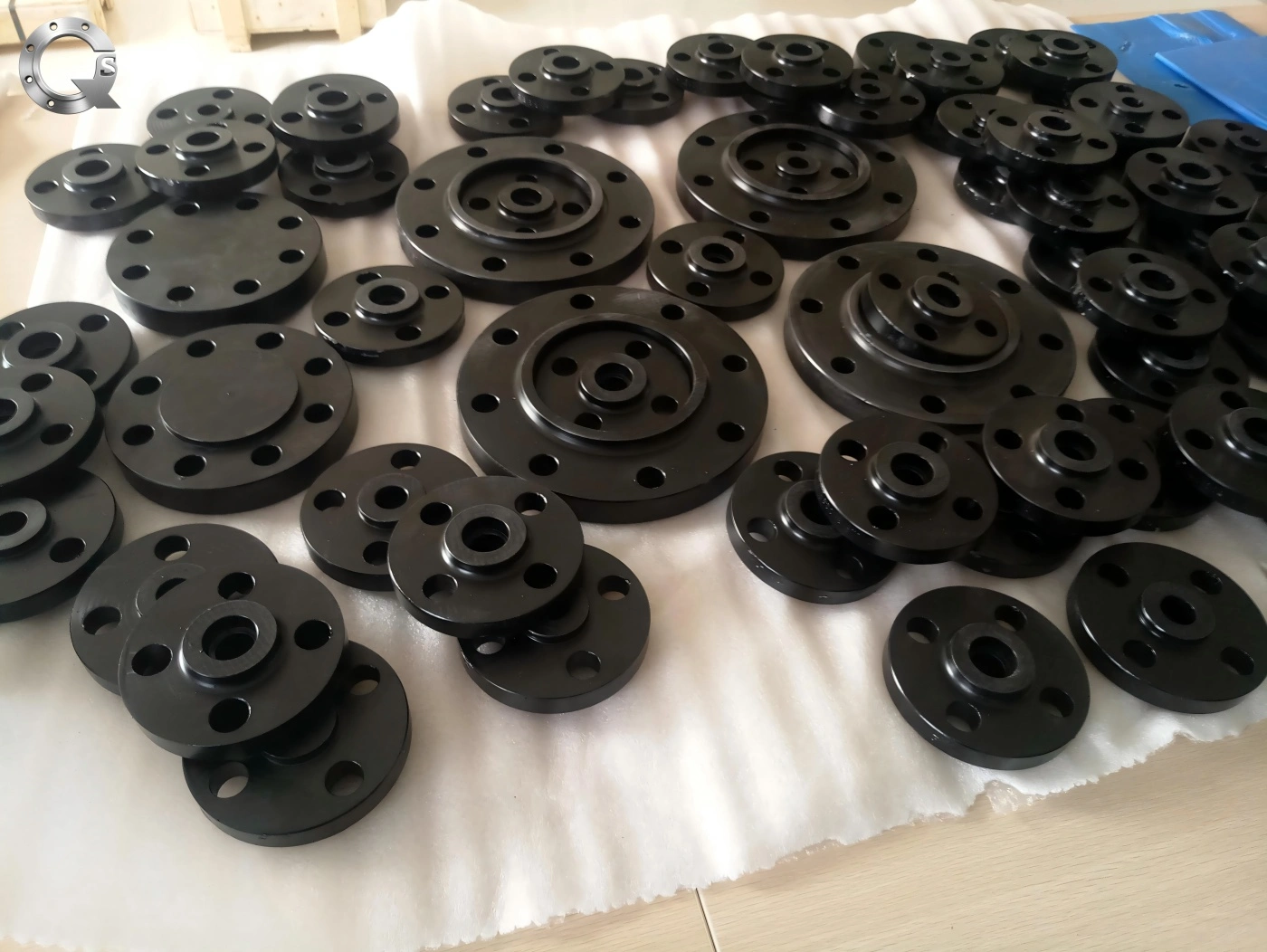
We ask whether a flange is going on the suction or the discharge side of a slurry pump, because the two joints see completely different loads and are not the same purchase even in the same size. A suction flange and a discharge flange in the same size are two different products, and treating them as one is the commonest mistake we are asked to correct on a slurry line.
We supply the gasket and the studs with the flange on mining work, since a line opened twice a month consumes both and a store that has to order them separately simply reuses them instead. The parts that fail on a slurry line are the consumables rather than the flange, so they should be ordered as consumables and not as once a year spares.
We will recommend a heavier table for a wear section even when the pressure does not require it, because face life rather than strength is what decides how long a joint lasts on abrasive duty. Write to info@sxqinsteel.com or open www.sxqsteel.com with the duty. Extra thickness at the face is the cheapest wear allowance available on a line that is scoured every working day of its life.
| Duty | Pressure concern | Wear concern | Usual response |
|---|---|---|---|
| Pump suction | Low | Air entrainment at the joint | Heavier table, long radius fitting |
| Pump discharge | High, with surge | Scouring at the bore | Heaviest table on the line |
| Cyclone feed | Moderate | Severe abrasion | Wear spool with hardened bore |
| Tailings transfer | Moderate | Moderate, long runs | Standard table with good coating |
| Return water | Low | Corrosion plus abrasion | Coated, gasket replaced each opening |
| Mill discharge | Moderate | Very severe | Wear resistant insert considered |
Frequently Asked Questions
1.Should a slurry line use a heavier table than the pressure requires?
Often yes, because the wear at the bore and the face is what limits the life of the joint. The extra thickness buys service interval rather than strength, and on an abrasive line that is usually the better return on the money.
2.Can I reuse studs when I replace a flange?
On abrasive service we advise against it. Threads exposed to wet slurry lose their fit and a torque figure applied to a worn thread does not produce the load it is supposed to, so the joint is loose before the pump starts.
3.What gasket suits a slurry line?
A material that resists the chemical component and has enough resilience for the vibration, usually a compressed sheet or a spiral wound type rather than an elastomer that will take a set. We will recommend one once we know the solids and the pH.
Contact Xi'an QinSteel for SANS 1123 Flange Solutions
Tell us the duty, the table and the solids at info@sxqinsteel.com and we will quote SANS 1123 Flange supply with gaskets and studs to match. Mining duty notes are at www.sxqsteel.com.
References
- SANS 1123 - Steel pipe flanges.
- SANS 1431 - Carbon steel plates for pressure vessels.
- EN 1092-1 - Flanges and their joints, circular flanges for pipes, valves, fittings and accessories, PN designated.
- BS 4504 Section 3.1 - Circular flanges for pipes, valves and fittings, steel flanges.
- ASME B16.5 - Pipe flanges and flanged fittings, NPS 1/2 through NPS 24.
- ASME B31.3 - Process piping.
- EN 10204 - Metallic products, types of inspection documents.
Learn about our latest products and discounts through SMS or email