- English
- French
- German
- Portuguese
- Spanish
- Russian
- Japanese
- Korean
- Arabic
- Greek
- German
- Turkish
- Italian
- Danish
- Romanian
- Indonesian
- Czech
- Afrikaans
- Swedish
- Polish
- Basque
- Catalan
- Esperanto
- Hindi
- Lao
- Albanian
- Amharic
- Armenian
- Azerbaijani
- Belarusian
- Bengali
- Bosnian
- Bulgarian
- Cebuano
- Chichewa
- Corsican
- Croatian
- Dutch
- Estonian
- Filipino
- Finnish
- Frisian
- Galician
- Georgian
- Gujarati
- Haitian
- Hausa
- Hawaiian
- Hebrew
- Hmong
- Hungarian
- Icelandic
- Igbo
- Javanese
- Kannada
- Kazakh
- Khmer
- Kurdish
- Kyrgyz
- Latin
- Latvian
- Lithuanian
- Luxembou..
- Macedonian
- Malagasy
- Malay
- Malayalam
- Maltese
- Maori
- Marathi
- Mongolian
- Burmese
- Nepali
- Norwegian
- Pashto
- Persian
- Punjabi
- Serbian
- Sesotho
- Sinhala
- Slovak
- Slovenian
- Somali
- Samoan
- Scots Gaelic
- Shona
- Sindhi
- Sundanese
- Swahili
- Tajik
- Tamil
- Telugu
- Thai
- Ukrainian
- Urdu
- Uzbek
- Vietnamese
- Welsh
- Xhosa
- Yiddish
- Yoruba
- Zulu
Flange Slip On ANSI B16.5 Compared With Weld Neck and Socket Weld
Oct 9 2026
The choice between a Flange Slip On ANSI B16.5, a weld neck and a socket weld flange is made on most projects by a specification that was written years ago, and it is rarely revisited. That is a pity, because the three patterns fail in different ways and cost different amounts, and the right answer depends on the service rather than on habit. Here is how we compare them when a customer asks, using the three questions that actually decide the outcome.
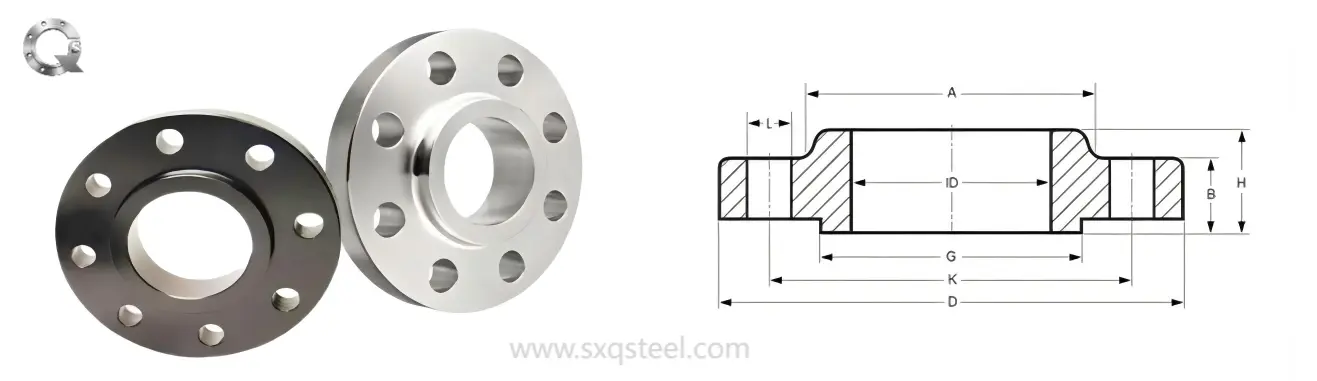
How the Three Joints Are Made
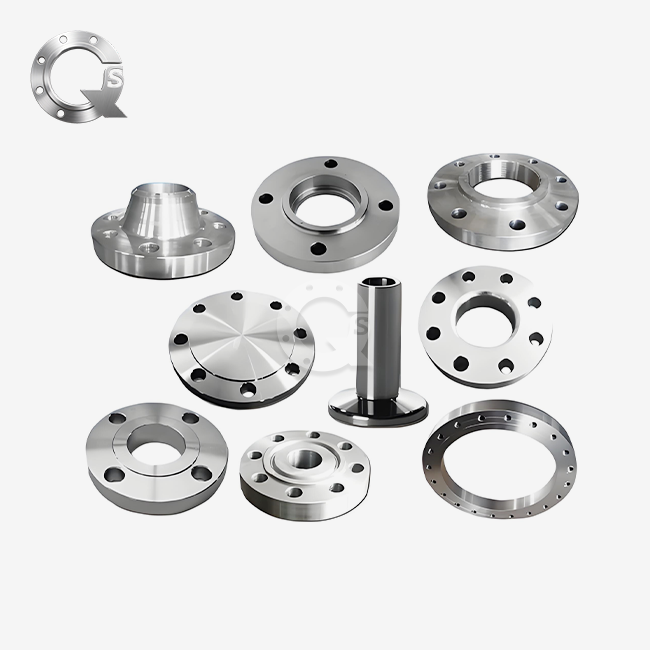
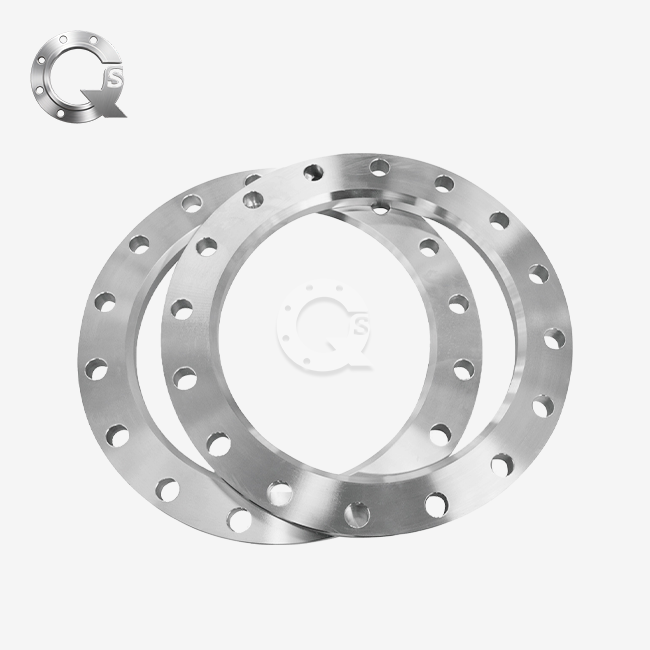
A slip-on flange slides over the pipe and is joined with one or two fillet welds. A socket weld flange receives the pipe into a recess and is welded with a single fillet around the outside of the socket, with the pipe expanded or the bore sized so the pipe stops against a shoulder. A weld neck flange butts against the pipe end and is joined with a full penetration butt weld, so the flange hub and the pipe form a continuous transition. A Flange Slip On ANSI B16.5 is welded with fillets, a weld neck with a butt weld and a socket weld with a single fillet inside a recess, and the geometry decides the rest.
The geometry decides almost everything else. A fillet weld has a stress concentration at its toe; a butt weld can be ground flush and inspected volumetrically. A socket confines the pipe and gives good alignment on small sizes; a slip-on leaves the pipe free to move and requires the flange to be set square by the fitter.
Strength, Fatigue and Where Each One Wins
For static pressure the three patterns are all adequate within their ratings, and the difference shows up under cyclic loading. A weld neck is the strongest of the three in fatigue because the butt weld produces a smooth transition and can be inspected. A slip-on is next, with its hub carrying the bending but its fillet weld concentrating stress. A socket weld is comparable to a slip-on in strength but suffers from a different problem entirely. Under cyclic loading a Flange Slip On ANSI B16.5 is less durable than a weld neck, because the fillet concentrates stress at the point where the hub meets the pipe.
That problem is the gap at the bottom of the socket. If the pipe is pushed hard against the shoulder before welding, the weld shrinks and leaves a gap that becomes a crack initiation site; if it is left clear, the pipe can vibrate. The usual advice is to leave a small gap, and that gap then becomes a crevice that traps fluid.
Cost, Lead Time and Fabrication Effort
A slip-on flange is the cheapest of the three to buy, and the weld is the quickest to make. A socket weld flange costs slightly more and needs careful fit-up but is convenient on small bore pipe. A weld neck costs the most as a part and the most in welding time, because it needs a qualified butt weld procedure, proper alignment and, often, volumetric inspection. A Flange Slip On ANSI B16.5 is the cheapest of the three patterns and the quickest to weld, which is why it appears in such numbers on utility work.
The whole life cost is not always what the purchase price suggests. On a line where the joint will be opened and remade repeatedly, or where the pipe is thin and the fillet leg has to be carefully controlled, the slip-on can take longer than expected. On a line that is welded once and never touched, the slip-on is faster in every respect.
Sizing, Alignment and Site Convenience
The slip-on has one genuine advantage that no other pattern matches: the flange can be rotated on the pipe to align its bolt holes with the mating flange, and it can be moved along the pipe to set the face position. On a spool that has to be offered up between two fixed connections, that freedom removes the need for a precisely fabricated length. The freedom to rotate a Flange Slip On ANSI B16.5 on the pipe is an advantage no other pattern offers, and it saves hours on a spool offered up between fixed flanges.
A weld neck has none of that freedom. Its length is fixed, so the pipe has to be cut to a dimension and the flange cannot be rotated once the joint is tacked. A socket weld flange is fixed in position once the pipe is bottomed in the socket, which is why socket welds are usually made in a shop on small bore assemblies rather than on site.
Choosing for a Specific Line
Three questions settle it in most cases. Is there significant cycling in the service. Is the line large enough or important enough to need volumetric inspection. Is the pipe wall thick relative to the bore. A yes to any of those points to a weld neck. Three noes, and the slip-on is the better answer on both cost and speed. Cyclic service, volumetric inspection and heavy wall pipe all point away from a Flange Slip On ANSI B16.5 and towards a weld neck.
There is also a practical rule about size. Welded pipe in small bore sizes is often socket welded because a butt weld becomes difficult to make well below about DN 40, while slip-on flanges are awkward below the same size because the inner weld cannot be reached. On small bore work, the choice is usually between socket weld and a threaded pattern.
Specifying the Choice So It Lasts
The specification should state the pattern for each service rather than a single rule for the whole plant, and it should say why. A line that reads slip-on flanges are acceptable below class 300 will be applied to a pump discharge sooner or later, and the note explaining the exception is what prevents that. Writing the reason into the specification is what stops a Flange Slip On ANSI B16.5 allowance being applied to a line where it was never intended.
Where a plant has standardised on one pattern for stores reasons, that is a legitimate decision and it should be written down as such. What is not legitimate is a specification that uses a conservative pattern everywhere without saying so, because the cost of the conservatism is then invisible and the first person to notice it will remove it on a line where it was needed.
Bolting, Gaskets and Joint Fit-Up
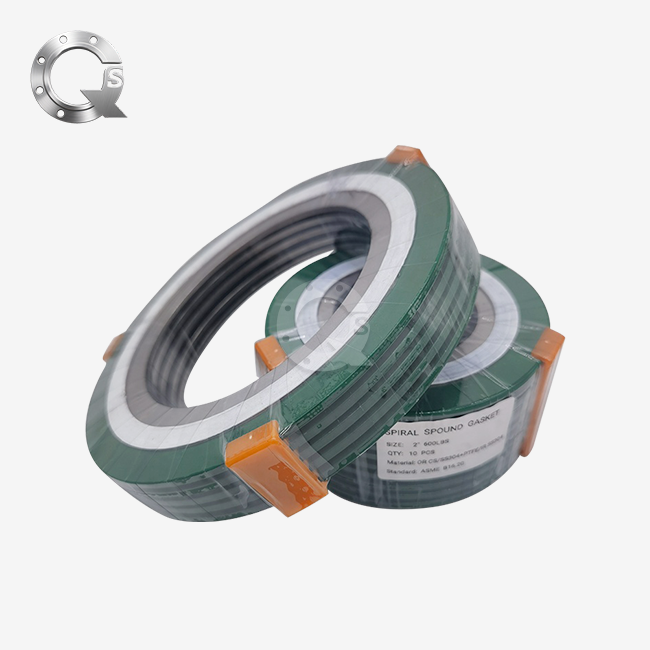
We quote the matching bolting and gasket with whichever pattern is chosen, because the flange thickness differs between patterns in the same class and the stud length follows it.
Certification, Traceability and Goods-In Checks
Certificates name the pattern as well as the class and the size, so there is no doubt at goods in about which of the three was delivered.
Packing, Coating and Export Logistics
Patterns are packed separately by type, since a slip-on and a weld neck in the same size and class are easy to confuse when they arrive loose on the same pallet.
Stock, Repeat Orders and Phased Release
A plant standardised on one pattern gets a stock holding in its own sizes, and we will hold a second pattern alongside during a change of specification.
How We Confirm the Specification Before We Cut
Before quoting we ask what the line does rather than only what it is, because cycling and inspection requirements choose between the patterns more often than pressure does.
The Three Questions Worth Asking
Does the service cycle more than a few times a day. Will the joint need volumetric inspection. Is the wall thickness high relative to the bore. Those three questions separate the patterns on almost every line we are asked about, and they can be answered from the line list in a couple of minutes.
If the answer to all three is no, a slip-on flange is usually the right and cheaper answer. If any one of them is yes, a weld neck is worth the extra cost, and the extra cost is smaller than the cost of cutting out a failed joint from a line that is already insulated and in service.
Why Choose Xi'an QinSteel for Flange Slip On ANSI B16.5 Supply
We ask what the line does rather than only what it is, because cycling and inspection requirements choose between flange patterns more often than the pressure rating does. The line list answers the question in two minutes, and getting it wrong costs a shutdown rather than an extra line on a purchase order that nobody queried at the time.
We quote the gasket and the stud length with the flange, since the three patterns differ in thickness in the same class and the fastener has to follow the assembled dimension. A fastener that arrives the correct length is the difference between a joint going together on site and a site modification carried out with a hacksaw and a file.
We will recommend a weld neck when the duty calls for one even though a slip-on is a quicker sale for us, because the customer who has to cut a joint out of an insulated line will not order from us again. Write to info@sxqinsteel.com or open www.sxqsteel.com. A recommendation made against our own short term interest is the cheapest form of customer retention there is, and it is the kind that customers tend to remember.
| Feature | Slip-on | Socket weld | Weld neck |
|---|---|---|---|
| Weld type | One or two fillets | One external fillet | Full penetration butt weld |
| Fatigue resistance | Moderate | Moderate | Highest |
| Volumetric inspection | Not possible | Not possible | Possible |
| Alignment freedom | Rotates and slides | Fixed once bottomed | Fixed length |
| Relative cost | Lowest | Low | Highest |
| Small bore suitability | Poor below DN 40 | Good | Good with skill |
| Crevice at the joint | Between pipe and bore | At the socket root | None |
Frequently Asked Questions
1.Why not use weld neck flanges everywhere?
Cost and fabrication time. A weld neck needs a qualified butt weld, careful alignment and usually some inspection, and on a low pressure utility line all of that is effort spent on a joint that will never be challenged. Using the simpler pattern where it is adequate is good engineering, not a shortcut.
2.Is a socket weld stronger than a slip-on?
They are broadly comparable for static pressure. The socket weld is weaker in a different way, because the gap at the root of the socket acts as a crack starter under vibration. Neither pattern matches a weld neck in cyclic service.
3.Can I mix patterns on the same line?
Yes, and it is common. The joint at each flange has to match its mating flange, but the pattern behind it is a fabrication choice. Most plants standardise broadly and make exceptions at pump discharges and other loaded connections.
Contact Xi'an QinSteel for Flange Slip On ANSI B16.5 Solutions
Tell us the service and the class at info@sxqinsteel.com and we will say whether a Flange Slip On ANSI B16.5 or a weld neck suits the line. Comparison notes are at www.sxqsteel.com.
References
1.ASME B16.5 - Pipe flanges and flanged fittings, NPS 1/2 through NPS 24.
2.ASME B16.47 - Large diameter steel flanges, NPS 26 through NPS 60.
3.ASME B31.3 - Process piping, including the welding requirements for slip-on flanges.
4.ASME BPVC Section II Part D - Properties, including pressure temperature ratings.
5.ASME PCC-1 - Guidelines for pressure boundary bolted flange joint assembly.
6.ASTM A105 / A105M - Carbon steel forgings for piping applications.
7.ASTM A182 / A182M - Forged or rolled alloy and stainless steel pipe flanges.
8.EN 10204 - Metallic products, types of inspection documents.
Learn about our latest products and discounts through SMS or email