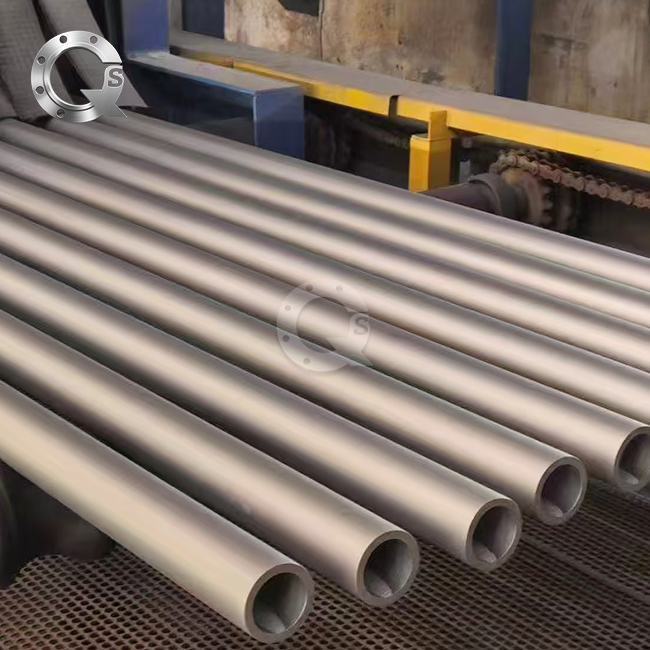
It is very important to make sure that industrial processes are safe, efficient, and long-lasting by choosing the right high-temperature carbon steel seamless pipe. Some of the most important things to think about are how well it resists heat, how thick the wall is, what the material grade is, and whether it meets the standards of the industry. For pipelines that carry fluids at more than 300℃, it is important to choose carbon steel seamless pipes that can handle high temperatures, such as the A335 P11 alloyed carbon steel pipe. No matter how hot it gets, these pipes will keep their shape and continue to work well. Because of this, they are great for chemical processing plants, oil companies, and power plants.
Understanding High-Temperature Carbon Steel Seamless Pipes
Composition and Properties of High-Temperature Carbon Steel
To increase their heat protection and mechanical properties, high temperature carbon steel seamless pipe is made with certain metals. These pipes are usually made of chromium and molybdenum. These metals help keep the lines from getting damaged at high temperatures. Adding these things helps keep strength at high temperatures, stop creep, and make stable carbides.
In these pipes, the carbon level is carefully controlled to find the right balance between strength and ductility. For making and installing pipes, it is important that adding more carbon generally makes things stronger but less ductile. The best makeup balances these qualities so that the pipe can stand both high temperatures and the stress of being used in industry.
Advantages of Seamless Pipes in High-Temperature Applications
Seamless pipes are better than soldered pipes in many ways when it is hot. Longitudinal welding could make some spots weaker that would fail if they got very hot or under a lot of pressure. These spots go away if you don't use this kind of welding. This structure with an even-based form is stronger and better able to handle heat stress. Also, seamless lines tend to have a more consistent wall thickness, which is important for maintaining thermal efficiency and pressure ratings in high-temperature activities.
The seamless structure lowers the risk of mistakes that could cause leaks or fails. This means the pipes can be used more safely for important industry tasks. Seamless lines are more cost-effective in the long run because they are more stable and don't need to be repaired as often, even though they are more expensive upfront. Because of this, they are a good fit for pipes that carry very hot materials.
Common Applications in Industry
A lot of businesses use a lot of high-temperature carbon steel seamless pipes. In the oil and gas industry, they are very important to processing processes, especially in cracking units and distillation columns that work at high temperatures. They use these pipes for steam lines and heat exchanges in power plants. The pipes have to handle very high temperatures and pressures.
In the chemical processing industry, these pipes are used in boilers and process lines that handle hot, toxic materials. For many different purposes, including making ethylene and propylene, the petroleum business also depends on high temperature carbon steel seamless pipe. These industrial uses depend on them because they can keep their shape even in very harsh situations.
Key Factors in Selecting Carbon Steel Seamless Pipes for High-Temperature Use
Temperature Resistance and Material Grade
When you pick carbon steel seamless pipes to use at high temperatures, the first thing you should check is how well the pipe can take heat. It relies on the grade of carbon steel to know the highest temperature at which it can work. For instance, both A335 P11 and A335 P22 carbon steel pipes can be used at temperatures above 650℃, but A335 P22 can handle even hotter temperatures.
It's very important to pick a material grade that not only meets but also passes the highest temperature your pipeline can handle. This guarantees additional space for safety, and the pipe has a longer lifespan. Consider both the constant temperature and the possibility of sudden changes in temperature that could happen while it is in use. Always check maker specifications and material property charts to be sure the grade you choose will work for your temperature needs.
Pressure Ratings and Wall Thickness
In pipes that carry hot liquids, the temperature has a big effect on the pressure number. As the temperature rises, the pressure that is usually fine goes down. So, when picking pipe specifications, both of these things need to be kept in mind. To find out how much pressure the pipe can take at high temperatures, you need to know how thick its wall is.
The internal pressure, pipe width, and maximum stress that can happen at the temperature it will be used should all be taken into account to find out how thick a wall needs to be. Industry standards like ASME B31.3 guide these numbers. It's generally best to choose a pipe with thicker walls than the absolute minimum, since they could rust or wear away over time.
Compliance with Industry Standards and Certifications
It is important to be sure that high-temperature carbon steel seamless pipes meet the right industry standards when you pick them out. ASTM A335 is an example of a standard that tells you how to test seamless ferritic alloy-steel pipes that are used in high-temperature situations and how to make sure they have the right chemicals and mechanical properties. If you follow these rules, you can be sure that the pipe is good and can be used where it gets very hot.
Look for lines that are properly documented and certified. This should include Material Test Reports (MTRs), which show what the pipe is made of and how it works. If a certification is given by a well-known group like API or ISO, it can help make sure that the quality is really there. These papers are good for quality control and legal reasons, and they make sure that the rules are followed.
Best Practices for Installation and Maintenance
Proper Handling and Installation Techniques
Care must be taken when installing high-temperature carbon steel seamless pipes so that they don't get broken and can keep working well. Try not to bend or hit the object too much while it's being shipped and set up. Use the right pulling gear and support devices to keep from changing shape. When you cut or join these pipes, do what the maker says. This will keep the material from getting hot.
In order to keep the pipes from getting too much stress, it is very important to make sure that everything is lined up properly during the fitting. Qualified welders with experience working on piping systems that use high temperatures should be used to make sure the joints are good. After welding, use the right methods to deal with stress so that the pipe stays structurally sound. Also, when you are planning your placement, keep thermal expansion in mind. Wherever they are needed, use loops or expansion joints to make sure that the system can still move when the temperature changes.
Monitoring and Inspection Protocols
To keep high-temperature pipes safe and in good working order, they need to be checked and watched often. Begin a wide inspection program that includes both regular checks with the naked eye and more advanced testing methods that don't hurt the objects being tested. A visible check makes it easy to spot clear signs of wear, corrosion, or deformation. Ultrasonic tests, on the other hand, can find problems or places where the walls are thinner that can't be seen without help.
Watch temperature, pressure, flow rates, and other important factors to be sure that the pipeline stays within its design limits. Use corrosion coupons or online tracking devices to keep an eye on how materials break down over time. You can plan for fixes or replacements by regularly checking the thickness.
Long-term Maintenance Strategies
Making a long-term repair plan is a good way to keep high-temperature carbon steel seamless pipes in good shape for as long as possible. Cleaning often should be part of this plan so that deposits don't build up. These buildups could make corrosion happen faster or make heat flow less efficient. Put chemicals on the lines to control corrosion and scale growth.
Periodically relieving stress in places that are likely to have temperature cycles can help prevent stress corrosion cracking. Keep detailed records of any checks, maintenance, repairs, or replacements that are done. This data helps to find trends and predict what kind of work will need to be done in the future. Also, stay up to date on the newest changes in pipe materials and repair technologies. This way, you can always make your maintenance practices better and be sure that your pipeline systems last longer.
Conclusion
Choosing the right carbon steel seamless pipe for high-temperature pipelines is an important decision that affects safety, speed, and the cost of doing work. You can pick out pipes that will work well in very harsh conditions as long as you consider factors such as temperature protection, material grade, wall thickness, and whether or not they meet industry standards. Remember that properly installing and regularly servicing your high-temperature piping systems are both important for making sure they last and stay safe. If you install and take care of your industrial lines the right way, you can get the best performance and longest lifespan out of them.
FAQs
How hot can it get in the area of carbon steel seamless pipes without harming them?
The highest temperature varies on the specific grade. For example, A335 P11 can take up to 650℃, and there are other kinds that can take more.
How often do you need to check lines that have hot fluids in them?
Checks should be done regularly, but how often depends on how the equipment is used. In general, it's a good idea to do frequent visual inspections and more in-depth non-destructive testing once a year or whenever industry standards say to do it.
Can regular carbon steel pipes be used for applications that require high temperatures?
Carbon steel pipes can't be used above 300℃. In these kinds of cases, you should use lines that are alloyed and can handle high temperatures, like A335 P11.
Expert Carbon Steel Seamless Pipe Solutions for High-Temperature Applications | QinSteel
At QinSteel, our main focus is on producing high-temperature carbon steel seamless pipe for tough industrial applications. Our large range includes A335 P11 and other advanced metals that can handle very high and low temperatures and pressures. As a leading manufacturer and supplier, we offer custom choices to meet the needs of your high-temperature pipelines. Email our skilled team at info@sxqinsteel.com to get professional help and a good deal on your next job.
References
ASME B31.3 Process Piping Guide, American Society of Mechanical Engineers, 2018 Edition.
Handbook of Piping Design, G.K. Sahu, New Age International Publishers, 2nd Edition, 2018.
High Temperature Characteristics of Steels, International Steel Academy, Technical Report, 2020.
Materials Science and Engineering: An Introduction, William D. Callister Jr., David G. Rethwisch, 10th Edition, Wiley, 2018.
Corrosion of High-Temperature Alloys in Petroleum and Petrochemical Environments, NACE International, Technical Report, 2019.
API 570: Piping Inspection Code: In-service Inspection, Rating, Repair, and Alteration of Piping Systems, American Petroleum Institute, 4th Edition, 2016.