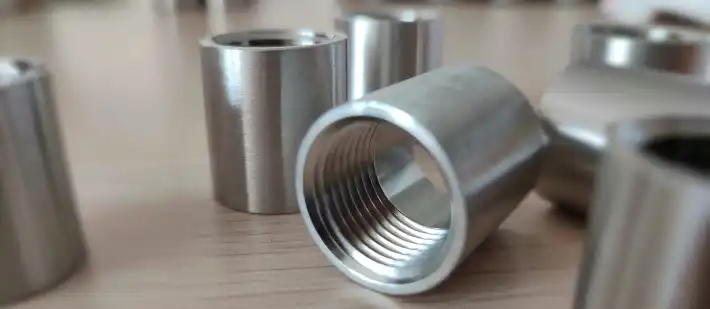
Understanding the Corrosion Resistance of ASME B16.11 Stainless Steel Couplings
Composition and Metallurgy
ASME B16.11 stainless steel couplings derive their corrosion resistance primarily from their unique composition. These fittings are typically made from austenitic stainless steel grades, such as 304 and 316L, which contain significant amounts of chromium and nickel. The chromium content, usually above 18%, is responsible for forming a thin, invisible layer of chromium oxide on the surface when exposed to oxygen. This passive layer acts as a protective barrier, preventing further oxidation and corrosion of the underlying metal.
The addition of nickel in these alloys enhances their corrosion resistance by stabilizing the austenitic structure and improving resistance to stress corrosion cracking. Moreover, grade 316L contains molybdenum, which further improves its resistance to pitting and crevice corrosion, especially in chloride-rich environments.
Passive Layer Formation and Self-Healing Properties
The passive layer formation on ASME B16.11 stainless steel couplings is a dynamic process. When the surface is exposed to oxygen, chromium in the alloy reacts rapidly to form a thin, adherent layer of chromium oxide. This layer is only a few atoms thick but provides remarkable protection against corrosive attacks.
One of the most impressive features of this passive layer is its self-healing ability. If the surface is scratched or damaged, exposing the underlying metal, the chromium in the alloy quickly reacts with oxygen to reform the protective layer. This continuous process ensures that the couplings maintain their corrosion resistance even under demanding conditions or after mechanical damage.
Performance in Various Corrosive Environments
ASME B16.11 stainless steel couplings demonstrate excellent corrosion resistance across a wide range of environments. In acidic conditions, these fittings show superior resistance compared to many other materials. They perform exceptionally well in nitric acid environments and maintain good resistance in sulfuric acid up to certain concentrations.
In alkaline environments, these couplings also exhibit strong corrosion resistance. They are widely used in caustic soda and other alkaline process streams without significant degradation. Additionally, their resistance to atmospheric corrosion is outstanding, making them suitable for both indoor and outdoor applications.
However, it's important to note that while these couplings offer excellent general corrosion resistance, they may be susceptible to specific types of corrosion under certain conditions. For instance, in high-temperature chloride environments, there's a risk of stress corrosion cracking. Therefore, proper material selection and environmental assessment are crucial for optimal performance.
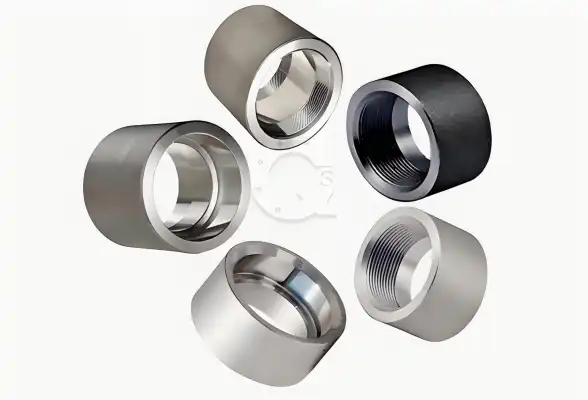
Factors Influencing the Corrosion Resistance of ASME B16.11 Stainless Steel Couplings
Environmental Conditions
The corrosion resistance of ASME B16.11 stainless steel couplings can be significantly influenced by the specific environmental conditions they're exposed to. Temperature plays a crucial role, as higher temperatures can accelerate corrosion processes and potentially destabilize the passive layer. Similarly, the presence of certain chemicals or ions in the environment can impact corrosion resistance.
For instance, chloride ions are particularly aggressive towards stainless steel and can lead to pitting corrosion or stress corrosion cracking under certain conditions. The concentration of corrosive species, pH levels, and the presence of oxidizing agents all contribute to the overall corrosivity of the environment and can affect the performance of these couplings.
Surface Condition and Finish
The surface condition of ASME B16.11 stainless steel couplings plays a significant role in their corrosion resistance. A smooth, clean surface allows for better formation and maintenance of the passive layer. Surface roughness can create crevices where corrosive species can concentrate, potentially leading to localized corrosion.
Various surface finishes can be applied to these couplings to enhance their corrosion resistance. Electropolishing, for example, can create an extremely smooth surface that improves the stability of the passive layer. Passivation treatments can also be used to optimize the protective oxide layer, further enhancing corrosion resistance.
Mechanical Stress and Design Considerations
The corrosion resistance of ASME B16.11 stainless steel couplings can be affected by mechanical stress. Stress corrosion cracking (SCC) is a phenomenon where the combined action of stress and a corrosive environment can lead to rapid crack propagation. Proper design and installation of these couplings are crucial to minimize residual stresses and avoid creating conditions favorable for SCC.
Additionally, the design of the couplings themselves can influence their corrosion resistance. Features that allow for the accumulation of debris or stagnant fluids can create localized corrosive environments. Therefore, designs that promote good drainage and avoid crevices can contribute to better overall corrosion performance.
Practical Applications and Performance Examples of ASME B16.11 Stainless Steel Couplings
Oil and Gas Industry
In the oil and gas industry, ASME B16.11 stainless steel couplings face some of the most challenging corrosive environments. These couplings are extensively used in offshore platforms, refineries, and pipelines where they encounter a variety of corrosive substances including hydrogen sulfide, carbon dioxide, and chlorides.
For instance, in sour gas applications, where the presence of hydrogen sulfide can cause severe corrosion and embrittlement in many materials, 316L stainless steel couplings have shown excellent resistance. Their ability to withstand these harsh conditions while maintaining structural integrity makes them a preferred choice for critical applications in this industry.
Chemical Processing Industry
The chemical processing industry presents a diverse range of corrosive environments, from strong acids to caustic solutions. ASME B16.11 stainless steel couplings, particularly those made from 316L grade, have demonstrated remarkable performance in many of these applications.
In a case study involving a chemical plant processing various organic acids, 316L stainless steel couplings were used in the piping system. After five years of continuous operation, inspection revealed minimal signs of corrosion, with the couplings maintaining their dimensional stability and leak-free performance. This exemplifies the long-term reliability of these couplings in aggressive chemical environments.
Marine and Coastal Applications
Marine and coastal environments are notorious for their corrosivity due to high chloride content and constant moisture exposure. ASME B16.11 stainless steel couplings have found widespread use in these settings, from shipbuilding to coastal industrial facilities.
A notable example is the use of these couplings in desalination plants. In one such plant operating in the Middle East, 316L stainless steel couplings were installed in seawater intake lines. After a decade of operation in this highly corrosive environment, the couplings showed only minimal surface discoloration without any significant loss of material or compromise in performance. This demonstrates the exceptional corrosion resistance of these couplings even in one of the most challenging environments for metallic materials.
Conclusion
ASME B16.11 stainless steel couplings, particularly those made from grades 304 and 316L, demonstrate exceptional corrosion resistance across a wide range of challenging environments. Their performance is attributed to the formation of a self-healing passive layer, which provides robust protection against various corrosive agents. While factors such as environmental conditions, surface finish, and mechanical stress can influence their corrosion resistance, proper material selection and design considerations can optimize their performance. These couplings have proven their reliability in diverse industries, from oil and gas to chemical processing and marine applications, making them a crucial component in ensuring the longevity and safety of piping systems in corrosive environments.
FAQs
What makes ASME B16.11 stainless steel couplings resistant to corrosion?
The corrosion resistance comes from their high chromium content, which forms a protective passive layer on the surface.
Are all ASME B16.11 stainless steel couplings equally corrosion-resistant?
No, different grades like 304 and 316L offer varying levels of corrosion resistance, with 316L generally performing better in more aggressive environments.
How long can these couplings last in corrosive environments?
With proper selection and maintenance, they can last for decades, even in harsh conditions.
High-Quality ASME B16.11 Stainless Steel Couplings for Superior Corrosion Resistance | QinSteel
As a leading manufacturer and supplier of ASME B16.11 stainless steel couplings, QinSteel offers premium-quality products engineered for exceptional corrosion resistance. Our state-of-the-art manufacturing processes and stringent quality control ensure that each coupling meets the highest industry standards. With our extensive experience and global supply chain, we provide reliable, corrosion-resistant solutions for diverse industrial applications. Contact us at info@sxqinsteel.com to learn how our expertly crafted stainless steel couplings can enhance your project's longevity and performance.
References
Corrosion Resistance of Stainless Steels in Atmospheric Environments. Outokumpu Stainless Steel Handbook, 11th Edition, 2015.
Sedriks, A. John. Corrosion of Stainless Steels. John Wiley & Sons, 2nd Edition, 1996.
Revie, R. Winston, and Herbert H. Uhlig. Corrosion and Corrosion Control: An Introduction to Corrosion Science and Engineering. John Wiley & Sons, 4th Edition, 2008.
Davis, J.R. Corrosion of Weldments. ASM International, 2006.
Olsson, C.O.A., and D. Landolt. Passive films on stainless steels—chemistry, structure and growth. Electrochimica Acta, 48(9), 2003.