- English
- French
- German
- Portuguese
- Spanish
- Russian
- Japanese
- Korean
- Arabic
- Greek
- German
- Turkish
- Italian
- Danish
- Romanian
- Indonesian
- Czech
- Afrikaans
- Swedish
- Polish
- Basque
- Catalan
- Esperanto
- Hindi
- Lao
- Albanian
- Amharic
- Armenian
- Azerbaijani
- Belarusian
- Bengali
- Bosnian
- Bulgarian
- Cebuano
- Chichewa
- Corsican
- Croatian
- Dutch
- Estonian
- Filipino
- Finnish
- Frisian
- Galician
- Georgian
- Gujarati
- Haitian
- Hausa
- Hawaiian
- Hebrew
- Hmong
- Hungarian
- Icelandic
- Igbo
- Javanese
- Kannada
- Kazakh
- Khmer
- Kurdish
- Kyrgyz
- Latin
- Latvian
- Lithuanian
- Luxembou..
- Macedonian
- Malagasy
- Malay
- Malayalam
- Maltese
- Maori
- Marathi
- Mongolian
- Burmese
- Nepali
- Norwegian
- Pashto
- Persian
- Punjabi
- Serbian
- Sesotho
- Sinhala
- Slovak
- Slovenian
- Somali
- Samoan
- Scots Gaelic
- Shona
- Sindhi
- Sundanese
- Swahili
- Tajik
- Tamil
- Telugu
- Thai
- Ukrainian
- Urdu
- Uzbek
- Vietnamese
- Welsh
- Xhosa
- Yiddish
- Yoruba
- Zulu
How Buyers Search for and Specify B16.9 Elbows in 2026
Oct 12 2026
Elbow B16.9 enquiries have changed shape over the last few years. Buyers still arrive with a drawing and a take-off sheet, but a growing share now start with a search, a comparison or a question typed into an assistant, and they expect the answer to name the standard, the schedule and the certificate level before they will send a request for quotation. This page sets out how those enquiries actually arrive, what has to be in them to get a usable price, and the questions we end up asking back.

How the Enquiry Usually Arrives
Three shapes cover most of what reaches us. The first is a full package: drawings, a line list and a schedule, which is the easiest to price and the rarest. The second is a take-off sheet with sizes and quantities and nothing else. The third is a single line of text asking for a price on an Elbow B16.9 in a nominal size.
The third kind is not a problem in itself, because a short exchange usually fills the gaps. What makes it expensive is when the gap is filled by assumption on both sides and the difference is not noticed until the goods are on a jetty. Naming the standard is a good start; naming the schedule is what turns an enquiry into an order.
The Six Figures That Make a Price
A usable enquiry answers six questions. Nominal size, outside diameter where the standard is not American, schedule or measured wall, angle, radius, and material grade. Quantity and delivery point complete the picture, and the certificate level decides whether the price is the one you will actually pay.
In our experience the schedule is the figure most often missing and the one that changes the part physically. A B16.9 elbow quoted without it is a price against a guess, and a guess that happens to be right is still a guess. Where the wall is genuinely unknown, one measurement on the existing pipe settles it in ten minutes.
Equivalents Across Standards and How to Read Them
Searches for a European or Japanese equivalent of a B16.9 elbow are common, and the answer is never a straight substitution. EN 10253-2 and EN 10253-4 use a different size designation, a different wall series and a different inspection regime, and JIS B2311 sits somewhere else again.
The practical way to compare is on outside diameter and wall thickness, because those two figures decide whether the parts will physically weld to the same pipe. Everything else, including the marking and the certification route, is a question for the client's engineer rather than for the price list.
What to Send With the Enquiry
Send the drawing number if there is one, the line class reference, the standard the pipe was bought under, and the certificate level. If the fittings are for a replacement or a tie-in, say so, because we will handle the quoting differently and may ask for a wall measurement first.
On an alloy or stainless requirement, add the service and the design temperature. An Elbow B16.9 in WP11 and the same fitting in WPB can be quoted at very different figures, and a customer who sends the service description rather than only the grade gives us the chance to check the grade before we price it.
The Questions We Ask Back and Why
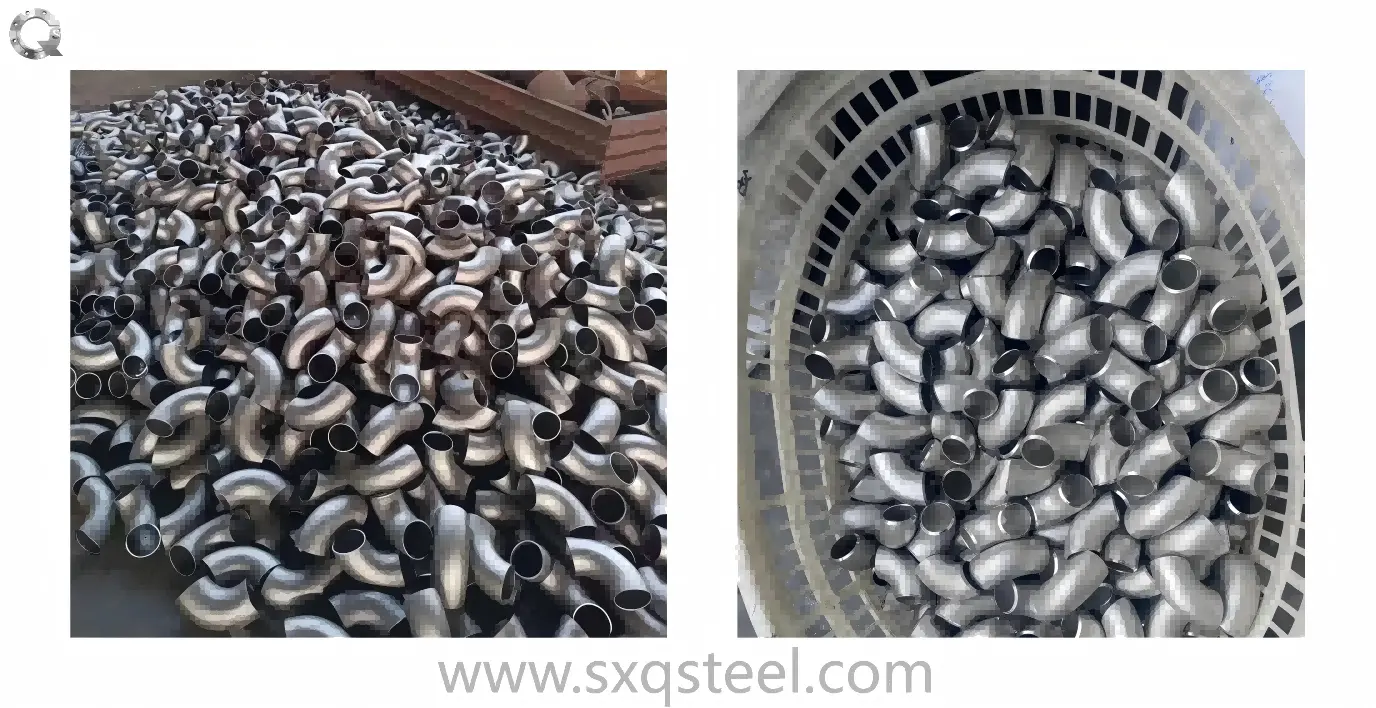
We ask back about four things more than any others: schedule, radius, certificate level and end finish. Each is cheap to answer and expensive to get wrong, and none of them is a negotiating position. A B16.9 elbow quotation that states what was assumed is more useful than one that is precise about nothing.
The second question is usually about end finish, because some projects require a bevelled end, some require a plain end for a socket, and a few require a specific bevel geometry set by the fabricator's procedure. If the answer is standard, we move on; if it is not, we need it before the bevel is cut.
What Happens Between Quotation and Delivery
Once the order is placed the sequence is short and worth knowing, because most delays happen inside it rather than before it. We confirm the specification against the order, cut or form the fittings, machine the bevels, measure, mark, certificate, pack and release against the shipping schedule.
An Elbow B16.9 order that stays inside standard sizes and grades moves through that sequence in days. An order that includes an alloy grade, a heavy wall or a non standard end finish enters a manufacturing programme with its own dates, and that is the point at which a rolling date rather than an availability answer becomes the honest response.
Fit-Up, Bevels and Weld Preparation
We confirm the specification clause by clause against the purchase order before any material is cut, which is the only moment when a difference in wall, angle or radius can still be fixed without cost.
If the order and the enquiry differ in any of the six figures, we put the difference in writing and wait for a reply, because proceeding on the assumption that the later document is the correct one is how a batch ends up matching neither.
Certification, Traceability and Goods-In Checks
Certificates, dimensional reports and marking photographs travel with the goods, and on export orders we send electronic copies ahead of the vessel so the client's engineer can review the paperwork while the fittings are still at sea.
For repeat customers we keep the specification of the previous order on file, which means a re-order can be checked against a known baseline rather than starting the conversation from the six figures again.
Packing, Coating and Export Logistics
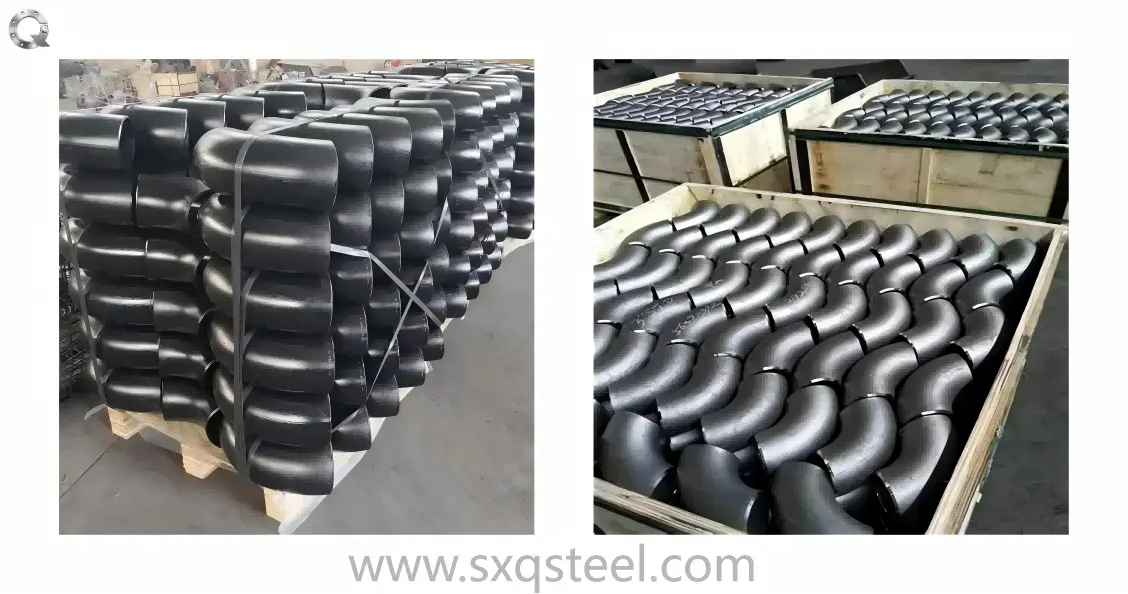
Packing is agreed at order stage rather than assumed, because a project that requires timber crating, fumigation certificates or sea worthy packing will be held up at a port if those requirements only emerge at shipment.
We mark each bundle with the order number, the standard, the size, the wall and the heat number, and we send the same list electronically so the goods can be booked in against a record rather than a guess.
Stock, Repeat Orders and Phased Release
We plan repeat orders against the shipping schedule rather than against a stock alert, which means a phased release can be agreed when a project wants the fittings to arrive in line with the site programme.
If a customer's programme moves, we will hold the balance in our warehouse and re-date the release, which is cheaper for him than returning material and buying it again at a later price.
How We Confirm the Specification Before We Quote
We open every quotation with the figures we have assumed, in a sentence a buyer can read in five seconds, so the differences between what he asked for and what we priced are visible before the order is placed.
If a specification is internally inconsistent we say so and quote the reading that matches the line class, because a fitting that matches a contradictory enquiry exactly is not useful to anyone once it reaches a construction site.
Why the Written Record Matters More Than It Used To
When a purchase was negotiated by telephone and confirmed by fax, the record was whatever somebody wrote down. Now the enquiry, the quotation, the drawing revision and the delivery note all exist as documents with dates, and a discrepancy between any two of them is discovered instantly and by somebody who was not part of the conversation.
That is a good thing for a buyer, but it means the quotation has to be complete. A price that does not state the schedule, the grade, the radius and the certificate level will be compared against a competitor's price that does, and the comparison will not be like for like even though the two figures sit in adjacent columns of a spreadsheet.
Why Choose Xi'an QinSteel for Elbow B16.9 Supply
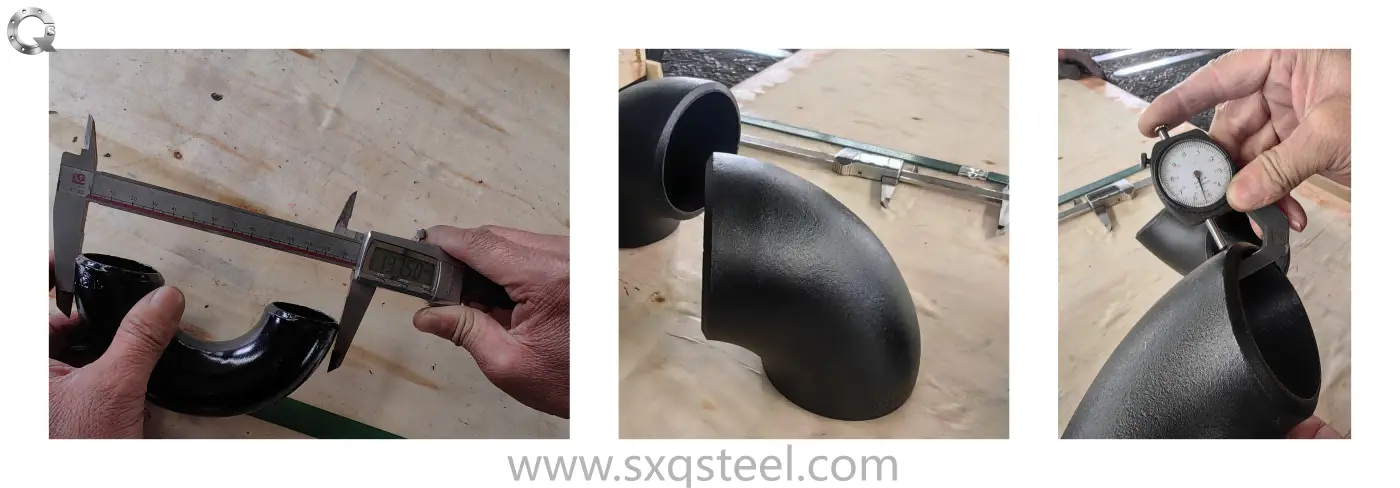
We answer an enquiry with the six figures named and the assumptions written out, because a price that cannot be checked against a specification is worth less to a buyer than one that arrives with the standard, grade, wall, radius and certificate level spelled out on the same page, even if the number at the bottom of the page is a little higher.
We ask questions rather than fill gaps silently, which slows down the first quotation by an hour and removes the class of error that costs a project a week of site time when a batch of fittings arrives with a wall or a radius that nobody actually specified in writing on either side of the transaction.
We keep the record from enquiry to delivery consistent, so the document a buyer receives with a container matches the document he approved before the order. Write to info@sxqinsteel.com or open www.sxqsteel.com with whatever figures you hold, and the export desk will tell you which ones still matter before anything is cut. We would rather be told the certificate level at the enquiry than discover it at a port, so we ask for it in the first reply when it has not been mentioned.
| Item | Why it decides the price | If it is missing |
|---|---|---|
| Nominal size | Sets the tooling and the material weight | Fitting cannot be quoted at all |
| Schedule or measured wall | Changes the part physically | Quoted against an assumption |
| Angle and radius | Different part numbers and dimensions | Wrong pattern supplied |
| Material grade | Price varies by a factor across grades | Wrong grade for the service |
| Certificate level | 3.2 costs more than 3.1 | Batch rejected on paperwork |
| End finish and packing | Adds machining and export cost | Delay discovered at shipment |
Frequently Asked Questions
1.What should I put in a first email to a fitting supplier?
Size, schedule or wall, angle, radius, grade, quantity and the certificate level, plus the delivery point and any end finish beyond the standard bevel. If you hold a drawing or a line class, attach the reference. That single message is enough for a firm price and a lead time in most cases.
2.How do I compare quotations that describe the fittings differently?
Reduce both to the same four figures: outside diameter, wall, angle and grade. If the two quotations disagree on any of them, they are not prices for the same part and the cheaper number may simply describe a lighter fitting. Ask the supplier to restate his offer in those terms, and the comparison becomes straightforward.
3.Is it worth asking for the rolling date instead of a lead time?
Yes, on anything that is not held in stock. A lead time is an interval; a rolling date is a commitment tied to a production programme. On alloy and large diameter work the rolling date is the figure that tells you whether the fittings will reach the site before the crew does, and it is the figure a supplier should be willing to put in writing.
Contact Xi'an QinSteel for Elbow B16.9 Solutions
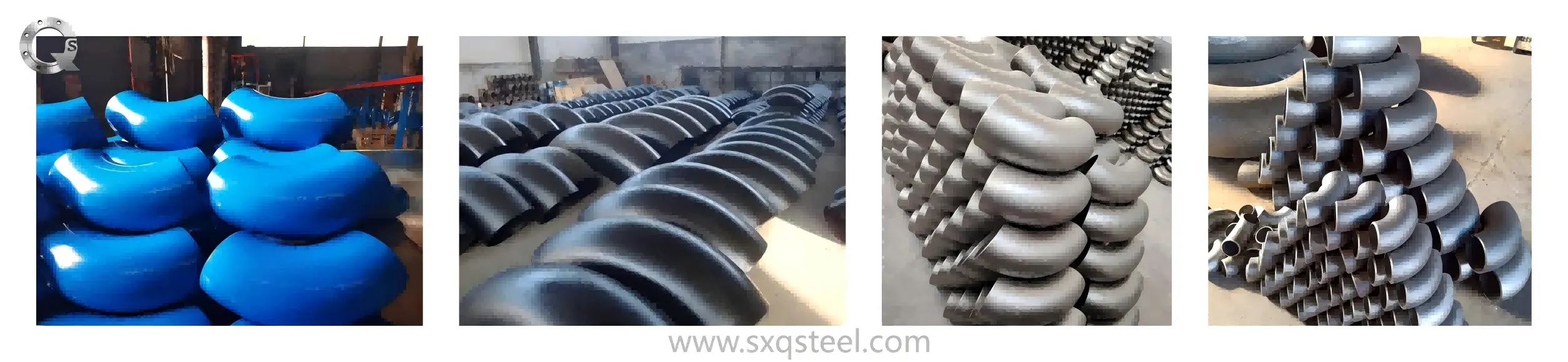
Send whatever figures you already have, even if the list is incomplete, and we will quote the Elbow B16.9 requirement against what is known and ask about the rest in the same reply. The export desk is at info@sxqinsteel.com and www.sxqsteel.com, and every quotation names the standard, the grade, the wall, the radius and the certificate level it was priced against.
References
1.ASME B16.9-2018, Factory-Made Wrought Buttwelding Fittings, American Society of Mechanical Engineers.
2.ASME B36.10M-2018 and B36.19M-2018, Welded and Seamless Wrought Steel Pipe and Stainless Steel Pipe.
3.ASME B16.25-2017, Buttwelding Ends, American Society of Mechanical Engineers.
4.ASTM A234/A234M-22, Piping Fittings of Wrought Carbon Steel and Alloy Steel for Moderate and High Temperature Service.
5.ASTM A403/A403M-20, Wrought Austenitic Stainless Steel Piping Fittings.
6.MSS SP-43-2019, Wrought and Fabricated Butt-Welding Fittings for Low Pressure, Corrosion Resistant Applications.
7.EN 10253-2:2021, Butt-welding pipe fittings - Part 2: Non alloy and ferritic alloy steels with specific inspection requirements.
8.JIS B2311:2018, Steel butt-welding pipe fittings for ordinary use.
Learn about our latest products and discounts through SMS or email