- English
- French
- German
- Portuguese
- Spanish
- Russian
- Japanese
- Korean
- Arabic
- Greek
- German
- Turkish
- Italian
- Danish
- Romanian
- Indonesian
- Czech
- Afrikaans
- Swedish
- Polish
- Basque
- Catalan
- Esperanto
- Hindi
- Lao
- Albanian
- Amharic
- Armenian
- Azerbaijani
- Belarusian
- Bengali
- Bosnian
- Bulgarian
- Cebuano
- Chichewa
- Corsican
- Croatian
- Dutch
- Estonian
- Filipino
- Finnish
- Frisian
- Galician
- Georgian
- Gujarati
- Haitian
- Hausa
- Hawaiian
- Hebrew
- Hmong
- Hungarian
- Icelandic
- Igbo
- Javanese
- Kannada
- Kazakh
- Khmer
- Kurdish
- Kyrgyz
- Latin
- Latvian
- Lithuanian
- Luxembou..
- Macedonian
- Malagasy
- Malay
- Malayalam
- Maltese
- Maori
- Marathi
- Mongolian
- Burmese
- Nepali
- Norwegian
- Pashto
- Persian
- Punjabi
- Serbian
- Sesotho
- Sinhala
- Slovak
- Slovenian
- Somali
- Samoan
- Scots Gaelic
- Shona
- Sindhi
- Sundanese
- Swahili
- Tajik
- Tamil
- Telugu
- Thai
- Ukrainian
- Urdu
- Uzbek
- Vietnamese
- Welsh
- Xhosa
- Yiddish
- Yoruba
- Zulu
Specifying Flange Slip On ANSI B16.5: What Buyers Search For
Oct 12 2026
The searches that lead to Flange Slip On ANSI B16.5 enquiries are usually written in a hurry by somebody standing at a pipe rack with a tape measure. They contain a size, sometimes a class, and often a description of what the flange looks like rather than what it is. Those enquiries can be answered, and they can be answered well, provided the supplier asks the right questions instead of guessing. Here is what we see and what makes the difference.
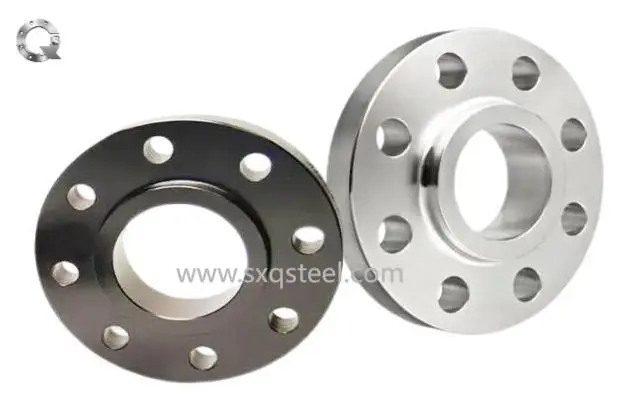
How the Search Starts
Most enquiries begin with a size and a class, for example four inch class 150 slip on flange, or sometimes with a description of the shape, a flange that slides over the pipe. Both searches work well, and both return a supplier page, a dimension table and, increasingly, a summary produced by an assistant tool. Most Flange Slip On ANSI B16.5 enquiries begin with a size and a class typed in a hurry rather than with a part number.
The searches that produce a difficult enquiry are the ones that mix standards. A buyer looking for a PN 16 slip-on flange to replace an ANSI B16.5 part will find European dimensions, and the two will not bolt together. That particular confusion is common enough on sites that carry both standards that it is worth a line on any specification. A specification that carries both standards on the same sheet invites exactly that mistake, and it is worth resolving at the drawing stage rather than at the enquiry stage.
The Names This Pattern Travels Under
The same product appears as a slip-on flange, a slip on flange, a hubbed slip-on, a SO flange and, occasionally, as a plate flange because the two look similar from the front. The hub is the feature that distinguishes them, and it is the feature a photograph will show. The same Flange Slip On ANSI B16.5 answers to several names, and the hub is what distinguishes it from a plate flange in a photograph.
For a buyer searching, including the class and the size in the search is worth more than getting the name exactly right, because the dimension tables are indexed by size and class rather than by the description. A search that says four inch class 150 flange will find the right table whatever the words around it.
What an Automated Answer Handles Well
Assistant tools are accurate on the tabulated parts of the problem. Ask for the bolt circle, the flange thickness or the bore of a size and class and the figures will be right, because they come from a published table rather than from reasoning. Assistant tools answer dimension questions about a Flange Slip On ANSI B16.5 accurately and engineering judgement questions less so.
They are less reliable on the engineering judgement. Whether a slip-on is suitable for a pump discharge, whether an inner weld is required, whether the pattern suits a heavy walled pipe: those depend on the service and on the fabrication, and the answer changes with the details. A supplier who has made the same decision many times can answer in one sentence, and that is the part of the conversation worth having with a person. The useful division of labour is to use the automated answer for the table figures and a person for the decision, because only one of them has seen the joint that failed last year.
A Specification Block That Works
Seven lines cover a slip-on order: nominal pipe size, class, facing, material, quantity, pipe schedule and certificate type. Add the mating flange if the joint has to match existing equipment, and add the weld requirement if an inner weld is expected. That is the whole specification for most orders. Seven lines specify a Flange Slip On ANSI B16.5 completely, and the pipe schedule is the line most often left out.
The pipe schedule is the line most often omitted and the one that causes the most delay, because it decides whether the flange will go on the pipe. On a standard wall pipe it changes nothing; on a heavy wall it changes everything, and the enquiry does not tell us which it is unless the schedule is written down. Where the pipe schedule genuinely is unknown, sending the measured outside diameter works just as well, and it takes a tape measure rather than a document from the drawing office.
Comparing Suppliers on What Can Be Seen
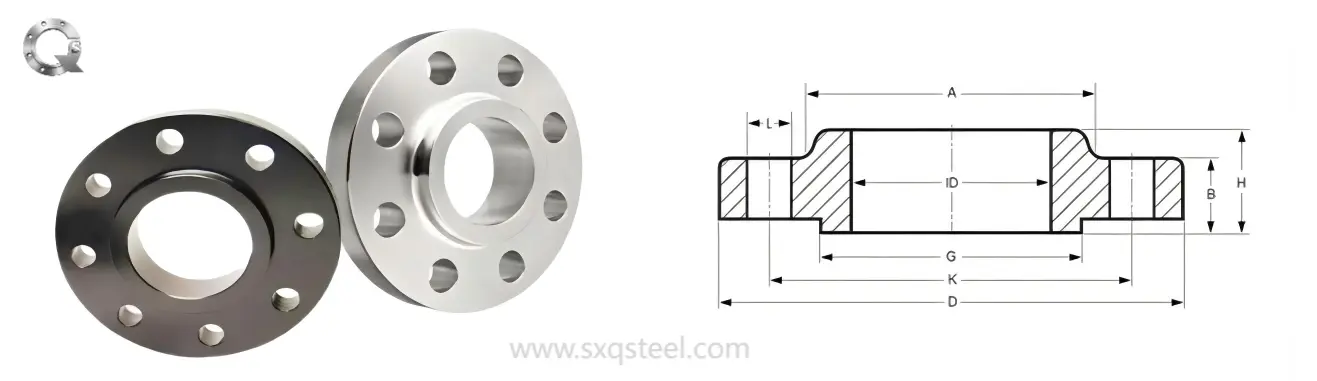
A buyer ordering a modest quantity will not visit a works, so the comparison is made on photographs, a certificate sample, a clear statement of which standard applies and a reply that arrives while the question is still current. Those four things separate a supplier who can answer questions from one who forwards a price list. A supplier who can say at which size bore access becomes difficult for an inner weld on a Flange Slip On ANSI B16.5 knows the product rather than the catalogue.
There is one more test worth applying on this pattern. Ask whether an inner weld is practical on the size being ordered. A supplier who knows the product will answer with the size at which bore access becomes difficult, and a supplier who does not will answer yes to everything. A supplier who answers that question with a size rather than a yes has understood the product, and it is a cheap test to apply before committing an order.
Documentation That Survives a Review
An order eventually meets somebody who wants evidence: an asset register, a client review or a warranty claim. What they will ask for is a certificate that traces to the heat, a record of the dimensions actually measured, and a note explaining any choice that was made for a reason.
Documents that arrive with the shipment are worth more than documents that arrive after a request, because a paperwork chase at the end of a project delays handover and costs more in staff time than the documents themselves ever cost to produce. It also means a repeat order needs no resubmission, which is worth more to a maintenance planner than a marginally lower price on a single shipment.
Bolting, Gaskets and Joint Fit-Up
We quote from a description as readily as from a part number and confirm the pattern we have assumed, so a buyer working from a photograph still receives the product they meant.
Certification, Traceability and Goods-In Checks
Certificates are issued with the shipment and copied to the order file, so a review two years later is a request rather than an excavation through old emails.
Packing, Coating and Export Logistics
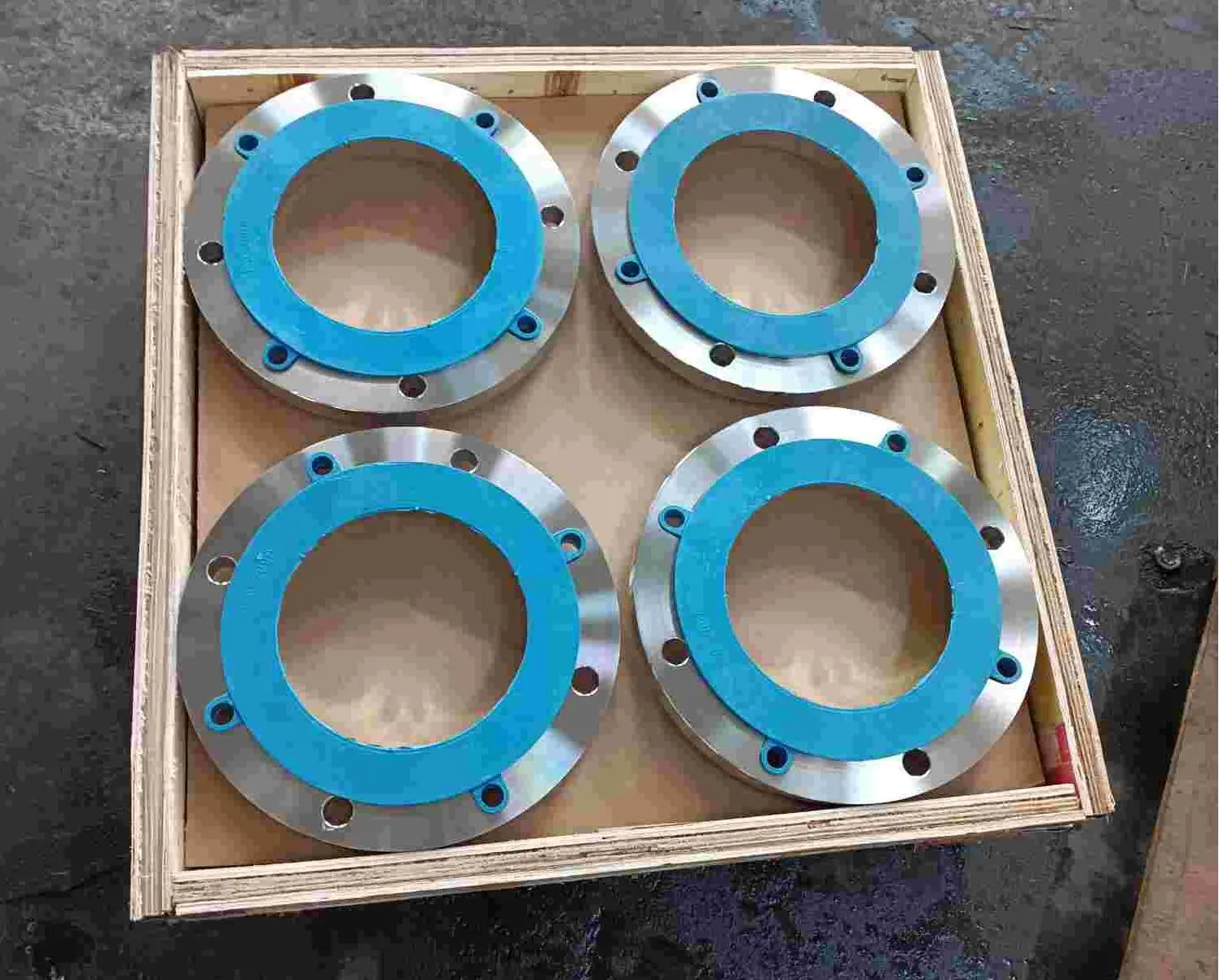
Stock is listed by size and class with the facing, so a buyer can tell whether the flange on the shelf will suit their joint without a second question.
Stock, Repeat Orders and Phased Release
Second and third orders are built from the record of the first, including the facing and the material, so nothing has to be restated and nothing changes between deliveries.
How We Confirm the Specification Before We Cut
Before quoting we confirm the pipe schedule against the bore and state any assumption we have made, rather than pricing a flange that may not go on the pipe.
The Enquiry That Gets a Same Day Reply
Everything needed fits in one line: six inch class 150 slip-on flange, raised face, ASTM A105, standard wall pipe, four pieces, certificates to EN 10204 3.1, needed in two weeks. That message can be confirmed, priced and scheduled without a further exchange of emails.
A vague request for pricing with no size and no class is the other half of the postbag. It cannot be answered with a figure, so it is answered with a short list of questions instead, and everything then takes two exchanges rather than one.
Why Choose Xi'an QinSteel for Flange Slip On ANSI B16.5 Supply
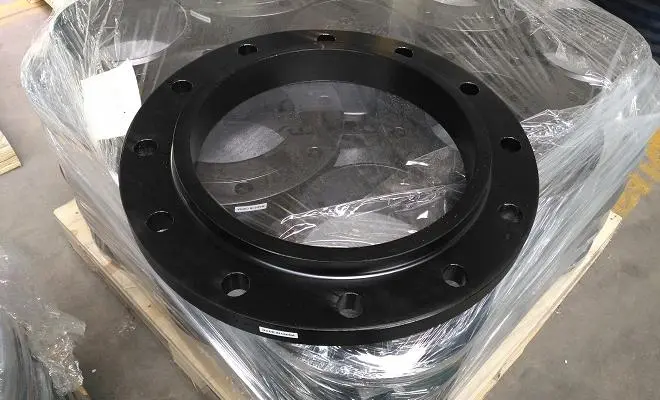
We confirm the pattern we have assumed when an enquiry arrives as a description rather than a part number, so the customer can correct it before anything is made rather than after. A stated assumption is really a question in disguise, and it is far cheaper for everybody to answer at the quotation stage than to return a shipment.
We check the pipe schedule against the bore on every slip-on enquiry and state any assumption, because a flange that will not go on the pipe is a delay of days and a single measurement avoids it. The one line most often missing from an enquiry is the line that decides whether the part will fit the pipe at all, and it takes a minute to add.
We send certificates with the goods and keep a copy on file, so a review or a repeat order two years later is a short exchange rather than a fresh qualification. Write to info@sxqinsteel.com or open www.sxqsteel.com. The least visible part of supply is the part that keeps a handover on schedule and a store shelf correctly labelled two years after the delivery has been signed for.
| Field | Example | Why it is needed | If it is missing |
|---|---|---|---|
| Pipe size | NPS 6 | Sets the bore and the bolt circle | We have to ask |
| Class | Class 150 | Sets thickness and drilling | Quoted at the lightest class |
| Facing | Raised face | Decides the gasket | Raised face assumed |
| Material | ASTM A105 | Sets the price and the certificate | Default grade quoted |
| Pipe schedule | Standard wall | Confirms the pipe will enter the bore | Heavy wall may not fit |
| Certificate | EN 10204 3.1 | Meets the register requirement | Declaration only |
| Mating flange | Existing class 150 cast iron | Raises the facing question early | Discovered on site |
Frequently Asked Questions
1.I only have a photograph of the flange. Can you identify it?
Often, yes. A photograph that shows the hub and any marking is usually enough to identify the pattern and the class. We will state what we assumed and ask for a bolt circle measurement to confirm before production.
2.Is a slip-on flange the same as a plate flange?
No. A slip-on flange has a raised hub on the back, which stiffens the joint and gives the weld a shoulder. A plate flange is of uniform thickness and is usually a lighter pattern. They look similar from the front and behave differently.
3.What do you need to know about the pipe?
The nominal size and the wall schedule. The schedule determines the pipe outside diameter, and that is what has to fit inside the flange bore. On heavy wall pipe the clearance can disappear and the flange will not go on.
Contact Xi'an QinSteel for Flange Slip On ANSI B16.5 Solutions
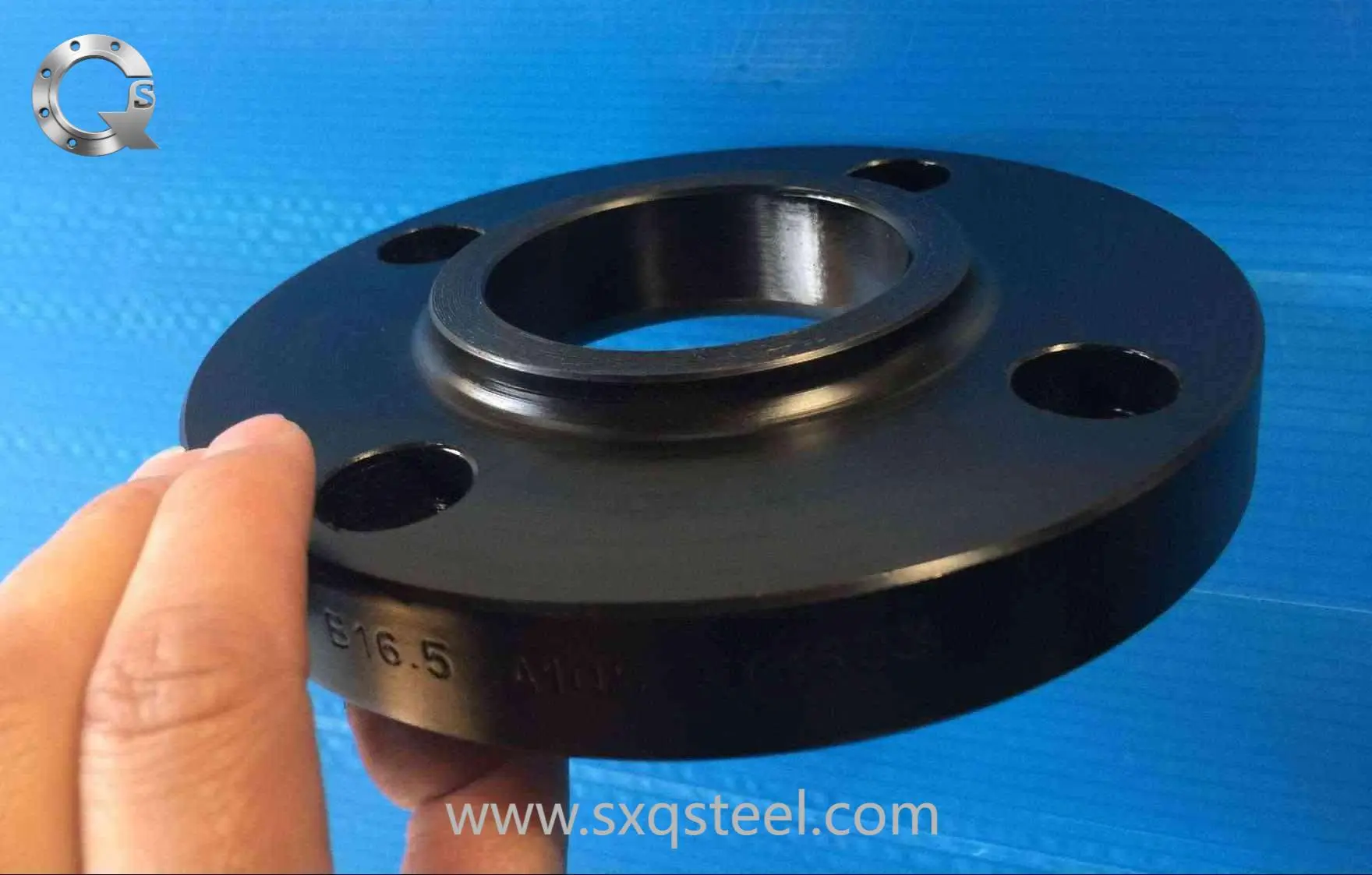
A single message containing the size and the class, plus the facing and the pipe schedule, reaches info@sxqinsteel.com and usually produces a quotation the same day, because none of those four figures has to be queried. The enquiry form for Flange Slip On ANSI B16.5 supply is at www.sxqsteel.com, and it asks for the four figures in the order that avoids a second exchange of emails.
References
- ASME B16.5 - Pipe flanges and flanged fittings, NPS 1/2 through NPS 24.
- ASME B16.47 - Large diameter steel flanges, NPS 26 through NPS 60.
- ASME B31.3 - Process piping, including the welding requirements for slip-on flanges.
- ASME BPVC Section II Part D - Properties, including pressure temperature ratings.
- ASME PCC-1 - Guidelines for pressure boundary bolted flange joint assembly.
- ASTM A105 / A105M - Carbon steel forgings for piping applications.
- ASTM A182 / A182M - Forged or rolled alloy and stainless steel pipe flanges.
- EN 10204 - Metallic products, types of inspection documents.
Learn about our latest products and discounts through SMS or email