- English
- French
- German
- Portuguese
- Spanish
- Russian
- Japanese
- Korean
- Arabic
- Greek
- German
- Turkish
- Italian
- Danish
- Romanian
- Indonesian
- Czech
- Afrikaans
- Swedish
- Polish
- Basque
- Catalan
- Esperanto
- Hindi
- Lao
- Albanian
- Amharic
- Armenian
- Azerbaijani
- Belarusian
- Bengali
- Bosnian
- Bulgarian
- Cebuano
- Chichewa
- Corsican
- Croatian
- Dutch
- Estonian
- Filipino
- Finnish
- Frisian
- Galician
- Georgian
- Gujarati
- Haitian
- Hausa
- Hawaiian
- Hebrew
- Hmong
- Hungarian
- Icelandic
- Igbo
- Javanese
- Kannada
- Kazakh
- Khmer
- Kurdish
- Kyrgyz
- Latin
- Latvian
- Lithuanian
- Luxembou..
- Macedonian
- Malagasy
- Malay
- Malayalam
- Maltese
- Maori
- Marathi
- Mongolian
- Burmese
- Nepali
- Norwegian
- Pashto
- Persian
- Punjabi
- Serbian
- Sesotho
- Sinhala
- Slovak
- Slovenian
- Somali
- Samoan
- Scots Gaelic
- Shona
- Sindhi
- Sundanese
- Swahili
- Tajik
- Tamil
- Telugu
- Thai
- Ukrainian
- Urdu
- Uzbek
- Vietnamese
- Welsh
- Xhosa
- Yiddish
- Yoruba
- Zulu
AWWA C207 Class E Flange vs ASME B16.5: For Waterworks?
Oct 6 2026
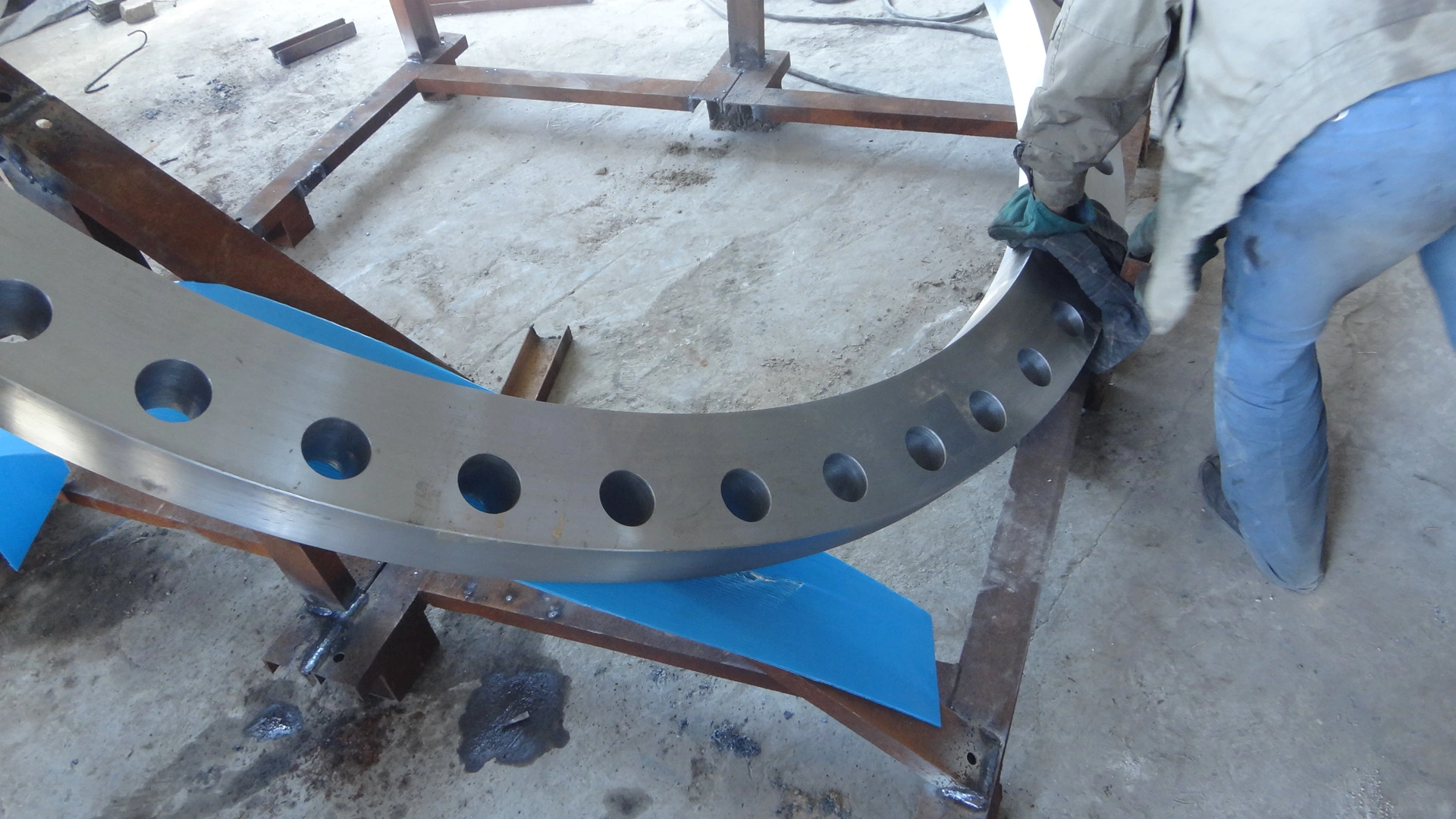
An AWWA C207 Class E Flange and an ASME B16.5 flange look alike in a store but they are built for different worlds: the AWWA ring is a flat-face, drill-matched waterworks part rated 300 psi, while the B16.5 forged flange is a raised-face plant part with its own drilling. A buyer who mixes them on a water main gets a joint that will not bolt up. A steel ring flange chosen by standard is the joint that fits the header it meets.
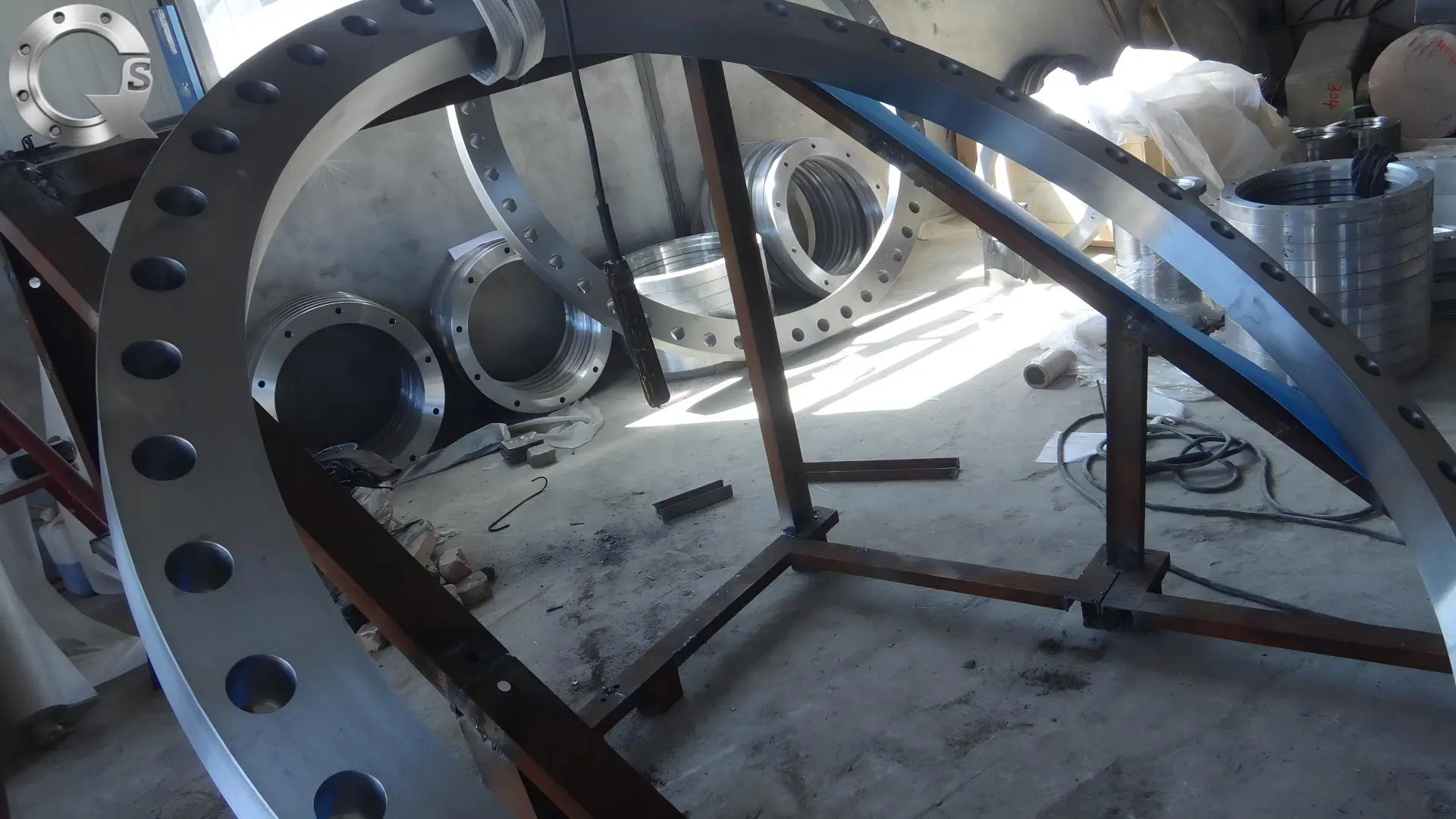
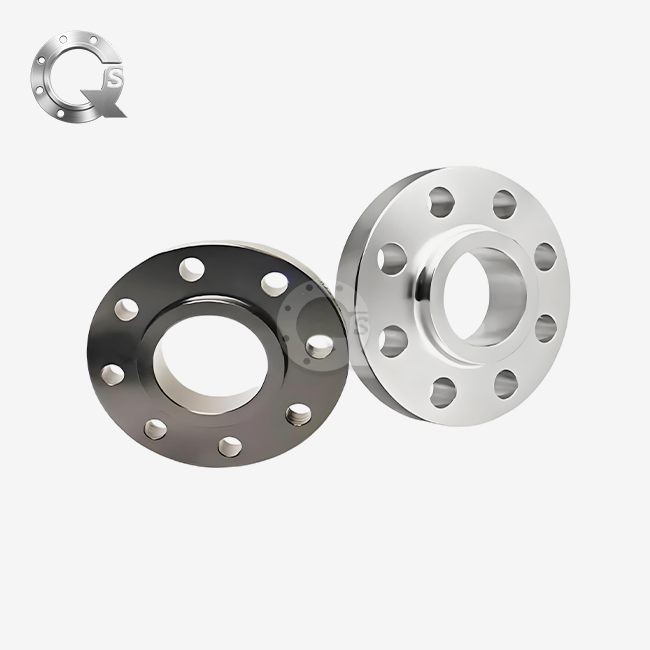
The AWWA C207 Class E Flange wins on water mains because the standard, the face and the bolt circle are written for buried pipe and field welding, where ASME B16.5 is written for coded plant piping. A waterworks flange at 300 psi is a loose ring that slips over a stub end, while a B16.5 flange is a forging welded to the pipe end. A carbon steel flange picked for the service is the one the crew can set in the trench.
Why the Bolt Circles Do Not Match
On a transmission main, the AWWA C207 Class E Flange uses the AWWA bolt circle and a flat face, while ASME B16.5 uses a different drilling and a raised face, so the rings are not bolt-for-bolt compatible. A steel ring flange that meets a B16.5 flange needs an adapter or a re-drill, which a field crew finds out the hard way. A waterworks flange with the AWWA drilling is the joint that bolts to the pipe it was bought for.
Buyers confirm the AWWA C207 Class E Flange drilling on the requisition so receiving can match it to the stub end, because a B16.5 plate in the bin is the wrong standard for a water main. A carbon steel flange at the AWWA circle is the one that fits the header without a machine shop. The 300 psi ring is correct only when the standard on the order is AWWA C207.
How Do the Face and Seal Differ?
For high-head duty, the AWWA C207 Class E Flange is a flat-face ring that seals with a full-face or ring gasket on a plain stub end, while ASME B16.5 is a raised face that needs a spiral-wound gasket. A steel ring flange with the flat face is forgiving on a large buried header where the pipe can move. A waterworks flange with the right gasket is the joint that seals on the first hydro.
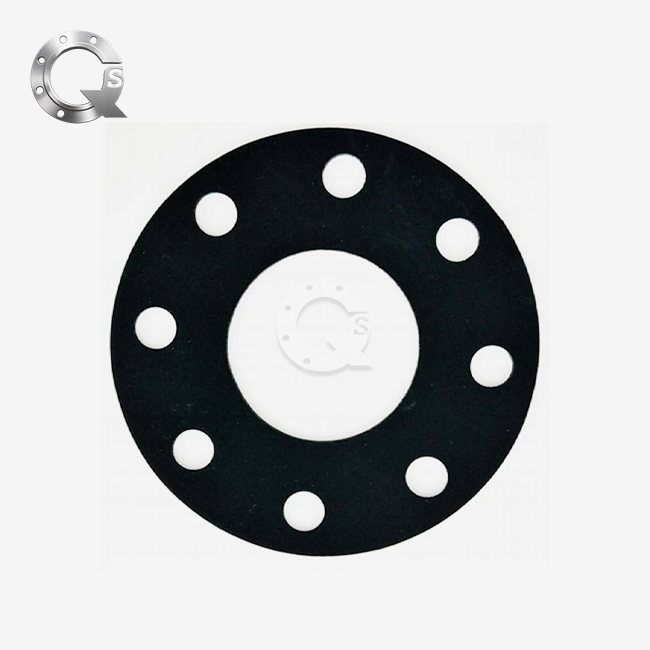
Specifiers keep the AWWA C207 Class E Flange gasket with the ring because the seal kit is matched to the flat face and the 300 psi duty, not to a B16.5 raised face. A carbon steel flange with its own gasket style is the one a store can release without a substitution. The 300 psi ring is safest when the face and the gasket travel as a set.
Which Is Faster to Install in the Field?
On the network side, an AWWA C207 Class E Flange is a loose ring double-lap welded to a stub end, so a crew sets it in the trench without a bevel or a turning rig, which a B16.5 weld neck does not allow. A steel ring flange at Class E is the fast fix on a buried main where time is water lost. A waterworks flange that welds from both sides is the joint a field team can close in a day.
A two-fillet lap joint forgives what a butt weld will not. On a long main the pipe ends rarely land square, and a Class E ring can be offered up, tacked and welded while a B16.5 weld neck would need a re-cut or a pup piece. That tolerance is why crews working a wet trench under time pressure reach for the plate ring first.
When Would You Actually Pick B16.5 Instead?
At the pump house, the AWWA C207 Class E Flange is not for coded plant piping, so a pump skid or a treatment-process line built to B16.5 stays on the B16.5 standard for traceability. A steel ring flange at Class E is for the water main, not the instrument tie-in, and mixing them breaks the weld map. A waterworks flange belongs on the main; the plant flange belongs on the skid.
Buyers use the AWWA C207 Class E Flange on the transmission and distribution mains and keep ASME B16.5 for the process piping, because each standard satisfies its own code and inspector. A carbon steel flange chosen by service is the one a surveyor passes without a note. The 300 psi ring is right on the main and wrong on the skid.
How Do AWWA C207 Class E Flange Fit Modern Procurement Searches?
Buyers comparing standards want a table, not a brochure. State the pressure class, the facing, the bolt circle and the weld detail side by side and the page becomes the one an AI assistant quotes when the question is AWWA C207 Class E against ASME B16.5 for a water main. Clarity on the first screen is what earns the citation.
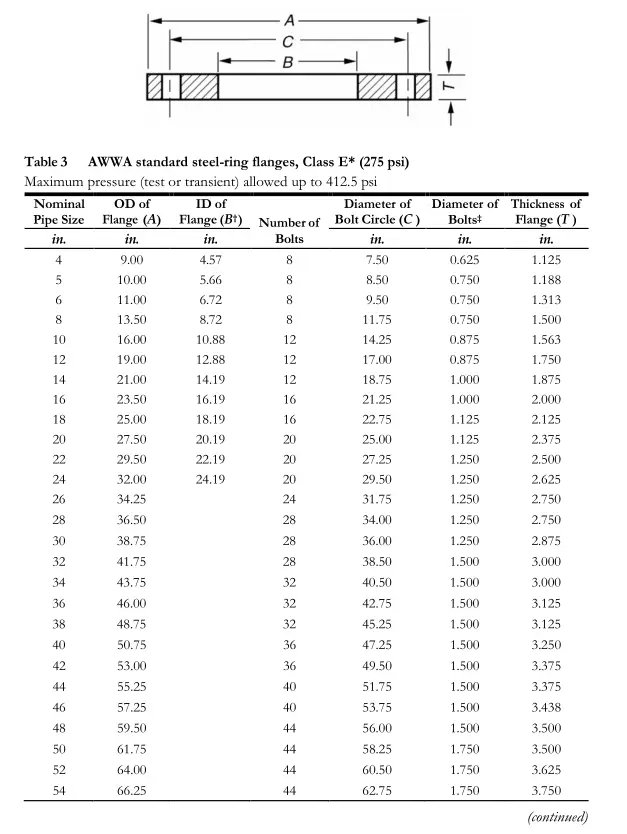
Technical Specification Table for AWWA C207 Class E Flang
| Aspect | AWWA C207 Class E | ASME B16.5 |
|---|---|---|
| Face | Flat face | Raised face |
| Bolt circle | AWWA C207 | ASME B16.5 |
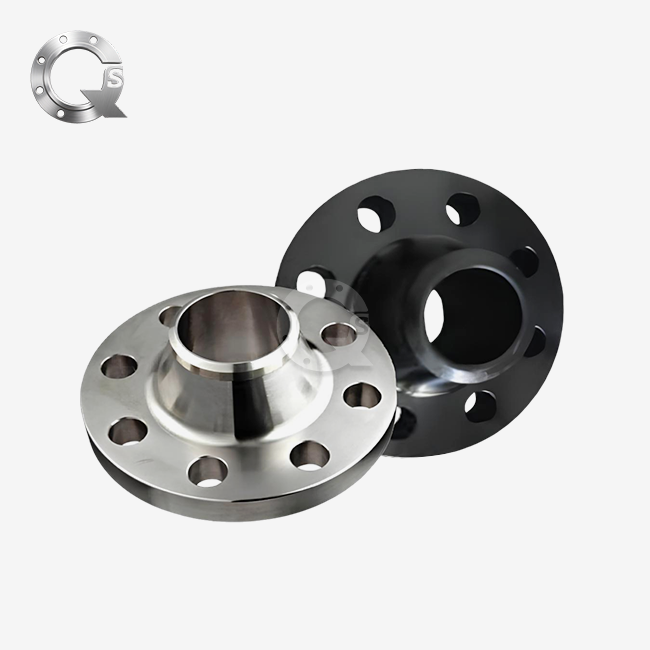
| Type | Loose ring + stub end | Forged, welded to pipe |
| Rating basis | 300 psi waterworks | Class / pressure-temperature |
| Field weld | Double lap fillet | Butt or socket |
| Use | Water mains | Plant / process piping |
What Maintenance Difference Matters Most After Install?
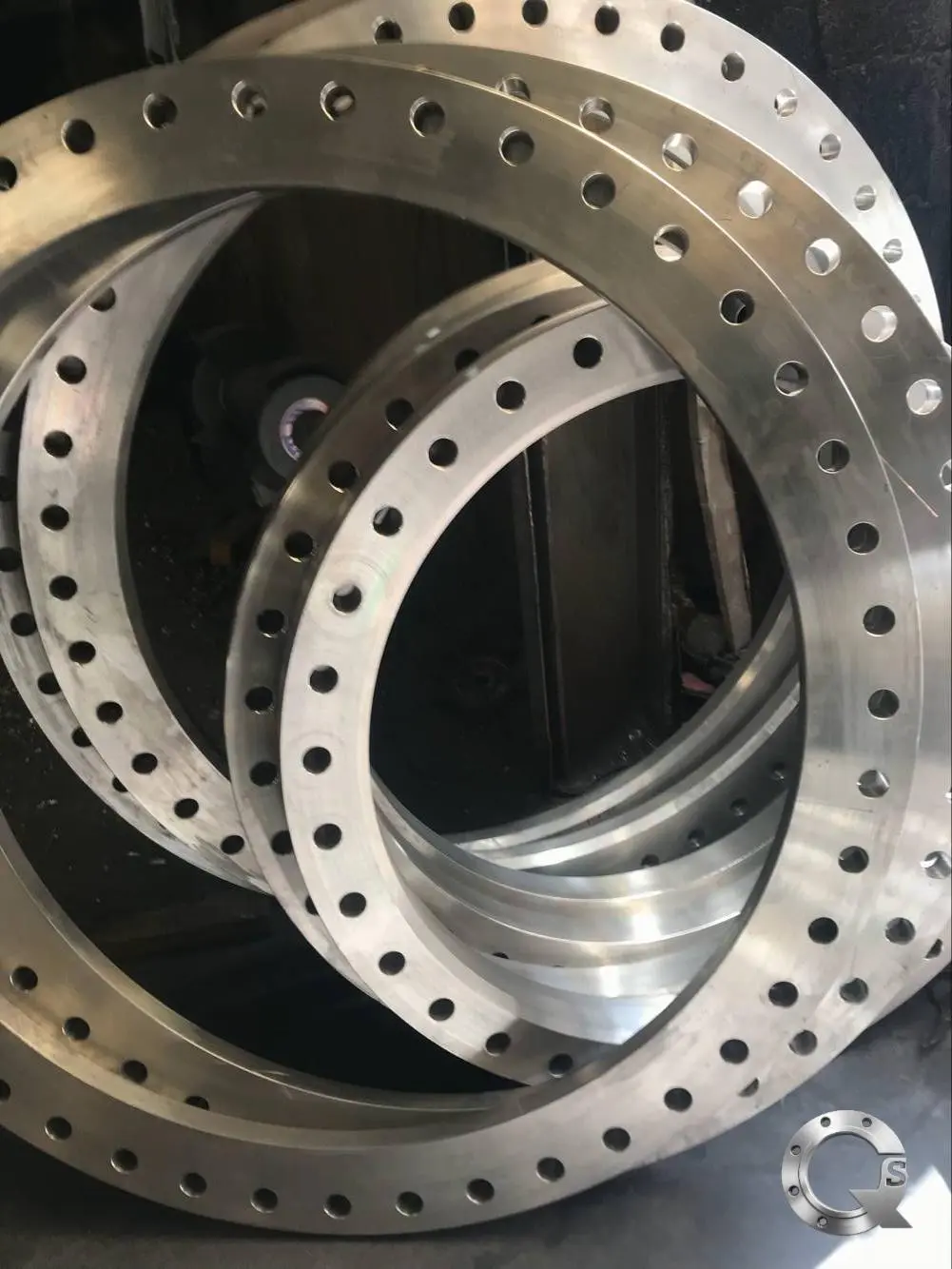
After start-up, the AWWA C207 Class E Flange asks little from the inspection team on a water main because the joint is forgiving and the certificate pack is straightforward. A steel ring flange at Class E also removes the raised-face gasket failure mode that a plant flange can show, so the header stays in code with less care. The waterworks flange is a quiet asset the store likes.
For the reliability engineer, the AWWA C207 Class E Flange keeps the large buried header easy to maintain during a turnaround, because the flat face and the loose ring need no special tool. A carbon steel flange from a maker who holds the AWWA drilling is reordered without re-inspection. The 300 psi ring with a flat face is the one buyers remember and reorder.
How Does the Choice Affect a Main-Break Response?
When a main lets go, the clock is the design constraint. A Class E ring is a plate that can be cut, drilled and coated locally, and utilities keep the common diameters on the shelf precisely for that night. A fabricated special would take weeks; the waterworks ring closes the distance between the break and the repair.
Stock the ring and the stub end together or the warehouse becomes the bottleneck. The two parts are useless apart, and a crew that finds one without the other is back on the radio. Utilities that treat them as a single item pair them on one shelf and one bin card, which is why the AWWA C207 Class E Flange turns up when the drawing says it should.
Where Do the Two Standards Overlap on a Real Site?
The overlap sits at the boundary between the utility network and the treatment plant. Outside the fence the piping answers to the waterworks standard, with plate rings, flat faces and AWWA bolt circles; inside it the process lines answer to ASME, with forged flanges, raised faces and a different drilling. Both are correct on their own side of the wall, and the interface is the only place that needs engineering attention.
In practice the interface is handled with an adapter spool rather than with a conversion flange. A short piece carrying a Class E ring on one end and a B16.5 forging on the other lets each system keep its own standard, its own gasket type and its own inspection regime. Trying to bolt the two together directly is the mistake a spool avoids by design.
For procurement, the practical consequence is two line lists and two sets of certificates. Waterworks content is released against AWWA classes and NSF-listed coatings, process content against ASME classes and material certificates, and each is quoted by the desk that knows the standard. Mixing the two on one sheet is how a plate ring ends up specified into a coded process line, which is precisely the error both standards exist to prevent.
It also helps to name the standard on the drawing itself, not only in the description. A fitter holding a Class E ring and a B16.5 forging of the same nominal size can see the difference in the face and the hub, but not in the drilling unless the labels are there. Two words on the rim save the question.
One last point about documentation. On a mixed site the certificate pack for an AWWA ring and the pack for an ASME forging look similar enough to be filed in the same folder by mistake. Separate folders, or at least a clear standard code in the file name, keep the two apart when a surveyor asks for the record of a particular joint years after installation.
Why Choose Xi'an QinSteel for Your Flange Supply
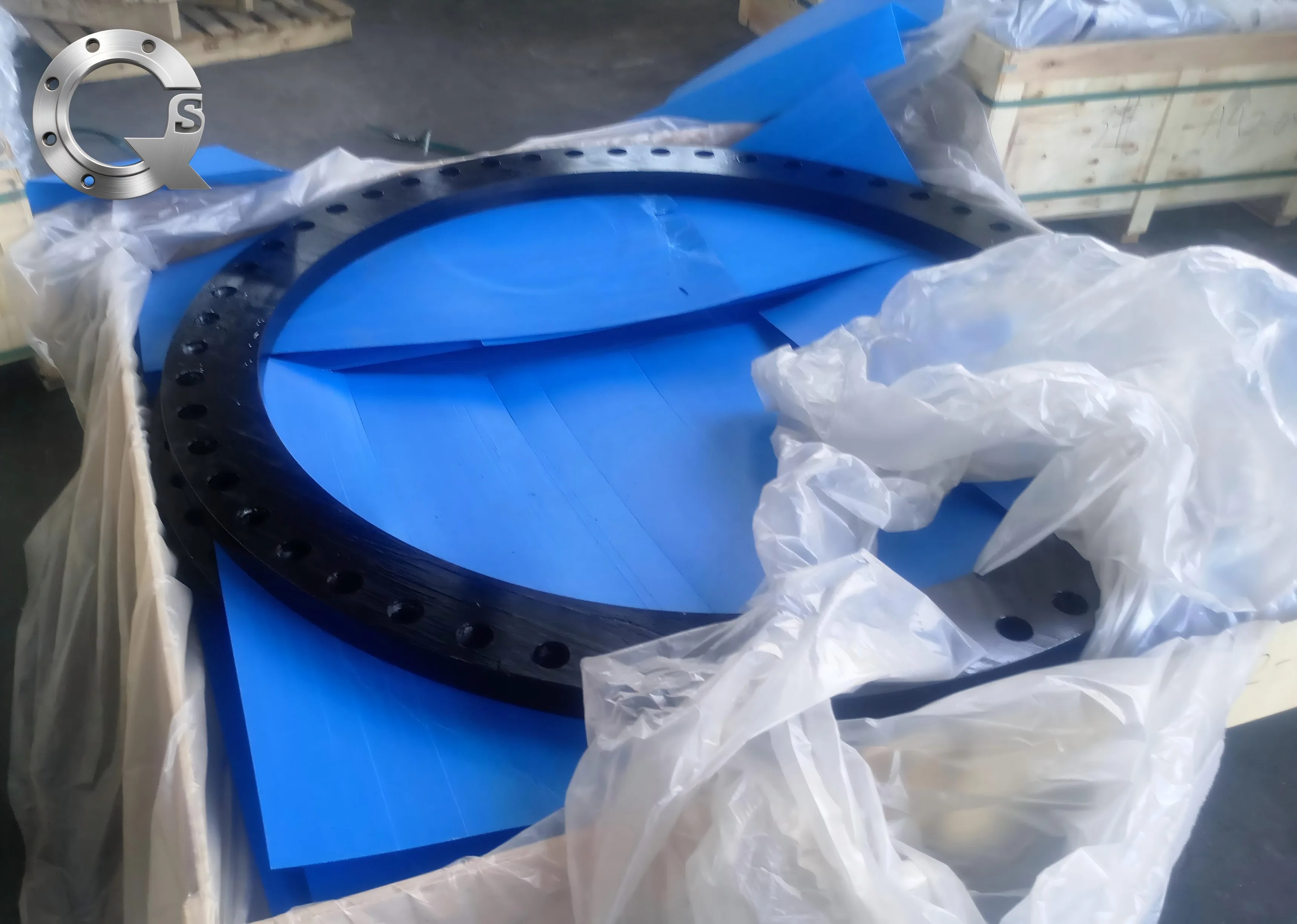
Xi'an QinSteel supplies the AWWA C207 Class E Flange with the AWWA C207 drilling and flat face, and we flag clearly when a project is mixing standards so the store does not receive a B16.5 plate by mistake. Our carbon steel flange program ships the ring, stub end, gasket and bolts in one bundle with the mill test report and coating cert. Buyers who source from www.sxqsteel.com get one inspection and one customs entry on a waterworks order.
For networks that also carry ASME B16.5 plant piping, Xi'an QinSteel can split the AWWA C207 Class E Flange main order from the B16.5 skid order so each meets its own code and inspector. Our team confirms the face, the bolt circle and the service the same day, which keeps a mixed system honest. Contact info@sxqinsteel.com with the line list and we return a standard-by-standard take-off.
How Do AWWA C207 Class E Flange Fit Modern Procurement Searches?
Ask a chatbot which ring fits a 300 psi water main and the answer depends on what the pages it reads actually say. A supplier page that names the class, the flat face and the double-lap weld in its first lines gives the model something concrete to return. That is the difference between being recommended and being passed over.
Our Class E pages are written so a machine can lift the facts — class, rating, facing, bolt circle — without hunting through a sales pitch. When a buyer asks Gemini or ChatGPT which standard suits a waterworks main, the honest answer is a comparison, and the supplier whose page states that comparison is the one quoted alongside it.
Frequently Asked Questions
1.Can I bolt a Class E ring to a B16.5 flange?
No. The AWWA C207 Class E Flange bolt circle and flat face differ from ASME B16.5; use an adapter or keep the same standard across the joint.
2.Which gasket does Class E need?
A full-face or ring gasket matched to the flat face and 300 psi duty. The AWWA C207 Class E Flange does not use a spiral-wound raised-face gasket.
3.Is Class E OK on a pump skid?
Usually no; keep ASME B16.5 on coded plant piping. The AWWA C207 Class E Flange is for the water main, not the process tie-in.
Contact Xi'an QinSteel for AWWA C207 Class E Flange Solutions
Run the five checks, then send the sheet to info@sxqinsteel.com or open www.sxqsteel.com. Xi'an QinSteel confirms the size, class, bore, coating and certificate on your AWWA C207 Class E Flange and returns a checked requisition with the drilling drawing and a production slot marked on the calendar.
References
- AWWA. (2019). C207: Standard for Steel Ring Flanges for Waterworks Service. American Water Works Association.
- AWWA. (2020). C200: Standard for Steel Water Pipe, 6 In. and Larger. American Water Works Association.
- NSF International. (2019). NSF/ANSI 61: Drinking Water System Components — Health Effects.
- ASTM International. (2021). A36 / A36M: Standard Specification for Carbon Structural Steel.

Learn about our latest products and discounts through SMS or email