- English
- French
- German
- Portuguese
- Spanish
- Russian
- Japanese
- Korean
- Arabic
- Greek
- German
- Turkish
- Italian
- Danish
- Romanian
- Indonesian
- Czech
- Afrikaans
- Swedish
- Polish
- Basque
- Catalan
- Esperanto
- Hindi
- Lao
- Albanian
- Amharic
- Armenian
- Azerbaijani
- Belarusian
- Bengali
- Bosnian
- Bulgarian
- Cebuano
- Chichewa
- Corsican
- Croatian
- Dutch
- Estonian
- Filipino
- Finnish
- Frisian
- Galician
- Georgian
- Gujarati
- Haitian
- Hausa
- Hawaiian
- Hebrew
- Hmong
- Hungarian
- Icelandic
- Igbo
- Javanese
- Kannada
- Kazakh
- Khmer
- Kurdish
- Kyrgyz
- Latin
- Latvian
- Lithuanian
- Luxembou..
- Macedonian
- Malagasy
- Malay
- Malayalam
- Maltese
- Maori
- Marathi
- Mongolian
- Burmese
- Nepali
- Norwegian
- Pashto
- Persian
- Punjabi
- Serbian
- Sesotho
- Sinhala
- Slovak
- Slovenian
- Somali
- Samoan
- Scots Gaelic
- Shona
- Sindhi
- Sundanese
- Swahili
- Tajik
- Tamil
- Telugu
- Thai
- Ukrainian
- Urdu
- Uzbek
- Vietnamese
- Welsh
- Xhosa
- Yiddish
- Yoruba
- Zulu
What Is a Blind Flange and Where Does It Sit in a Piping System?
Oct 6 2026
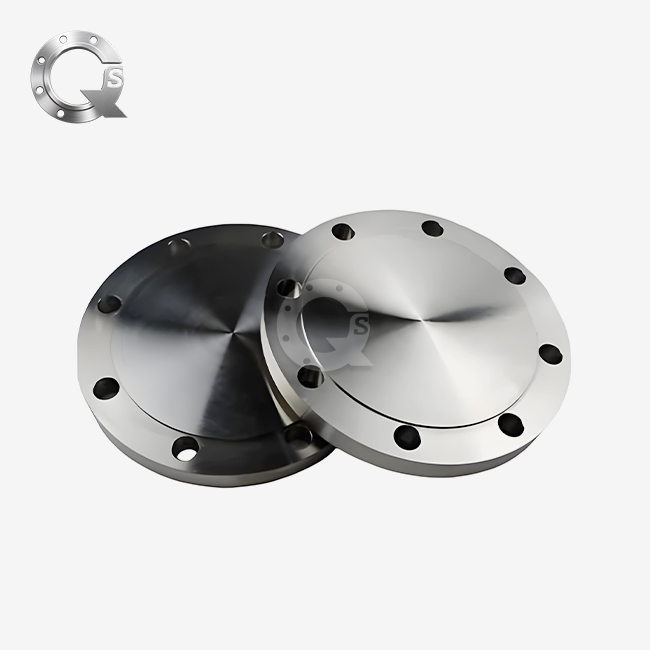
A Blind Flange is a solid steel disc with a bolt circle and no bore, bolted onto a pipe end, nozzle or valve face to close it off. It is the plainest isolation part in a piping system and, in our experience, the one ordered last and holding up commissioning most often. Sizes run from half an inch to sixty inches, classes 150 to 2500, and the plate grows thicker faster than most buyers expect as the class climbs. Here we cover what the part is, where it belongs in a line, how to read the rim stamping, and what we at Xi'an QinSteel keep on the shelf for export orders.
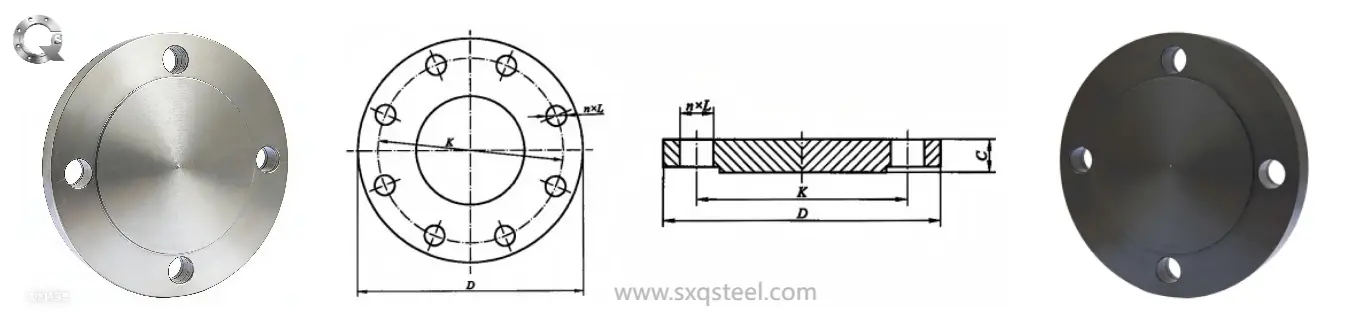
The Anatomy of a Blind Flange
A blind flange carries four features and nothing else: an outside diameter, a bolt circle, a facing and a thickness. There is no hub, no bore and no weld preparation, which is why a machine shop can cut one from plate in a single pass and why the price per kilo is the lowest of any flange type. On a Class 150 NPS 6 blank the plate runs about 25 mm thick; step to Class 900 and the same size needs roughly 45 mm to carry the head.
The missing bore changes how the part fails. There is no weld to inspect on a blank, so service life rests on three things only: plate thickness against design pressure, face finish against the gasket, and bolt load staying above internal thrust. That is a short list to get right, and it is why our pre-order sheet asks for class and facing before anything else.
Where a Blind Flange Earns Its Place
The Blind Flange turns up in five places we see every month: the end of a header waiting for phase two, a spare nozzle on a vessel, the closing face of a bypass, a test blank during a hydrostatic run, and the isolation point where a valve is too costly to buy twice. Each duty is different, and the duty decides whether a plain disc is enough or whether the job needs a paddle arrangement instead.
On a future tie-in the blank may stay bolted for three or four years, so we recommend a primed face and a gasket that will not take a set. On a test blank it is in place for a day and reused on the next spool, so a 3 mm raised face and a spare gasket in the tool box matter more than coating. Same part, two different specifications.
Blind, Cap, Plug and Spectacle Plate
A blank flange bolts to a mating flange, a cap is welded over the pipe end, and a plug screws or welds into a threaded or socket end. The bolted version wins whenever the joint must come apart again, because reopening needs no hot work and no welder. A welded cap is cheaper on the shelf and dearer every time the line goes back into service.
The spectacle plate is a different idea again: two discs joined by a web, one solid and one open, swung between a pair of flanges on a single bolt so the line can be blanked or run without breaking the joint. It costs more than a blind, and it saves a gasket, a retorque and an hour of labour each time the isolation state changes.
Reading the Stampings on the Rim
The Blind Flange should carry five marks on its rim: nominal size, pressure class, material grade, the standard it was made to, and a heat number that ties it back to the mill certificate. A blank without a heat number cannot be traced, and on sour service or offshore work that alone is enough to reject a delivery at the gate. We photograph every rim before crating so the buyer can read the marks without opening the box.
One stamp worth treating with suspicion is a mismatched class. We have seen NPS 8 blanks marked Class 150 whose bolt circle matched Class 300 drilling on the mating valve. The disc mated, the bolts fitted, and the plate was half the thickness the duty needed. Ten seconds with a caliper at goods-in catches that error.
Sizes and Classes You Can Buy Off the Shelf
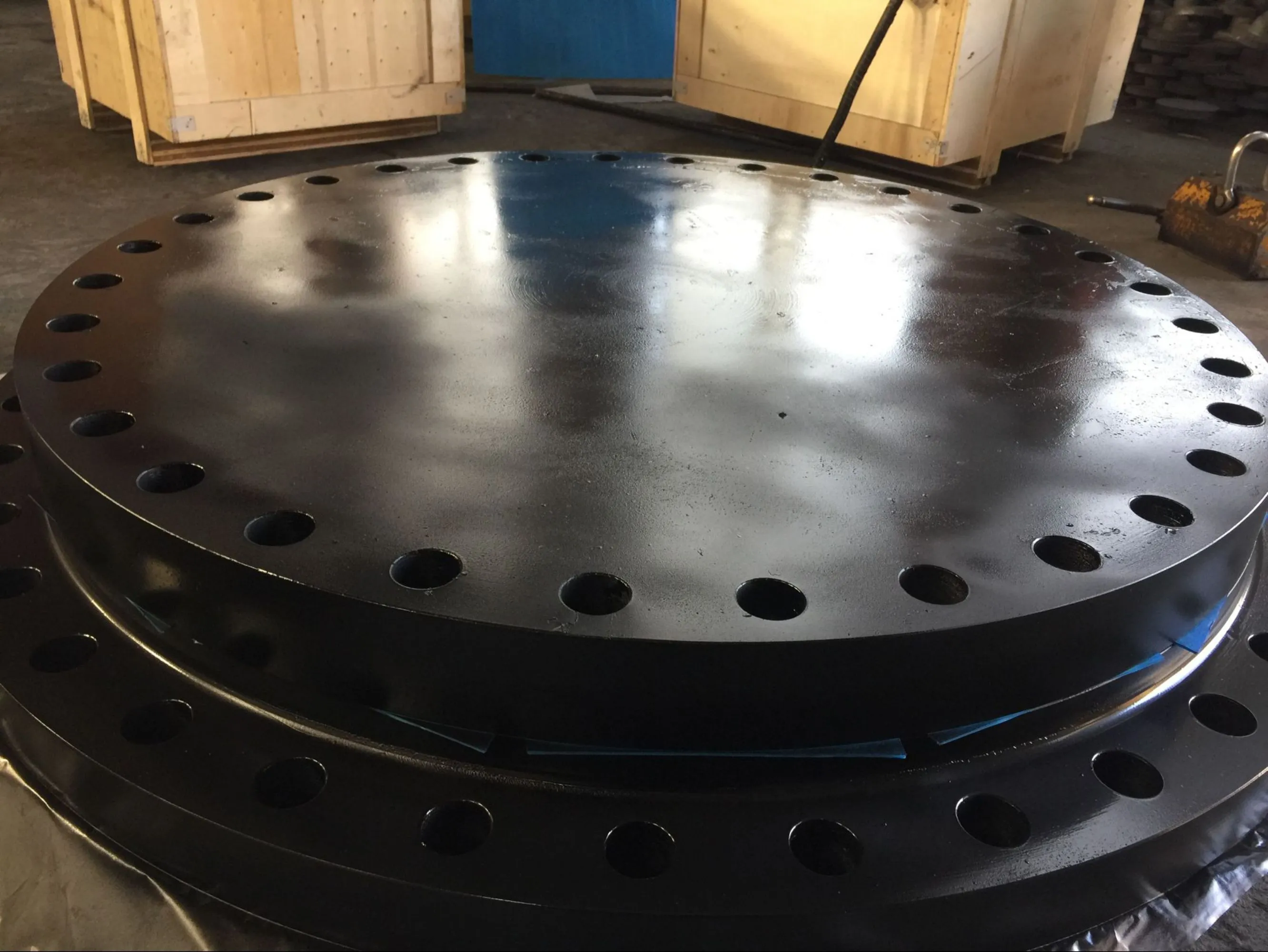
The blind disc most stockists hold runs NPS half an inch to 24 in ASME B16.5 classes 150 through 2500, then NPS 26 to 60 in B16.47 Series A or B up to Class 900. Thickness scales with the class rather than the diameter, so a Class 900 NPS 2 blank is thicker than a Class 150 NPS 12, and a buyer comparing prices by size alone usually meets the surprise on the invoice.
On large bore work the Series A and Series B bolt circles are not interchangeable, and the flange on the other side of the joint decides which one fits. Send us the mating drawing and we match the series before quoting, which takes a day off the enquiry round and keeps a crate from coming back.
A Terminal Job That Turned on One Blank
A 2023 fuel terminal job in Fujairah turned on a single blind flange. The contractor had to hydrotest a 16 inch loading header before the pumps arrived, and the only closure on site was a Class 300 blank offered against a Class 150 valve. Bolt holes lined up, but the raised face stood 2 mm proud of the mating face and the gasket would not seat evenly.
We cut a matched Class 150 blank and a spare the same afternoon, put both on an air waybill, and the test went ahead two days late instead of two weeks. The lesson was not about the part. The site sheet listed two classes because a revision had never been issued, and the blank was simply where the mistake became visible.
Bolting, Gaskets and Joint Fit-Up
On a blank the bolt load does the sealing, so we quote studs and gaskets with the disc rather than leaving them to the site. For a Class 150 NPS 8 joint we normally pair ASTM A193 B7 studs with A194 2H nuts and a 3 mm spiral wound or compressed fibre gasket matched to the drawing. Torque follows the gasket maker's table rather than the flange standard, and we include the tightening sequence with the packing list.
Certification, Traceability and Goods-In Checks
Every blind leaves us with a certificate to EN 10204 3.1 as standard, carrying heat number, chemistry, mechanical results and the standard it was made to. When a project calls for 3.2 we arrange third-party witness at our works before dispatch. At receiving we photograph the rim stamping and the face before the crate is sealed, so a question raised eight months later already has an answer in the file.
Packing, Coating and Export Logistics
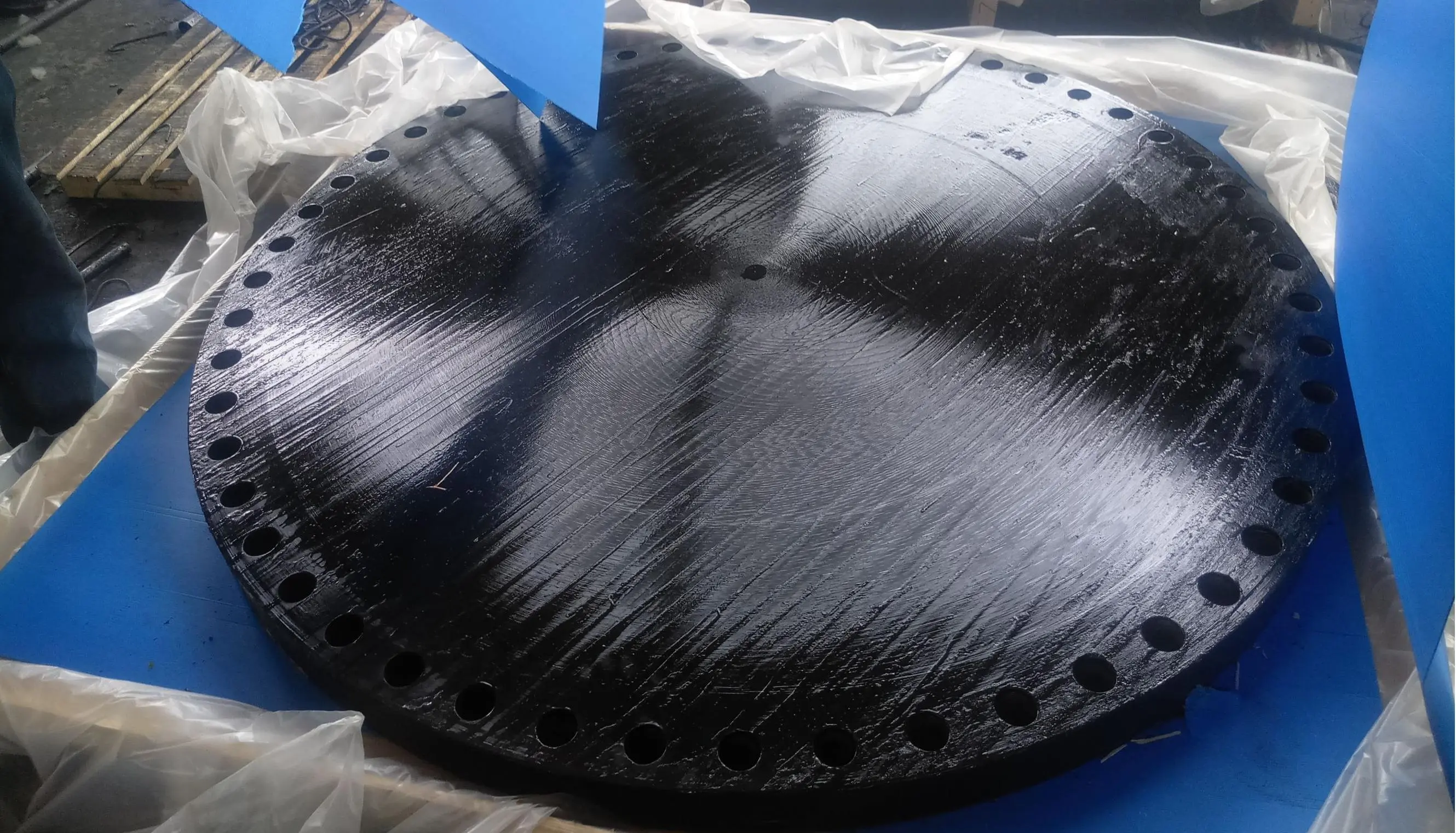
The face is what matters in transit, so the disc face goes into VCI paper, the part sits on timber, and we strap the crate instead of banding straight across the facing. Blanks above 24 inches travel on skids with lifting eyes; smaller ones go in returnable stillages. For sea freight we add a desiccant bag per crate, because a bare face crossing the Gulf in summer can show surface rust inside four weeks.
Stock, Repeat Orders and Phased Release
We keep A105 blanks from NPS half an inch to 24, classes 150 to 900, on the shelf for same-week release. Larger sizes and alloy grades are cut to order in seven to ten working days, and a contract quantity can be held for monthly release so the buyer carries no more stock than the site consumes. Repeat orders can be matched to the original heat if the certificate family has to stay consistent.
How We Confirm the Specification Before We Cut
Before a plate is cut we send back a one page confirmation listing size, class, facing, material grade, standard, quantity, marking requirement and delivery window. You approve or correct it, and only then does material go to the saw. That single step has prevented more wrong deliveries for us than any shop floor inspection, because most errors start life as an assumption in an email subject line.
How a Blank Is Made, From Plate to Machining
A blank starts as either a rolled plate or a forged disc, and the choice follows the pressure class. Up to Class 600 and NPS 24 we cut from plate on a profile machine or a waterjet, because a flat disc does not gain anything from grain flow the way a hub or a neck does. Above Class 900, or wherever a client asks for it, the part is forged and then fully machined, which costs more and gives a denser section.
After cutting, the plate goes to the lathe for facing on both sides, then to the drill for the bolt circle, then back to the lathe if the face has to be stepped. Three operations, two setups, and the measurement that matters is the distance between the two faces, because that number is the pressure rating. We write it on the inspection sheet before the part leaves the shop.
Marking comes last: size, class, grade, standard and heat number stamped into the rim, not painted on, because paint falls off in a crate and a painted mark is not traceability. We photograph the rim and the face against the order number, so a question six months later is answered with an image rather than a description of an image.
Why Choose Xi'an QinSteel for Blind Flange Supply
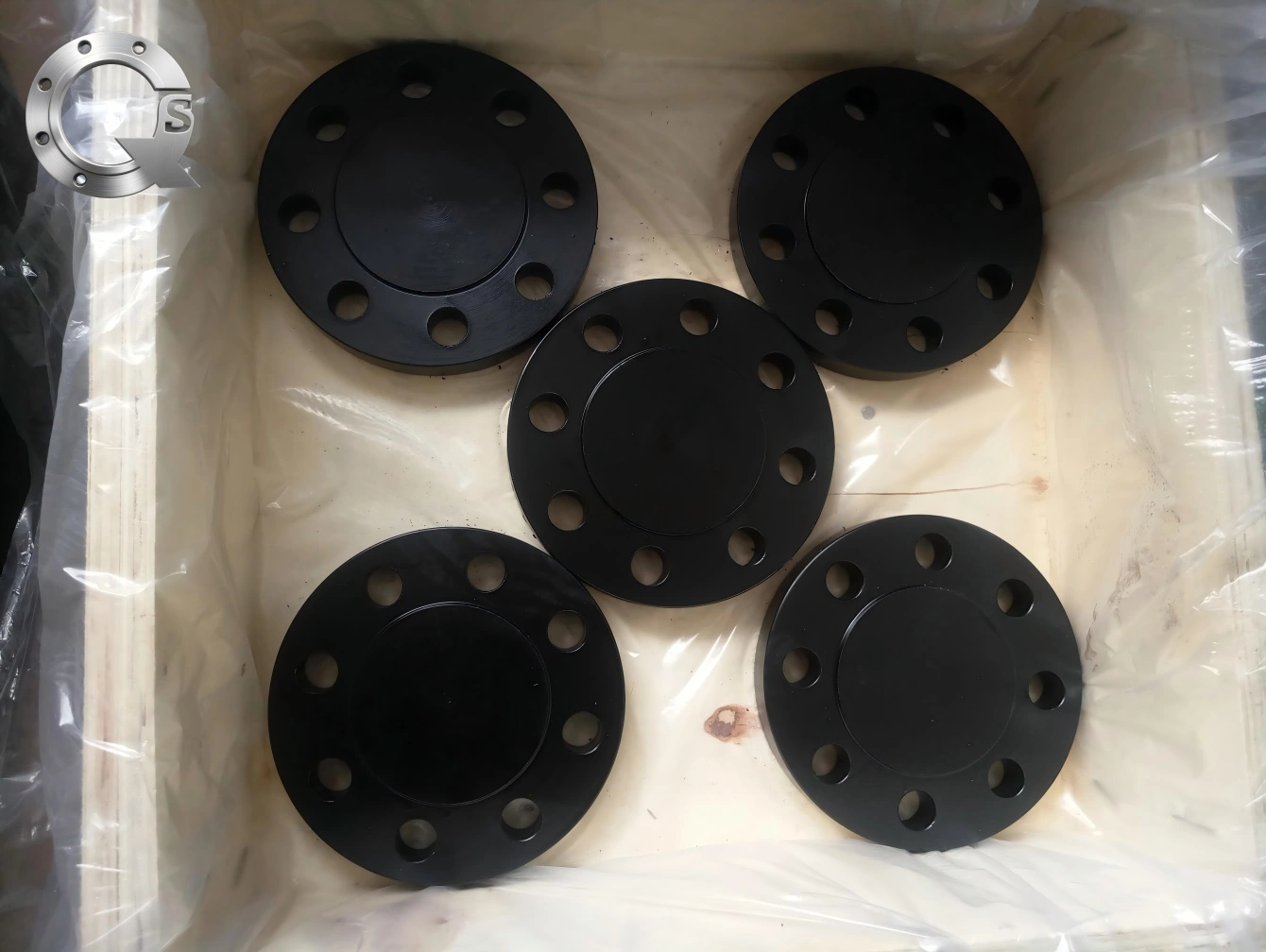
We have cut blanks in the same workshop for eighteen years, so a question about face height or bolt circle is usually answered the same day instead of after a mill enquiry. We keep the drawing, the certificate and the rim photograph for each order together, which is the first thing an auditor asks to see.
We ship to forty two countries and quote in USD, EUR or RMB with FOB, CIF and DDP shown side by side. We consolidate blanks with the other flanges on the same line list, so the buyer pays one freight bill and files one customs entry rather than four. Freight on a single crate is cheaper than three part loads, and we would rather tell you that than sell you four shipments.
We treat a technical question as part of the order, not an interruption to it. When a class looks low for the head in the line we say so in writing before the steel is cut, and we have lost orders that way. We would rather lose the order than the account. A written correction costs an email; a wrong delivery costs a fortnight and a freight claim nobody enjoys.
| Size (NPS) | Class 150 | Class 300 | Class 600 | Class 900 | Bolt holes |
|---|---|---|---|---|---|
| 2 | 19 mm | 22 mm | 25 mm | 32 mm | 4 |
| 4 | 24 mm | 29 mm | 38 mm | 44 mm | 8 |
| 6 | 25 mm | 29 mm | 35 mm | 45 mm | 8 |
| 10 | 30 mm | 38 mm | 48 mm | 57 mm | 12 |
| 16 | 37 mm | 48 mm | 58 mm | 70 mm | 16 |
| 24 | 46 mm | 64 mm | 83 mm | 98 mm | 20 |
Figures are typical minimum thicknesses for reference and material selection only. Confirm every value against the current ASME B16.5 table for the exact size, class and facing before release to manufacture.
Frequently Asked Questions
1.Is a blind flange the same as a blank flange?
Yes. Both names describe one part: a solid disc with a bolt circle and no bore. We use blind in our own documents and blank in export paperwork where the customs description expects it, and either word orders the same item.
2.How do I know which class to order for a dead end?
Match the class of the flange it bolts to and confirm the design pressure and temperature of the line. A dead end sees full internal pressure with no flow to cool it, so do not step down a class on a dead leg to save money.
3.Can a blind flange be a permanent end?
It can, and on water and utility lines it often is. For hydrocarbon service check the code first, because some operators prefer a welded cap or a blind with a bleeder hole for an end that will never reopen.
Contact Xi'an QinSteel for Blind Flange Solutions
For pricing and stock on Blind Flange orders, email info@sxqinsteel.com or open www.sxqsteel.com. Send the size, class, facing and material grade and our desk will reply with a firm quote, a certificate sample and the packing method for your port, usually inside one working day.
References
- ASME B16.5 - Pipe Flanges and Flanged Fittings, NPS 1/2 through NPS 24.
- ASME B16.47 - Large Diameter Steel Flanges, NPS 26 through NPS 60.
- ASME B16.48 - Steel Line Blanks.
- ASTM A105 / A105M - Carbon steel forgings for piping applications.
- ASME B31.3 - Process Piping.
- ISO 10474 / EN 10204 - Inspection documents, 3.1 and 3.2 certificates.
Learn about our latest products and discounts through SMS or email