- English
- French
- German
- Portuguese
- Spanish
- Russian
- Japanese
- Korean
- Arabic
- Greek
- German
- Turkish
- Italian
- Danish
- Romanian
- Indonesian
- Czech
- Afrikaans
- Swedish
- Polish
- Basque
- Catalan
- Esperanto
- Hindi
- Lao
- Albanian
- Amharic
- Armenian
- Azerbaijani
- Belarusian
- Bengali
- Bosnian
- Bulgarian
- Cebuano
- Chichewa
- Corsican
- Croatian
- Dutch
- Estonian
- Filipino
- Finnish
- Frisian
- Galician
- Georgian
- Gujarati
- Haitian
- Hausa
- Hawaiian
- Hebrew
- Hmong
- Hungarian
- Icelandic
- Igbo
- Javanese
- Kannada
- Kazakh
- Khmer
- Kurdish
- Kyrgyz
- Latin
- Latvian
- Lithuanian
- Luxembou..
- Macedonian
- Malagasy
- Malay
- Malayalam
- Maltese
- Maori
- Marathi
- Mongolian
- Burmese
- Nepali
- Norwegian
- Pashto
- Persian
- Punjabi
- Serbian
- Sesotho
- Sinhala
- Slovak
- Slovenian
- Somali
- Samoan
- Scots Gaelic
- Shona
- Sindhi
- Sundanese
- Swahili
- Tajik
- Tamil
- Telugu
- Thai
- Ukrainian
- Urdu
- Uzbek
- Vietnamese
- Welsh
- Xhosa
- Yiddish
- Yoruba
- Zulu
ASME B16.11 Reducer Coupling: Ultimate Guide to Industry Standards, Dimensions and Pressure Ratings
Aug 12 2026
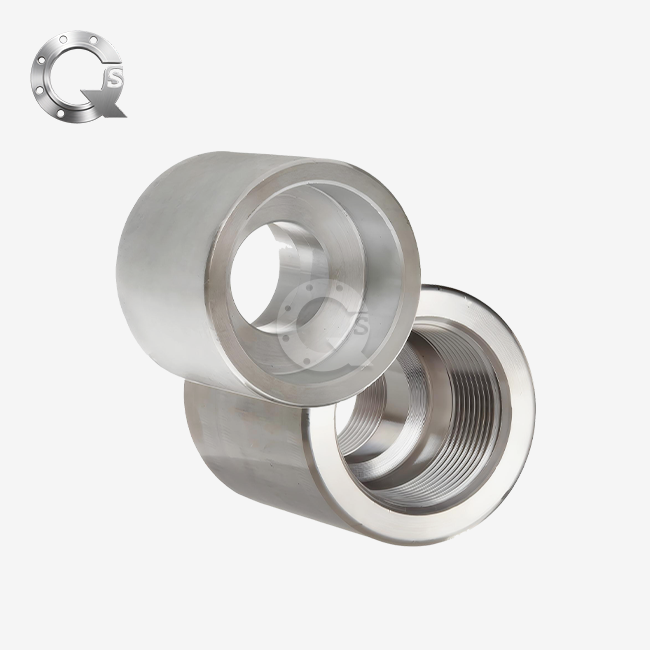
ASME B16.11 Reducer Coupling is a critical forged pipe fitting widely adopted in high-pressure industrial piping systems to connect pipes of different nominal diameters while complying with unified American Society of Mechanical Engineers (ASME) industry standards. As a core component of socket weld and threaded forged fittings, this reducing coupling ensures stable fluid transmission, structural tightness and operational safety in complex industrial environments. It is extensively applied in petrochemical, natural gas, power generation, marine engineering and hydraulic pipeline systems, becoming a standardized accessory for high-precision pipeline connection projects worldwide.
Core Definition and Basic Overview
A reducer coupling compliant with ASME B16.11 specifications is a concentric reducing pipe fitting designed for transitioning between two different pipe sizes. Unlike conventional straight couplings, this forged fitting features a tapered internal bore structure that enables seamless diameter conversion without disrupting pipeline fluid flow stability. Manufactured through integral forging technology, the fitting eliminates internal gaps and structural defects, delivering superior mechanical strength compared to welded reducing pipe sections. The ASME B16.11 standard strictly governs its manufacturing process, dimensional tolerance, material selection and pressure resistance performance, ensuring full compatibility with global industrial pipeline construction norms.
Classified by connection mode, standard reducing couplings fall into two mainstream categories: socket weld type and threaded type. Socket weld variants are suitable for high-pressure, high-temperature pipeline scenarios requiring full welding sealing, while threaded variants are ideal for low-to-medium pressure systems that demand convenient installation and disassembly. Both types follow unified ASME B16.11 specification constraints to guarantee interchangeability and installation consistency across different engineering projects.
Compliance Scope and Standard Specifications of ASME B16.11
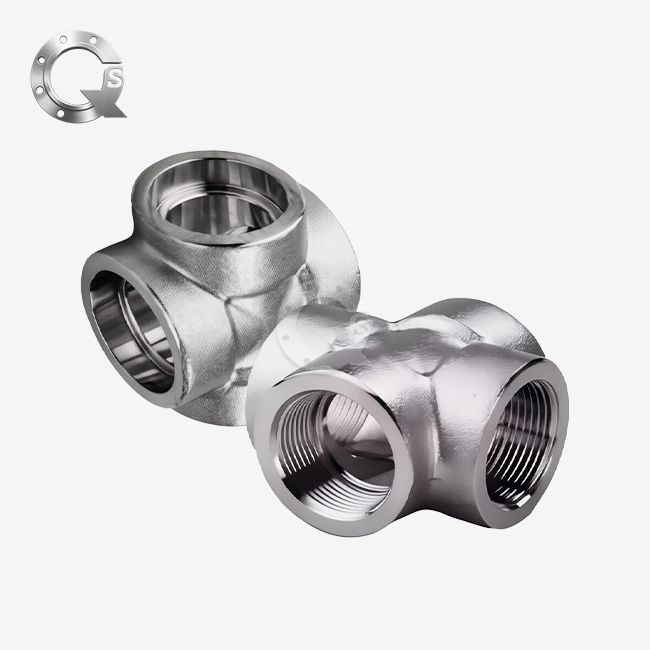
The ASME B16.11 specification is the authoritative industrial standard for forged socket weld and threaded pipe fittings, covering reducer couplings, straight couplings, elbows, tees and other commonly used pipeline accessories. Updated iteratively by ASME, the latest valid version unifies the design, manufacturing and testing standards of small-bore high-pressure pipe fittings, filling the gap in standardized specifications for reducing connection fittings in industrial pipelines. For industrial reducing couplings, this standard clearly defines applicable size ranges, pressure level classifications, material performance requirements and dimensional deviation allowances, eliminating non-standard product differences in the industry.
In terms of applicable specifications, standard compliant reducing fittings cover a nominal size range from 1/8 inch (DN6) to 4 inches (DN100), fully meeting the matching needs of small and medium-bore industrial pipelines. The standard strictly distinguishes pressure rating systems for different connection types: socket weld reducing couplings support Class 3000, Class 6000 and Class 9000 high-pressure levels, while threaded reducing couplings adapt to Class 2000, Class 3000 and Class 6000 pressure grades, covering most low, medium and high-pressure industrial pipeline working conditions.
In addition to size and pressure constraints, the standard also regulates material selection and surface treatment requirements. Qualified reducing pipe couplings must be made of high-quality forged steel materials such as ASTM A105 carbon steel, ASTM A182 stainless steel and ASTM A350 low-temperature steel, ensuring excellent tensile strength, pressure resistance and corrosion resistance. All products must undergo non-destructive testing (NDT) to eliminate cracks, porosity and other internal defects, meeting industrial safety operation standards.
Standard Dimension Parameters
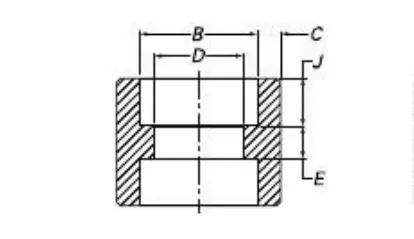
Dimensional standardization is the core advantage of ASME B16.11 compliant reducing couplings, enabling universal interchangeability in global engineering projects. All dimensional parameters are precisely defined by the standard, including end-to-end length, outer diameter, socket bore diameter, socket depth and thread length, with strict tolerance control to ensure precise matching with standard steel pipes.
For common size specifications, the 1.1/2×1 inch reducing coupling features a socket bore diameter of 48.90mm and 48.65mm respectively, with a socket depth of 34.05mm and 33.80mm; the 1.1/2×3/4 inch model has a socket depth of 27.30mm and 27.05mm. Different nominal size combinations correspond to fixed outer diameter and length parameters, avoiding installation deviation caused by non-standard dimensions. Threaded reducing couplings follow NPT or BSPT thread standards, with standardized thread length and tooth pitch to ensure tight thread engagement and reliable sealing performance.
All dimensional tolerances are controlled within ±0.8mm, which effectively solves the problems of poor assembly fit and easy leakage caused by irregular sizes of traditional reducing fittings. Whether for new pipeline construction or old pipeline renovation and replacement, standardized dimensional design ensures quick and accurate installation, greatly improving engineering construction efficiency.
Pressure Rating Classification and Application Scenarios
Pressure rating is a key indicator for selecting qualified reducing couplings, directly determining the safe working range of fittings in pipeline systems. Based on ASME B16.11 regulations, forged reducing couplings of different connection types have graded pressure resistance performance, adapting to diverse industrial working conditions.
Socket weld reducing couplings are mainly used for high-pressure working environments. Class 3000 products are suitable for conventional high-pressure pipelines in petrochemical and chemical industries; Class 6000 variants apply to high-pressure and high-temperature pipelines in power plants and refining projects; Class 9000 ultra-high pressure models are dedicated to special industrial scenarios such as deep-sea marine engineering and high-pressure hydraulic systems. Threaded reducing couplings with Class 2000 and Class 3000 ratings are widely used for low and medium-pressure pipelines in general manufacturing, water supply and gas transmission projects, featuring flexible installation and convenient later maintenance.
It is worth noting that the pressure resistance of reducing pipe fittings is closely related to material and wall thickness. Standard thickened wall design and integral forging process ensure that the fittings can maintain structural stability and sealing performance under long-term high-pressure operation, avoiding pipeline leakage, deformation and other safety hazards. Users need to select corresponding pressure grade products according to actual pipeline working pressure, medium temperature and transmission medium characteristics to ensure system operational safety.
Common Manufacturing Materials and Performance Advantages
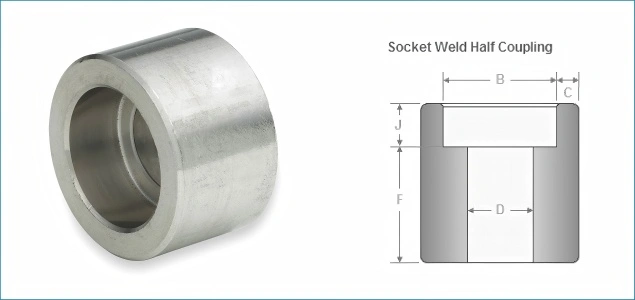
The service life and operational stability of industrial reducing couplings depend largely on manufacturing materials. In line with ASME B16.11 supporting material standards, high-quality reducing fittings adopt diversified material configurations to adapt to different corrosive, high-temperature and low-temperature working environments.
Carbon steel materials represented by ASTM A105 and A105N are the most widely used, with excellent mechanical strength and cost performance, suitable for conventional non-corrosive high-pressure pipeline systems. ASTM A350 LF2/LF3 low-temperature carbon steel materials are specially used for cryogenic service conditions and low-temperature chemical processing environments, effectively preventing material brittle fracture under extreme low temperatures. For corrosive medium transmission scenarios such as chemical acid-base liquid and seawater pipelines, ASTM A182 F304/F316 stainless steel and duplex steel materials are adopted, with outstanding corrosion and oxidation resistance.
Compared with ordinary welded reducing fittings, standardized forged reducing couplings have obvious performance advantages. The integral forging process optimizes the internal metal fiber structure of the product, improving overall density and pressure resistance; standardized size and pressure grade design ensure product consistency and reliability; diversified material options meet the customized needs of different industrial scenarios, making them the preferred fittings for high-standard industrial pipeline projects.
Installation Guidelines and Quality Inspection Standards
Correct installation and strict quality inspection are key links to ensure the service performance of standard reducing couplings. For socket weld reducing fittings, workers need to clean the socket and pipe end impurities before installation, control the welding temperature and welding seam width, and adopt full welding process to ensure welding tightness. For threaded reducing couplings, it is necessary to apply high-temperature sealing glue or winding sealing tape on the thread part to avoid medium leakage caused by loose thread engagement.
In terms of quality inspection, all finished reducing couplings must comply with ASME B16.11 full inspection standards, including dimensional tolerance detection, appearance defect inspection, hydraulic pressure test and non-destructive testing. The hydraulic test pressure is 1.5 times the rated working pressure, ensuring no deformation or leakage after pressure holding; ultrasonic and radiographic testing are used to detect internal micro-defects to ensure product qualification rate. Only products that pass all inspection items can be delivered and used in engineering projects.
Frequently Asked Questions (FAQs)
Q1: What is the core difference between ASME B16.11 and ASME B16.5 standards for pipe fittings?
A1: ASME B16.11 mainly applies to small-bore forged socket weld and threaded pipe fittings including reducer couplings, covering sizes below DN100, focusing on small-diameter high-pressure pipeline connection accessories. In contrast, ASME B16.5 is applicable to large-diameter flanges and large-bore pipe fittings, with higher size and pressure grade ranges. The two standards complement each other and cover different specifications of industrial pipe fittings.
Q2: Can reducing couplings of different pressure grades be used interchangeably?
A2: Interchangeable use is not recommended. Products of different pressure grades have differences in wall thickness, material strength and structural bearing capacity. Low-pressure grade fittings used in high-pressure environments will cause deformation, leakage or even pipe burst safety hazards, while high-pressure products used in low-pressure scenarios will cause cost waste. It is necessary to select matching pressure grade products according to actual working conditions.
Q3: What working conditions are suitable for threaded and socket weld reducing couplings respectively?
A3: Threaded reducing fittings are suitable for low and medium-pressure, normal temperature pipelines that require frequent disassembly and maintenance, with simple installation and low cost. Socket weld reducing couplings adopt full welding sealing, with better structural stability and pressure resistance, suitable for high-pressure, high-temperature, corrosive and other harsh working conditions with high safety requirements and no frequent disassembly.
Q4: How to confirm the compliance of purchased reducing coupling products?
A4: Qualified products should be marked with ASME B16.11 standard logo, clear size specification, pressure grade and material grade. Meanwhile, manufacturers need to provide complete qualification documents including material test reports, pressure test reports and non-destructive inspection reports to verify product compliance.
Q5: What surface treatment methods are available for standard reducing couplings?
A5: According to usage scenarios, common surface treatments include black oil treatment, galvanizing treatment, pickling passivation and anti-rust coating. Carbon steel products are mostly treated with black oil or galvanizing to prevent oxidation and rust; stainless steel products adopt pickling passivation to improve corrosion resistance, meeting the anti-corrosion requirements of different working environments.
Contact QinSteel for Premium ASME B16.11 Reducer Coupling Solutions
As a professional manufacturer and supplier of standardized forged pipe fittings, QinSteel has long been committed to providing high-quality, standard-compliant industrial pipe fitting products and one-stop pipeline connection solutions for global industrial customers. Our full range of ASME B16.11 Reducer Coupling strictly follows international standard specifications, with complete size specifications, accurate dimensional tolerance and stable pressure resistance performance, fully meeting the construction needs of petrochemical, power, marine and other high-standard engineering projects.
We support customized processing of special size and special material reducing couplings, and provide professional product selection guidance, technical parameter consultation and after-sales service. All products are inspected in strict accordance with ASME standards, with complete qualification certificates and test reports to ensure reliable product quality. For product inquiry, sample customization, bulk procurement and technical cooperation, please send your detailed demand to our official business email: info@sxqinsteel.com. Our professional technical and sales team will reply to your message within 24 hours and provide targeted industrial pipeline fitting solutions.

References
[1] ASME B16.11-2021, Forged Socket Welding and Threaded Fittings, American Society of Mechanical Engineers
[2] ASTM A105/A105M-22, Standard Specification for Carbon Steel Forgings for Piping Applications
[3] ASTM A182/A182M-23, Standard Specification for Forged or Rolled Alloy and Stainless Steel Pipe Flanges, Forged Fittings, and Valves and Parts for High-Temperature Service
[4] Industrial Piping System Design and Fitting Selection Manual, Global Industrial Engineering Press
[5] ASME B16.11 Standard Dimensional Tolerance and Pressure Rating Technical Guidelines, Mechanical Engineering Industry Standardization Research Institute
Learn about our latest products and discounts through SMS or email