- English
- French
- German
- Portuguese
- Spanish
- Russian
- Japanese
- Korean
- Arabic
- Greek
- German
- Turkish
- Italian
- Danish
- Romanian
- Indonesian
- Czech
- Afrikaans
- Swedish
- Polish
- Basque
- Catalan
- Esperanto
- Hindi
- Lao
- Albanian
- Amharic
- Armenian
- Azerbaijani
- Belarusian
- Bengali
- Bosnian
- Bulgarian
- Cebuano
- Chichewa
- Corsican
- Croatian
- Dutch
- Estonian
- Filipino
- Finnish
- Frisian
- Galician
- Georgian
- Gujarati
- Haitian
- Hausa
- Hawaiian
- Hebrew
- Hmong
- Hungarian
- Icelandic
- Igbo
- Javanese
- Kannada
- Kazakh
- Khmer
- Kurdish
- Kyrgyz
- Latin
- Latvian
- Lithuanian
- Luxembou..
- Macedonian
- Malagasy
- Malay
- Malayalam
- Maltese
- Maori
- Marathi
- Mongolian
- Burmese
- Nepali
- Norwegian
- Pashto
- Persian
- Punjabi
- Serbian
- Sesotho
- Sinhala
- Slovak
- Slovenian
- Somali
- Samoan
- Scots Gaelic
- Shona
- Sindhi
- Sundanese
- Swahili
- Tajik
- Tamil
- Telugu
- Thai
- Ukrainian
- Urdu
- Uzbek
- Vietnamese
- Welsh
- Xhosa
- Yiddish
- Yoruba
- Zulu
ASME B16.11 Half Coupling: Dimensions, Materials & Selection Guide
Feb 28 2026
Understanding the specs and functions of ASME B16.11 half coupling parts is important for projects that need to buy important piping links for high-pressure uses. These forged steel fittings make branch connections that work well in harsh industrial settings. They come in both socket weld and threaded versions to meet a range of operational needs. These couplings are very important in oil and gas, petrochemical, power generation, and industrial piping systems where room is limited and performance reliability is very important. They come in sizes from 1/8" to 4" and can withstand pressures up to 9000LB.

Understanding ASME B16.11 Half Couplings
ASME B16.11 half couplings are a special type of forged steel parts that are designed to make branch connections in high-pressure pipe systems that are safe. These parts are basically different from full couplings because they only have one end, which makes installations more space-efficient while still keeping the structure strong in harsh conditions.
Essential Dimensions and Specifications
Tough ASME B16.11 standards are used to make sure that these fittings' dimensions are compatible with all kinds of industry uses. Standard sizes range from 1/8" to 4" nominal pipe size, and each one is carefully made to fit a certain pipe wall thickness. The countersunk design of the coupling body makes it ideal for high-pressure activities because it evenly distributes stress.
Socket weld configurations have a recessed shoulder that keeps the pipe end in the right place while welding, and threaded designs can handle NPT, BSPP, and BSPT thread patterns. To keep the same level of strength, the overall length changes depending on the nominal size. Smaller fittings are about 1.5 inches long, while bigger sizes go up to 3 inches.
Material Standards and Grade Selection
The choice of material is very important for the long-term success of half coupling installations. Grade A105 carbon steel is the standard material for general-purpose uses because it is strong and doesn't cost too much in environments with mild corrosion. It is reliable to use this type of material in temperatures ranging from -29°C to 538°C, and it keeps its shape even when the pressure changes.
Grades F304 and F316 of stainless steel meet the needs for corrosion resistance in chemical processing and marine uses. The molybdenum added to the F316 grade makes it more resistant to corrosion caused by chloride. This makes it suitable for use in seawater and acidic settings. A350 LF2 material is good for low-temperature service uses because it stays flexible at temperatures below zero without losing its ability to withstand pressure.
Pressure Ratings and Safety Factors
The pressure ratings of 3000LB, 6000LB, and 9000LB show the highest pressure that can be used at room temperature. These scores include a lot of safety factors that take into account things like temperature changes, pressure spikes, and long-term service conditions. The 9000LB rating is best for high-pressure drilling and hydraulic systems that experience pressure surges that are higher than usual.
These pressure ratings are affected by temperature derating factors. As working temperatures rise, the highest pressures that are allowed will also rise. This relationship makes sure that the system can be used safely at all temperatures and keeps the material from breaking down when pressure and temperature stress are mixed.
Comparing ASME B16.11 Half Coupling with Alternative Couplings
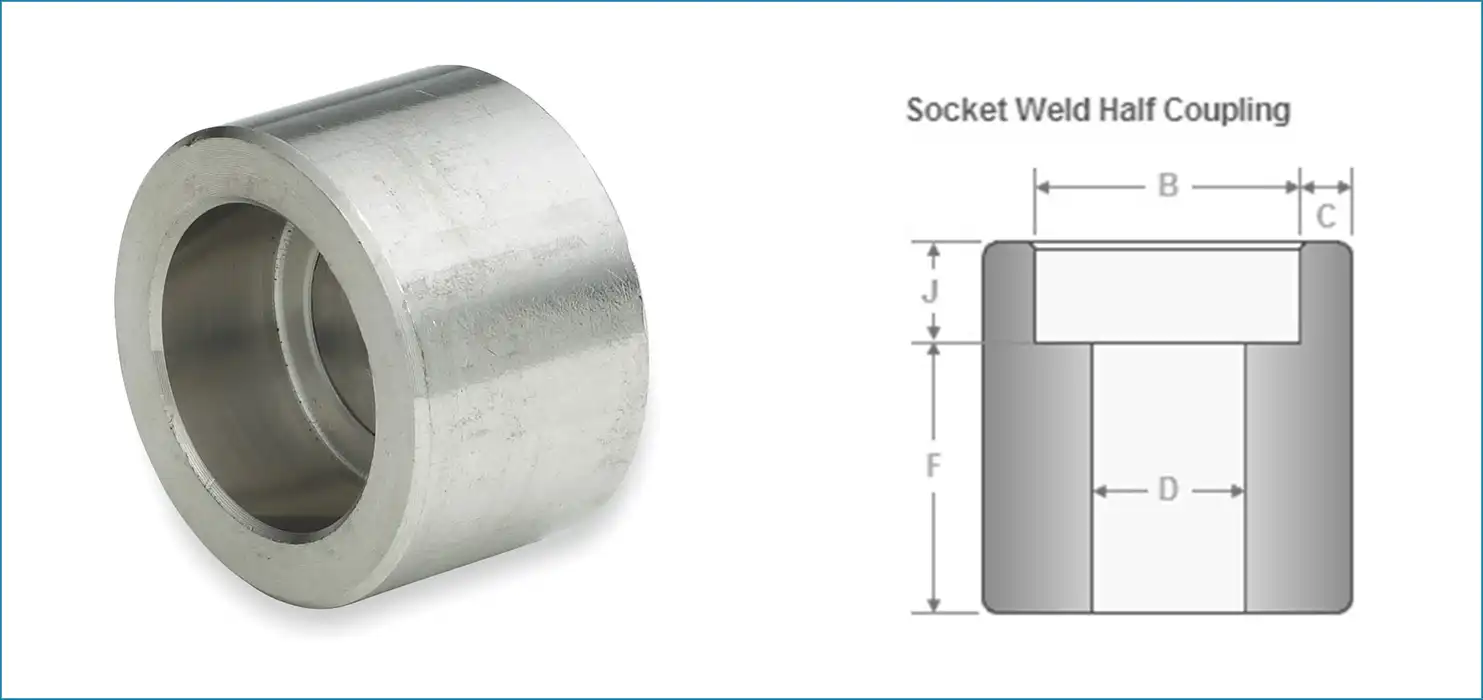
Knowing the differences in speed between different types of B16.11 half coupling lets you make smart choices based on the needs of your application. In installations with limited room, half couplings are much more useful than full couplings, but they can still handle the same amount of pressure.
Functional Differences and Application Suitability
There are two ends to a full coupling, which means it can connect two pipes together. This makes it perfect for straight-run pipe installations. Half couplings, on the other hand, work great for branch connection applications where full coupling installation isn't possible due to room constraints. The single-end form makes the fitting lighter and cheaper to make, and it makes installation easier in situations where there are a lot of pipes in one place.
Socket weld half couplings are better at resisting vibration than threaded options, which makes them better for use with moving equipment and in places with a lot of vibration. The welded link eliminates any chance of loosening while creating a permanent joint that stays strong over long periods of service.
Threaded half couplings are better for maintenance because the links can be taken off, which lets you service the equipment without having to weld it. This set-up works well for connecting instruments and for short-term setups where changes may need to be made in the future. But threaded joints need to be sealed with the right sealant and torque levels to keep leaks from happening when pressure is applied.
Material Performance Comparison
It is possible to get carbon steel materials at reasonable prices and they are very strong. This makes them good for general industrial uses where corrosion protection is not very important. Standard welding techniques can be used on these materials, and they work reliably in oil handling and power generation settings.
Some types of stainless steel are more expensive at first, but they are very resistant to corrosion, which means they last longer in harsh chemical conditions. Because stainless steel surfaces are so easy to clean, they are necessary in high-purity, food processing, and pharmaceutical settings where keeping things clean is very important.
ASME versus ANSI Standard Compliance
The ASME B16.11 standards set the size ranges, material requirements, and testing needs for forged steel fittings. This makes sure that the quality is the same from one maker to the next. These guidelines are in line with what other countries do and make it easier to source goods from around the world while keeping performance reliable.
ANSI standards set installation practices, safety procedures, and quality assurance routines that go along with ASME specifications. When both sets of standards are followed together, they cover all the requirements for design, production, and use, which is what is needed for government approval processes around the world.

Procurement and Buying Guide for ASME B16.11 Half Couplings
To come up with good buying strategies for forged steel fittings, you need to know how the market works, what your suppliers can do, and how to handle the logistics that affect project costs and timelines. Effective sourcing strategies match the need for quality with the need to stay within budget, all while making sure that the supply chain is supported in a reliable way.
Pricing Structures and Order Considerations
When you buy in bulk, you can save a lot of money because of volume deals that can cut the cost of each piece by 15 to 30 percent compared to small orders. Different suppliers have different minimum order amounts. For standard sizes and materials, well-known makers often need at least 100 pieces.
Lead times depend on how much material is available and how much the factory can make, but normal configurations usually ship within two to three weeks. Custom orders may take 4 to 6 weeks to make, especially if they feature rare materials or sizes that aren't standard. Planning procurement plans around these dates keeps projects on track and cuts down on the costs of speeding things up.
Supplier Evaluation Criteria
Quality certifications are the best way to tell if a seller is reliable. For example, ISO 9001 certification shows that the supplier uses systematic quality management practices. Other certifications, like PED, NACE, and API, offer more detailed compliance checks for use in certain industries.
Documentation for material traceability makes sure that the right materials, including B16.11 half coupling, are identified and that their performance is checked all along the supply chain. Reliable providers give mill test certificates that list the chemical make-up, mechanical properties, and heat treatment history for each batch of material.
Superior suppliers stand out from others by offering technical support that includes engineering help, application advice, and help with fixing problems. These services are helpful when making specifications and planning for installations.
Custom Manufacturing and Value-Added Services
When you need something in a size that isn't standard, you usually need custom manufacturing skills that can fit project-specific dimensions while keeping standard performance characteristics. Manufacturers with a lot of experience have the engineering know-how and tooling flexibility needed for custom fitting output.
Surface treatment choices like passivation, coating application, and special marking can make an item more useful in some situations. These services make procurement easier by combining multiple tasks with a single seller and making sure that all of the tasks can be done together.
Company Introduction and Product & Service Information
With 20 years of experience, Xi'An QinSteel Trading Co., Ltd. has been making and selling forged steel parts to customers in the Americas, Africa, Europe, and Southeast Asia. Because we know so much about industrial pipe needs, we can provide well-designed solutions that meet the strict requirements of oil and gas, chemical processing, and power generation projects.
Our Product Range and Manufacturing Excellence
We have a huge selection of ASME B16.11 half couplings in all sizes. They are made from high-quality materials like A105, A350 LF2, A694 F65, and stainless steel types F304 and F316. To make sure that every product works the same way in all situations, they go through strict quality control steps like 100% hydrostatic testing, dimensional verification, and material approval.
Modern casting methods and heat treatment steps are used in manufacturing to improve the structure of the grains and the strength of the materials. Our quality management system keeps its ISO 9001 certification and also follows other industry standards, such as the PED and NACE rules for certain uses.
Customization Capabilities and Technical Support
Our engineering team works with clients to create custom solutions that meet the specific needs of each application, even if those needs involve non-standard sizes, unusual materials, or special surface treatments. Original equipment manufacturers and specialized industrial projects that need exact specs find this feature to be very useful.
Technical consultation services include more than just selling products. They also include application engineering, help with installation, and advice on how to keep things in good shape over time. Our presence around the world lets us provide quick help in many time zones while keeping quality standards the same no matter where the delivery is going.
Supply Chain Excellence and Logistics Support
Logistics management that works well positions goods strategically and sets up shipping partnerships that keep delivery times on track. Standard products usually ship within 48 hours of confirmation of the order, while contact is open and clear throughout the production cycle for custom manufacturing projects.
As part of our commitment to a reliable supply chain, we use backup buying strategies and safety stock management to make sure that supplies don't stop during times of high demand or when the market changes in ways we didn't expect.
Conclusion
When choosing an ASME B16.11 half coupling, you need to carefully think about the size requirements, the suitability of the materials, and the performance needs of the application. Because they come in standard sizes, are made of tested materials, and can handle pressure reliably, these fittings are important parts of key piping systems in many industries. To be a good buyer, you need to know about the skills, certifications, and professional support services that suppliers offer to make sure the project runs smoothly for a long time. With the right choice of materials, installation, and upkeep, these strong fittings will work reliably for long periods of time while meeting strict safety and legal requirements.
FAQ
What materials are commonly used for ASME B16.11 half couplings?
Standard materials include carbon steel grade A105 for general applications, stainless steel grades F304 and F316 for corrosion resistance, A350 LF2 for low-temperature service, and A694 F65 for high-strength requirements in sour gas environments.
How do I verify pressure ratings for safety compliance?
Pressure ratings appear on the fitting body marking along with material grade and standard designation. These ratings apply at ambient temperature with derating factors for elevated temperature service as specified in ASME B31 piping codes.
What customization options are available for specific projects?
Custom options include non-standard sizes, exotic alloy materials, special surface treatments, and project-specific marking requirements. Lead times for custom manufacturing typically range from 15-30 days depending on specification complexity.
What is the difference between socket weld and threaded half couplings?
Socket weld types provide permanent welded connections with superior vibration resistance, while threaded versions offer removable connections for maintenance access but require proper sealant application and torque control.
Partner with QinSteel for Your ASME B16.11 Half Coupling Requirements
QinSteel delivers comprehensive forged fitting solutions backed by 20 years of manufacturing excellence and global supply chain expertise. Our extensive inventory of ASME B16.11 half coupling products ensures rapid delivery while our custom manufacturing capabilities address specialized project requirements. Contact our technical team at info@sxqinsteel.com to discuss your specific application needs and receive competitive pricing for both standard and custom configurations. Experience the reliability of working with a trusted ASME B16.11 half coupling supplier committed to quality, performance, and customer success.

References
American Society of Mechanical Engineers, "ASME B16.11 - Forged Fittings, Socket-Welding and Threaded," ASME International, New York, 2018.
Harvey, John F., "Theory and Design of Pressure Vessels," Van Nostrand Reinhold Company, New York, 2015.
Nayyar, Mohinder L., "Piping Handbook," McGraw-Hill Professional, New York, 2019.
Chuse, Robert and Carson, Bryce E., "Pressure Vessels: The ASME Code Simplified," McGraw-Hill Professional, New York, 2016.
Singh, Karan P., "Mechanical Engineer's Handbook: Materials and Mechanical Design," John Wiley & Sons, Hoboken, 2020.
American Petroleum Institute, "API Recommended Practice 5L3 - Recommended Practice for Conducting Drop-Weight Tear Tests on Line Pipe," API Publishing Services, Washington DC, 2017.

Learn about our latest products and discounts through SMS or email