- English
- French
- German
- Portuguese
- Spanish
- Russian
- Japanese
- Korean
- Arabic
- Greek
- German
- Turkish
- Italian
- Danish
- Romanian
- Indonesian
- Czech
- Afrikaans
- Swedish
- Polish
- Basque
- Catalan
- Esperanto
- Hindi
- Lao
- Albanian
- Amharic
- Armenian
- Azerbaijani
- Belarusian
- Bengali
- Bosnian
- Bulgarian
- Cebuano
- Chichewa
- Corsican
- Croatian
- Dutch
- Estonian
- Filipino
- Finnish
- Frisian
- Galician
- Georgian
- Gujarati
- Haitian
- Hausa
- Hawaiian
- Hebrew
- Hmong
- Hungarian
- Icelandic
- Igbo
- Javanese
- Kannada
- Kazakh
- Khmer
- Kurdish
- Kyrgyz
- Latin
- Latvian
- Lithuanian
- Luxembou..
- Macedonian
- Malagasy
- Malay
- Malayalam
- Maltese
- Maori
- Marathi
- Mongolian
- Burmese
- Nepali
- Norwegian
- Pashto
- Persian
- Punjabi
- Serbian
- Sesotho
- Sinhala
- Slovak
- Slovenian
- Somali
- Samoan
- Scots Gaelic
- Shona
- Sindhi
- Sundanese
- Swahili
- Tajik
- Tamil
- Telugu
- Thai
- Ukrainian
- Urdu
- Uzbek
- Vietnamese
- Welsh
- Xhosa
- Yiddish
- Yoruba
- Zulu
When Should You Use an SS Blind Flange Instead of a Cap or Valve?
Oct 3 2026
SS Blind Flanges closes a pipe end in corrosive or hygienic service, or seals a line taken out of service without welding a permanent stop. We reach for a stainless blank when the medium would pit carbon steel within a season, because the alloy keeps the joint clean and the reopen simple. The grade most buyers ask for is 316L for chloride risk or 304 for mild duty, and the class follows the line it seals. In this piece we cover the jobs where a stainless blind earns its place, the ones where it does not, and how we at Xi'an QinSteel stock and cut them for export orders.
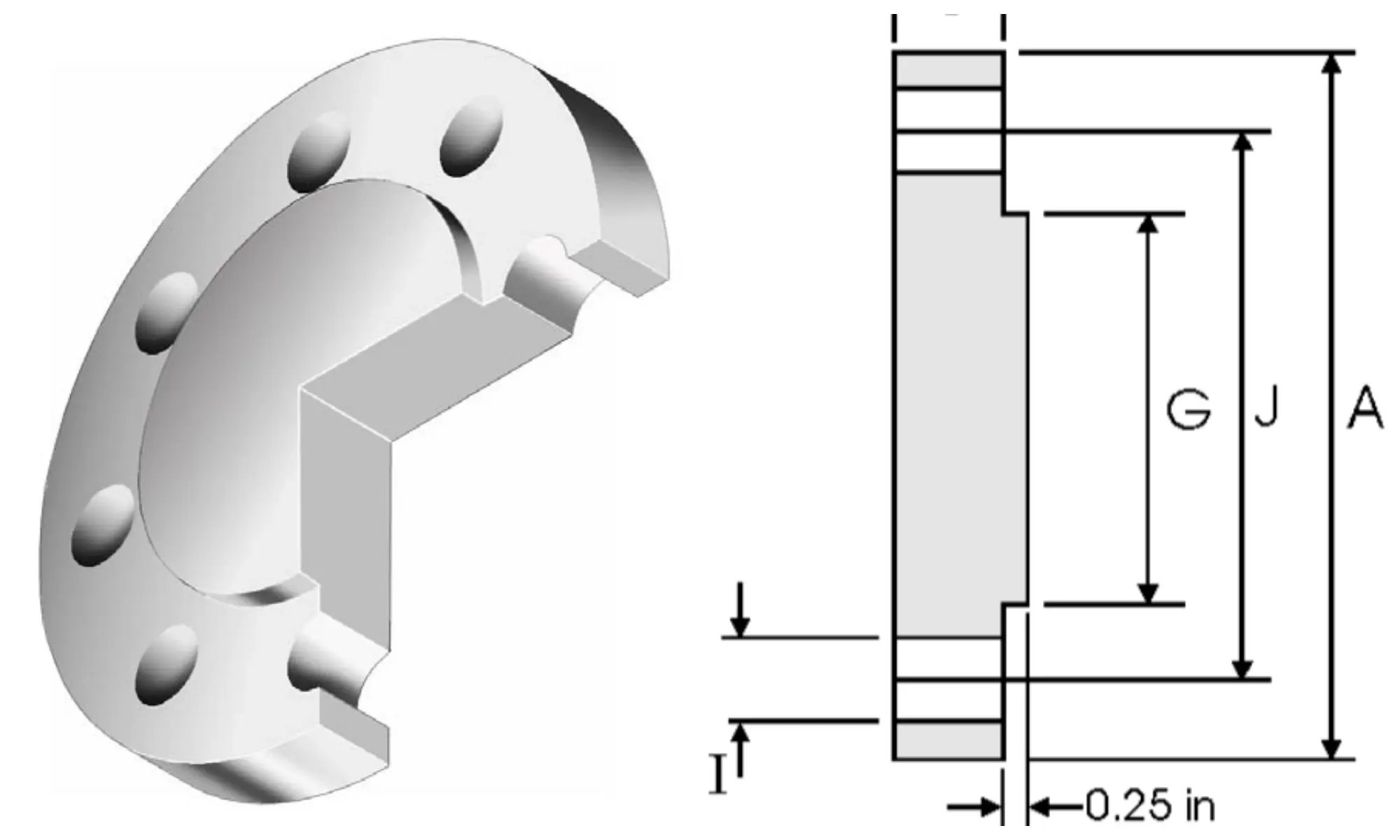
Where a Stainless Blank Does the Job Best
stainless steel blind flange stops flow at a dead end that will stay capped in a wet or acidic area, such as a seawater intake stub on a Gulf plant where carbon steel would rust through before the next turnaround. We supplied a batch that sealed twelve sample points on a desalination train, and the discs came out of the crate bright because the alloy resists the salt.
The flat face means the fitter does not need a special stub, only the same gasket and bolt circle as the live joint. He lines up the ring, fits the seal, and torques to the line spec, which is the same motion he uses on every other flange in the run.
On a Southeast Asia food plant we blanked a CIP return that reopened every wash cycle, and the stainless face took the repeated open-close without a weep. A carbon part there would have needed replacement inside a year.
SS Blind Flange Versus a Pipe Cap
stainless steel blind flanges keeps the flange rating continuous, so the line can reopen by unbolting rather than cutting. A cap welds the end shut and forces a grinder plus a new weld when the pipe finally extends. We point this out to EPCs who leave future tie-ins blanked for years.
The disc also lets you keep the original bolts and a spare gasket with the joint, so the next close is a few minutes rather than a procurement. On a busy unit that difference is the gap between a planned stop and an unplanned one.
When a Valve Is the Better Call
SS Blind Flanges seals and isolates but gives no throttling, so a valve stays the right pick when the operator needs to meter or stop flow on demand. We sell blanks for ends that are dead, not for lines that must be controlled from the board.
For a line that reopens often, a blank plus a tagged tag beats a valve on cost, but only if nobody needs to crack it halfway. The decision is about control, not about the seal itself.
Grade Choice in Wet Service
SS blind flange in 316L is our default for any water that touches chloride, because the moly content resists pitting that 304 would suffer. We note the design environment on the confirmation sheet so the grade matches the duty, not just the price list.
Where the medium is clean and the risk is low, 304 still saves money and seats just as well. We flag the lines where the upgrade to 316L is worth it and show the delta so the buyer decides with the numbers in front of him.
How We Handle Stock and Custom
blind flange in SS from NPS 1/2 to NPS 24 sit on our shelf in 316L at Class 150 and 300, and we cut the odd diameters from plate within a few days. Tell us the schedule and we match the wall so the joint looks right, not just the bore.
Custom diameters get a flatness check before they leave, because a warped disc will not seat and a reseat costs more than the original part. We measure on the bench and photograph the result for the file.
A Note on the Seal Face
SS Blind Flanges relies on a clean flat face, and we wrap the disc for transit so a scored seat does not cause a weep on first use. A quick wipe before seating keeps the gasket honest and the joint dry.
Pickling and passivation matter for the long haul in acid. We offer the passivated finish on request so the surface resists the first attack instead of inviting it, which is cheap insurance against a leak found after the line is live.
| Parameter | SS blind flange | Pipe cap | Gate valve |
|---|---|---|---|
| Function | Seal, reopenable | Seal, permanent | Seal and control |
| Corrosion | Resists acid, salt | Same if SS | Same if SS |
| Reopen | Unbolt | Cut off | Turn handle |
| Cost | Mid | Lowest | High |
| Rating continuity | Keeps flange rating | Changes end | Keeps rating |
| Best use | Wet or hygienic dead end | Permanent end | Need throttling |
Bolting, Gaskets and Joint Fit-Up
If the line will be opened and closed more than once, keep the original bolts and a spare gasket set with the disc. A blank reused with a crushed gasket is the usual source of a weep at the next hydrotest, and the fix is a ten-dollar gasket, not a new part.
A blank that arrives with the bolts and gasket in the same box is a small logistics win that pays back on a crowded site, because the fitter is not hunting a stud across three crates. We bundle the set on request so the joint is complete on arrival.
Certification, Traceability and Goods-In Checks
Goods-in inspection is quick when the heat number is stamped and the cert is in the box. We put the heat on the disc and the 3.1 on request, so your inspector signs off without a chase. A blank with no traceability is a query, and a query stops the line.
Packing, Coating and Export Logistics
On a Middle East utility job we held stainless blinds in stock against a rolling schedule, shipping a few boxes each week so the operator never tied up cash in a full container of spares. That kind of release plan suits projects that grow in stages.
On the plant deck the disc is light enough to handle by hand up to about NPS 12, and we mark the unit weight on the packing list so the crew sizes the lift for the larger sizes. A blank that arrives without a weight note tends to surprise the crane.
Stock, Repeat Orders and Phased Release
Common sizes from NPS 1/2 to NPS 24 sit on our shelf in 316L at Class 150 and 300, and we cut the odd diameters from plate within a few days. Tell us the schedule and we match the wall so the joint looks right, not just the bore.
For a phased build we release blanks in lots against your install dates, which keeps cash free and the shelf honest. A buyer who takes a full container of spares ties up money on parts he may not use for a year, and the release plan avoids that.
How We Confirm the Specification Before We Cut
Email info@sxqinsteel.com with your line list and we return a confirmation sheet the same business day for stock sizes, with mill certs available on request. For a one-off diameter we quote from plate and confirm the delivery window before you commit.
When you send a line list, include the mating flange class and the facing, not just the size. The two together decide the thickness and the gasket, and a missing facing is the most common cause of a blank that will not seat. We return a confirmation sheet that lists both before we cut.
The documentation pack we send with the order names the standard, the class, the facing, and the grade in one row, so the confirmation is a single glance, not a search. We have found that a clean sheet prevents most of the field calls we used to get.
Finally, tag the isolated end so the next crew knows the line is blanked, not abandoned. A disc with no tag is a mystery at the next turnaround, and mysteries cost the schedule far more than the tag did.
Why Choose Xi'an QinSteel for SS Blind Flanges
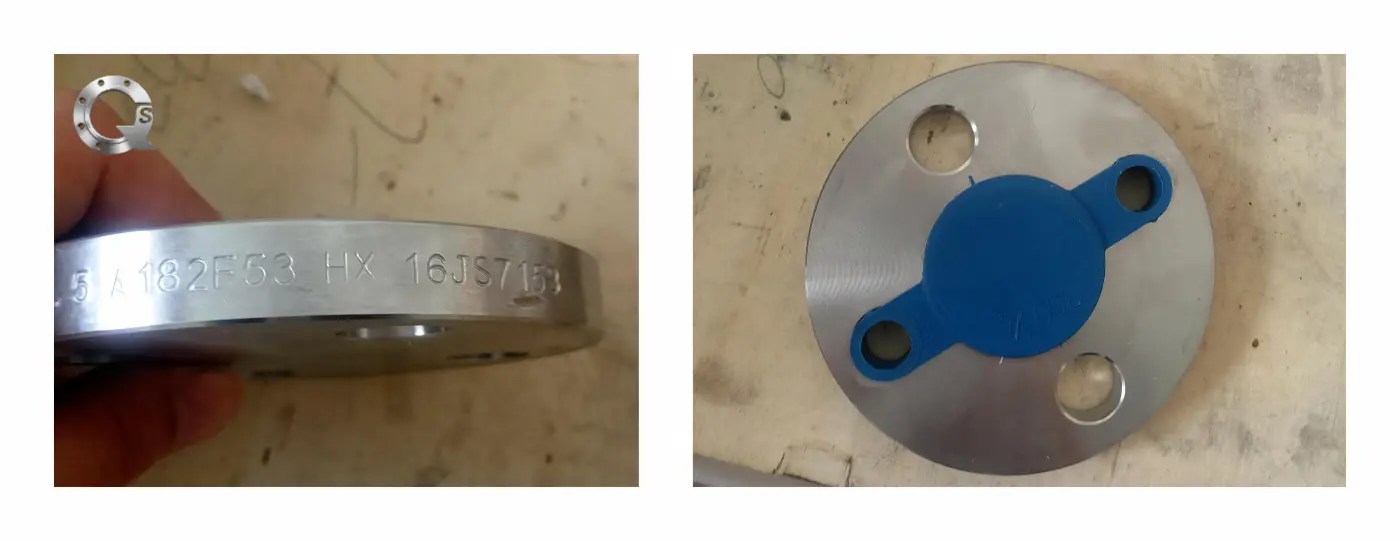
We keep common sizes of 316L and 304 blinds on the shelf and cut custom diameters from plate when a job needs a non-standard NPS. Our pre-order check lists the standard, class, facing, and grade so you catch a mismatch before the steel is cut.
We have supplied stainless blanks that stayed in a coastal store for a year before use, and the passivated ones seated clean while the bare ones needed a machine pass. The finish is the difference, and it is cheap insurance.
Passivation is part of the part for acid duty. We passivate the disc before it leaves the bay when the PO says corrosive, because a bare stainless face can still stain and then weep on the first reopen. The cost of the finish is small against the site rework it prevents. Logistics for export matter as much as the steel. We crate to survive a container, a crane, and a Customs hold, and we photograph the pack so you can see the condition before it sails. A disc that stains in transit is a rejected part, not a saving.
Frequently Asked Questions
1.Is an SS blind flange the same as a blank flange?
Yes, the terms are used interchangeably for the solid disc with no bore. The part and its bolt pattern are the same under ASME B16.5; only the alloy changes for stainless.
2.Should I use 304 or 316L for a water line?
Use 316L where chloride or seawater is present, because the molybdenum resists pitting. For clean, low-risk water, 304 is sufficient and cheaper.
3.Can I reuse a stainless blank after opening the line?
Usually yes if the face and gasket seat are undamaged. We advise a visual check and a fresh gasket; a pitted face should be machined or replaced rather than reused.
Contact Xi'an QinSteel for SS Blind Flanges Solutions
For pricing and lead time on SS Blind Flanges stock or a made-to-order run, email info@sxqinsteel.com or open www.sxqsteel.com. Our team checks your drawing, confirms the material and pressure class, and replies with a firm quote the same business day for standard sizes.
References
1.ASME B16.5 - Pipe Flanges and Flanged Fittings, NPS 1/2 through 24.
2.ASTM A182 / A182M - Forged or Rolled Alloy and Stainless Steel Pipe Flanges, F304/F316L.
3.ASTM A240 / A240M - Chromium and Chromium-Nickel Stainless Steel Plate for flanges.
4.NACE MR0175 / ISO 15156 - Sulfide stress cracking resistant materials for oil and gas.
5.ASME B31.3 - Process Piping, design and flange selection for corrosive service.
6.ISO 10474 / EN 10204 - Inspection documents for steel products, 3.1 and 3.2 certs.
Learn about our latest products and discounts through SMS or email