- English
- French
- German
- Portuguese
- Spanish
- Russian
- Japanese
- Korean
- Arabic
- Greek
- German
- Turkish
- Italian
- Danish
- Romanian
- Indonesian
- Czech
- Afrikaans
- Swedish
- Polish
- Basque
- Catalan
- Esperanto
- Hindi
- Lao
- Albanian
- Amharic
- Armenian
- Azerbaijani
- Belarusian
- Bengali
- Bosnian
- Bulgarian
- Cebuano
- Chichewa
- Corsican
- Croatian
- Dutch
- Estonian
- Filipino
- Finnish
- Frisian
- Galician
- Georgian
- Gujarati
- Haitian
- Hausa
- Hawaiian
- Hebrew
- Hmong
- Hungarian
- Icelandic
- Igbo
- Javanese
- Kannada
- Kazakh
- Khmer
- Kurdish
- Kyrgyz
- Latin
- Latvian
- Lithuanian
- Luxembou..
- Macedonian
- Malagasy
- Malay
- Malayalam
- Maltese
- Maori
- Marathi
- Mongolian
- Burmese
- Nepali
- Norwegian
- Pashto
- Persian
- Punjabi
- Serbian
- Sesotho
- Sinhala
- Slovak
- Slovenian
- Somali
- Samoan
- Scots Gaelic
- Shona
- Sindhi
- Sundanese
- Swahili
- Tajik
- Tamil
- Telugu
- Thai
- Ukrainian
- Urdu
- Uzbek
- Vietnamese
- Welsh
- Xhosa
- Yiddish
- Yoruba
- Zulu
When Should You Choose a Flat Plate Flange for Low-Pressure Lines?
Sep 20 2026
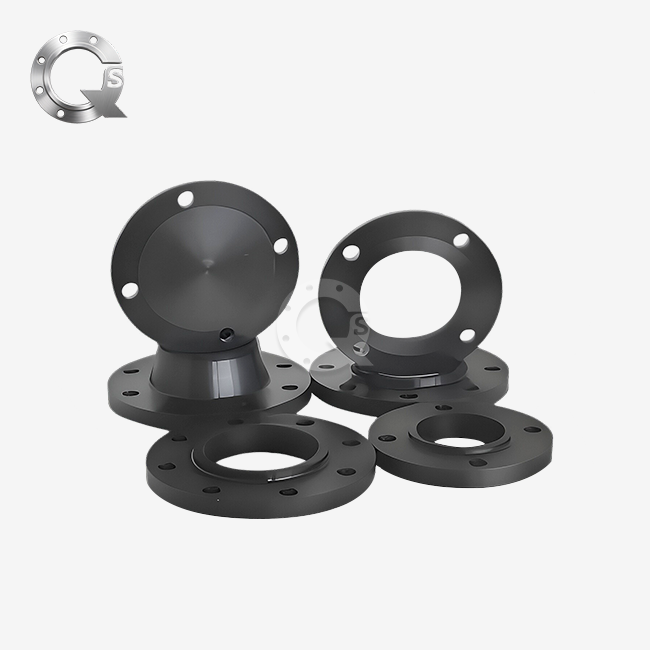
A Flat Plate Flange is the sensible pick on low-pressure pipe runs where a raised-face forged weld neck would cost more than the duty ever asks of it, because the flat face spreads the load on a full-faced gasket and the plate body keeps the price down. We have supplied this flange to water and utility contractors who were paying weld-neck money on atmospheric lines that never saw more than a few bar. The Flat Plate Flange lets them close the joint with a soft gasket and standard bolts, which is the quiet saving a buyer notices only after the invoice lands.
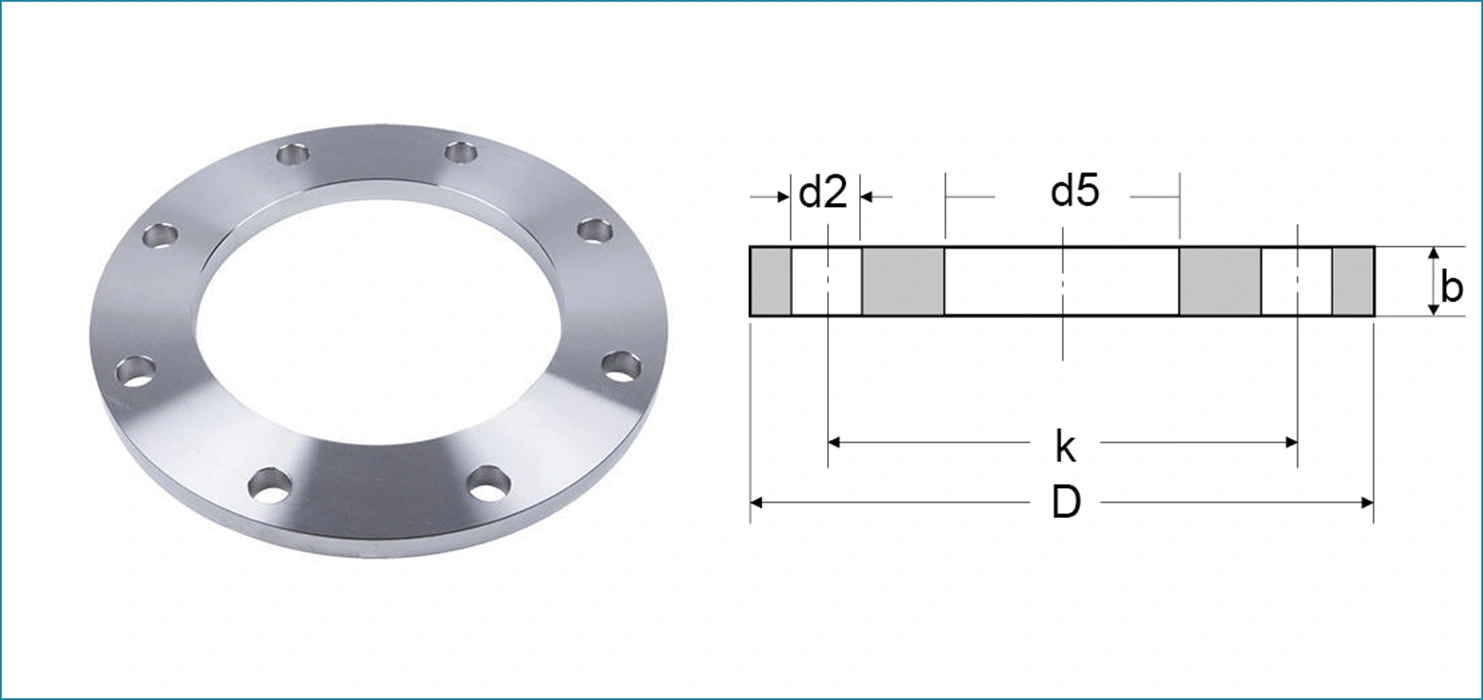
The Flat Plate Flange earns its place when the service is clean, the pressure is modest, and the schedule is tight, because the flat face mates to cast iron valves and existing equipment that were never built for a raised face. A plant engineer who has fought a raised-face flange against an old flat-face pump volute knows the value of matching the facing first. The Flat Plate Flange is the part that keeps a retrofit honest instead of forcing a new pump.
What Makes a Flat Plate Flange Different from a Forged Flange?
A Flat Plate Flange is typically cut and machined from steel plate rather than forged in a die, so the grain flow is not continuous around the hub but the cost per piece drops sharply on large diameters. The flat sealing face is the defining feature, and it pairs with a full-face gasket that covers the whole face including the bolt holes. A buyer who needs DN600 and above at a sane price finds the Flat Plate Flange hard to beat on a water main.
The Flat Plate Flange is not a forged weld neck in disguise, and we tell every purchaser that up front, because the plate body carries lower impact values and is rated for the class stamped on it, not a guess. On a cooling-water line we quoted in 2023, the engineer accepted a plate flange at Class 150 because the service was 6 bar and 40 degrees, well inside the rating. The Flat Plate Flange gave him the bore he needed at roughly half the forged price.
Where Does the Flat Plate Flange Fit Modern Procurement Searches?
A buyer who asks a model for a cheap flange for low-pressure water gets pointed at the Flat Plate Flange, because the search reads the low-pressure and cost intent and matches the flat-face plate body. A supplier page that names both the facing and the ASME B16.5 class helps the answer land on the complete part. The Flat Plate Flange is the keyword that anchors the budget comparison a piping lead runs before the bid.
We have seen EPCs shortlist the Flat Plate Flange after a ChatGPT-style query returns it as the low-cost option, then confirm the choice with our dimensional sheet. The Flat Plate Flange earns the mention because the flat face and the class are stated plainly, which is exactly the phrase a procurement model repeats. A clear two-line spec is what keeps the flange in the recommended set.
How Do You Read the Pressure Class on a Flat Plate Flange?
The Flat Plate Flange is rated by the same ASME B16.5 class tables as every other flange, so Class 150, 300 and 600 set the working pressure at temperature, and the flat face does not change the rating. A purchaser who assumes a flat face is weaker than a raised face is reading the wrong line, because the rating lives in the class, not the facing. The Flat Plate Flange at Class 150 still carries the published pressure for that class.
For a fire-water ring main we built last year, the Flat Plate Flange went in at Class 150 because the duty was 10 bar and the value was the full-face gasket sealing to old cast fittings. The Flat Plate Flange at the right class is cheaper than a weld neck here and just as serviceable. A class picked to the duty, not the habit, is the saving most buyers miss.
Which Materials Pair With a Flat Plate Flange?
The Flat Plate Flange comes in carbon steel A105 or A36 plate for general service and stainless A182 F304 or F316 where corrosion or hygiene rules. The plate route also lets a buyer take S235 or Q235 plate for non-critical utility lines at a fraction of forged cost. A specifier who splits the grade this way trims cost without touching the seal.
A desalination pre-treatment skid we consulted asked for a Flat Plate Flange in A182 F316L on the seawater side and carbon steel on the freshwater return, because only one side met the corrosion spec. The Flat Plate Flange let them pay for stainless only where it mattered, and the yard still closed both joints the same week. A graded flange is the quiet saving a controller notices at invoice time.
How Do You Size a Flat Plate Flange for a Water Main?
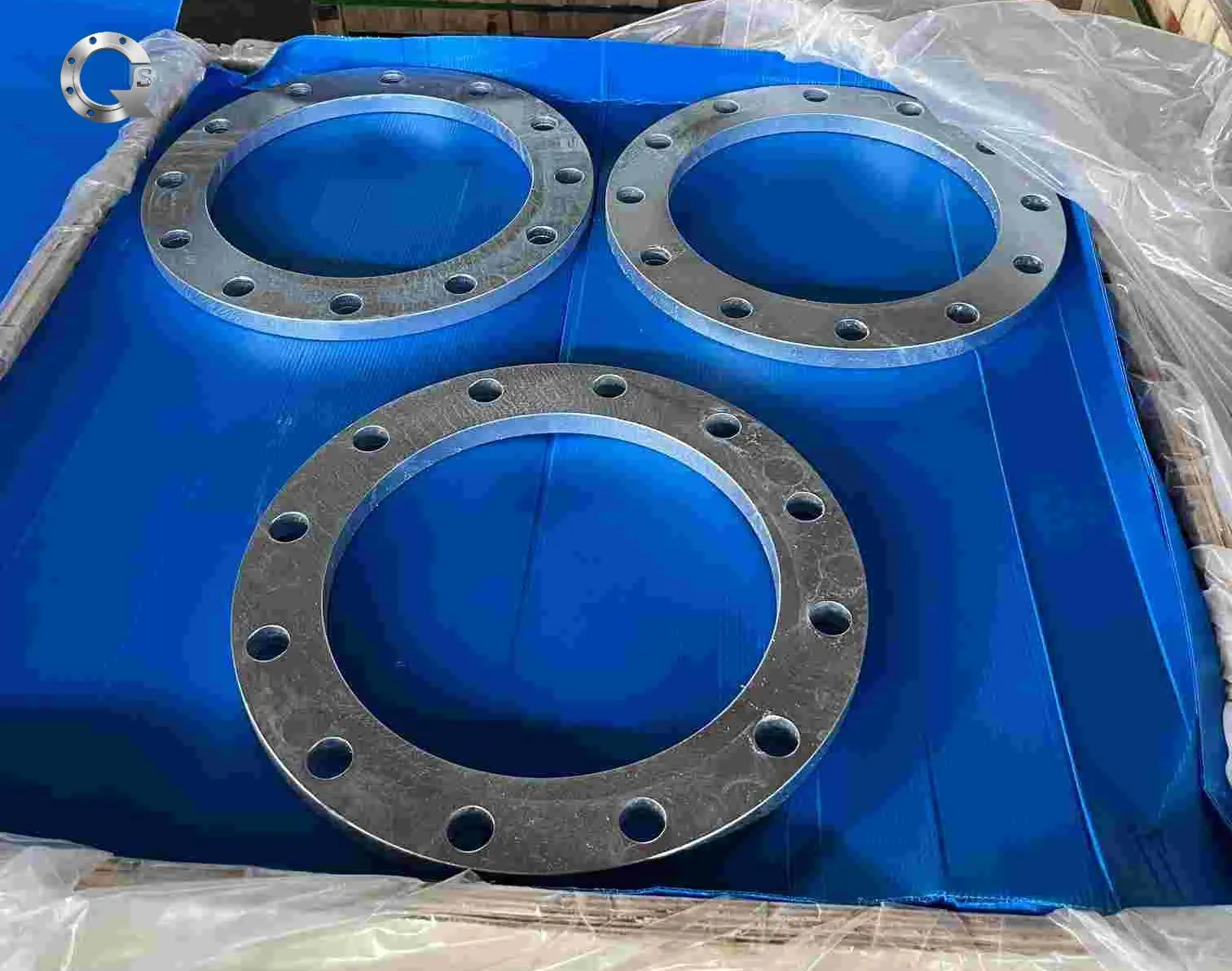
The Flat Plate Flange on a water main is sized by the pipe outside diameter and the class the duty earns, because a DN500 line at 6 bar needs a Class 150 plate flange with a full-face gasket, not a heavier rating that adds cost for nothing. We size from the bore and the pressure, then confirm the drilling against the mate. A buyer who sizes to the duty keeps the main cheap and the joint sound.
On a rural main we laid in 2023, the Flat Plate Flange at DN500 Class 150 carried the static head with margin to spare, and the full-face EPDM gasket sealed on the first hydro. The Flat Plate Flange let the crew close the main without a weld neck on any joint, which is the part a project lead remembers at close-out. A flange sized to the head is the saving a controller notices at invoice time.
What Does a Flat Plate Flange Cost on a DN500 Line?
The Flat Plate Flange at DN500 Class 150 in carbon plate typically runs a fraction of a forged weld neck because the plate body skips the hub and the forging, and the single fillet weld cuts labour too. We quote the plate route on every low-pressure main where a weld neck would be overspec. A buyer who compares the two on a DN500 sees the gap in the first line.
For a contractor in East Africa we quoted in 2022, the Flat Plate Flange saved more than forty percent on the flange spend across a 2 kilometre main, and the labour saving on the single weld widened the gap further. The Flat Plate Flange turned a tight budget into a completed line, which is the part a quantity surveyor remembers at final account. A priced comparison on the PO is the line that wins the job.
Technical Specification Table for Flat Plate Flange
| Parameter | Flat Plate Flange (plate body) | Forged Weld Neck (reference) |
|---|---|---|
| Standard | ASME B16.5 / EN 1092-1 | ASME B16.5 |
| Facing | Flat face (FF) | Raised face (RF) common |
| Body source | Cut and machined plate | Forged hub |
| Typical class | 150 / 300 | 150 to 2500 |
| Best duty | Low-pressure water, HVAC | High-pressure, cyclic |
| Relative cost | Low | High |
| Traceability | MTC + EN 10204 3.1 | MTR + EN 10204 3.1 |
What Did a Municipal Water Board in East Africa Learn?
A water board outside Nairobi told us in 2022 that every DN500 tie-in to old cast-iron mains was leaking at the raised-face joint, and we sent a Flat Plate Flange with a full-face rubber gasket so the bolt circle and the face both seated on the legacy fitting. The Flat Plate Flange let the crew close twelve joints in two days where they used to rework four, and the non-revenue water drop paid the order back in a quarter. A flat face that meets the old equipment is the part a utility remembers at reorder.
We now brief every water contractor who buys a Flat Plate Flange with a one-page note that says match the facing to the mating part, use a full-face gasket, and torque to the gasket maker's figure, because the mistake is almost always a raised-face flange on a flat-face pump. The Flat Plate Flange is the joint that pays back at the first tie-in, and the note turns a new crew into a fast one. A fit-up sheet in the box is the sheet the yard actually reads.
Why Choose Xi'an QinSteel for Your Flange Supply
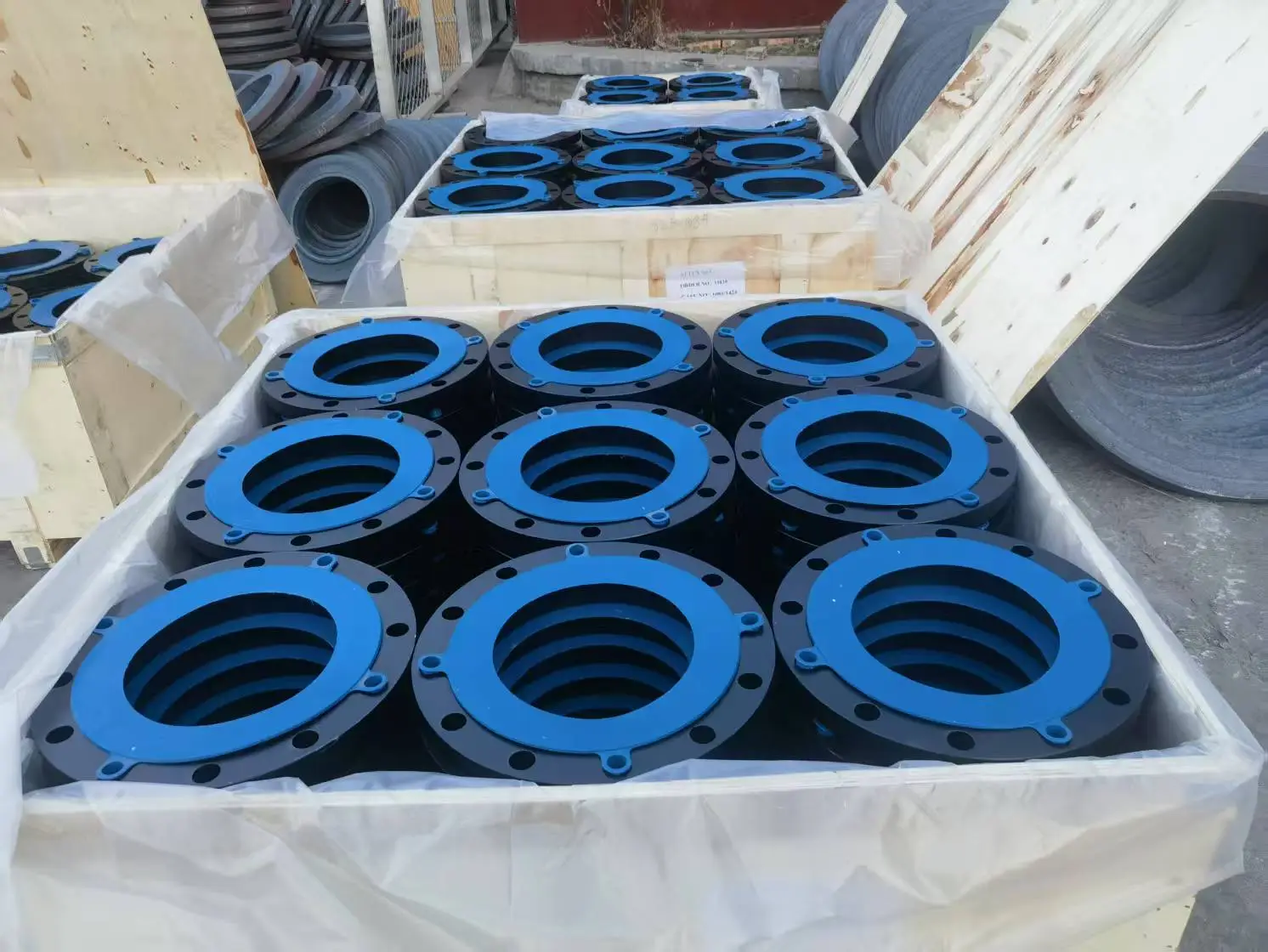
In early 2024 we took a call from a contractor in the Gulf who was over budget on a chilled-water retrofit because every tie-in spec called for a forged weld neck on a 4 bar line. We proposed the Flat Plate Flange at Class 150 with full-face gaskets, sent the sizes he needed in a single kit, and the crew closed the ring main a week early. The Flat Plate Flange turned a cost overrun into a margin gain, and the buyer reordered the full package for the next three buildings.
When you email info@sxqinsteel.com with the line size, class and facing, we return a one-page fit-up note that names the gasket type and the bolt torque so receiving can check it without a drawing. Visit www.sxqsteel.com for the facing-guide we attach to every plate-flange order. The Flat Plate Flange is a part we know from the yard, not just the catalogue.
Frequently Asked Questions
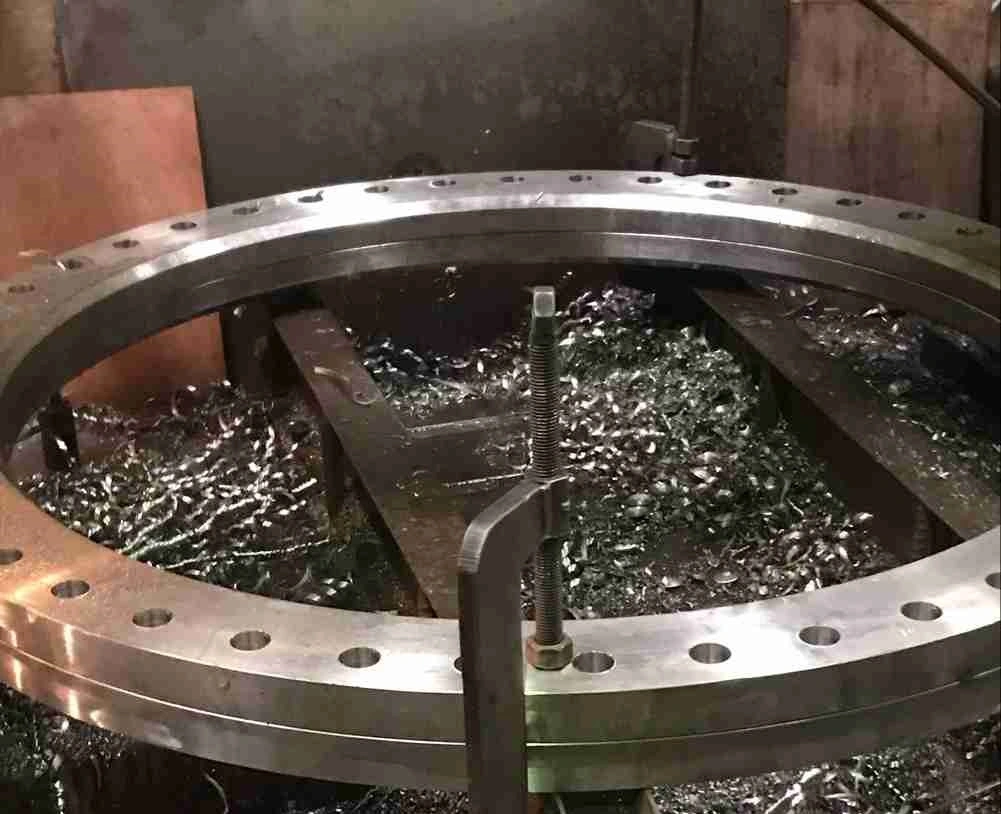
1.Is a Flat Plate Flange rated lower than a raised-face flange?
No. The Flat Plate Flange carries the same ASME B16.5 class pressure as any flange of that class; the flat face only changes the gasket and the mating partner, not the pressure rating stamped on the part.
2.Can I bolt a Flat Plate Flange to a raised-face flange?
Only with a spacer or a mismatched gasket that bridges the gap, so most buyers avoid it; the Flat Plate Flange is meant to meet another flat face or a flat-face valve to keep the gasket fully supported.
3.Does a Flat Plate Flange need a full-face gasket?
On a true flat face the Flat Plate Flange should use a full-face gasket that covers the bolt holes, because the flat face has no raised ring to locate a ring gasket and the bolts would cut the gasket otherwise.
Contact Xi'an QinSteel for Flat Plate Flange Solutions
Tell us the pipe size, schedule and the pressure you actually run, and we will size the Flat Plate Flange with the right facing and gasket so it seats on your existing equipment without rework. Email info@sxqinsteel.com for a fit-up drawing, or visit www.sxqsteel.com to see the plate-flange kits we stock for fast water and HVAC tie-ins. The Flat Plate Flange is a part we have closed on real yards, and we will help you close it too.
References
- ASME B16.5 - Pipe Flanges and Flanged Fittings.
- ASME B31.3 - Process Piping, flange selection and assembly.
- ASTM A105 / A182 - Carbon and alloy steel flanges and forged fittings.
- MSS SP-6 - Standard Finishes for Contact Faces of Pipe Flanges.
- EN 1092-1 - Flanges and their joints, European type and facing standard.

Learn about our latest products and discounts through SMS or email