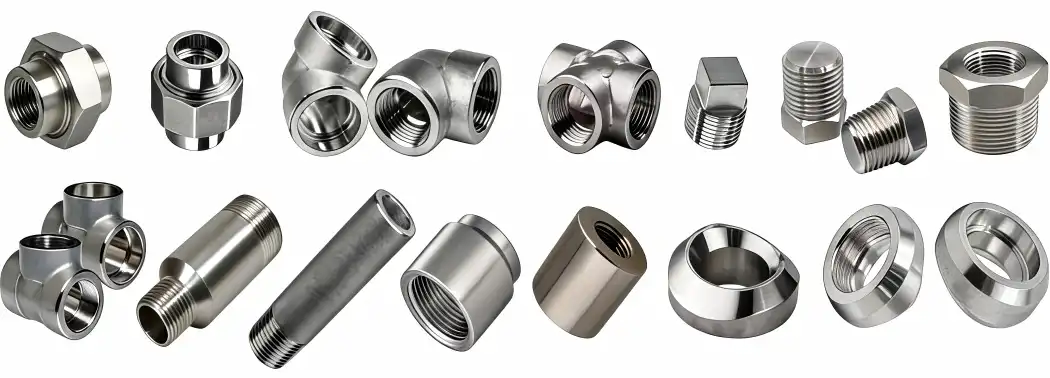
Duplex stainless steel is exceedingly reasonable for ASME B16.11 duplex stainless steel offshore fittings when extraordinary quality and erosion resistance are required in harsh marine situations. These fittings are perfect for seaward oil and gas stages, subsea pipelines, and other marine applications exposed to saltwater and forceful chemicals. Duplex stainless steel's interesting microstructure, combining austenitic and ferritic stages, gives an ideal balance of mechanical properties and erosion resistance. This makes it an amazing choice for ASME B16.11 fittings utilized in seaward establishments where unwavering quality and life span are vital. The material's predominant execution in chloride-rich situations and its tall strength-to-weight proportion make it especially well-suited for demanding seaward conditions.
Understanding Duplex Stainless Steel in Offshore Applications
Composition and Properties of Duplex Stainless Steel
Duplex stainless steel is a surprising combination that combines the best properties of austenitic and ferritic stainless steels. Its special microstructure comprises roughly equal parts austenite and ferrite, resulting in prevalent mechanical properties and erosion resistance. The commonplace composition incorporates chromium (21-23%), nickel (4.5-6.5%), molybdenum (2.5-3.5%), and nitrogen (0.08-0.20%). This adjusted mix of components contributes to its remarkable quality, durability, and resistance to different forms of corrosion.
One of the key focal points of duplex stainless steel is its tall and ductile quality, which can be twice that of standard austenitic grades. This permits for more slender divider thicknesses in ASME B16.11 fittings, decreasing weight and reducing costs without compromising execution. Moreover, the fabric shows amazing resistance to push erosion, breaking and setting erosion, making it perfect for seaward situations where introduction to chlorides is a consistent concern.
Advantages of Duplex Stainless Steel in Marine Environments
In seaward applications, duplex stainless steel offers various benefits that make it a fabulous choice for ASME B16.11 fittings:
- Superior erosion resistance: The tall chromium and molybdenum substance gives extraordinary security against setting and cleft erosion in saltwater environments.
- High strength-to-weight proportion: This permits lighter components without relinquishing basic judgment, significant for offshore structures where weight is a critical consideration.
- Excellent weariness resistance: Duplex stainless steel can withstand cyclic stacking superior to numerous other materials, improving the life span of seaward fittings.
- Good weldability: This is fundamental for making dependable associations in seaward channeling systems.
- Cost-effectiveness: In spite of its higher beginning cost compared to a few materials, duplex stainless steel frequently demonstrates more conservative costs in the long run due to its extended benefit life and diminished upkeep requirements.
Comparing Duplex Stainless Steel to Other Materials for Offshore Fittings
When considering materials for ASME B16.11 duplex stainless steel offshore fittings, duplex stainless steel frequently beats alternatives:
Compared to carbon steel, duplex stainless steel offers distinct predominant erosion resistance, dispensing with the requirement for defensive coatings and lessening upkeep costs. Whereas austenitic stainless steels like 316L are commonly utilized in marine applications, duplex grades give higher quality and superior resistance to stress erosion splitting. Super duplex assortments, such as UNS S32750, indeed offer more noteworthy erosion resistance for the most demanding seaward environments.
Nickel amalgams like Inconel may outperform duplex in a few extraordinary conditions, but are essentially more costly. For most seaward applications, duplex stainless steel strikes an ideal balance between execution and cost-effectiveness, making it the favored choice for ASME B16.11 fittings in marine environments.
ASME B16.11 Standards and Offshore Fitting Requirements
Overview of ASME B16.11 Specifications
ASME B16.11 is a vital standard that administers the design and fabrication of produced steel fittings, socket-welding, and threaded. This detail is broadly recognized in the oil and gas industry, especially for seaward applications. The standard covers different perspectives of a fitting plan, including:
- Dimensional requirements
- Material specifications
- Pressure-temperature ratings
- Marking and identification
- Testing and review procedures
For seaward fittings, ASME B16.11 guarantees that components meet rigid quality and execution criteria fundamental for the requesting marine environment. The standard's determinations are planned to ensure the astuteness and unwavering quality of channeling frameworks beneath unforgiving conditions, including high pressures, extraordinary temperatures, and destructive environments.
Specific Requirements for Offshore Fittings
Offshore fittings confront interesting challenges that require uncommon considerations in their design and fabrication. A few key necessities for ASME B16.11 seaward fittings include:
- Corrosion Resistance: Fittings must withstand steady introduction to saltwater and other destructive components found in marine environments.
- High Quality: Seaward structures are subject to critical loads from waves, streams, and operational exercises, requiring fittings with fabulous mechanical properties.
- Fatigue Resistance: Cyclic stacking is common in seaward applications, making weariness quality a basic consideration in fitting selection.
- Temperature Resistance: Fittings ought to keep up their properties over a wide range of temperatures, from freezing seawater to high-temperature handling fluids.
- Pressure Appraisals: Seaward fittings are frequently required to withstand tall inner weights in deep-sea applications.
Duplex stainless steel exceeds expectations in assembly, these prerequisites, advertising a combination of high quality, amazing corrosion resistance, and great wear resistance properties. Its reasonableness for ASME B16.11 seaward fittings is advanced improved by its capacity to maintain these properties in chloride-rich situations typical of marine settings.
How Duplex Stainless Steel Meets ASME B16.11 Offshore Standards?
Duplex stainless steel adjusts uncommonly well with ASME B16.11 duplex stainless steel offshore fittings:
- Material Compatibility: Duplex grades like UNS S31803 and S32205 are expressly recorded in ASME benchmarks as worthy materials for manufactured fittings.
- Strength Prerequisites: The tall abidance quality of duplex stainless steel meets or surpasses the mechanical property necessities indicated in ASME B16.11.
- Corrosion Resistance: Duplex stainless steel's amazing resistance to pitting and hole erosion in chloride situations aligns with the operational needs of seaward fittings.
- Dimensional Soundness: The material's modulus of elasticity makes a difference in maintaining tight resiliences required by ASME B16.11 over changing temperatures.
- Weldability: Duplex stainless steel can be promptly welded utilizing strategies consistent with seaward establishment practices, guaranteeing solid and dependable connections.
By assembling these criteria, duplex stainless steel ASME B16.11 fittings give seaward administrators with components that not only comply with industry benchmarks but also offer prevalent long-term execution and unwavering quality in challenging marine environments.
Factors Influencing the Choice of Duplex Stainless Steel for Offshore Fittings
Environmental Considerations in Offshore Applications
The marine environment poses noteworthy challenges for seaward fittings, making fabric determination significant. Key natural variables include:
- Saltwater Introduction: Steady contact with seawater rich in chlorides can lead to fast erosion of lacking materials.
- Temperature Varieties: Seaward fittings must withstand temperature changes from cold seawater to hot prepared fluids.
- Atmospheric Erosion: Salt showers and muggy conditions contribute to destructive conditions over the waterline.
- Microbiologically Affected Erosion (MIC): Marine life forms can accelerate erosion processes.
- UV Radiation: Delayed introduction to daylight can degrade a few materials over time.
Duplex stainless steel exceeds expectations in these conditions due to its high chromium content and adjusted microstructure, giving fabulous resistance to chloride-induced erosion and maintaining its properties over a wide temperature range. Its resistance to setting and cleft erosion makes it especially reasonable for regions inclined to stagnant water or marine growth.
Mechanical and Physical Properties for Offshore Durability
The mechanical and physical properties of duplex stainless steel contribute altogether to its appropriateness for ASME B16.11 seaward fittings:
- High Surrender Quality: Ordinarily extending from 450-550 MPa, permitting for more slender divider thicknesses and weight reduction.
- Excellent Durability: Great effect resistance indeed at low temperatures, significant for cold seaward environments.
- Superior Weariness Resistance: Withstands cyclic stacking superior to numerous other materials, upgrading long-term reliability.
- Low Warm Extension: Makes a difference in keeping up dimensional stability in fluctuating temperatures.
- Good Warm Conductivity: Encourages warm exchange in handle applications.
These properties guarantee that duplex stainless steel fittings can withstand the mechanical stresses, weight variations, and thermal cycles common in seaward operations while keeping up auxiliary judgment and execution over extended periods.
Cost-Benefit Analysis of Using Duplex Stainless Steel in Offshore Fittings
When assessing the utilization of duplex stainless steel for ASME B16.11 duplex stainless steel offshore fittings, it's fundamental to consider both starting costs and long-term benefits:
Initial Costs:
- Higher fabric has taken a toll compared to carbon steel or standard austenitic stainless steels.
- Potentially higher creation costs due to specialized welding procedures
Long-term Benefits:
- Reduced upkeep and substitution costs due to prevalent erosion resistance
- Lower lifecycle costs from amplified benefit life, frequently surpassing 25 years
- Potential weight investment funds driving to decreased auxiliary back requirements
- Decreased downtime for repairs or substitutions, moving forward, operational efficiency
- Enhanced security and unwavering quality, lessening the hazard of exorbitant failures
While the introductory speculation in duplex stainless steel fittings may be higher, the long-term financial benefits regularly exceed the upfront costs. For seaward applications where unwavering quality, security, and life span are fundamental, duplex stainless steel proves to be a cost-effective choice for ASME B16.11 fittings.
Conclusion
In conclusion, duplex stainless steel is profoundly reasonable for ASME B16.11 seaward fittings due to its extraordinary combination of quality, erosion resistance, and strength in harsh marine environments. Its special microstructure gives an ideal balance of mechanical properties and erosion resistance, making it perfect for applications exposed to saltwater and forceful chemicals. Whereas the initial cost may be higher than a few options, the long-term benefits of diminished upkeep, amplified benefit life, and improved security make duplex stainless steel a cost-effective choice for seaward administrators. As the industry proceeds to thrust into more challenging seaward situations, the unwavering quality and execution of duplex stainless steel ASME B16.11 fittings will likely guarantee their continued inclination in basic marine applications.
FAQs
What makes duplex stainless steel suitable for ASME B16.11 offshore fittings?
Duplex stainless steel offers high strength, excellent corrosion resistance in saltwater, and good fatigue properties, meeting ASME B16.11 standards for offshore applications.
How does duplex stainless steel compare to other materials for offshore fittings?
Duplex stainless steel outperforms carbon steel in corrosion resistance and offers higher strength than austenitic stainless steels, making it ideal for offshore environments.
Are duplex stainless steel ASME B16.11 fittings cost-effective for offshore use?
While initially more expensive, duplex stainless steel fittings offer long-term cost savings through extended service life, reduced maintenance, and improved reliability in offshore applications.
Choose Quality ASME B16.11 Duplex Stainless Steel Offshore Fittings | QinSteel
At Xi 'An QinSteel Trading Co., Ltd., we specialize in providing high-quality ASME B16.11 duplex stainless steel offshore fittings. With our 20 years of industry expertise, we ensure durable, precision-engineered products that meet international standards. Trust our reliable supply chain solutions for your offshore projects. Contact us at info@sxqinsteel.com for competitive pricing and timely delivery of superior offshore fittings.
References
American Society of Mechanical Engineers. (2017). ASME B16.11-2016: Forged Fittings, Socket-Welding and Threaded. New York, NY: ASME.
Gunn, R. N. (1997). Duplex Stainless Steels: Microstructure, Properties and Applications. Abington Publishing.
Lippold, J. C., & Kotecki, D. J. (2005). Welding Metallurgy and Weldability of Stainless Steels. John Wiley & Sons.
Offshore Technology Conference. (2019). Proceedings of the Offshore Technology Conference. Houston, TX: OTC.
International Molybdenum Association. (2014). Practical Guidelines for the Fabrication of Duplex Stainless Steels. London: IMOA.
NACE International. (2018). Corrosion in the Petrochemical Industry (2nd ed.). Houston, TX: NACE Press.