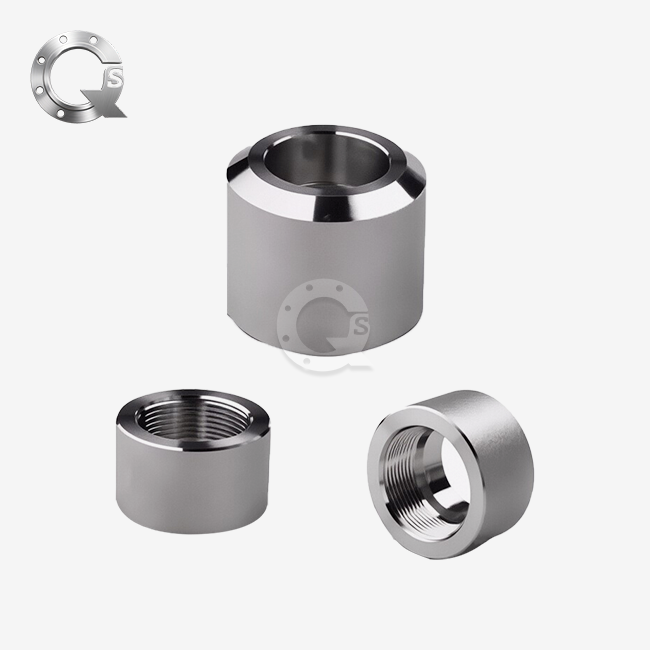
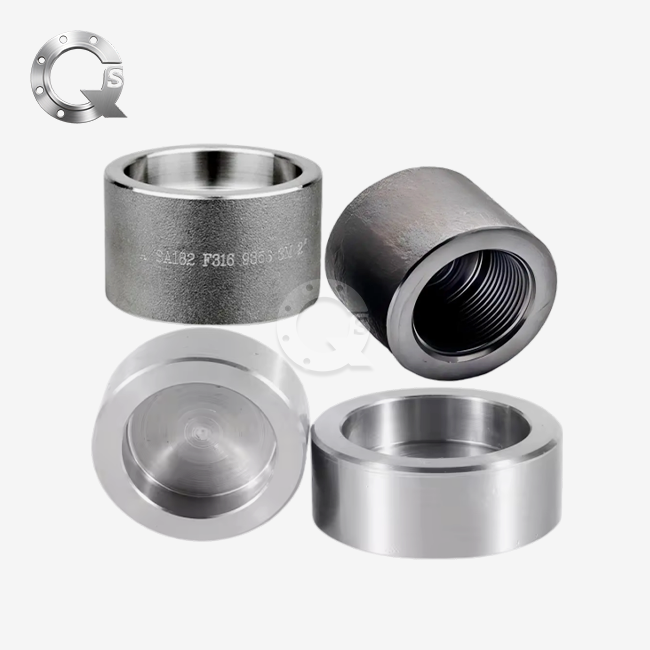
When selecting ASME B16.11 pressure-class fittings for mechanical frameworks, the weight class ought to be chosen based on the pipeline's maximum working pressure. By and large, 2000#, 3000#, and 6000# weight classes are accessible, with higher classes reasonable for extraordinary weight conditions. The suitable weight course guarantees framework security and effectiveness. Variables to consider include working temperature, fabric compatibility, and security edges. Counseling with experienced engineers and providers like Xi'an QinSteel Trading Co., Ltd. can offer assistance in deciding the ideal weight lesson for your particular application, guaranteeing solid and long-lasting execution in your mechanical pipeline system.
Understanding ASME B16.11 Pressure Classes and Their Applications
Overview of ASME B16.11 Standard
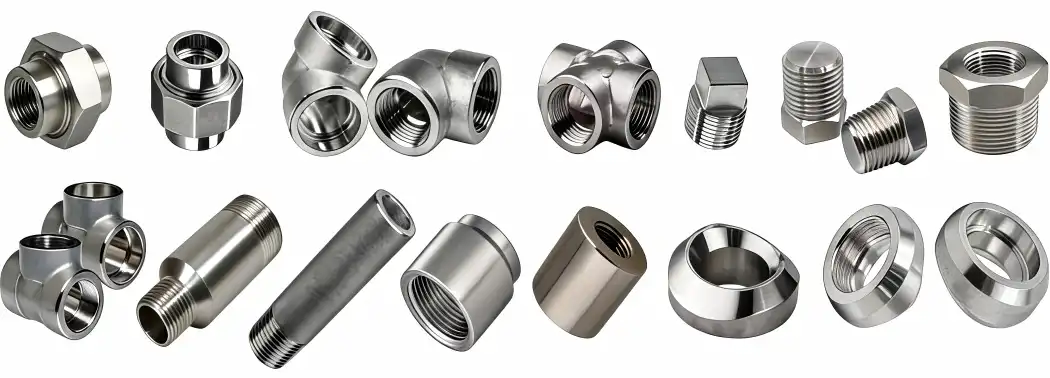
The ASME B16.11 standard is a significant determination for manufactured fittings utilized in different mechanical applications. It covers a wide range of fittings, including elbows, tees, crosses, and couplings, which are fundamental components in channeling frameworks. This standard guarantees consistency in planning, fabricating, and execution over distinctive producers, giving engineers and framework creators with dependable choices for their projects.
ASME B16.11 fittings are known for their high-pressure capabilities and vigorous development. They are ordinarily utilized in applications where compact design and high quality are required, such as in oil and gas pipelines, chemical processing plants, and control era offices. The standard indicates measurements, resistances, and pressure-temperature evaluations for these fittings, guaranteeing they meet the requirements of mechanical systems.
Explanation of Pressure Classes: 2000#, 3000#, and 6000#
The weight classes characterized in ASME B16.11 - 2000#, 3000#, and 6000# - speak to the most extreme admissible working weight (MAWP) that the fittings can securely withstand at particular temperatures. These classes are outlined to give an extent of choices for diverse working conditions:
- 2000# Course: Appropriate for direct weight applications, regularly up to 5,000 psi (345 bar) at room temperature.
- 3000# Course: Planned for higher weight frameworks, able to deal with weights up to 7,500 psi (517 bar) at room temperature.
- 6000# Course: Built for extraordinary weight conditions, able to withstand weights up to 15,000 psi (1,034 bar) at room temperature.
It's vital to note that these weight appraisals diminish as working temperatures increase. Engineers must consult pressure-temperature rating charts to decide the suitable course for their particular working conditions.
Factors Influencing Pressure Class Selection
Selecting the right weight course for ASME B16.11 pressure-class fittings includes considering a few basic factors:
- Maximum Working Weight: The essential thought is the most noteworthy weight the framework will encounter during ordinary operation, including any potential weight spikes.
- Operating Temperature: Higher temperatures decrease the pressure-bearing capacity of fittings, requiring cautious assessment of the pressure-temperature ratings.
- Material of Development: Distinctive materials have shifting quality characteristics and erosion resistance, influencing their reasonableness for particular weight classes and applications.
- Safety Variables: Engineers regularly apply security variables to account for startling conditions or framework variations, possibly leading to the determination of a higher weight class.
- Regulatory Prerequisites: Certain businesses or locales may have particular controls managing at least weight reduction necessities for specific applications.
By carefully considering these variables, engineers can guarantee the determination of ASME B16.11 fittings that give secure and solid execution in their mechanical systems.
Matching Pressure Classes to Industrial System Requirements
Analyzing System Pressure and Temperature Profiles
To select the fitting weight lesson for ASME B16.11 fittings, an seriously examination of the mechanical system's weight and temperature profiles is essential. This arrangement involves:
- Identifying Most Extraordinary Working Weight: Choose the most vital weight the system will experience amid normal operation, counting any potential weight surges or spikes.
- Assessing Temperature Ranges: Consider the full run of working temperatures, counting startup, shutdown, and any potential aggravated conditions.
- Creating Pressure-Temperature Twists: Make twists that talk to the relationship between weight and temperature all through the system's working range.
- Evaluating Cyclic Conditions: For systems with visit weight or temperature variances, consider the impact of shortcoming on fitting performance.
This comprehensive examination ensures that the chosen weight lesson can safely suit the most requesting conditions the system may experience.
Selecting the Appropriate Pressure Class Based on System Requirements
Once the system's weight and temperature profiles are caught on, the determination of the suitable ASME B16.11 weight course can be made:
- For frameworks working underneath 5,000 psi at direct temperatures, 2000# lesson fittings may be sufficient.
- Systems with weights between 5,000 and 7,500 psi or those with higher temperature prerequisites may require 3000# course fittings.
- For extraordinary weight applications surpassing 7,500 psi or those with exceptionally high temperatures, 6000# lesson fittings are regularly required.
It's significant to consult the pressure-temperature rating charts given by fitting producers or in the ASME B16.11 standard to guarantee the chosen course meets both weight and temperature requirements simultaneously.
Considering Safety Margins and Future System Expansion
When selecting weight classes, it's judicious to join security edges and consider potential future framework expansions:
- Apply Security Variables: Industry best practices frequently prescribe utilizing security variables of 1.5 to 2.0 times the maximum working load when selecting fittings.
- Anticipate Future Needs: Consider potential increments in framework weight or temperature that may happen due to handling changes or capacity expansions.
- Standardization Benefits: Selecting a higher weight lesson than instantly fundamental can rearrange stock administration and give adaptability for future modifications.
- Life Cycle Costs: Whereas higher weight course fittings may have a higher introductory cost, they can offer long-term benefits in terms of durability and framework adaptability.
By considering these components, engineers can guarantee that the chosen ASME B16.11 pressure-class fittings not only meet current framework necessities but also provide an edge of security and oblige potential future needs.
Best Practices for Implementing ASME B16.11 Fittings in Industrial Systems
Proper Installation and Maintenance Procedures
Ensuring the life span and execution of ASME B16.11 fittings requires adherence to legitimate establishment and support procedures:
- Follow Producer Rules: Follow the instructions given by the producer to guarantee legitimate gathering and sealing.
- Use Qualified Staff: Utilize certified welders and professionals familiar with high-pressure channeling frameworks for establishment and support tasks.
- Conduct Customary Assessments: Execute a schedule review plan to check for signs of wear, erosion, or potential leaks.
- Maintain Appropriate Documentation: Keep point-by-point records of establishment dates, upkeep exercises, and any observed issues for each fitting.
- Use Suitable Apparatus: Utilize calibrated torque tools and other specialized devices to guarantee appropriate fixing and avoid harm to fittings during installation.
By taking after these best practices, mechanical offices can maximize the life expectancy and unwavering quality of their ASME B16.11 fittings, diminishing the risk of framework failures and unplanned downtime.
Quality Control and Testing Requirements
Implementing strong quality control measures and following testing necessities is pivotal for guaranteeing the integrity of ASME B16.11 fittings in mechanical systems:
- Material Confirmation: Conduct fabric testing to affirm that fittings meet the indicated chemical composition and mechanical properties.
- Dimensional Assessment: Perform exhaustive dimensional checks to guarantee fittings comply with ASME B16.11 tolerances.
- Pressure Testing: Conduct hydrostatic or pneumatic tests as indicated by pertinent codes to confirm the pressure-bearing capability of introduced fittings.
- Non-Destructive Examination: Actualize fitting NDE strategies such as radiography or ultrasonic testing for basic applications.
- Documentation Survey: Carefully survey and keep up all quality-related documentation, including fabric test reports and review certificates.
These quality control and testing measures offer assistance to guarantee that ASME B16.11 fittings meet the required measures and perform dependably under the indicated working conditions.
Ensuring Compatibility with Other System Components
When executing ASME B16.11 pressure-class fittings, it's fundamental to consider their compatibility with other framework components:
- Material Compatibility: Guarantee that the fitting fabric is consistent with the channeling fabric and the liquid being transported to avoid galvanic erosion or other material-related issues.
- End Association Compatibility: Confirm that the fitting conclusion associations (e.g., attachment weld, strung) are consistent with the connecting channeling and components.
- Pressure Course Consistency: Keep up consistency in weight course appraisals through the framework to dodge weak points or over-engineering.
- Thermal Development Contemplations: Account for contrasts in thermal development between fittings and associated components, particularly in high-temperature applications.
- Gasket and Sealant Determination: Select fitting gaskets and string sealants that are congruous with both the fitting fabric and the handle fluid.
By guaranteeing compatibility over all framework components, engineers can make a cohesive and dependable channeling framework that meets the demanding requirements of mechanical applications.
Conclusion
Selecting the fitting weight course for ASME B16.11 fittings is noteworthy for ensuring the security, effectiveness, and life span of mechanical frameworks. By carefully analyzing system prerequisites, considering future needs, and actualizing best hones in foundation and upkeep, engineers can make taught choices that optimize execution and minimize dangers. Joining strengths with experienced suppliers like Xi'An QinSteel Trading Co., Ltd. can donate a beneficial capacity in choosing the right fittings for specific applications. Keep in intellect, authentic choice and execution of ASME B16.11 fittings contribute basically to the generally unwavering quality and victory of mechanical channeling frameworks.
FAQs
What is the primary distinction between 2000#, 3000#, and 6000# weight classes?
The primary distinction is their pressure-bearing capacity. 2000# course can handle up to 5,000 psi, 3000# up to 7,500 psi, and 6000# up to 15,000 psi at room temperature.
How does temperature influence the weight rating of ASME B16.11 fittings?
Higher temperatures diminish the pressure-bearing capacity of fittings. Continuously counsel pressure-temperature rating charts for precise information.
Can I utilize a higher weight course fitting in a lower weight system?
Yes, utilizing a higher weight lesson fitting in a lower weight framework is by and large satisfactory and may give extra security and adaptability for future framework overhauls.
Expert ASME B16.11 Fittings Supplier | QinSteel
As a driving exporter of high-quality ASME B16.11 pressure-class fittings, Xi'an QinSteel Trading Co., Ltd. offers master direction in selecting the right weight course for your mechanical frameworks. Our comprehensive run of fittings, coupled with our 20 a long time of industry mastery, guarantees ideal arrangements for oil & gas, water supply, and mechanical applications around the world. For reliable, precision-engineered fittings that meet international standards, contact us at info@sxqinsteel.com.
References
ASME B16.11-2016 Forged Fittings, Socket-Welding and Threaded. American Society of Mechanical Engineers, 2016.
Nayyar, M. L. Piping Handbook, 7th Edition. McGraw-Hill Education, 2000.
Smith, P. Piping Materials Selection and Applications. Elsevier, 2005.
Antaki, G. A. Piping and Pipeline Engineering: Design, Construction, Maintenance, Integrity, and Repair. CRC Press, 2003.
Mohitpour, M., Szabo, J., & Van Hardeveld, T. Pipeline Operation & Maintenance: A Practical Approach. ASME Press, 2005.
Kannappan, S. Introduction to Pipe Stress Analysis. Wiley, 1986.