- English
- French
- German
- Portuguese
- Spanish
- Russian
- Japanese
- Korean
- Arabic
- Greek
- German
- Turkish
- Italian
- Danish
- Romanian
- Indonesian
- Czech
- Afrikaans
- Swedish
- Polish
- Basque
- Catalan
- Esperanto
- Hindi
- Lao
- Albanian
- Amharic
- Armenian
- Azerbaijani
- Belarusian
- Bengali
- Bosnian
- Bulgarian
- Cebuano
- Chichewa
- Corsican
- Croatian
- Dutch
- Estonian
- Filipino
- Finnish
- Frisian
- Galician
- Georgian
- Gujarati
- Haitian
- Hausa
- Hawaiian
- Hebrew
- Hmong
- Hungarian
- Icelandic
- Igbo
- Javanese
- Kannada
- Kazakh
- Khmer
- Kurdish
- Kyrgyz
- Latin
- Latvian
- Lithuanian
- Luxembou..
- Macedonian
- Malagasy
- Malay
- Malayalam
- Maltese
- Maori
- Marathi
- Mongolian
- Burmese
- Nepali
- Norwegian
- Pashto
- Persian
- Punjabi
- Serbian
- Sesotho
- Sinhala
- Slovak
- Slovenian
- Somali
- Samoan
- Scots Gaelic
- Shona
- Sindhi
- Sundanese
- Swahili
- Tajik
- Tamil
- Telugu
- Thai
- Ukrainian
- Urdu
- Uzbek
- Vietnamese
- Welsh
- Xhosa
- Yiddish
- Yoruba
- Zulu
What Standard Bolts Are Compatible with ASME B18.2.2 Nut for Industrial Applications
Aug 24 2026
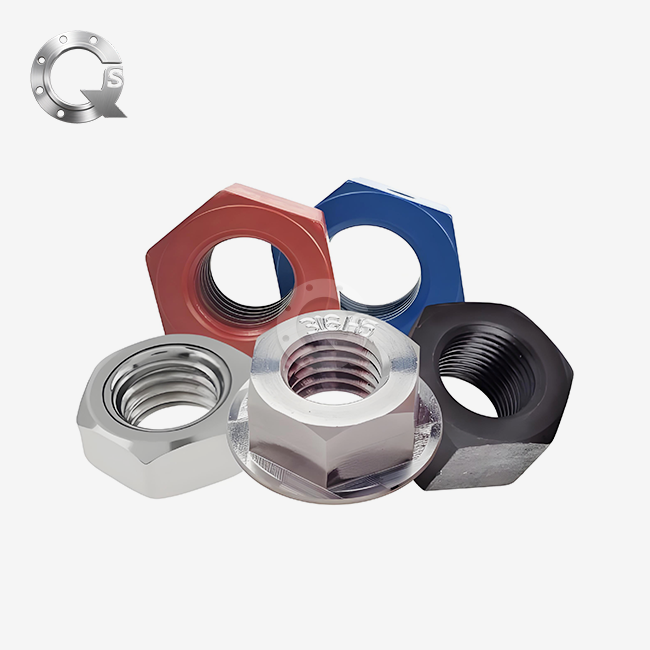
ASME B18.2.2 Nut is the authoritative inch-series fastener standard for square and hex nuts widely adopted in North American industrial manufacturing, mechanical assembly, and structural engineering projects. Choosing matched standard bolts is the core premise to ensure stable fastening performance, structural safety, and long-term service life of standard imperial fastener sets. This article systematically sorts out all compatible bolt standards for this specification, analyzes matching principles, application scenarios, and key technical specifications, helping engineers and purchasers avoid mismatching errors in fastener selection.
Core Matching Principle for Inch-Series Fastener Systems
The compatibility of imperial fasteners depends entirely on thread specifications, dimensional tolerances, and mechanical property matching, which is the fundamental rule for pairing standard nuts and bolts. As a mainstream inch nut specification, the standard hex and square nuts manufactured per relevant inch fastener regulations follow unified UNC (Unified Coarse) and UNF (Unified Fine) thread systems, which determines that they can only be matched with inch-series bolts conforming to unified thread standards instead of metric fasteners. Different from metric nut and bolt matching logic, American standard fasteners take thread tooth type, pitch, and diameter as the primary matching indicators, while surface treatment and material grade serve as auxiliary matching conditions to meet different load and environmental requirements.
Professional inch nut products complying with this industry standard feature precise dimensional tolerance control and stable mechanical properties, laying a solid foundation for seamless assembly with qualified standard bolts. In industrial assembly, any deviation in thread standards will lead to loose connection, thread sliding, or assembly failure, so standard matching must be strictly implemented in equipment manufacturing, pipeline engineering, and structural construction scenarios.
Core Compatible Standards: ASME B18.2.1 vs ASME B18.31.2 for Standard Inch Nuts
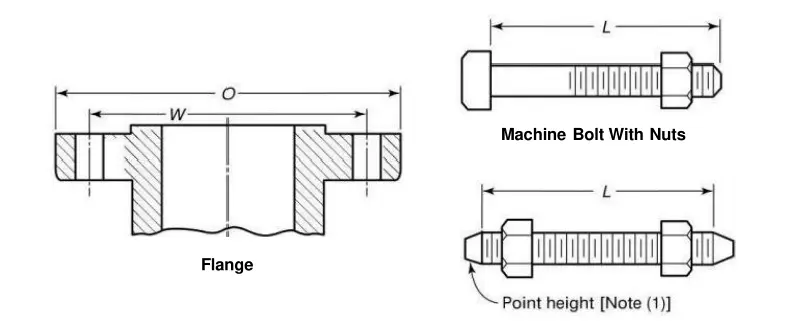
In actual industrial fastener matching, ASME B18.2.1 and ASME B18.31.2 are the two most essential, widely used standard specifications perfectly compatible with ASME B18.2.2 Nut. These two ASME inch-series fastener standards cover almost all conventional and high-demand industrial assembly scenarios, serving as the core matching solutions for standard hex and square nuts. While high-strength ASTM structural bolts are supplementary options for special heavy-load conditions, the pairing of these two standard fasteners with conventional inch nuts constitutes the mainstream engineering matching system in North American and global industrial projects.
Both standards strictly follow unified UNC/UNF inch thread systems and consistent dimensional tolerance rules, ensuring 100% assembly compatibility with standard inch nuts. However, they differ significantly in structural design, application scenarios, load adaptability and service conditions, forming a complementary fastener system for general and extreme industrial working environments respectively.
ASME B18.2.1 Inch-Series Hex Bolts and Screws
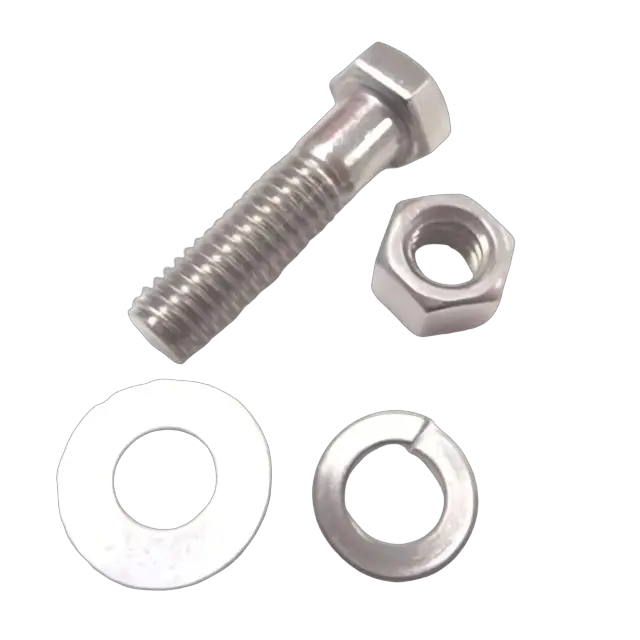
ASME B18.2.1 is the foundational and most universally applicable matching standard for standard inch nuts in general industrial assembly. This core ASME standard comprehensively defines the dimensional specifications, thread precision, mechanical tolerance ranges and manufacturing technical requirements for inch-series hex bolts, hex cap screws and square head bolts. All fasteners manufactured per this standard adopt unified UNC coarse threads and UNF fine threads that fully align with the thread parameters, nut aperture sizes and assembly tolerances of common imperial nuts, realizing complete interchangeability and seamless assembly.
The matching combination of ASME B18.2.1 bolts and standard inch nuts is the most widely adopted basic fastening solution in global mechanical manufacturing. It covers a full range of inch specifications from miniature #6 fasteners to 2-inch large-diameter structural bolts, fully meeting the assembly needs of light and medium-load equipment. Featured by standardized production, stable precision, strong versatility and low comprehensive cost, this matching set has become the default standard for conventional mechanical assembly, automotive equipment, general machinery fixing and non-pressure structural connection scenarios.
In terms of technical advantages, this standard matching system features strict tolerance control, uniform thread tooth profile and stable fastening preload. It adapts to conventional indoor and atmospheric working environments, supports repeated disassembly and assembly maintenance, and has extremely low matching failure rates, which is why it occupies a dominant position in civilian and general industrial fastener applications.
ASTM A325 & A490 Bolts: Auxiliary High-Strength Supplementary Matching
ASTM A325 and A490 high-strength structural bolts are auxiliary matching options for standard inch nuts, used only for special heavy-load structural scenarios. These high-strength bolts adopt unified inch threads compatible with standard nuts, but they belong to material performance standards rather than dimensional fastener standards. Compared with ASME B18.2.1 and ASME B18.31.2, they have narrower application scope, only suitable for large steel structures and heavy mechanical support fastening, and serve as supplementary solutions in the overall matching system.
ASTM A325 bolts provide medium high-strength bearing capacity, which can match standard nuts to form reliable structural fastening, while ASTM A490 bolts are used for ultra-high load working conditions. In actual engineering selection, these two specifications are only adopted when conventional ASME standard fasteners cannot meet strength requirements, and need to be matched with corresponding nut grades per ASTM A563 standards to avoid performance mismatch.
It is worth emphasizing that these ASTM bolt standards cannot replace the core status of ASME B18.2.1 and ASME B18.31.2. They lack universal versatility and scenario adaptability, and are only special auxiliary choices in the matching system of standard imperial nuts.
ASME B18.31.2 High-Pressure Studs: Specialized Matching for Harsh Working Conditions
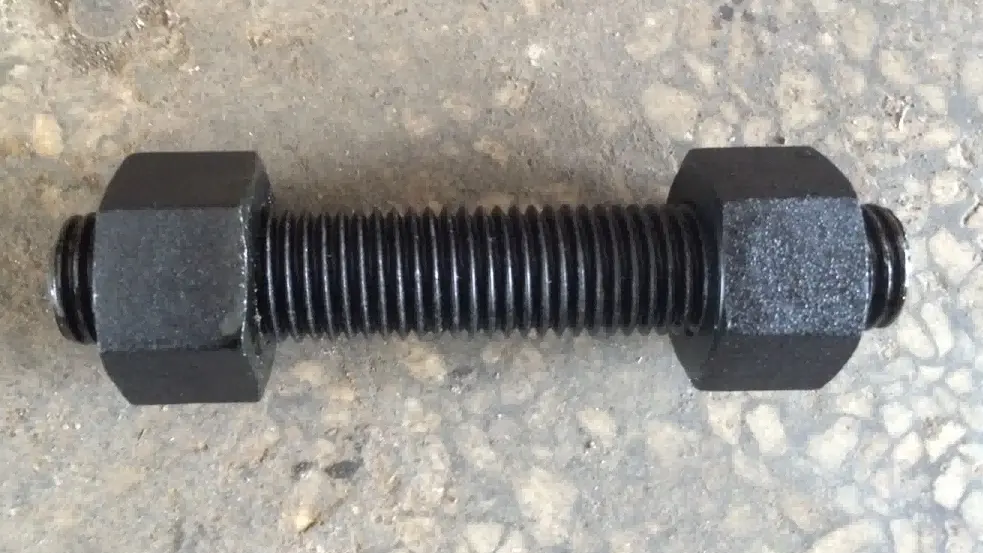
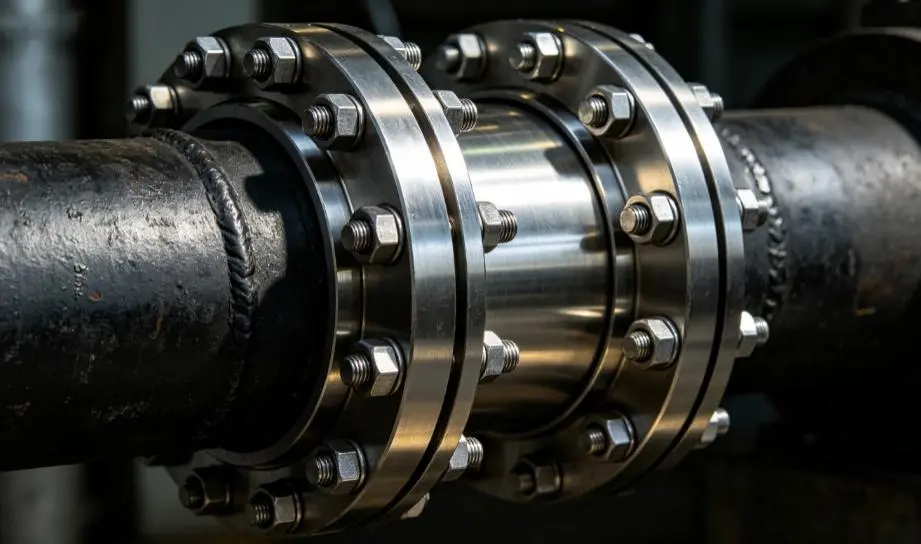
As a key supplementary core standard of ASME B18.2.1, ASME B18.31.2 is the preferred matching specification for standard inch nuts in high-pressure, high-temperature and high-vibration industrial scenarios, and is widely regarded as the optimal fastening solution for pipeline and pressure vessel flange connections. Different from the head-structured bolts specified in ASME B18.2.1, this standard focuses on continuous full-thread studs and double-end threaded studs, which are professionally designed for severe industrial working conditions that ordinary hex bolts cannot adapt to.
The core compatibility foundation of ASME B18.31.2 studs and standard inch nuts lies in the fully unified UNC/UNF thread system and dimensional tolerance standard. The thread pitch, tooth shape and nominal diameter of full-thread studs completely match the supporting parameters of standard hex and square nuts, ensuring zero-clearance assembly and uniform stress distribution. Compared with ASME B18.2.1 hex bolts, full-thread studs have no stress concentration at the bolt head, effectively avoiding loosening, thread fatigue and fastening failure under long-term vibration and alternating load conditions.
In petrochemical engineering, thermal power generation, marine facilities and pressure vessel manufacturing, the matching system of ASME B18.31.2 studs and standard inch nuts has irreplaceable application value. It realizes double-sided symmetrical locking of flange structures, enables the nut to bear uniform axial sealing pressure, and greatly improves the tightness and stability of pipeline medium connections. In addition, the full-thread design allows flexible adjustment of locking length, adapting to different flange thickness specifications, and significantly reduces equipment leakage risks and later maintenance costs compared with conventional ASME B18.2.1 bolt assembly schemes.
Direct Technical Comparison: ASME B18.2.1 vs ASME B18.31.2
To help engineers and procurement personnel quickly complete accurate model selection and avoid on-site assembly errors, the following table intuitively sorts out the core differences and matching characteristics of the two core standards compatible with standard inch nuts, covering structural design, applicable working conditions, performance advantages and industrial positioning:
|
Comparison Item |
ASME B18.2.1 |
ASME B18.31.2 |
|
Fastener Structure Type |
Hex head bolts, square head bolts, hex cap screws with fixed bolt heads |
Full-thread continuous studs, double-end threaded studs (no bolt head design) |
|
Core Matching Object |
Standard hex and square ASME B18.2.2 Nut for general assembly |
Heavy-duty matched ASME B18.2.2 Nut for flange and pressure vessel fastening |
|
Applicable Working Conditions |
Normal temperature, atmospheric pressure, light and medium load, static conventional assembly scenarios |
High temperature, high pressure, strong vibration, alternating load and harsh industrial scenarios |
|
Structural Performance Advantages |
Standardized size, strong versatility, convenient installation and disassembly, low comprehensive cost |
No head stress concentration, uniform stress distribution, excellent anti-loosening and fatigue resistance |
|
Main Application Industries |
General machinery, automobile manufacturing, civilian equipment, ordinary steel structures |
Petrochemical, thermal power, marine engineering, pressure vessel, pipeline flange systems |
|
Assembly Characteristics |
Single-sided fixed assembly, limited adjustment range |
Double-sided symmetrical locking, flexible adjustable assembly length, better sealing performance |
From the comparative analysis, it can be clearly seen that ASME B18.2.1 and ASME B18.31.2 form a perfect complementary matching system for standard inch nuts. There is no absolute superiority or inferiority between the two standards, only scenario applicability differences. Reasonable selection according to actual working conditions is the key to ensuring long-term stable operation of the fastening system.
Incompatible Fastener Standards and Common Matching Mistakes
To ensure assembly quality and structural safety, it is crucial to clarify the incompatible fastener types of standard inch nuts in actual production and procurement. Many engineering failures are caused by non-standard matching, which needs to be strictly avoided.
First, all metric series bolts (such as DIN 933, ISO 4014, GB standard metric bolts) are completely incompatible. Metric bolts adopt M-series metric threads with different pitch and tooth shape parameters from UNC/UNF unified threads, which cannot be assembled smoothly with inch standard nuts, and forced assembly will cause thread damage and connection failure. Second, non-standard modified bolts and non-ASME customized inch bolts with adjusted tolerances cannot be matched, as their dimensional deviation will affect fastening stability.
In addition, many purchasers confuse ISO 4032 international standard nuts with American standard nuts. ISO 4032 belongs to metric nut standards and cannot be matched with American standard inch bolts. Only by adhering to the matching of American standard inch bolt and nut systems can the performance advantages of standard fastener sets be fully exerted.
FAQ
Q1: What are the two core standard fasteners compatible with ASME B18.2.2 Nut?
A1: The two core and most widely used matching standards are ASME B18.2.1 inch-series hex bolts and ASME B18.31.2 high-pressure threaded studs. The two are perfectly compatible with this standard nut in thread and size, forming a full-scenario fastening solution covering general assembly and harsh working condition assembly.
Q2: How to scientifically choose between ASME B18.2.1 and ASME B18.31.2 for standard inch nut assembly?
A2: For conventional light and medium-load mechanical assembly, normal-temperature and normal-pressure equipment fixing, and non-flange structural connections, ASME B18.2.1 hex bolts are preferred for cost-effectiveness and convenient maintenance. For high-pressure, high-temperature, high-vibration working conditions such as pipeline flanges, pressure vessels and petrochemical equipment, ASME B18.31.2 full-thread studs must be selected to ensure anti-loosening performance and sealing tightness.
Q3: Can standard inch nuts be matched with metric bolts?
A3: No. Standard inch nuts are inch-series fasteners adopting UNC/UNF unified threads, while metric bolts adopt M-series metric threads. The two have different thread pitch and tooth profile, which are completely incompatible. Forced assembly will cause thread damage and connection failure.
Q4: Do surface treatments affect the matching of these ASME standard fastener sets?
A4: Conventional surface treatments including hot-dip galvanization, black oxide treatment and passivation will not affect the thread matching and assembly precision of ASME B18.2.1, ASME B18.31.2 fasteners and standard inch nuts. Only excessive coating thickness that changes thread tolerance will cause assembly jamming, so standardized coating processes are required for industrial applications.
Q5: What is the core principle to ensure the long-term stability of ASME matching systems?
A5: On the premise of thread standard matching, select fasteners according to service scenarios (ASME B18.2.1 for general use, ASME B18.31.2 for harsh pressure-bearing environments). Meanwhile, match the mechanical grades of nuts and fasteners in accordance with ASTM A563 specifications to avoid strength mismatch and improve the overall safety and service life of the fastening system.
A1: The two core matching standards are ASME B18.2.1 inch-series hex bolts and ASME B18.31.2 high-pressure threaded studs. The two form a complementary system, covering general industrial assembly and high-pressure harsh working condition assembly respectively, and are the most widely used and reliable matching solutions for standard inch nuts.
Q2: How to choose between ASME B18.2.1 and ASME B18.31.2 for standard inch nut assembly?
A2: For conventional light and medium-load mechanical assembly, atmospheric environment equipment fixing and non-flange structural connection, prioritize ASME B18.2.1 hex bolts for cost-effective and stable assembly. For high-pressure, high-temperature, high-vibration working conditions such as pipeline flanges, pressure vessels and petrochemical equipment, select ASME B18.31.2 full-thread studs to ensure fastening stability and sealing tightness.
Q3: Do surface treatments affect the matching of ASME standard fastener sets?
A3: Conventional surface treatments including hot-dip galvanization, black oxide treatment and passivation will not affect the thread matching and assembly precision of ASME B18.2.1, ASME B18.31.2 fasteners and standard inch nuts. Only excessive coating thickness that changes thread tolerance will cause assembly jamming, so standard coating processes must be adopted for industrial matching.
Q4: What is the key to ensure stable performance of ASME standard matching systems?
A4: On the premise of thread standard matching, it is necessary to select supporting fasteners based on working conditions: ASME B18.2.1 for general scenarios and ASME B18.31.2 for harsh pressure-bearing scenarios. Meanwhile, match nut and fastener mechanical grades in accordance with ASTM A563 specifications to avoid strength mismatch and ensure long-term stable operation of the fastening system.
Contact QinSteel for Premium ASME B18.2.2 Nut Matching Solutions
If you are looking for high-precision, fully compliant ASME standard fastener matching solutions, QinSteel focuses on core supporting products of ASME B18.2.1 bolts and ASME B18.31.2 studs, providing one-stop procurement and technical consulting services for ASME B18.2.2 Nut matching. All our products strictly comply with official ASME standard specifications, with complete specifications, precise tolerances and excellent compatibility, perfectly adapting to general machinery assembly and high-pressure pipeline flange connection scenarios.
Our professional technical team has in-depth research on the matching differences and scenario selection logic of ASME B18.2.1 and ASME B18.31.2 standards, and can provide targeted professional selection suggestions according to your actual working conditions, load parameters and equipment application scenarios. We help you accurately match standard inch nut sets, avoid engineering matching errors, reduce equipment failure risks, and improve overall assembly quality and service life.
For standard product parameter inquiry, bulk quotation, ASME standard matching technical consultation and customized fastener demands, please feel free to contact our official email: info@sxqinsteel.com. We will provide you with 24-hour professional reply and exclusive industrial fastener overall solutions.
References
1. ASME B18.2.2-2010, Nuts for General Applications: Machine Screw Nuts, Hex, Square, Hex Flange, and Coupling Nuts (Inch Series)
2. ASME B18.2.1-2012, Square and Hex Bolts and Screws (Inch Series)
3. ASTM A563-21, Standard Specification for Carbon and Alloy Steel Nuts for Bolts
4. ASTM A325-22, Standard Specification for Structural Bolts, Steel, Heat Treated, 120 ksi Minimum Tensile Strength
5. ASTM A490-21, Standard Specification for High-Strength Structural Bolts of Alloy Steel, Heat Treated, 150 ksi Minimum Tensile Strength
6. ASME B1.3-2019, Screw Thread Gaging Systems for Dimensional Acceptability
7. ASME B18.31.2-2018, Continuous Thread Studs and Threaded Bolts (Inch Series) for High-Pressure Service
Learn about our latest products and discounts through SMS or email