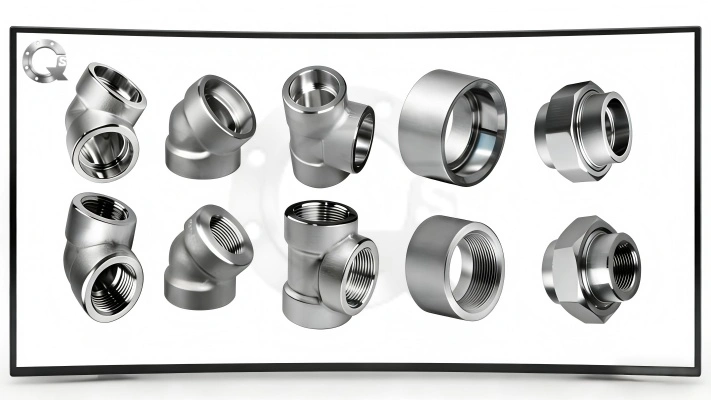
Threaded or socket-weld ASME B16.11 parts ought to be chosen based on the needs of the application. Threaded ASME B16.11 threaded fittings are best for low-pressure frameworks or joins that can be taken off and on. These are simple to set up and keep up. In any case, socket weld joints are way better for long-term, high-pressure applications that require stronger structures. For critical frameworks, socket weld fittings are the best choice since they make the association stronger. When you make your choice, think about things like the weight number, the temperature, the resistance to erosion, and how simple it is to keep up. Threaded or socket-weld fittings influence the security, adequacy, and life span of your channeling framework in the end.
Understanding ASME B16.11 Fittings: Threaded vs Socket Weld
What are ASME B16.11 Fittings?
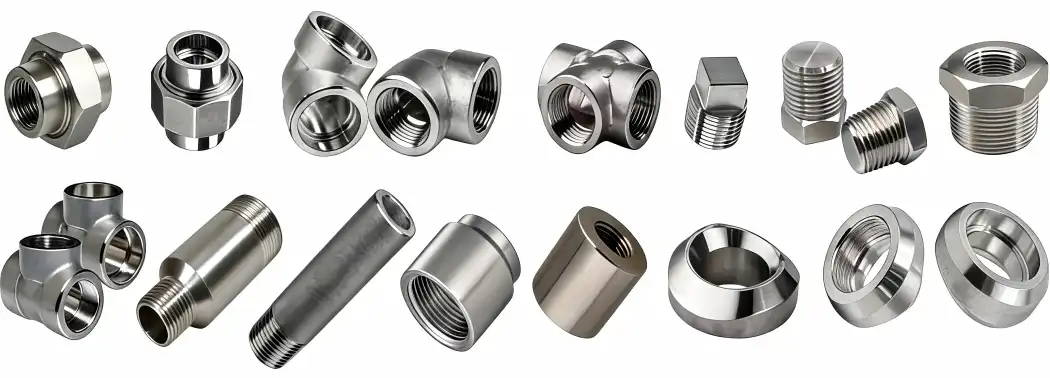
ASME B16.11 fittings are standard manufactured parts that are utilized in a variety of mechanical pipe frameworks to ensure that all joints are solid and of high quality. Taking after the strict rules set by the American Society of Mechanical Engineers for dimensional exactness, fabric guidelines, and execution characteristics is what these fittings do. ASME B16.11 fittings make solid, leak-proof connections that make plumbing systems more secure and more effective by following these rules. The standard, as it were, covers produced socket-weld and threaded fittings that are regularly utilized in high-pressure zones, where long-term framework stability depends on them being solid and performing consistently.
Characteristics of Threaded ASME B16.11 Fittings
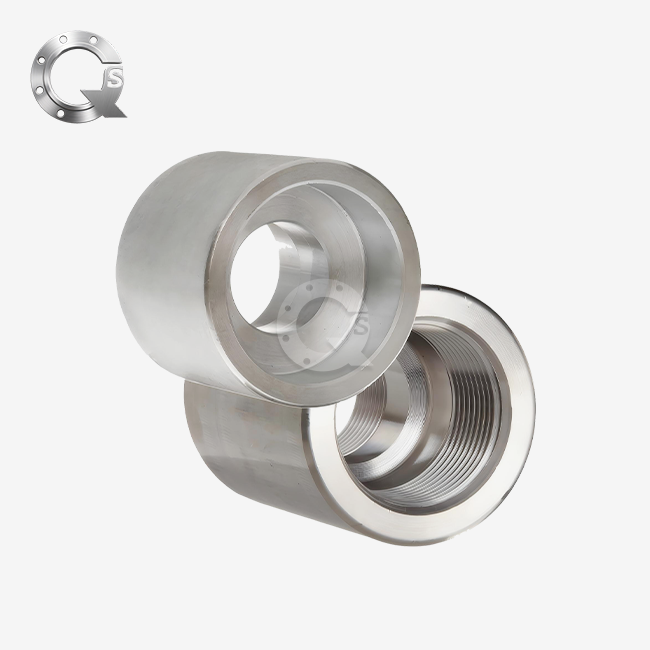
ASME B16.11 threaded fittings have accurately machined strings that make it simple for them to connect to channels that have strings of the same sort. Since these fittings do not require welding, they are simpler to introduce, can be replaced rapidly, and can be taken apart for repair or to modify frameworks. They are particularly valuable in places where the format of the channels needs to be reviewed or changed frequently. Threaded fittings work best with shorter pipe distances across and are more often than not utilized for medium to medium-weight levels. They are a valuable choice when adaptability and ease of access are important.
Features of Socket Weld ASME B16.11 Fittings
ASME B16.11 socket weld fittings are planned to make solid, lasting joins that are exceptionally solid and do not leak. Each fitting has a recessed socket that holds the pipe solidly in place, and sometimes has been recently welded. This makes a difference, keeps everything in the right place, and makes it beyond any doubt that the structure is solid. The joint can handle high temperatures and weights, thanks to its design. It doesn't influence its execution in any way. Socket weld fittings are exceptionally valuable in unsafe places like oil and gas channels, petrochemical plants, and high-pressure steam frameworks since they are secure, solid, and long-lasting.
Factors to Consider When Choosing Between Threaded and Socket Weld Fittings
Pressure and Temperature Requirements
When choosing between threaded and socket-weld fittings, it is imperative to consider the working weight and temperature of the framework. Depending on the fabric review, pipe measure, and reason, threaded fittings ordinarily work well at lower weights, up to almost 2000 psi most of the time. On the other hand, socket weld fittings are made for much harder conditions and can regularly handle temperatures over 10,000 psi. Moreover, they work way better indeed when temperatures alter a part. This makes them the best choice for frameworks that require stability and security in high-pressure, high-temperature, or cold environments.
Installation and Maintenance Considerations
The sort of fitting that is required depends on how it will be introduced and how much upkeep is anticipated over time. Numerous individuals like threaded fittings since they are simple to install and do not require any extraordinary tools or high-level specialized information. Since they are so straightforward to take apart, they are ideal for frameworks that need to be reviewed, settled, or reconfigured on a regular basis. Indeed, in spite of the fact that socket weld fittings make joints more grounded and more secure, they need to be installed by somebody who knows how to utilize welding devices. These joints are settled once they are welded, so if you need to evacuate or alter them in the future, you will ordinarily have to cut the pipe.
Longevity and Leak Resistance
When it comes to long-term sturdiness and resistance to spillage, socket weld fittings more often than not do a superior job than threaded ones. An appropriately ASME B16.11 socket weld fitting joint makes a single, nonstop interface that makes it less likely that vibration, thermal expansion, or mechanical push will cause a spill. Threaded fittings can work well at first, but over time, the strings may end up free or erode, particularly in frameworks that move around a part or experience temperature regularly. Still, threaded fittings can work dependably in a wide range of moderate-demand circumstances as long as they are installed accurately and are frequently serviced.
Applications and Best Practices for ASME B16.11 Fittings
Ideal Applications for Threaded Fittings
Threaded ASME B16.11 fittings are particularly valuable in frameworks where parts need to be taken apart, changed, or replaced frequently. Their shape makes establishment fast and simple, so you do not require any extraordinary instruments. They can handle medium to heavy weights up to 2000 psi and pipe breadths that aren't enormous. Individuals regularly utilize these fittings in water systems, HVAC frameworks, and transitory setups that can be changed as the needs of the venture alter. Threaded fittings are awesome for places that are brief on time or do not have a part of get to to welding devices since they make upkeep simpler and cut down on downtime.
Optimal Uses for Socket Weld Fittings
For extreme benefit circumstances with high pressure, high temperatures, or strict security rules, socket-weld ASME B16.11 fittings work best. Since they are welded together, the connection is solid and won't spill. It can also handle changes in temperature, vibrations, and other mechanical stresses. As a result, these fittings are utilized in a variety of places, like control plants, chemical handling units, high-pressure steam systems, and indeed channels that carry cold fluids. In these sorts of settings, socket weld parts must be solid and long-lasting to halt spills, ensure beyond a doubt the framework works well, and remain in line with security rules.
Best Practices for Installation and Maintenance
Whether threaded or socket weld fittings are chosen, the framework must be introduced accurately and kept up routinely for it to work dependably. When utilizing ASME B16.11 threaded fittings, it's vital to utilize the right string sealant or tape, not fix them too much, since that can harm the strings, and check for spills or rust on a regular basis. To account for vibrations or warm development, the screws may also need to be fixed more regularly. When utilizing qualified welders and affirmed strategies for socket weld fittings, it is exceptionally vital to ensure that the channels are aligned accurately before welding. Non-destructive tests and warm treatment after the weld offer assistance to check the quality of the weld and keep the system's astuteness over time.
Conclusion
It is exceptionally critical to select between threaded and socket weld ASME B16.11 fittings since it influences the security, effectiveness, and life of your channeling framework. Since they are adaptable and simple to introduce, threaded valves are awesome for medium-weight frameworks and those that require frequent adjustment. Socket weld fittings are the best choice for high-pressure, high-temperature, and imperative security applications since they are solid and do not leak. By carefully considering things like the weight required, the temperature, how simple it is to introduce, and how well it will work in the long run, you can make the choice that best fits your needs. Keep in mind that the best way to get the most out of either sort of fitting is to put it on accurately and keep it in great shape.
FAQs
What is the fundamental contrast between ASME B16.11 parts that string and those that socket weld?
Using exact strings to connect, threaded fittings are simple to put together and take separated. To make a more grounded, longer-lasting interface, socket weld fittings require to be welded.
What kind of fitting works best for high-pressure situations?
Because their joints are more grounded and do not spill, socket weld fittings are ordinarily superior for high-pressure uses.
Can threaded fittings be utilized in places where it's exceptionally hot?
Some high-temperature occupations can be done with threaded fittings, but socket weld fittings ordinarily work superior in those situations.
Expert ASME B16.11 Fitting Solutions | QinSteel
You can believe QinSteel to give and make high-quality ASME B16.11 threaded fitting parts. We have 20 a long time of encounter in the field and can meet your needs with either a threaded or a socket weld. Our carefully outlined merchandise work flawlessly in numerous settings, from oil and gas to mechanical frameworks. If you don't mind e-mail us at info@sxqinsteel.com if you require offer assistance picking the right fitting for your work.
References
American Society of Mechanical Engineers. (2017). ASME B16.11-2016: Forged Fittings, Socket-Welding and Threaded. New York: ASME.
Nayyar, M. L. (2000). Piping Handbook (7th ed.). McGraw-Hill Education.
Smith, P. (2018). Piping Materials Guide: Selection and Applications for Process Plants. Elsevier.
American Welding Society. (2015). AWS D10.4/D10.4M:2015 Recommended Practices for Welding Austenitic Chromium-Nickel Stainless Steel Piping and Tubing. Miami: AWS.
Becht, C. (2019). Process Piping: The Complete Guide to ASME B31.3. ASME Press.
Antaki, G. A. (2003). Piping and Pipeline Engineering: Design, Construction, Maintenance, Integrity, and Repair. CRC Press.