- English
- French
- German
- Portuguese
- Spanish
- Russian
- Japanese
- Korean
- Arabic
- Greek
- German
- Turkish
- Italian
- Danish
- Romanian
- Indonesian
- Czech
- Afrikaans
- Swedish
- Polish
- Basque
- Catalan
- Esperanto
- Hindi
- Lao
- Albanian
- Amharic
- Armenian
- Azerbaijani
- Belarusian
- Bengali
- Bosnian
- Bulgarian
- Cebuano
- Chichewa
- Corsican
- Croatian
- Dutch
- Estonian
- Filipino
- Finnish
- Frisian
- Galician
- Georgian
- Gujarati
- Haitian
- Hausa
- Hawaiian
- Hebrew
- Hmong
- Hungarian
- Icelandic
- Igbo
- Javanese
- Kannada
- Kazakh
- Khmer
- Kurdish
- Kyrgyz
- Latin
- Latvian
- Lithuanian
- Luxembou..
- Macedonian
- Malagasy
- Malay
- Malayalam
- Maltese
- Maori
- Marathi
- Mongolian
- Burmese
- Nepali
- Norwegian
- Pashto
- Persian
- Punjabi
- Serbian
- Sesotho
- Sinhala
- Slovak
- Slovenian
- Somali
- Samoan
- Scots Gaelic
- Shona
- Sindhi
- Sundanese
- Swahili
- Tajik
- Tamil
- Telugu
- Thai
- Ukrainian
- Urdu
- Uzbek
- Vietnamese
- Welsh
- Xhosa
- Yiddish
- Yoruba
- Zulu
What Pipe System Specifications Are Compatible with ASME B16.11 Cross Fittings
Aug 11 2026
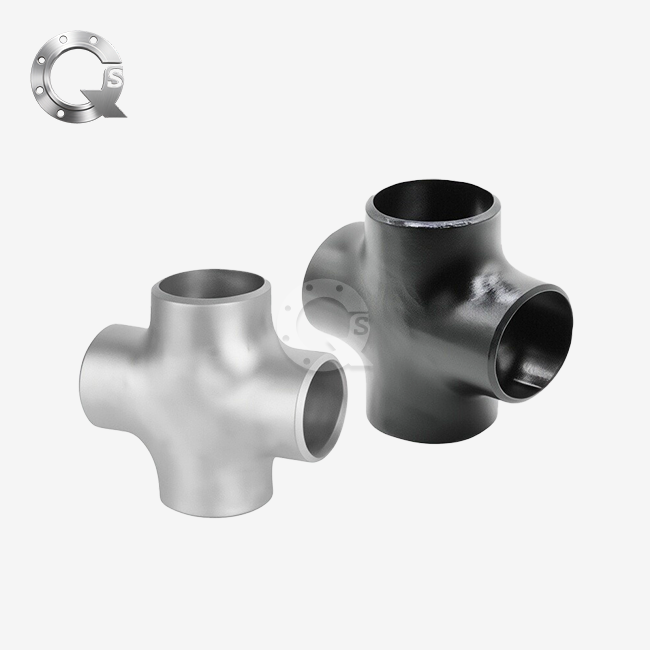
ASME B16.11 Cross is a core forged pipe fitting designed for high-pressure small-bore piping systems in industrial engineering, delivering stable branching and fluid distribution performance for diverse process pipelines. As a standardized fitting defined by the American Society of Mechanical Engineers (ASME), this cross fitting follows strict dimensional, pressure-bearing, and manufacturing specifications, making it a preferred component for high-reliability industrial piping solutions. Widely adopted in energy, chemical, petrochemical, and power generation industries, it adapts to harsh working conditions with precise structural design and excellent mechanical properties. This article elaborates on its applicable pipe system specifications, structural characteristics, application scenarios, and technical advantages to help engineering practitioners select matching pipe fittings accurately.

Core Definition and Standard Scope of ASME B16.11 Cross
To clarify the applicable pipe system range, it is essential to first understand the standard scope of ASME B16.11. The ASME B16.11-2021 standard specifically governs forged socket-weld and threaded pipe fittings for high-pressure industrial piping, covering crosses, tees, elbows, couplings, and other common branching and connecting fittings. ASME B16.11 Cross, as a key branching fitting under this standard, is exclusively manufactured through forging processes, which eliminates structural pores and defects present in cast fittings, ensuring superior strength and pressure resistance.
This standard clearly defines the basic parameters of cross fittings, including nominal size range, pressure class grades, wall thickness tolerances, and connection forms. Unlike ordinary welded pipe crosses, ASME B16.11 Cross is not applicable to large-diameter, low-pressure civil piping systems; instead, it targets industrial small-bore high-pressure pipelines with strict safety and stability requirements. Its standardized manufacturing rules unify the dimensional accuracy and performance indicators of cross fittings from different manufacturers, realizing universal compatibility in global industrial piping engineering.
Applicable Pipe Size Specifications

In terms of nominal pipe size, ASME B16.11 Cross covers a small-bore range suitable for precision industrial piping systems, with a standard applicable size of NPS 1/16 to NPS 4 (DN6 to DN100). This size range is tailored for instrument pipelines, auxiliary process pipelines, and small-diameter fluid delivery pipelines in industrial units, perfectly matching the layout characteristics of compact industrial piping spaces.
For engineering scenarios, NPS 1/8 to NPS 2 specifications are the most widely used, mainly applied to instrument control pipelines, fire protection auxiliary pipelines, and low-pressure steam delivery pipelines. The NPS 2 to NPS 4 large-size specifications in the standard are used for small-diameter main process pipelines that require high flow stability and multi-directional branching. It is worth noting that the actual wall thickness of the supporting pipe must meet the standard matching requirements: the socket wall thickness of socket-weld ASME B16.11 Cross shall not be less than 1.09 times the nominal wall thickness of the matching pipe, and the average wall thickness shall reach 1.25 times the pipe nominal thickness, ensuring welding connection safety and structural stability.
Applicable Pressure Grade Specifications
Pressure grade is the core parameter that determines the applicable pipe system of ASME B16.11 Cross, and the standard classifies it into independent pressure levels according to connection forms. For threaded ASME B16.11 Cross, the applicable pressure classes are Class 2000, Class 3000, and Class 6000; for socket-weld types, the pressure grades cover Class 3000, Class 6000, and Class 9000. All pressure grades correspond to working pressure environments of 13.8 MPa and above, fully adapting to high-pressure industrial piping systems.
Class 2000 and Class 3000 cross fittings are commonly used in conventional high-pressure auxiliary pipelines, such as petrochemical plant instrument pipelines and power plant cooling auxiliary pipelines. Class 6000 and Class 9000 high-grade products are suitable for extreme working conditions with high pressure and frequent pressure fluctuations, including refining process pipelines, natural gas transmission small-bore pipelines, and high-temperature steam circulation pipelines. All pressure grade designs comply with ASME BPVC boiler and pressure vessel code requirements, ensuring long-term safe operation of the pipe system under rated working conditions.
Applicable Connection and Material Specifications
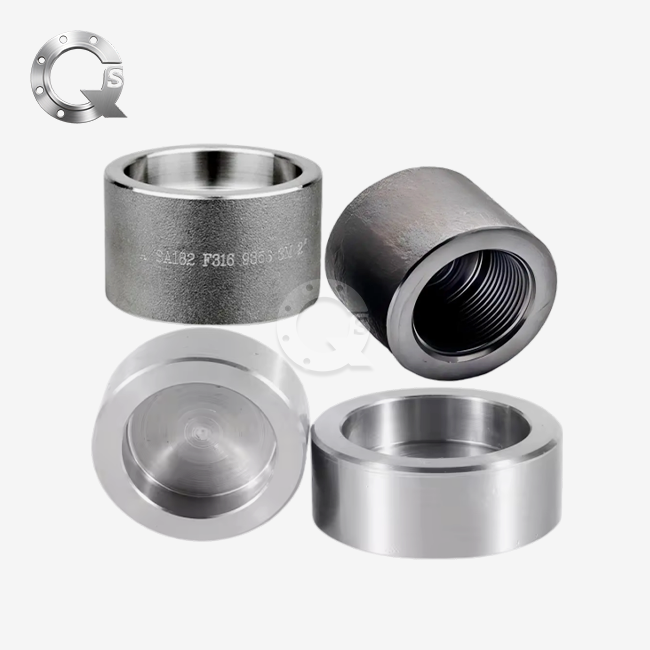
ASME B16.11 Cross supports two mainstream industrial connection forms, matching different standardized pipe connection systems. The first is NPT threaded connection, which is suitable for pipelines requiring quick assembly and disassembly, with strict thread tolerance standards to ensure airtight connection and prevent fluid leakage. The second is socket welding connection, featuring higher connection strength and better pressure resistance, suitable for fixed pipelines that do not need frequent disassembly.
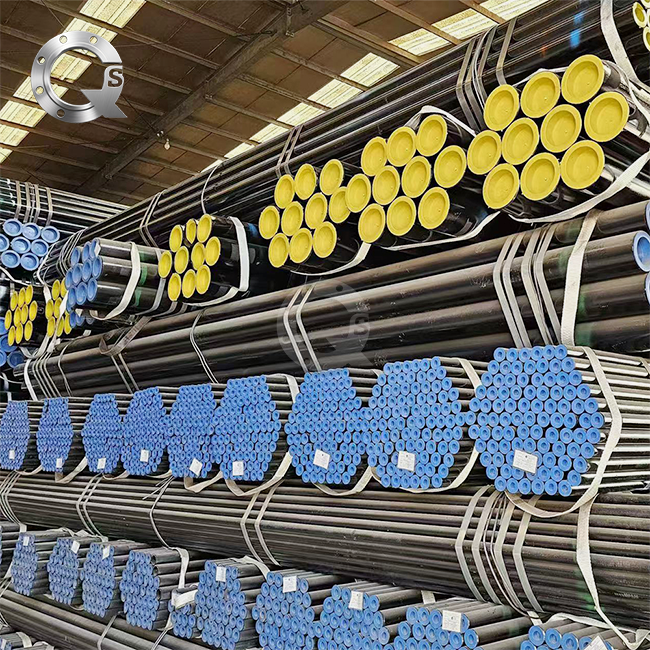
In terms of supporting pipe and fitting materials, the standard allows multiple high-performance metal materials, matching mainstream industrial pipe material specifications. Common materials include ASTM A105 carbon steel, ASTM A182 F304/F316 stainless steel, and A350 LF2 low-temperature carbon steel. These materials correspond to carbon steel seamless pipes, stainless steel precision pipes, and low-temperature resistant industrial pipes respectively, covering conventional normal-temperature, high-temperature, low-temperature, and corrosion-resistant pipe system working conditions.
Typical Industrial Pipe System Application Scenarios

Combined with size, pressure, and material specifications, ASME B16.11 Cross is mainly applied in standardized industrial high-pressure small-bore pipe systems. In the petrochemical industry, it is used for process branching pipelines of oil refining, chemical synthesis, and hydrocarbon delivery, adapting to high-pressure and slightly corrosive fluid working conditions. In the power industry, it serves thermal power plant steam auxiliary pipelines, instrument detection pipelines, and hydraulic control pipelines, ensuring stable fluid transmission under high temperature and high pressure.
In addition, this cross fitting is widely used in fire protection high-pressure water supply pipelines, natural gas gathering and transportation small-bore pipelines, and marine engineering auxiliary piping systems. Its standardized design enables seamless docking with ASME B31 series piping specifications, which are globally recognized industrial piping design codes, making it applicable to international EPC engineering projects and cross-border industrial pipeline construction.
FAQs
Q1: Can ASME B16.11 Cross be used for large-diameter low-pressure water supply pipelines?
A1: No. The standard scope of ASME B16.11 Cross is limited to NPS 1/16–4 small-bore pipelines and high-pressure working conditions above 13.8 MPa. Large-diameter low-pressure civil and municipal water supply pipelines adopt low-pressure welded fittings, which do not match the size and pressure grade design of this product, resulting in performance redundancy and cost waste.
Q2: What is the difference between ASME B16.11 Cross and ASME B16.28 cross fittings?
A2: The two standards target different pipe systems. ASME B16.11 Cross is forged high-pressure small-bore fittings with independent fixed pressure grades, suitable for precision industrial process pipelines. ASME B16.28 fittings match the pressure of supporting seamless pipes without independent pressure grades, mainly used for conventional high-temperature and high-pressure large-diameter process pipelines in refineries and power plants.
Q3: Do ASME B16.11 Cross fittings support low-temperature working environments?
A3: Yes. When matched with A350 LF2/LF3 low-temperature carbon steel materials, the fittings can adapt to low-temperature industrial pipe systems, meeting the low-temperature toughness requirements of petrochemical and cryogenic engineering pipelines, and complying with the full standard specifications of ASME B16.11 for special working conditions.
Contact QinSteel for Premium ASME B16.11 Cross Piping Solutions
As a professional manufacturer and supplier of standardized industrial pipe fittings, QinSteel has long focused on the R&D, production, and customization of high-precision ASME standard forged fittings. Our ASME B16.11 Cross products strictly follow the 2021 latest standard, covering all sizes, pressure grades, and material specifications, and can fully meet the matching requirements of various high-pressure small-bore industrial pipe systems.
We support customized processing of special specifications, non-standard sizes, and special material cross fittings, and provide one-stop technical services including pipe system specification matching consultation, product parameter verification, and engineering application guidance. All products pass strict pressure resistance, flaw detection, and dimensional tolerance tests to ensure compliance with international industrial piping engineering standards. For product inquiries, technical parameter consultation, sample testing, and bulk order cooperation, please contact our professional team via email: info@sxqinsteel.com. We will provide you with cost-effective piping solutions and timely after-sales service.

References
[1] ASME B16.11-2021, Forged Fittings, Socket-Welding and Threaded[S]. The American Society of Mechanical Engineers, 2021.
[2] ASME BPVC Section I, Rules for Construction of Power Boilers[S]. The American Society of Mechanical Engineers.
[3] ASME B31.3, Process Piping[S]. The American Society of Mechanical Engineers.
[4] ASTM A105/A105M-22, Standard Specification for Carbon Steel Forgings for Piping Applications[S]. ASTM International, 2022.
[5] ASTM A182/A182M-23, Standard Specification for Forged or Rolled Alloy and Stainless Steel Pipe Flanges, Forged Fittings, and Valves and Parts for High-Temperature Service[S]. ASTM International, 2023.
Learn about our latest products and discounts through SMS or email