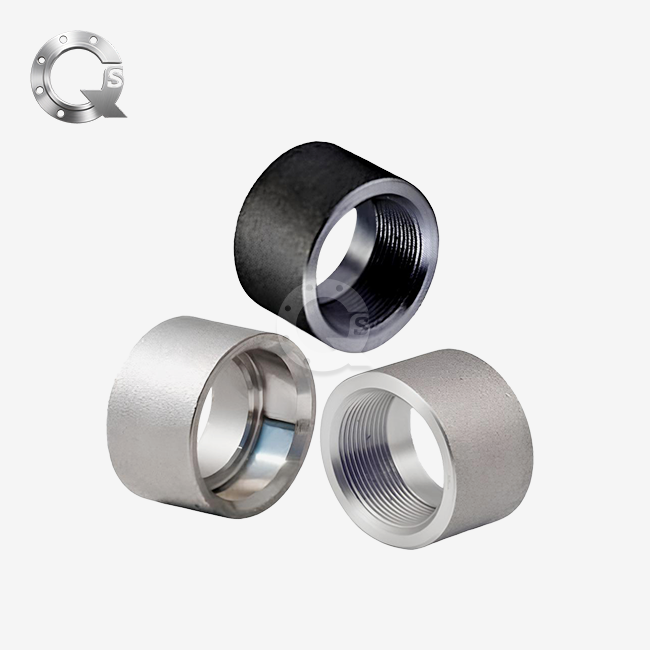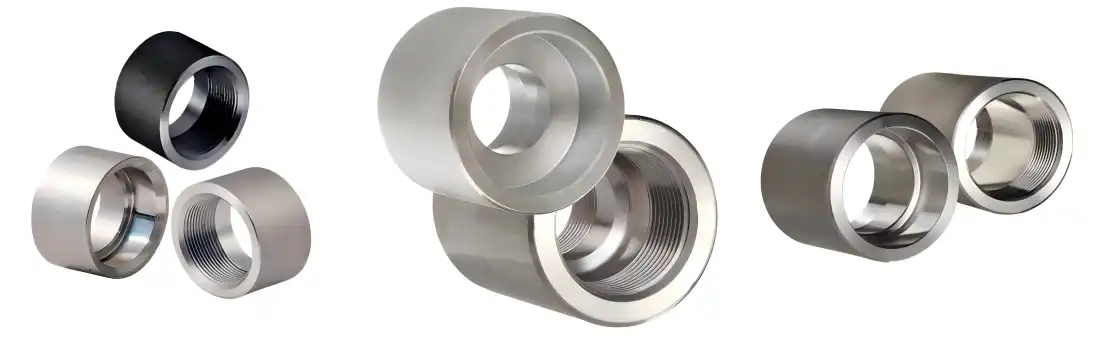
ASME B16.11 forged couplings are famous for their uncommon pressure-bearing capacity, extending from 2000# to 6000#. This amazing capability makes them perfect for high-pressure small-bore frameworks in different mechanical applications. The pressure-bearing capacity of these couplings is a basic calculation in their execution and unwavering quality, guaranteeing they can withstand extraordinary conditions in demanding situations. Understanding this capacity is basic for engineers and acquisition professionals when selecting the right components for their channeling frameworks, especially in businesses such as oil and gas, petrochemicals, and control era, where security and productivity are paramount.
Understanding ASME B16.11 Forged Couplings and Their Pressure Ratings
What Are ASME B16.11 Forged Couplings?
ASME B16.11 forged couplings are high-quality, pressure-resistant components utilized in channeling frameworks. These couplings are fabricated through a fashioning process, which upgrades their quality and toughness. The ASME B16.11 standard indicates the prerequisites for forged fittings, including couplings, in sizes NPS 1/8 to NPS 4.
Pressure Classes and Their Significance
The weight classes of ASME B16.11 forged couplings are indicated by the pound (#) image, showing the greatest working weight at room temperature. Common weight classes incorporate 2000#, 3000#, 6000#, and in a few cases, indeed higher. These evaluations are vital for guaranteeing the secure and effective operation of channeling frameworks under different weight conditions.
Factors Influencing Pressure-Bearing Capacity
Several variables influence the pressure-bearing capacity of ASME B16.11 forged couplings:
1. Fabric composition: The sort of amalgam utilized in fabricating the coupling plays a noteworthy part in its weight resistance.
2. Divider thickness: Thicker dividers, for the most part, give higher pressure-bearing capacity.
3. Temperature: As temperature increments, the pressure-bearing capacity may diminish.
4. Fabricating handle: The fashioning procedure and quality control measures affect the coupling's general strength.
Advantages of High-Pressure-Bearing-Capacity in ASME B16.11 Forged Couplings
Enhanced Safety in High-Pressure Systems
The tall pressure-bearing capacity of ASME B16.11 forged couplings altogether improves security in basic applications. These couplings can withstand extraordinary weights, diminishing the hazard of spills, cracks, or disastrous disappointments. This is especially vital in businesses managing with dangerous materials or where framework integrity is vital for operational safety.
Versatility Over Different Industries
The amazing weight evaluations of ASME B16.11 forged couplings make them flexible components suitable for a wide range of businesses. From seaward oil and gas stages to chemical handling plants and control era offices, these couplings discover applications wherever high-pressure small-bore frameworks are required. Their capacity to handle differing weight requirements makes them a go-to choice for engineers across distinctive sectors.
Cost-Effectiveness and Longevity
While the introductory fetched of high-pressure ASME B16.11 forged couplings might be higher compared to lower-rated options, their long-term benefits frequently exceed the upfront venture. The solidness and unwavering quality of these couplings lead to decreased support needs, fewer substitutions, and less downtime. This translates to critical, taking a toll on reserve funds over the lifecycle of the channeling framework, making them a cost-effective choice for requesting applications.
Selecting the Right ASME B16.11 Forged Coupling for Your Application
Assessing System Requirements
Choosing the fitting ASME B16.11 forged coupling starts with an exhaustive evaluation of your framework requirements. Consider variables such as:
1. Most extreme working weight
2. Temperature extent
3. Liquid or gas being transported
4. Natural conditions
5. Administrative benchmarks and details
By carefully assessing these angles, you can guarantee that the chosen coupling will meet the particular needs of your application while keeping up an adequate security margin.
Material Selection for Optimal Performance
The fabric of the ASME B16.11 forged coupling plays a vital part in its pressure-bearing capacity and generally performance. Common materials include:
1. Carbon steel: Reasonable for general-purpose applications
2. Stainless steel: Perfect for destructive situations
3. Combination steel: Offers upgraded quality and temperature resistance
4. Nickel amalgams: Give uncommon erosion resistance in extraordinary conditions
Selecting the right fabric guarantees that the coupling can withstand not as it were the weight requirements but also the chemical and natural challenges of your particular application.
Importance of Proper Installation and Maintenance
Even the highest-rated ASME B16.11 forged coupling can come up short if not appropriately introduced or kept up. To maximize the pressure-bearing capacity and life span of these components:
1. Follow the producer's rules for establishment methods
2. Utilize suitable torque values when fixing associations
3. Execute customary assessment and support plans
4. Prepare the work workforce on appropriate care and establishment strategies
5. Keep point-by-point records of establishment dates, upkeep exercises, and any observed issues
By following these best practices, you can guarantee that your ASME B16.11 forged couplings perform ideally through their service life, keeping up their pressure-bearing capacity and contributing to the in general security and effectiveness of your channeling system.
Conclusion
The pressure-bearing capacity of ASME B16.11 forged couplings, extending from 2000# to 6000#, is a confirmation of their extraordinary quality and unwavering quality in high-pressure small-bore frameworks. These couplings play a significant part in guaranteeing the security, productivity, and life span of channeling frameworks across various businesses. By understanding their capabilities, preferences, and determination criteria, engineers and acquisition pros can make educated choices that contribute to the by and large execution and cost-effectiveness of their ventures. As businesses proceed to thrust the boundaries of weight and temperature necessities, ASME B16.11 forged couplings stay at the cutting edge of solid and tough channeling arrangements.
FAQs
What materials are commonly used for ASME B16.11 forged couplings?
Common materials include carbon steel, stainless steel, alloy steel, and nickel alloys.
How does temperature affect the pressure-bearing capacity of these couplings?
Generally, as temperature increases, the pressure-bearing capacity may decrease.
Are ASME B16.11 forged couplings suitable for small-bore piping systems?
Yes, they are specifically designed for high-pressure small-bore systems.
What industries commonly use ASME B16.11 forged couplings?
They are widely used in oil & gas, petrochemicals, power generation, and other industrial applications.
High-Quality ASME B16.11 Forged Couplings for Your High-Pressure Systems | QinSteel
At QinSteel, we are a leading manufacturer and supplier of premium ASME B16.11 forged couplings. Our products are engineered to meet the most demanding pressure requirements, ensuring safety and reliability in your critical applications. With our extensive experience and commitment to quality, we provide tailored solutions to meet your specific needs. Contact us at info@sxqinsteel.com to discover how our high-pressure forged couplings can enhance your piping systems.

References
ASME B16.11-2016: Forged Fittings, Socket-Welding and Threaded. American Society of Mechanical Engineers.
Bringas, J. E. (2004). Handbook of Comparative World Steel Standards. ASTM International.
Nayyar, M. L. (2000). Piping Handbook. McGraw-Hill Education.
Smith, P. (2005). Valve Selection Handbook: Engineering Fundamentals for Selecting the Right Valve Design for Every Industrial Flow Application. Elsevier Science.
Antaki, G. A. (2003). Piping and Pipeline Engineering: Design, Construction, Maintenance, Integrity, and Repair. CRC Press.
Chasis, D. A. (1988). Plastic Piping Systems. Industrial Press Inc.