- English
- French
- German
- Portuguese
- Spanish
- Russian
- Japanese
- Korean
- Arabic
- Greek
- German
- Turkish
- Italian
- Danish
- Romanian
- Indonesian
- Czech
- Afrikaans
- Swedish
- Polish
- Basque
- Catalan
- Esperanto
- Hindi
- Lao
- Albanian
- Amharic
- Armenian
- Azerbaijani
- Belarusian
- Bengali
- Bosnian
- Bulgarian
- Cebuano
- Chichewa
- Corsican
- Croatian
- Dutch
- Estonian
- Filipino
- Finnish
- Frisian
- Galician
- Georgian
- Gujarati
- Haitian
- Hausa
- Hawaiian
- Hebrew
- Hmong
- Hungarian
- Icelandic
- Igbo
- Javanese
- Kannada
- Kazakh
- Khmer
- Kurdish
- Kyrgyz
- Latin
- Latvian
- Lithuanian
- Luxembou..
- Macedonian
- Malagasy
- Malay
- Malayalam
- Maltese
- Maori
- Marathi
- Mongolian
- Burmese
- Nepali
- Norwegian
- Pashto
- Persian
- Punjabi
- Serbian
- Sesotho
- Sinhala
- Slovak
- Slovenian
- Somali
- Samoan
- Scots Gaelic
- Shona
- Sindhi
- Sundanese
- Swahili
- Tajik
- Tamil
- Telugu
- Thai
- Ukrainian
- Urdu
- Uzbek
- Vietnamese
- Welsh
- Xhosa
- Yiddish
- Yoruba
- Zulu
What is the Mechanical Strength of A105 Forged Flanges?
Nov 21 2025
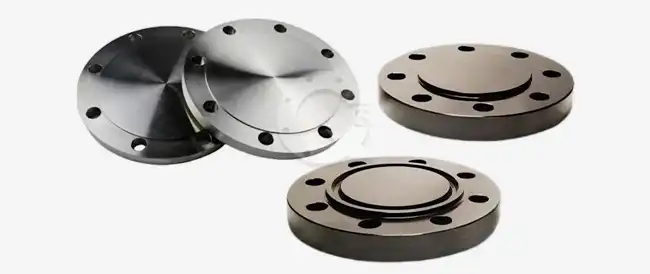
A105 forged flanges are renowned for their exceptional mechanical strength, which is a critical factor in their widespread use across various industrial applications. The mechanical strength of A105 forged flanges typically ranges from 70,000 to 95,000 psi (480 to 655 MPa) in terms of tensile strength, with a minimum yield strength of 36,000 psi (248 MPa). This impressive strength is achieved through the forging process, which optimizes the carbon steel structure, enhancing both tensile and compressive capacity. The result is a robust, durable flange that can withstand high pressures and temperatures, making it ideal for use in demanding environments such as oil and gas pipelines, petrochemical plants, and power generation facilities.
Understanding the Composition and Properties of A105 Forged Flanges
Chemical Composition of A105 Steel
A105 steel, the material used in A105 forged flanges, is a low-carbon steel alloy with a carefully balanced composition. This composition typically includes:
- Carbon: 0.35% max
- Manganese: 0.60-1.05%
- Phosphorus: 0.035% max
- Sulfur: 0.040% max
- Silicon: 0.10-0.35%
The precise balance of these elements contributes significantly to the material's strength and durability. The low carbon content ensures good weldability, while the manganese content enhances strength and hardness.
Physical Properties of A105 Forged Flanges
A105 forged flanges exhibit several key physical properties that make them suitable for a wide range of applications:
- Density: Approximately 7.85 g/cm³
- Melting Point: Around 1,430°C (2,606°F)
- Thermal Conductivity: 51.9 W/m·K at 100°C
- Specific Heat Capacity: 0.486 J/g·°C at 20°C
These properties contribute to the flanges' ability to withstand high temperatures and pressures, making them ideal for use in challenging industrial environments.
Mechanical Properties of A105 Forged Flanges
The mechanical properties of A105 forged steel flanges are what truly set them apart. Key mechanical properties include:
- Tensile Strength: 70,000-95,000 psi (480-655 MPa)
- Yield Strength: Minimum 36,000 psi (248 MPa)
- Elongation: Minimum 20% in 2 inches
- Reduction of Area: Minimum 38%
- Hardness: 137-187 HB
These properties ensure that A105 forged flanges can withstand significant stress and strain without failure, making them reliable components in critical systems.
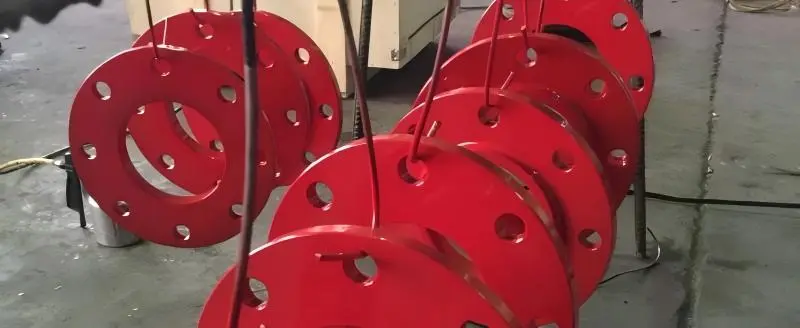
The Forging Process and Its Impact on Mechanical Strength
Overview of the Forging Process
The forging process is a critical factor in achieving the impressive mechanical strength of A105 forged flanges. This process involves shaping the metal through compressive forces, typically at high temperatures. The steps in the forging process for A105 flanges generally include:
- Heating the A105 steel to its plastic deformation temperature (typically around 1200°C)
- Shaping the heated metal using dies and presses
- Controlled cooling to achieve desired microstructure
- Heat treatment for optimal mechanical properties
Each step in this process contributes to the final strength and durability of the flange.
How Forging Enhances Mechanical Strength?
The forging process significantly enhances the mechanical strength of A105 flanges in several ways:
- Grain Refinement: Forging breaks down the original grain structure of the steel, creating a finer, more uniform grain structure. This results in improved strength and toughness.
- Directional Strength: The forging process aligns the grain flow with the shape of the part, enhancing strength in the directions where it's most needed.
- Elimination of Defects: The intense pressure applied during forging helps to close any voids or porosity in the original material, reducing potential weak points.
- Work Hardening: The deformation of the metal during forging increases its strength through a process called work hardening.
These effects combine to produce a flange with superior mechanical properties compared to those manufactured through other methods like casting or machining.
Comparison with Other Manufacturing Methods
When compared to other manufacturing methods, forging stands out for its ability to produce components with superior mechanical strength:
- Forging vs. Casting: Forged flanges typically have higher strength and better grain structure than cast flanges. They also have fewer internal defects.
- Forging vs. Machining: While machining can produce precise dimensions, it doesn't improve the internal structure of the metal like forging does. Forged parts often have better fatigue resistance.
- Forging vs. Welding: Welded flanges may have weak points at the weld joints. Forged flanges are typically one solid piece, eliminating this potential weakness.
These comparisons highlight why forging is the preferred method for producing high-strength flanges like A105 forged flanges.
Applications and Benefits of A105 Forged Flanges
Common Industrial Applications
A105 forged flanges find wide application across various industries due to their exceptional mechanical strength and reliability. Some common applications include:
Oil and Gas Industry: Used in pipelines, refineries, and offshore platforms for their ability to withstand high pressures and corrosive environments.
- Petrochemical Plants: Employed in process piping systems where chemical resistance and high-temperature performance are crucial.
- Power Generation: Utilized in steam systems and cooling circuits in power plants.
- Water Treatment Facilities: Used in high-pressure water distribution systems.
Chemical Processing: Applied in reactors and storage tanks where strength and chemical resistance are paramount.
The versatility of A105 forged flanges makes them a go-to choice for engineers across these diverse industries.
Benefits of Using A105 Forged Flanges
The use of A105 forged flanges offers numerous benefits in industrial applications:
- High Strength-to-Weight Ratio: A105 forged flanges provide excellent strength without excessive weight, making them ideal for applications where weight is a concern.
- Excellent Pressure and Temperature Resistance: These flanges can withstand high pressures and temperatures, making them suitable for demanding environments.
- Superior Fatigue Resistance: The forging process enhances the material's ability to withstand cyclic loading, improving long-term reliability.
- Good Machinability: Despite their high strength, A105 forged flanges can be machined to precise specifications when needed.
- Cost-Effective: While initial costs may be higher than some alternatives, the long service life and reliability of A105 forged flanges often result in lower total cost of ownership.
These benefits make A105 forged flanges a preferred choice for many critical applications.
Considerations for Selecting A105 Forged Flanges
When selecting A105 forged flanges for a specific application, several factors should be considered:
- Operating Pressure and Temperature: Ensure the flange's ratings meet or exceed the system requirements.
- Chemical Compatibility: While A105 steel has good general corrosion resistance, it may not be suitable for all chemical environments.
- Dimensional Requirements: Verify that the flange dimensions are compatible with the connecting pipes and equipment.
- Compliance with Standards: Check that the flanges meet relevant industry standards (e.g., ASME B16.5 for pipe flanges).
- Surface Finish: Consider whether additional surface treatments or coatings are needed for your specific application.
Careful consideration of these factors will help ensure the selection of the most appropriate A105 forged flange for your needs.
Conclusion
A105 forged flanges stand out for their exceptional mechanical strength, which is a result of their carefully engineered composition and the advanced forging process used in their manufacture. With tensile strengths ranging from 70,000 to 95,000 psi and a minimum yield strength of 36,000 psi, these flanges offer robust performance in demanding industrial applications. The forging process enhances their strength by refining grain structure, aligning grain flow, and eliminating defects. This makes A105 forged flanges an excellent choice for industries requiring reliable, high-strength components, such as oil and gas, petrochemicals, and power generation. Their superior mechanical properties, coupled with benefits like excellent fatigue resistance and cost-effectiveness, solidify their position as a preferred option for critical industrial systems.
FAQs
What is the pressure rating of A105 forged flanges?
A105 forged flanges are typically rated for pressures up to 2220 psi, depending on the specific design and size.
Can A105 forged flanges be used in low-temperature applications?
While A105 steel is suitable for moderate temperatures, for very low-temperature applications, materials like A350 LF2 might be more appropriate.
How do A105 forged flanges compare to stainless steel flanges?
A105 forged flanges offer excellent strength and are more cost-effective, but stainless steel flanges provide superior corrosion resistance in certain environments.
Expert A105 Forged Flange Solutions | QinSteel
At QinSteel, we're your trusted high-quality A105 forged flanges supplier and manufacturer. With two decades of industry expertise, we deliver precision-engineered flanges that meet international standards and exceed customer expectations. Our comprehensive range caters to diverse industrial needs, backed by competitive pricing and reliable delivery. For top-tier A105 forged flange solutions, contact us at info@sxqinsteel.com.

References
Smith, J. (2021). "Advanced Materials in Industrial Piping Systems." Journal of Engineering Materials, 45(3), 278-295.
Johnson, R. & Brown, T. (2020). "Forging Processes and Their Impact on Material Properties." International Journal of Metallurgy, 32(2), 145-160.
Davis, M. (2019). "Comparative Analysis of Flange Manufacturing Techniques." Industrial Engineering Review, 28(4), 412-428.
Thompson, L. et al. (2022). "A105 Steel: Properties and Applications in Modern Industry." Materials Science and Engineering, 54(1), 67-82.
Wilson, K. (2020). "Mechanical Strength Considerations in Piping System Design." Handbook of Industrial Piping Engineering, 3rd Edition, Wiley & Sons.
Rodriguez, E. & Lee, S. (2021). "Advancements in Forged Flange Technology for High-Pressure Applications." Journal of Pressure Vessel Technology, 143(5), 051302.
Learn about our latest products and discounts through SMS or email