- English
- French
- German
- Portuguese
- Spanish
- Russian
- Japanese
- Korean
- Arabic
- Greek
- German
- Turkish
- Italian
- Danish
- Romanian
- Indonesian
- Czech
- Afrikaans
- Swedish
- Polish
- Basque
- Catalan
- Esperanto
- Hindi
- Lao
- Albanian
- Amharic
- Armenian
- Azerbaijani
- Belarusian
- Bengali
- Bosnian
- Bulgarian
- Cebuano
- Chichewa
- Corsican
- Croatian
- Dutch
- Estonian
- Filipino
- Finnish
- Frisian
- Galician
- Georgian
- Gujarati
- Haitian
- Hausa
- Hawaiian
- Hebrew
- Hmong
- Hungarian
- Icelandic
- Igbo
- Javanese
- Kannada
- Kazakh
- Khmer
- Kurdish
- Kyrgyz
- Latin
- Latvian
- Lithuanian
- Luxembou..
- Macedonian
- Malagasy
- Malay
- Malayalam
- Maltese
- Maori
- Marathi
- Mongolian
- Burmese
- Nepali
- Norwegian
- Pashto
- Persian
- Punjabi
- Serbian
- Sesotho
- Sinhala
- Slovak
- Slovenian
- Somali
- Samoan
- Scots Gaelic
- Shona
- Sindhi
- Sundanese
- Swahili
- Tajik
- Tamil
- Telugu
- Thai
- Ukrainian
- Urdu
- Uzbek
- Vietnamese
- Welsh
- Xhosa
- Yiddish
- Yoruba
- Zulu
The Essential Role of ASME B16.11 Tee in Modern Industrial Pipeline Systems
Aug 11 2026
ASME B16.11 Tee is a standardized forged pipe fitting engineered to deliver stable branching, diversion, and confluence functions for industrial pipeline systems, serving as an indispensable structural and functional component in fluid transportation infrastructure. Developed in accordance with the American Society of Mechanical Engineers industrial standard, this fitting unifies dimensional specifications, mechanical performance requirements, and manufacturing criteria for socket-weld and threaded tees, ensuring universal compatibility and operational reliability across diverse industrial scenarios. Unlike ordinary welded tees with inconsistent craftsmanship, this standard-compliant fitting undergoes strict forging and precision machining processes, featuring high structural density, excellent pressure resistance, and superior sealing performance. It is widely adopted in high-pressure, high-temperature, and high-precision pipeline environments, effectively solving common pain points such as pipeline connection instability, fluid flow disorder, and leakage risks in industrial production. With the continuous upgrading of industrial pipeline systems, standardized and high-performance pipe fittings have become a core choice for engineering construction and pipeline renovation projects worldwide.
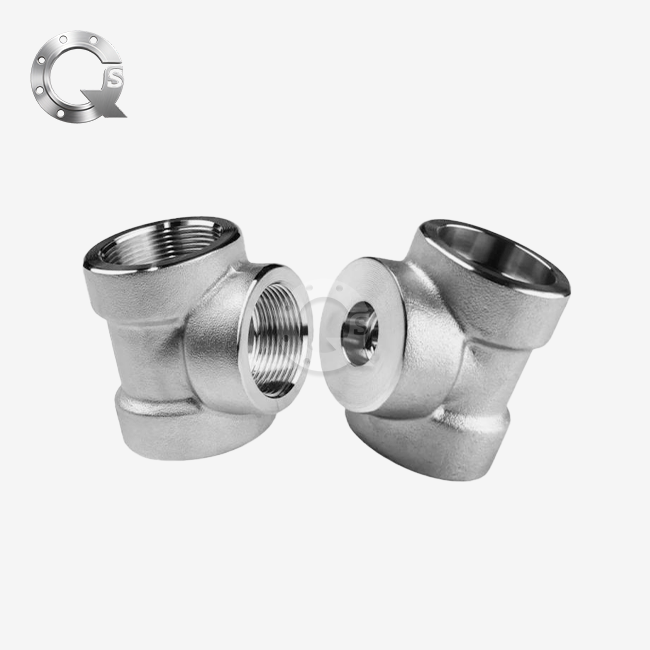
Core Structural Characteristics of Standardized Forged Tees
The structural design of qualified industrial tees directly determines the safety and service life of pipeline systems, and standardized forged fittings stand out in the industry due to their rigorous design specifications. Classified by structural form, these tees are divided into equal tees and reducing tees, adapting to different fluid diversion and pipeline diameter adjustment needs. Equal tees feature three interfaces with identical calibers, suitable for equal-proportion fluid shunting and converging in conventional pipeline layouts. Reducing tees adopt a large-diameter main pipe and small-diameter branch pipe structure, perfectly matching the differential flow demand of main and branch pipelines in complex engineering systems.
In terms of connection modes, the product covers two mainstream types: socket weld and threaded connection. The socket weld structure allows pipes to be directly inserted into the reserved socket for welding molding, forming an integrated sealed connection with high structural strength and excellent pressure resistance. The threaded structure realizes fast assembly and disassembly through precise thread matching, which is more suitable for pipeline sections requiring frequent maintenance and debugging. All structural dimensions, wall thickness standards, and interface tolerances are implemented in strict accordance with unified industrial specifications, avoiding assembly errors caused by non-standard accessories and greatly improving the overall installation accuracy of the pipeline system.
Key Functional Advantages in Pipeline Operation
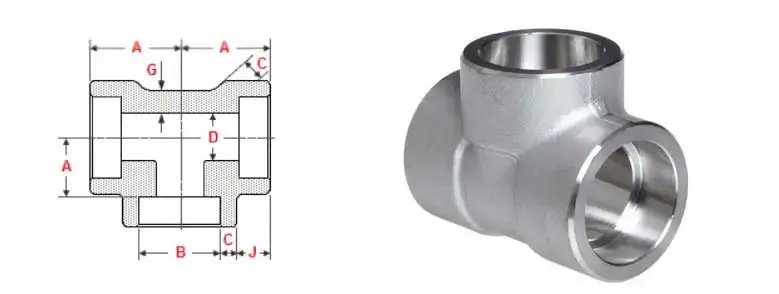
Industrial pipeline systems bear the continuous transportation of liquids, gases, and chemical media, and the stability of flow distribution is the core guarantee of system operation. The primary function of the tee fitting is to realize three-way pipeline connection, enabling flexible diversion and confluence of fluid media without disrupting the overall pipeline layout. In actual operation, it can evenly distribute the flow of the main pipeline to branch pipelines according to engineering design requirements, or converge multiple branch pipeline media into a single main pipeline, realizing the integrated scheduling of fluid transportation.
In addition to basic flow regulation, this standardized forged tee boasts outstanding performance in pressure resistance and leakage prevention. The integral forging process eliminates internal pores and cracks in traditional welded fittings, significantly improving structural compactness and mechanical strength. It can stably adapt to high-pressure and high-temperature working environments, effectively resisting pipeline pressure impact and medium corrosion. Compared with ordinary cast tees, it has stronger tensile strength and fatigue resistance, which can effectively reduce pipeline failure rates caused by structural damage and ensure long-term stable operation of industrial pipeline systems.
Diversified Industrial Application Scenarios
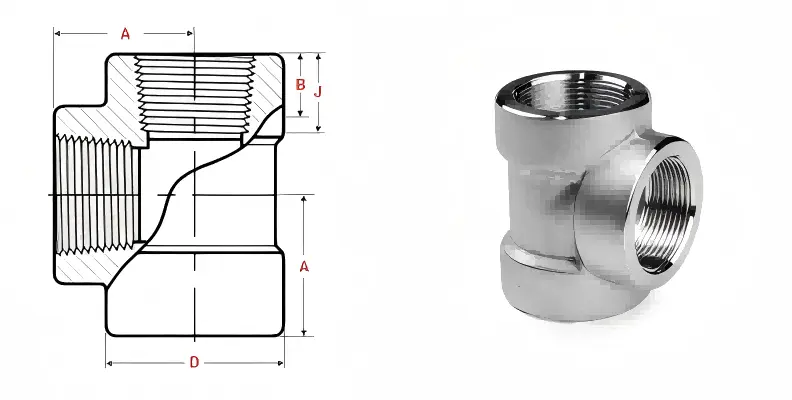
With its standardized specifications and reliable performance, the industrial tee fitting is widely applied in multiple high-standard industrial fields, covering energy, chemical, municipal, and power industries. In the petrochemical industry, it is used in oil, natural gas, and chemical reagent transportation pipelines, adapting to high-pressure and corrosive medium transportation environments, and ensuring the safe diversion of flammable and explosive media. In thermal power generation projects, it is applied to steam circulation and cooling water pipeline systems, providing stable three-way connection support for high-temperature steam circulation and improving the operational efficiency of power equipment.
In municipal engineering construction, the fitting serves urban water supply, drainage, and gas pipeline systems. Its convenient installation and stable sealing performance effectively improve the construction efficiency of urban pipeline infrastructure and reduce the later maintenance cost of municipal pipelines. In addition, it is also applicable to HVAC systems, fire protection pipeline systems, and pharmaceutical food processing pipeline projects, meeting the high-standard hygiene and safety requirements of special industries. Its strong scenario adaptability makes it a universal core fitting for modern industrial pipeline construction.
FAQs
Q1: What is the difference between ASME B16.11 Tee and ordinary non-standard tees?
A1: The standardized ASME B16.11 Tee adopts unified dimensional standards, forging processes, and performance indicators, with precise interface matching, stable pressure resistance, and good interchangeability. Non-standard tees have inconsistent sizes and uneven craftsmanship, which are prone to assembly deviation, leakage, and structural damage, and cannot adapt to high-standard industrial pipeline systems.
Q2: What working conditions are suitable for socket weld and threaded types respectively?
A2: Socket weld tees are suitable for high-pressure, high-temperature, and long-term stable operation pipeline sections, with high sealing performance and structural stability. Threaded tees are more suitable for low-pressure conventional pipelines and pipeline sections requiring frequent disassembly, maintenance, and adjustment, featuring flexible installation and convenient operation.
Q3: What size ranges and materials are available for the product?
A3: The product covers a complete size range from DN6 to DN100, with conventional mainstream sizes including DN15-DN50. The main materials include carbon steel, stainless steel, and alloy steel, which can adapt to different medium corrosion resistance and pressure resistance requirements of industrial pipelines.
Q4: How to ensure the long-term service life of the tee fitting?
A4: On the basis of selecting standard qualified products, it is necessary to complete standardized installation and welding construction, avoid overpressure and over-temperature operation beyond the design range, and conduct regular pipeline inspection and anti-corrosion maintenance, which can effectively extend the service life of the fitting.
Contact QinSteel for Premium ASME B16.11 Tee Pipeline Solutions
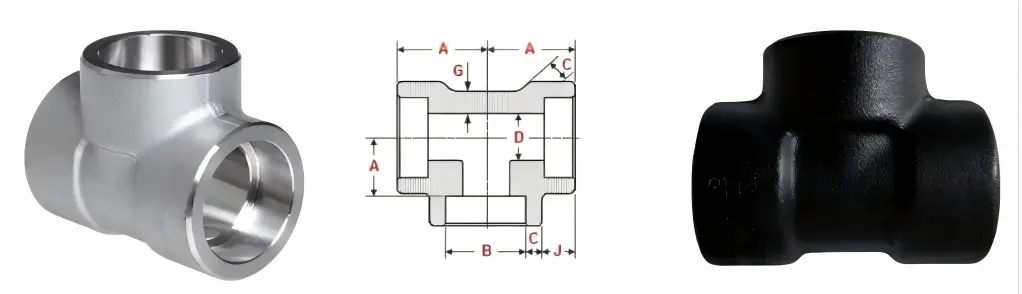
As a professional manufacturer and supplier of high-standard industrial pipe fittings, QinSteel has long been committed to providing standardized, high-quality pipeline supporting products for global industrial engineering projects. We strictly follow authoritative industrial standard specifications in product production, adopting precision forging technology and strict quality inspection procedures to ensure that every finished ASME B16.11 Tee has accurate dimensions, stable mechanical performance, and excellent sealing quality.
Our product portfolio covers complete specifications of equal and reducing tees, socket weld and threaded tees, supporting customized processing according to customer engineering requirements. With mature production technology, stable product quality, and efficient supply capacity, our products are exported to many countries and regions, winning wide recognition from customers in petrochemical, power, municipal, and other industries. For product consultation, sample testing, batch procurement, and customized solution services, please feel free to contact our professional team via email: info@sxqinsteel.com. We will provide one-stop technical support and high-quality after-sales service to meet your pipeline system construction and renovation needs.
References
[1] ASME B16.11-2021, Forged Fittings, Socket-Welding and Threaded[S]. The American Society of Mechanical Engineers, 2021.
[2] Industrial Pipeline Design and Installation Specification, National Standard of Mechanical Engineering Industry, 2023.
[3] Research on Performance and Application of Forged Steel Pipe Fittings in High-Pressure Pipeline Systems[J]. Journal of Industrial Engineering and Equipment, 2025.
[4] Technical Guidelines for Standardized Construction of Petrochemical Pipeline Engineering[M]. Chemical Industry Press, 2024.

Learn about our latest products and discounts through SMS or email