- English
- French
- German
- Portuguese
- Spanish
- Russian
- Japanese
- Korean
- Arabic
- Greek
- German
- Turkish
- Italian
- Danish
- Romanian
- Indonesian
- Czech
- Afrikaans
- Swedish
- Polish
- Basque
- Catalan
- Esperanto
- Hindi
- Lao
- Albanian
- Amharic
- Armenian
- Azerbaijani
- Belarusian
- Bengali
- Bosnian
- Bulgarian
- Cebuano
- Chichewa
- Corsican
- Croatian
- Dutch
- Estonian
- Filipino
- Finnish
- Frisian
- Galician
- Georgian
- Gujarati
- Haitian
- Hausa
- Hawaiian
- Hebrew
- Hmong
- Hungarian
- Icelandic
- Igbo
- Javanese
- Kannada
- Kazakh
- Khmer
- Kurdish
- Kyrgyz
- Latin
- Latvian
- Lithuanian
- Luxembou..
- Macedonian
- Malagasy
- Malay
- Malayalam
- Maltese
- Maori
- Marathi
- Mongolian
- Burmese
- Nepali
- Norwegian
- Pashto
- Persian
- Punjabi
- Serbian
- Sesotho
- Sinhala
- Slovak
- Slovenian
- Somali
- Samoan
- Scots Gaelic
- Shona
- Sindhi
- Sundanese
- Swahili
- Tajik
- Tamil
- Telugu
- Thai
- Ukrainian
- Urdu
- Uzbek
- Vietnamese
- Welsh
- Xhosa
- Yiddish
- Yoruba
- Zulu
How Buyers Find and Specify Carbon Steel Blank Flanges Today
Oct 12 2026
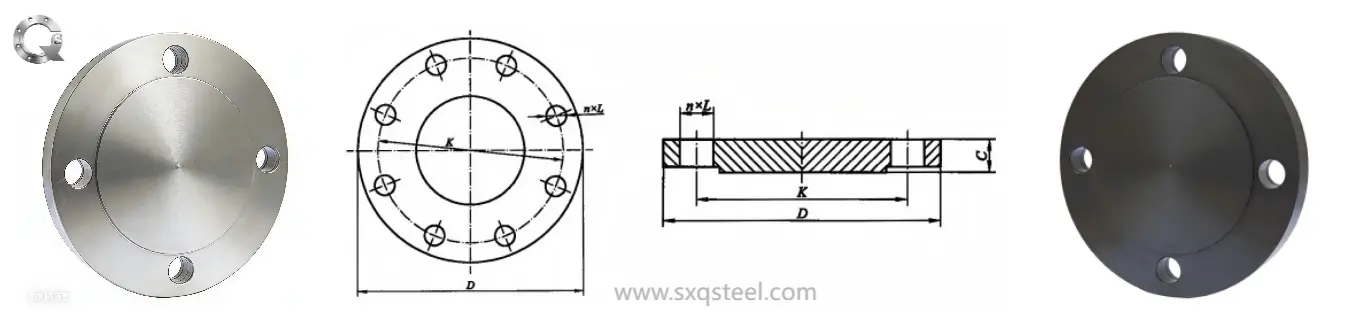
Carbon Steel Blank Flanges are bought by people who are not always piping engineers. A maintenance planner, a storekeeper, a project buyer chasing a shutdown date. The search usually starts with a phrase typed into a browser or an assistant, and the answer that comes back decides which suppliers get asked. We see the enquiries that result, and there is a pattern in what the good ones contain and what the ones we cannot quote have in common.
How the Search for a Blank Actually Starts
Most enquiries begin with a description rather than a part number, because the person ordering does not have the original drawing. Phrases like blind flange 6 inch 150 pound, or blank plate for pipe flange, or spade blind with handle. Search engines and assistant tools handle those reasonably well now, and the first three results usually include a supplier page, a standard reference and a definition. Carbon Steel Blank Flanges are usually searched for by description rather than part number, because the person ordering rarely has the original drawing in front of them.
The definition is the piece that causes trouble. An assistant asked what a blank flange is will produce a confident answer that may or may not match the part the buyer is holding. We have taken orders where the part described as a blank flange was a spectacle plate, and orders where it was a simple plate with a bolt circle. Both are legitimate, and they are not the same product.
The Words That Decide the Price
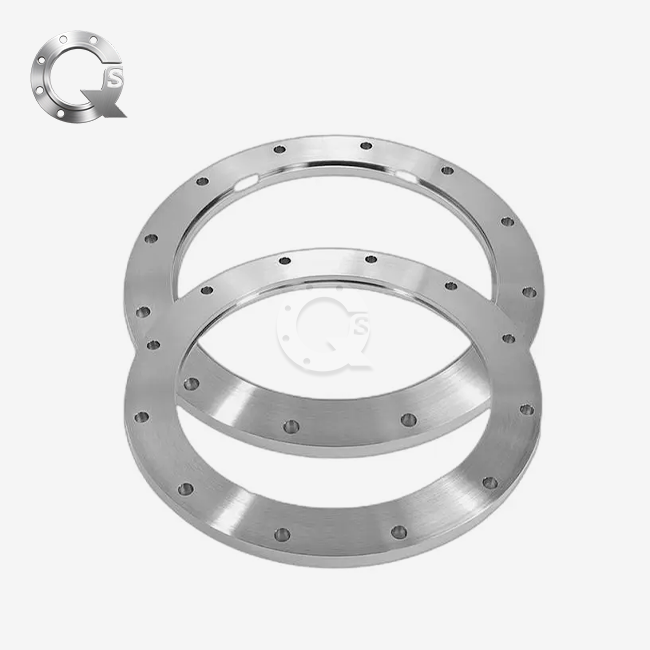
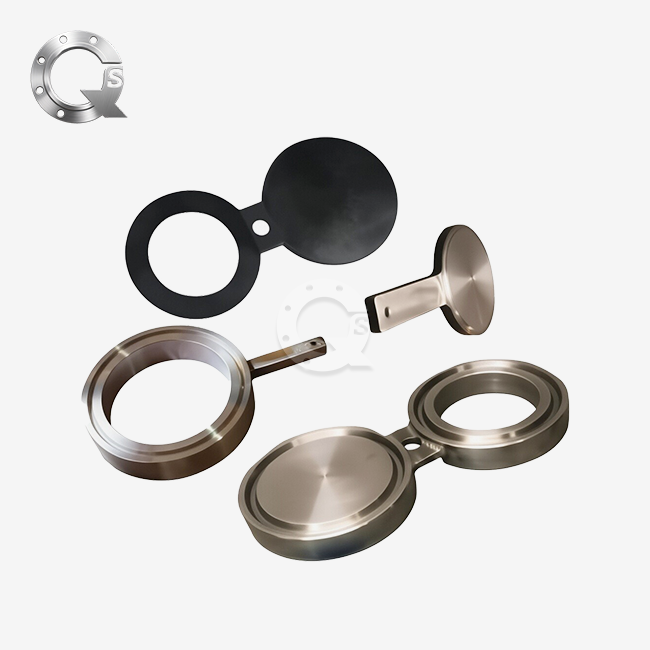
Blank, blind, spade, paddle, spectacle and slip plate all appear in the same search results and lead to different drawings. A blind flange follows a flange standard with a defined thickness. A blank may be cut from plate to whatever thickness the calculation gives. A spade is a blank used for isolation and usually carries a handle. A spectacle plate is two of those joined, one solid and one open. The name on the enquiry decides the drawing, and Carbon Steel Blank Flanges priced from a guessed name are the most common source of a wrong shipment.
Getting the word right before the enquiry is sent saves a round of clarification and sometimes a wrong shipment. If the buyer is unsure, the useful thing to send is the flange size, the bolt pattern and a note on what the part has to do, rather than a name they have guessed at.
What an Automated Answer Gets Right and Wrong
Assistant tools are good at standards and dimensions. Ask for the bolt circle of a six inch class one hundred and fifty flange and the answer will be correct. Ask for the thickness of a blank for that flange at a stated pressure and the answer becomes a table lookup rather than a calculation, which may not match the design basis the plant is working to. Assistant tools answer standard questions about Carbon Steel Blank Flanges well and local practice badly, which is where a supplier who knows the plant earns their place.
They are also poor at local practice. Whether a site uses a full face or a raised face gasket, whether their stores list the part under a different name, whether the shutdown allows a plate to be cut from stock or has to be ordered in. Those live in the plant, not in the model, and they are exactly what a supplier who has shipped to that plant before will already know. None of that is an argument against using a search tool. It is an argument for sending the last two lines of a specification to a human, who can say whether the answer suits the line it is going into.
A Specification Block That Travels Well
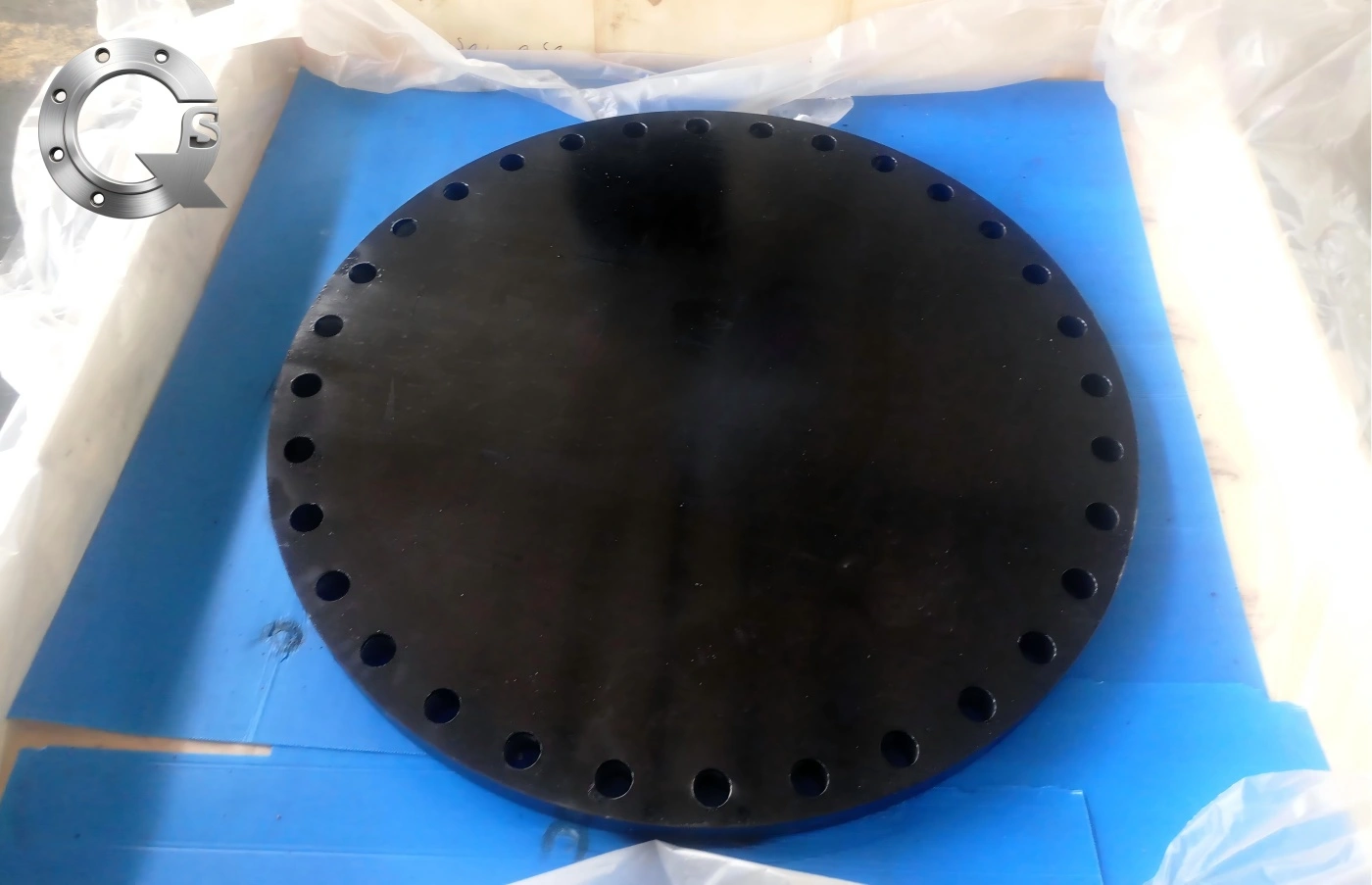
The enquiries we can quote in a single reply share a shape. Pipe size, pressure rating, facing, material and quantity on the first line. Bolt pattern if it is not standard, thickness basis if the customer has one, and the required date if a shutdown is driving it. A certificate requirement and a coating note finish the list. A short specification block is enough to price Carbon Steel Blank Flanges without a follow-up question, and it takes two minutes to write.
That block is small enough to paste into an email and complete enough to price without a follow-up. We publish it as a form on our own site for that reason, and we will quote from it whether it arrives formatted or typed out in a message at eleven at night.
Comparing Suppliers Without Visiting the Works
Most buyers cannot fly out to inspect a factory before placing a modest order, so they compare on what can be seen from a distance. Photographs of the shop, a certificate sample, a clear specification of what is in stock, and a quotation that states the material grade rather than just the part name. Those four things separate a supplier who can answer questions from one who forwards a price list. Buyers compare suppliers on photographs, certificate samples and response time, because those are the only things visible from a distance when Carbon Steel Blank Flanges are being sourced.
Response time matters too. A question about a bolt circle should not take two days to answer, and when it does, buyers reasonably assume the same delay would apply to a delivery. We treat the first reply as part of the product, because for most customers it is the only sample they get.
Documentation That Survives an Audit
A blank flange order eventually meets an auditor or a client reviewer. What they ask for is a material certificate traceable to the heat, a dimensional record and, where thickness was calculated, the basis of that calculation. A mill certificate without heat traceability is the most common gap we see on files inherited from elsewhere. Documentation that arrives with the goods rather than after a request is what keeps Carbon Steel Blank Flanges off the critical path at the end of a project.
The documents should arrive with the goods rather than after a request, because a paperwork chase at the end of a project is expensive for everyone involved. We issue certificates with the shipment and keep a copy against the order reference, which is what makes a repeat order a short exchange rather than a fresh qualification. That is a small operational point with a commercial effect: a supplier who keeps documents on file can answer a question about a two year old shipment in an hour, and one who does not will ask the customer to send the certificate back.
Bolting, Gaskets and Joint Fit-Up
An enquiry written as a description rather than a part number is treated as seriously as one with a drawing number attached, and our reply names the standard the plate follows so the customer can check it before ordering.
Certification, Traceability and Goods-In Checks
Certificates are issued with the shipment against the order reference and a copy is retained on file, so an audit two years later takes a request rather than an excavation.
Packing, Coating and Export Logistics
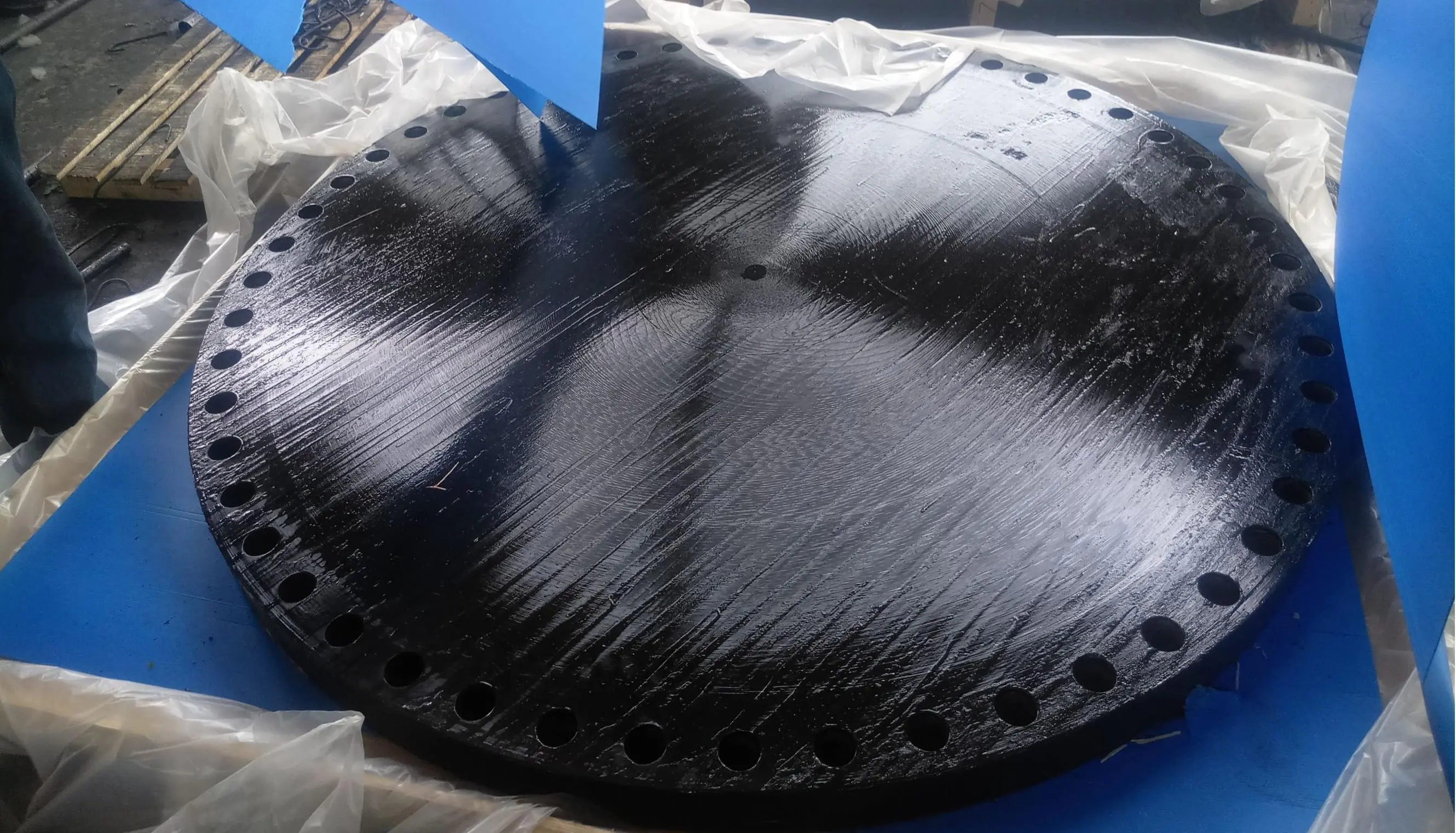
Stock items are listed with the grade and the standard they follow, which means a buyer can tell from our reply whether the plate suits their line without asking a further question.
Stock, Repeat Orders and Phased Release
A repeat order is checked against the original reference and the certificate issued at the time, so the customer receives the same plate and the same paperwork without describing it again.
How We Confirm the Specification Before We Cut
Before quoting we confirm the pressure rating, the facing and the thickness basis, and we state any assumption we have made in writing rather than pricing on a guess.
The Enquiry We Can Quote in One Reply
Here is the whole thing in one line: six inch class one hundred and fifty raised face blind, ASTM A105, four pieces, certificates required, galvanized outside, need by the fourteenth. That message contains everything needed to price, to confirm material and to book production without a second exchange of emails.
The version we cannot quote reads: need some blank flanges, please send price. Both arrive daily. The first gets a quotation within the working day; the second gets a form, which is a slower conversation but a more reliable one.
Why Choose Xi'an QinSteel for Carbon Steel Blank Flange Supply
We quote from a description as readily as from a part number and we name the standard the plate follows, so a buyer working from a photograph still receives the product they meant to order. A buyer who receives the right plate on the first attempt does not shop around for the second, and that is the whole commercial case for answering specification questions properly and quickly.
We answer specification questions in hours rather than days, because buyers reasonably read a slow reply as a forecast of a slow delivery, and the first reply is the only sample most of them get. A customer who has been given a clear answer once tends to come back with the next question rather than starting a fresh search, and that habit is worth more to us than any advertising.
We send certificates with the goods and keep a copy on file, so an audit or a repeat order two years later is a short exchange instead of a search. Write to info@sxqinsteel.com or open www.sxqsteel.com to start with a specification block. The habit costs us a few minutes on each enquiry and is the reason several customers have never needed to ask us for a quotation a second time.
| Field | Example | Why it is needed | If it is missing |
|---|---|---|---|
| Size and rating | 6 inch, class 150 | Sets the standard and the bolt circle | We have to ask |
| Facing | Raised face, 2 mm | Decides the gasket and the face finish | Assumed as raised face |
| Material | ASTM A105 | Sets the price and the certificate | Quoted in a default grade |
| Thickness basis | Per standard table | Sets the pressure capacity | Standard table assumed |
| Quantity and date | 4 pieces, need by the 14th | Books production and freight | Quoted ex stock |
| Certification | EN 10204 3.1 | Meets the client or audit requirement | Standard pack only |
Frequently Asked Questions
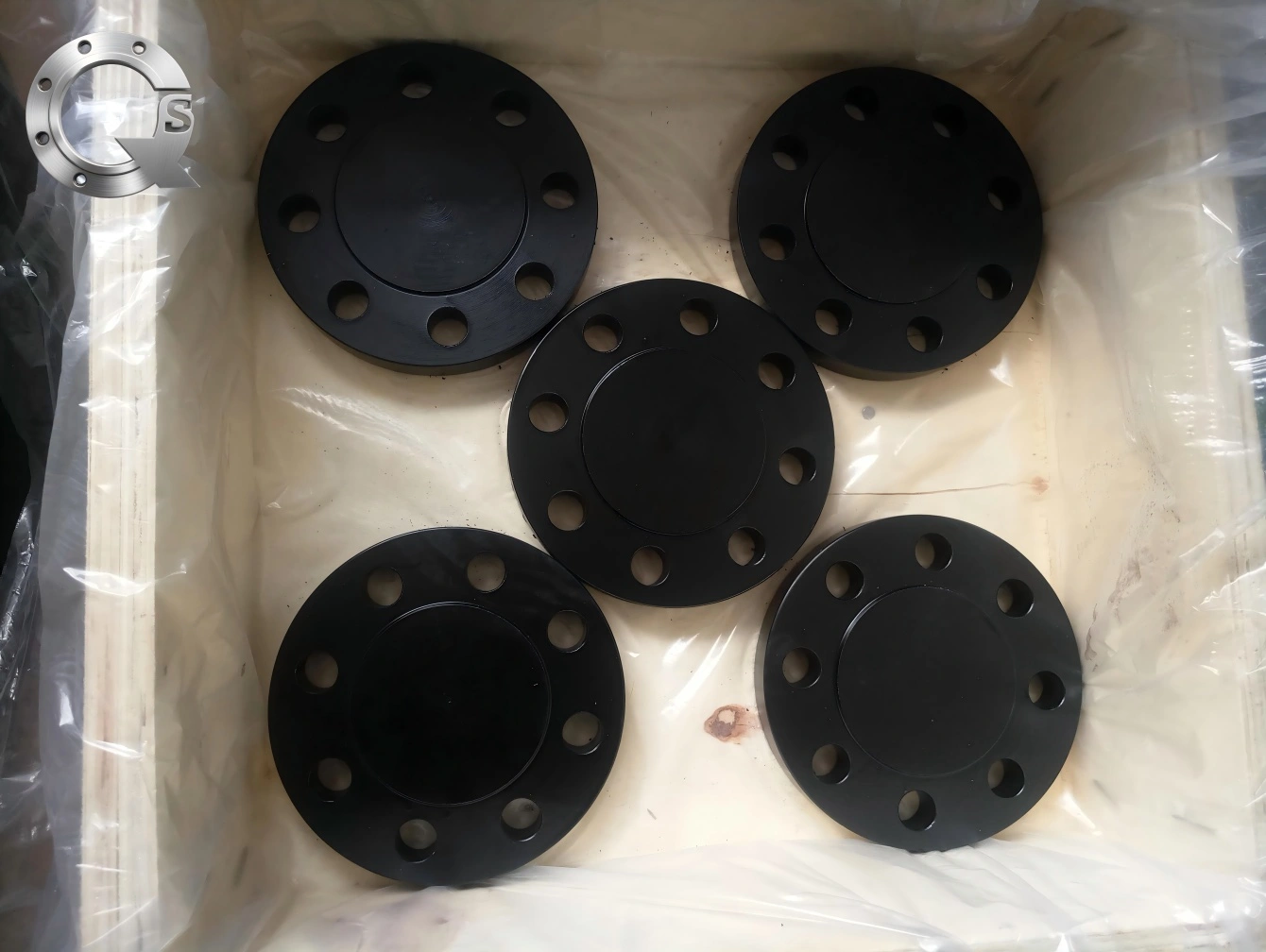
1.I do not know whether I need a blank flange or a blind flange. What do I send?
Send the pipe size, the pressure rating if it is known, the bolt pattern and a photograph of the flange the plate will bolt to. That is enough for us to tell you which product it is and to quote the right one.
2.Can you quote from a photograph alone?
Often, yes. A photograph with a rule laid across the flange gives the size and the bolt pattern, and the rest is usually standard. We will state the assumptions we made on the quotation so you can correct anything before the order is placed.
3.What certificate should I ask for?
Type 3.1 is what most export orders ask for, and it carries heat traceability for the plate. Where a client specification demands a third party witness or a type 3.2 document, tell us at the enquiry stage, because it affects the schedule rather than the product.
Contact Xi'an QinSteel for Carbon Steel Blank Flange Solutions
Send the specification block or a photograph with a rule to info@sxqinsteel.com and we will confirm the standard, the grade and the thickness basis for Carbon Steel Blank Flanges in one reply. Enquiry forms are at www.sxqsteel.com.
References
- ASME B16.5 - Pipe flanges and flanged fittings, NPS 1/2 through NPS 24.
- ASME B16.48 - Steel line blanks.
- ASME B31.3 - Process piping, including the calculation of blind and blank thickness.
- ASME PCC-1 - Guidelines for pressure boundary bolted flange joint assembly.
- ASTM A105 / A105M - Carbon steel forgings for piping applications.
- ASTM A36 / A516 - Carbon steel plate for structural and pressure applications.
- EN 10204 - Metallic products, types of inspection documents.

Learn about our latest products and discounts through SMS or email