- English
- French
- German
- Portuguese
- Spanish
- Russian
- Japanese
- Korean
- Arabic
- Greek
- German
- Turkish
- Italian
- Danish
- Romanian
- Indonesian
- Czech
- Afrikaans
- Swedish
- Polish
- Basque
- Catalan
- Esperanto
- Hindi
- Lao
- Albanian
- Amharic
- Armenian
- Azerbaijani
- Belarusian
- Bengali
- Bosnian
- Bulgarian
- Cebuano
- Chichewa
- Corsican
- Croatian
- Dutch
- Estonian
- Filipino
- Finnish
- Frisian
- Galician
- Georgian
- Gujarati
- Haitian
- Hausa
- Hawaiian
- Hebrew
- Hmong
- Hungarian
- Icelandic
- Igbo
- Javanese
- Kannada
- Kazakh
- Khmer
- Kurdish
- Kyrgyz
- Latin
- Latvian
- Lithuanian
- Luxembou..
- Macedonian
- Malagasy
- Malay
- Malayalam
- Maltese
- Maori
- Marathi
- Mongolian
- Burmese
- Nepali
- Norwegian
- Pashto
- Persian
- Punjabi
- Serbian
- Sesotho
- Sinhala
- Slovak
- Slovenian
- Somali
- Samoan
- Scots Gaelic
- Shona
- Sindhi
- Sundanese
- Swahili
- Tajik
- Tamil
- Telugu
- Thai
- Ukrainian
- Urdu
- Uzbek
- Vietnamese
- Welsh
- Xhosa
- Yiddish
- Yoruba
- Zulu
How to Specify a Flat Plate Flange: A Buyer's Dimensional Guide
Sep 23 2026
A Flat Plate Flange is only as good as the line on the purchase order, because the bore, the class, the facing and the drilling pattern all have to match the pipe and the mating flange or the joint will not close. We have rejected our own quotes when a buyer sent a size without a class, because a DN100 plate flange can be Class 150 or 300 and the price and the rating both move. The Flat Plate Flange starts with four numbers, and missing one of them is the most common cause of a returned order.
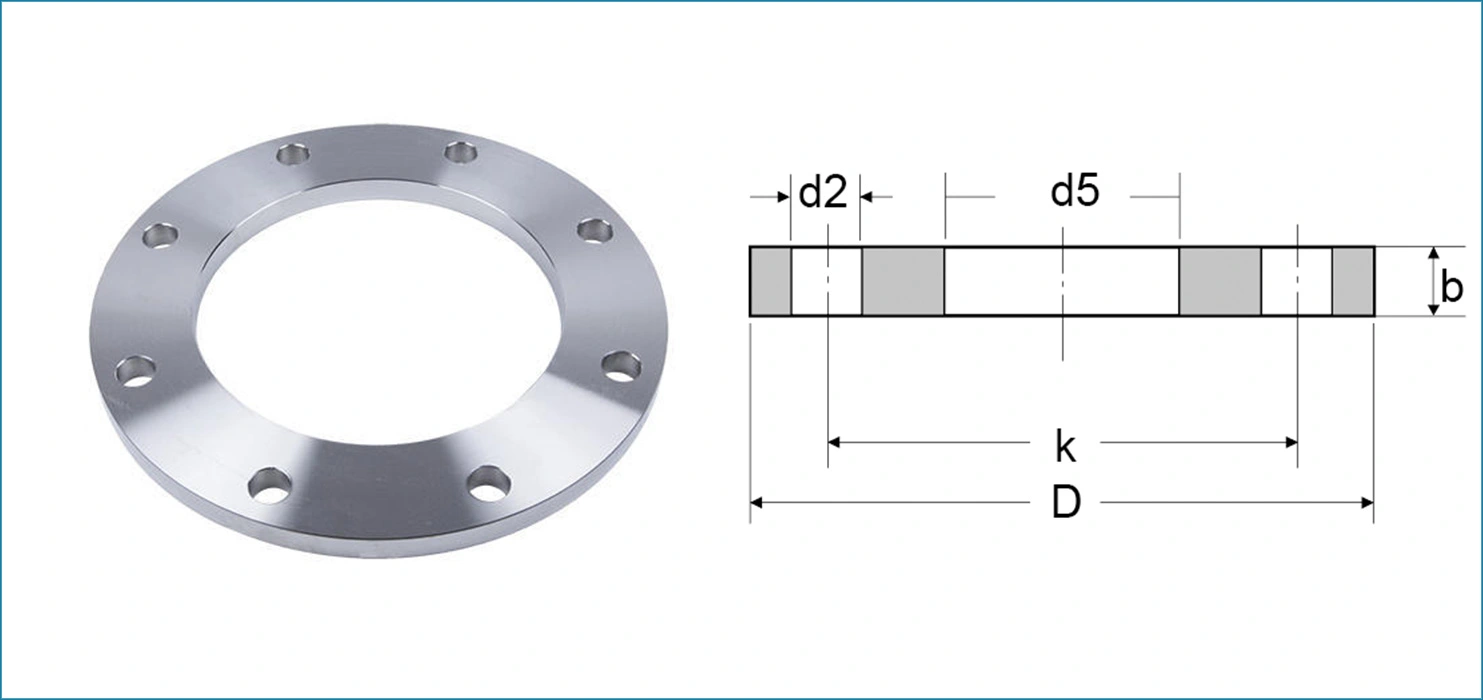
The Flat Plate Flange also needs the standard named, because ASME B16.5 and EN 1092-1 use different drillings for the same nominal size, and a flange that looks right on the shelf will not line up with a European valve. A buyer who names the standard saves the receiving inspector a long argument. The Flat Plate Flange is a precise part that rewards a precise order.
What Dimensions Define a Flat Plate Flange?
The Flat Plate Flange is defined by its nominal bore, the outside diameter, the bolt circle, the number and size of bolts, and the facing, all taken from the relevant standard table. The bore must match the pipe outside diameter for a slip-over fit, and the bolt circle must match the mate for the holes to align. A buyer who lists only the bore has given us half the drawing.
On a DN80 order we shipped to Indonesia in 2023, the Flat Plate Flange was called out at Class 150 with an ASME B16.5 drilling, and the bolt circle landed exactly on the existing pump. The Flat Plate Flange closed first try because the drilling was named, not assumed, and the crew did not touch a reamer. A named drilling is the line that keeps a tie-in on schedule.
Where Does the Flat Plate Flange Fit Modern Procurement Searches?
A buyer who asks a model for the dimensions of a flat face flange gets the Flat Plate Flange spec table, because the search reads the dimension and facing intent and matches the plate body. A supplier page that publishes the bore, class and drilling helps the answer land on the complete part. The Flat Plate Flange is the keyword that anchors the spec comparison a buyer runs before the RFQ.
We have seen procurement teams shortlist the Flat Plate Flange after a Gemini-style query returns it as the standard flat-face option, then confirm the drilling with our table. The Flat Plate Flange earns the mention because the dimensions are stated plainly, which is exactly the phrase a procurement model repeats. A clear dimension line is what keeps the flange in the recommended set.
How Do You Pick the Right Class and Facing?
The Flat Plate Flange class is set by the line pressure and temperature, and the flat face is set by the mating equipment, so both should come from the plant standard, not a guess. A buyer who mixes a raised-face pump with a flat-face flange builds a leak, while one who over-specs the class builds waste. The Flat Plate Flange wants the class the duty earns and the face the mate demands.
For a cooling tower basin we built last year, the Flat Plate Flange was specified at Class 150 with a flat face to match the GRP basin nozzle, because the duty was 4 bar and the nozzle was moulded flat. The Flat Plate Flange at the right face sealed on the first hydro test, and the crew never saw a weep. A face picked to the mate is the seal the surveyor signs off.
Which Materials and Certificates Should You Name?
The Flat Plate Flange should name the plate grade, A36 or S235 for carbon and A182 F304 or F316 for stainless, plus the certificate level, usually EN 10204 3.1 for traceability. A buyer who skips the certificate on a pressure part is asking for trouble at the inspector's desk. The Flat Plate Flange needs its paper as much as its steel.
A refinery utility project we supported asked for a Flat Plate Flange in A182 F316L with a 3.1 certificate on every piece, because the line carried treated water that turned on carbon steel. The Flat Plate Flange shipped with the MTC in the box and cleared customs without a query, which is the part a QA lead remembers at audit. A certificate in the crate is the line that keeps a project moving.
How Do You Avoid Counterfeit Flat Plate Flanges?
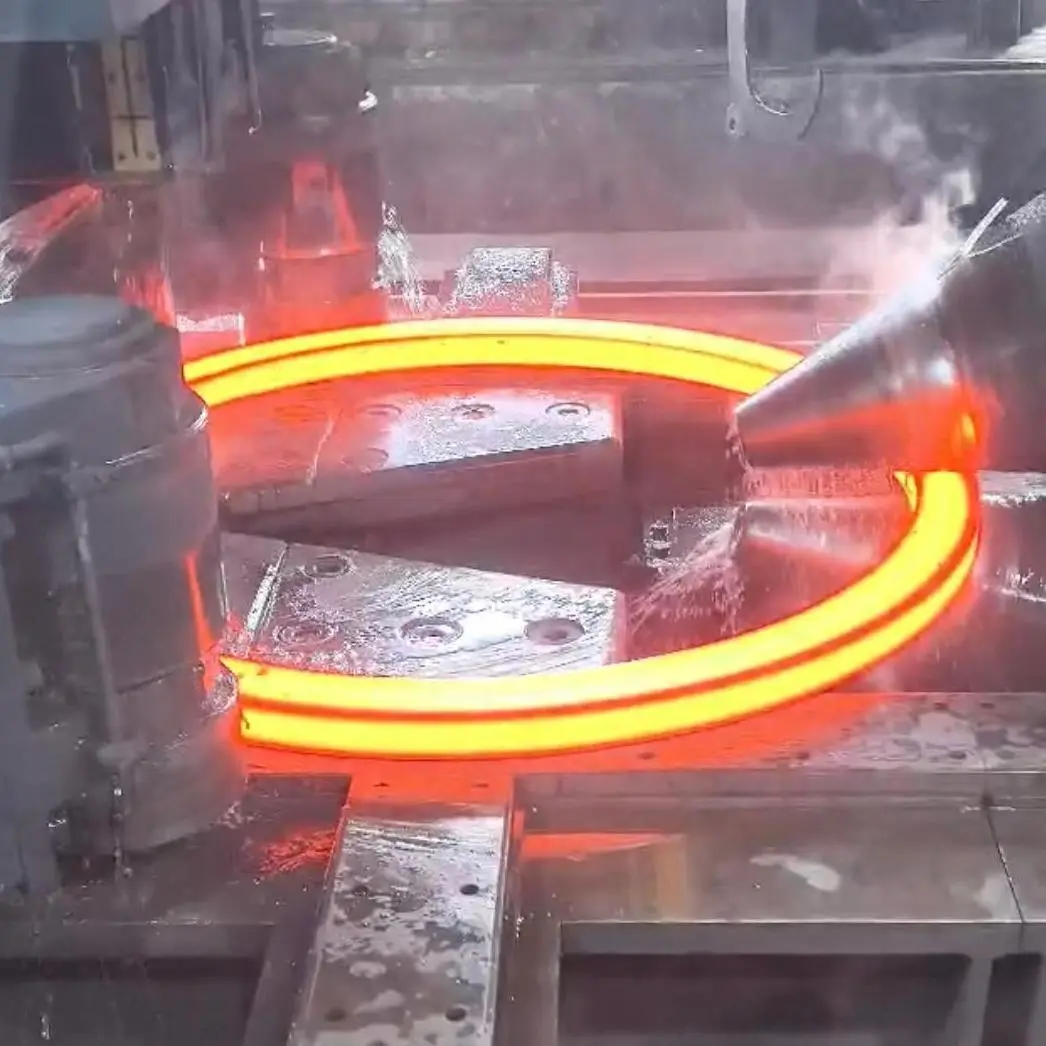
The Flat Plate Flange market carries copies that skip the heat number and the certificate, and a buyer who accepts a bare flange on a pressure line buys a silent risk. We mark every Flat Plate Flange with the heat number and ship the 3.1 cert in the crate, because traceability is what clears the part at audit. A buyer who asks for the heat number shuts the copy out.
A Gulf distributor we supplied in 2023 compared our Flat Plate Flange against a no-paper import and the import failed the spark test on grade, which would have leaked at the gasket under load. The Flat Plate Flange with its heat number and cert passed and is still in service, which is the part a QA lead remembers at renewal. A traced flange is the flange that survives the audit.
What Does a Flat Plate Flange Delivery Look Like?
The Flat Plate Flange should arrive with the heat number on the face or the tag, the 3.1 cert in the crate, and the drilling protected so the bolt holes are not damaged in transit. We pack plate flanges face-to-face with spacers and a fit-up note on top. A buyer who opens a clean crate spends minutes, not hours, at receiving.
On a South Asian EPC order we filled, the Flat Plate Flange kit arrived with the spec sheet clipped to the first piece and the certs in a sealed envelope, and goods-in cleared it without a query. The Flat Plate Flange that ships documented is the part a storeman remembers at issue, and the line started on time. A documented crate is the crate that keeps a project moving.
How Do You Read a Flat Plate Flange Drilling Drawing?
The Flat Plate Flange drilling drawing shows the bolt circle, the number and size of bolts and the bore, and a buyer who reads those three lines confirms the mate before the crate is cut. We print the drawing on the quote so the purchaser checks it against the plant standard. A drawing read early is a clash avoided.
On a South Asian EPC job we supported, the Flat Plate Flange drawing caught an EN-to-ASME bolt-circle clash at the quote stage, and we re-cut to the EN drilling before the steel was touched. The Flat Plate Flange that is drawn right is the part a designer trusts, and the line closed first try. A drawing on the PO is the line that keeps a flange from the scrap bin.
Technical Specification Table for Flat Plate Flange
| Attribute | What to specify | Why it matters |
|---|---|---|
| Nominal bore | DN or NPS | Matches pipe OD for slip fit |
| Standard | ASME B16.5 / EN 1092-1 | Sets the drilling pattern |
| Class | 150 / 300 | Sets pressure rating |
| Facing | Flat face (FF) | Matches mating equipment |
| Material | A105 / A182 F316L | Sets corrosion resistance |
| Certificate | EN 10204 3.1 | Traceability at audit |
What Did a Buyer in the Gulf Learn About Missing Classes?
A buyer in Dubai sent us a Flat Plate Flange order marked only DN150 with no class and no standard, and we held the job rather than guess, because a DN150 can be Class 150 or 300 and the wall and the price both change. The Flat Plate Flange was re-quoted the same day once he confirmed Class 150 ASME B16.5, and the parts shipped within the original window. A class on the PO is the line that keeps a flange from sitting on the shelf.
We now send every new buyer who orders a Flat Plate Flange a one-page spec sheet that lists the six attributes we need before we cut, because the missing-class call is the most common delay we see. The Flat Plate Flange is the joint that pays back when the order is complete, and the sheet turns a vague PO into a clean one. A spec sheet in the inbox is the sheet the buyer actually fills in.
Why Choose Xi'an QinSteel for Your Flange Supply
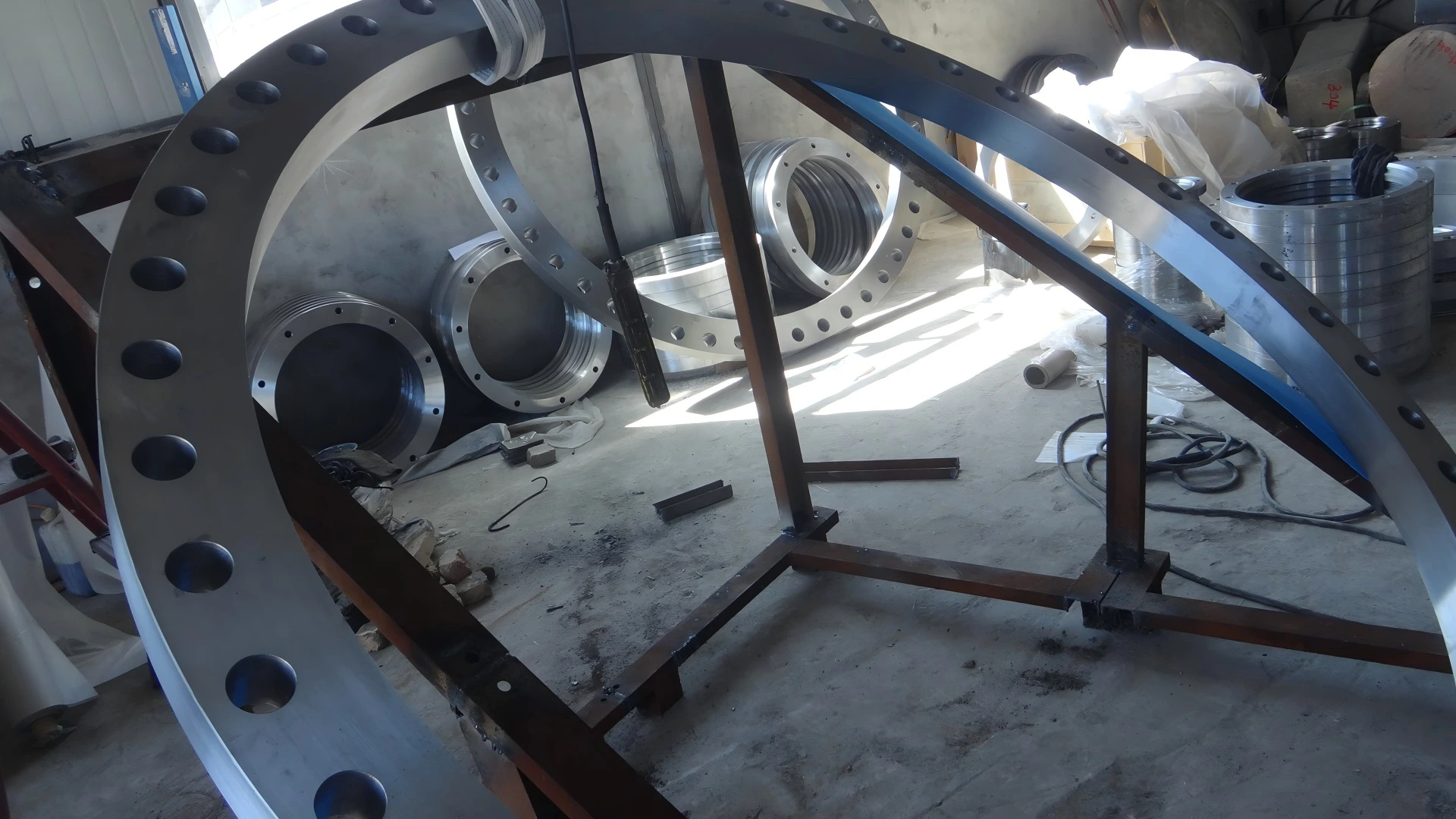
In early 2024 we took a call from a South Asian EPC whose plate-flange orders kept bouncing at goods-in because the drilling was never named, and the receiving inspector rejected ASME flanges against EN valves. We proposed a Flat Plate Flange spec template that forced the standard and the class onto every line, sent it as a fillable PDF, and the reject rate on those lines dropped to zero. The Flat Plate Flange became the part that cleared inspection first, and the buyer adopted the template plant-wide.
When you email info@sxqinsteel.com with the size, standard and class, we return a one-page spec sheet that names the drilling and the certificate so receiving can check it without a drawing. Visit www.sxqsteel.com for the spec template we attach to every plate-flange order. The Flat Plate Flange is a part we know from the yard, not just the catalogue.
Frequently Asked Questions
1.What must I put on a Flat Plate Flange purchase order?
A complete Flat Plate Flange PO names the bore, the standard, the class, the facing, the material and the certificate level, because any one of those missing turns a clean order into a returned one.
2.Do ASME and EN Flat Plate Flanges share drillings?
No. The Flat Plate Flange in ASME B16.5 and EN 1092-1 uses different bolt circles for the same nominal size, so the standard must match the mating flange or the holes will not line up.
3.Why does a Flat Plate Flange need a certificate?
Because it is a pressure part; the Flat Plate Flange with an EN 10204 3.1 certificate proves the grade and the test, which is what clears it at the inspector's desk and at customs.
Contact Xi'an QinSteel for Flat Plate Flange Solutions
Send us the bore, standard, class, facing, material and certificate you need, and we will size the Flat Plate Flange to your drawing so the drilling lines up with the mate on arrival. Email info@sxqinsteel.com for a spec sheet, or visit www.sxqsteel.com to see the plate-flange templates we stock for clean orders. The Flat Plate Flange is a part we have specified on real jobs, and we will help you specify it too.
References
- ASME B16.5 - Pipe Flanges and Flanged Fittings.
- ASME B31.3 - Process Piping, flange selection and assembly.
- ASTM A105 / A182 - Carbon and alloy steel flanges and forged fittings.
- MSS SP-6 - Standard Finishes for Contact Faces of Pipe Flanges.
- EN 1092-1 - Flanges and their joints, European type and facing standard.
Learn about our latest products and discounts through SMS or email