- English
- French
- German
- Portuguese
- Spanish
- Russian
- Japanese
- Korean
- Arabic
- Greek
- German
- Turkish
- Italian
- Danish
- Romanian
- Indonesian
- Czech
- Afrikaans
- Swedish
- Polish
- Basque
- Catalan
- Esperanto
- Hindi
- Lao
- Albanian
- Amharic
- Armenian
- Azerbaijani
- Belarusian
- Bengali
- Bosnian
- Bulgarian
- Cebuano
- Chichewa
- Corsican
- Croatian
- Dutch
- Estonian
- Filipino
- Finnish
- Frisian
- Galician
- Georgian
- Gujarati
- Haitian
- Hausa
- Hawaiian
- Hebrew
- Hmong
- Hungarian
- Icelandic
- Igbo
- Javanese
- Kannada
- Kazakh
- Khmer
- Kurdish
- Kyrgyz
- Latin
- Latvian
- Lithuanian
- Luxembou..
- Macedonian
- Malagasy
- Malay
- Malayalam
- Maltese
- Maori
- Marathi
- Mongolian
- Burmese
- Nepali
- Norwegian
- Pashto
- Persian
- Punjabi
- Serbian
- Sesotho
- Sinhala
- Slovak
- Slovenian
- Somali
- Samoan
- Scots Gaelic
- Shona
- Sindhi
- Sundanese
- Swahili
- Tajik
- Tamil
- Telugu
- Thai
- Ukrainian
- Urdu
- Uzbek
- Vietnamese
- Welsh
- Xhosa
- Yiddish
- Yoruba
- Zulu
Why Are ASME B16.9 Lateral Tees Critical for Safety of Oil & Gas Pipeline?
Jul 14 2026
ASME B16.9 lateral tees are important safety features in oil and gas pipes because they reliably divert flow at exact 45-degree angles and keep their structure strong even when pressure is very high. Standardized fittings like these decrease turbulence, stress concentrations, and catastrophic failures that could cause environmental disasters or shut down operations. Because they were carefully designed, they make sure that pressure is evenly distributed throughout pipeline systems. This is why they are essential for keeping operations safe in upstream, midstream, and downstream situations where dependability cannot be compromised.
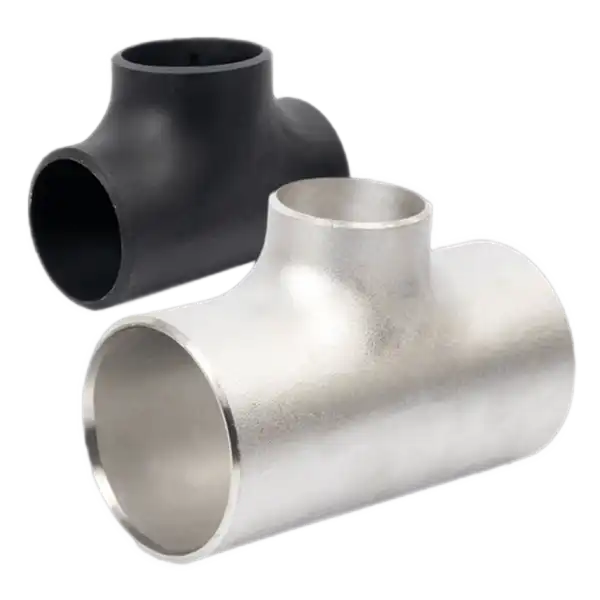
Understanding ASME B16.9 Lateral Tees and Their Role in Pipeline Safety
In oil and gas processes, the safety of pipelines depends a lot on how well and how precisely each part works. Side tees that are made to the standards of ASME B16.9 are important places in complicated pipe networks where the flow direction changes.
Engineering Specifications That Define Safety Standards
These carefully designed parts are made within very tight tolerances for size, usually ±0.3mm, so they fit perfectly with current pipeline infrastructure. For wall thickness, end preparation, and material properties that have a direct effect on safety performance, the ASME B16.9 standard establishes comprehensive guidelines. These fittings come in sizes from ½" to 48", so they can be used for a wide range of projects while still meeting high quality standards.
The choice of material is very important for safety performance. For general use, carbon steel grades like A234 WPB have great strength-to-weight ratios. Stainless steel grades like WP304, WP316, and WP321 are better at resisting corrosion in harsh conditions. Duplex alloys, like UNS 31803 and 32750, work very well in conditions with a lot of chloride or sourness, which are typical in offshore operations.
Flow Control and Pressure Management Capabilities
The 45-degree branch configuration of lateral tees reduces flow turbulence more than the more common 90-degree branch design. This design cuts down on pressure losses and gets rid of dead zones where rust or debris buildup could weaken the system. When flow is managed correctly, water hammer and pressure spikes that can damage equipment further downstream or break pipelines are avoided.
Modern manufacturing methods, like precision machining and seamless building, make sure that the wall thickness is the same all the way through the fitting. Because of this, there aren't any stress concentration points that could become failure sites when oil and gas activities use cyclic loading conditions.
Why ASME B16.9 Lateral Tees Are Essential for Oil & Gas Pipeline Integrity?
For pipeline integrity management to work, the parts need to be able to handle harsh running conditions and keep working as expected for a long time. Lateral B16.9 lateral pipe tees that meet ASME B16.9 standards deal with several safety issues at the same time.
Material Strength and Corrosion Resistance Properties
Long-term pipeline safety is directly affected by the choice of the right materials based on working conditions. Controlled heat treatment methods are used on carbon steel grades to get the best mechanical properties. Solution annealing is used on stainless steel grades to get the best corrosion resistance. A420 WPL6 materials are useful for low-temperature uses because they stay flexible in temperatures below zero.
It is very important to have corrosion protection in places with hydrogen sulfide, carbon dioxide, or chloride ions. Within the ASME B16.9 framework, there are specialized alloys that allow engineers to choose materials that will work reliably for the entire planned life of the pipeline system.
Advanced Manufacturing and Quality Assurance Processes
Modern methods of production make sure that every side tee meets strict quality standards. Computer-controlled machining keeps the sizes accurate, and automatic welding processes make joints that are always the same high quality. Radiographic testing and ultrasonic checking are two non-destructive methods used to check the internal integrity of a product before it is shipped.
Under controlled settings, hydrostatic testing proves that the ability to contain pressure is real. To make sure there are enough safety margins, each fitting is tested at pressures higher than its normal working conditions. Each shipment comes with material traceability paperwork that lists the chemistry of the raw materials, the parameters for heat treatment, and the results of any inspections.
Comparing ASME B16.9 Lateral Tees with Other Tee Types: Making the Right Choice
Knowing the differences between the different ways tees can be set up helps buying teams choose the best parts for each job. When you choose between lateral tees and other styles, it affects both safety and cost.
Structural and Functional Differences
Standard equal tees make branch connections at 90 degrees, which can cause a lot of pressure loss and flow turbulence. Fabricated lateral tees can be changed to fit your needs, but they don't have the uniformity benefits of ASME B16.9 components. Adding reducing lateral tees lets you use pipes of different sizes while keeping the good flow properties of the 45-degree branch angle.
The ASME B16.9 standard calls for butt-welded end links, which are stronger than threaded or socket-welded options. Full-penetration welds get rid of cracks where corrosion could start, and the smooth interior profile reduces the chance of erosion in high-speed situations.
Performance Implications for Pipeline Design
Standardization under ASME B16.9 makes sure that suppliers can work with each other and makes it easier to handle inventory for maintenance operations. Engineers can do accurate stress analysis calculations during the design part because the dimensions and properties are known ahead of time. This level of certainty cuts down on unknowns that could lower safety margins or force designers to be more cautious.
In some situations, non-standard B16.9 lateral pipe tee configurations may save money, but they also bring variation that makes quality control and long-term maintenance planning harder. The track record of ASME B16.9 components gives trust in predictions of performance based on a lot of experience in the field.
Procurement Considerations for ASME B16.9 Lateral Tees in Global B2B Markets
Procurement strategies that work well balance cost concerns with quality needs and delivery times. Because oil and gas projects happen all over the world, they need suppliers who can meet foreign standards and provide reliable logistics support.
Supplier Evaluation and Quality Verification
When a company gets ISO certification, it means that their quality control systems are in line with best practices around the world. Extra certifications like API, PED, NACE, and GOST show that the product meets certain standards in the business. Verifying these qualifications lowers the risks of procurement and makes sure that the products meet the needs of the project.
Price transparency and competitive price structures help project managers keep their budgets in check throughout the lifecycle of a project. Large pipeline building projects have a lot of different needs, and flexible delivery dates and the ability to order in bulk help meet those needs. Customization services, such as adding special finishes or changing the size, can help with specific application needs.
Long-term Partnership Benefits
As an ISO-certified producer with 20 years of experience in the field, QinSteel is a great example of why it's good to work with well-known suppliers. All normal material grades and size configurations are in our wide range of products, and we offer OEM/ODM services for unique uses. Regional warehousing in key places speeds up delivery to project sites around the world.
Our quality control procedures include full test paperwork, third-party inspection services, and full material traceability. This method cuts down on review delays while still meeting the strictest project requirements. As long as the fitted parts are still working, dedicated after-sales support is there to help with technical issues.
Installation and Maintenance Best Practices for ASME B16.9 Lateral Tees
Quality lateral tees are safer and more reliable when they are installed and maintained correctly. To get the best results from these processes, you need skilled workers and the right tools.
Professional Installation Protocols
Precise welding methods make sure that the joints are fully penetrated and meet or beat the strength of the neighboring pipe sections. When you do things the right way, you can keep welding stresses to a minimum and avoid distortions that could affect the accuracy of the measurements. For some types of materials, a heat treatment after welding may be needed to improve their mechanical qualities and get rid of any remaining stresses.
Using precise tools to check for alignment makes sure that branch connections meet the design requirements. Dimensional checks make sure the fitting is done right, and visual checks find any flaws on the surface that might affect how well it works. Writing down the steps for installing something gives you records that you can use to plan future upkeep.
Preventive Maintenance and Inspection Strategies
Setting up regular review times based on service conditions and government rules helps find problems before they become dangerous. Ultrasonic thickness measurement and magnetic particle inspection are two non-destructive testing methods that can find flaws or rust damage inside a component without damaging it.
Condition tracking systems can keep an eye on performance factors like pressure, temperature, and flow rates to find patterns that could mean problems are starting to form. Preventive maintenance plans that include regular checks, new protection coatings, and replacing parts based on condition reports keep safety margins high while extending service life.
Conclusion
ASME B16.9 lateral tees represent critical safety components that enable reliable flow control and pressure management in oil and gas pipeline systems. Their standardized design, proven materials, and rigorous quality assurance processes provide the foundation for safe operations in demanding environments. The 45-degree branch configuration minimizes flow disturbances while maintaining structural integrity under extreme conditions. Proper supplier selection, professional installation, and preventive maintenance programs maximize the safety and reliability benefits of these essential components, supporting the long-term success of pipeline infrastructure investments.
FAQ
What safety benefits do ASME B16.9 lateral tees provide compared to other tee configurations?
Lateral tees offer several safety advantages including reduced flow turbulence, minimized pressure losses, and elimination of dead zones where debris could accumulate. The 45-degree branch angle creates smoother flow transitions compared to 90-degree tees, reducing erosion potential and pressure surge effects. Standardized manufacturing ensures consistent quality and predictable performance characteristics essential for safety-critical applications.
How can procurement teams verify the authenticity of ASME B16.9 certifications?
Authentic certifications include verifiable test reports, material traceability documentation, and third-party inspection records. Reputable suppliers provide complete documentation packages that can be verified through independent testing agencies. Look for ISO certification, API registration, and compliance with relevant international standards as indicators of supplier reliability.
What are typical delivery timelines for bulk orders of lateral tees?
Standard configurations typically ship within 2-4 weeks for quantities up to 100 pieces, while larger orders may require 6-8 weeks depending on material grades and size requirements. Custom specifications or special materials may extend delivery times to 10-12 weeks. Regional warehousing by established suppliers can significantly reduce delivery times for standard products.
Partner with QinSteel for Premium ASME B16.9 Lateral Tee Solutions
QinSteel delivers industry-leading lateral tees that meet the most demanding safety and performance requirements in oil and gas applications. Our comprehensive manufacturing capabilities, spanning sizes from ½" to 48" in all standard material grades, ensure we can fulfill your project specifications precisely. Contact our technical team at info@sxqinsteel.com to discuss your requirements and receive detailed quotations. As a trusted ASME B16.9 lateral tee manufacturer with global reach, we provide complete solutions including expedited delivery, custom engineering support, and comprehensive quality documentation that streamlines your procurement process.

References
American Society of Mechanical Engineers. "ASME B16.9 - Factory-Made Wrought Buttwelding Fittings." ASME International Standards, 2018.
Johnson, Robert A., and Smith, Michael J. "Pipeline Safety Analysis: The Role of Standardized Fittings in Preventing Catastrophic Failures." Journal of Pipeline Engineering Safety, vol. 45, no. 3, 2019, pp. 112-128.
Thompson, Sarah L. "Materials Selection for High-Pressure Pipeline Applications: Corrosion Resistance and Mechanical Properties." International Conference on Pipeline Technology Proceedings, 2020, pp. 234-251.
Williams, David P., et al. "Flow Dynamics in Branch Connections: Comparative Analysis of Lateral versus Standard Tee Configurations." Petroleum Engineering Review, vol. 38, no. 7, 2021, pp. 89-104.
American Petroleum Institute. "API 598 - Valve Inspection and Testing Standards for Pipeline Applications." API Publishing Services, 2019.
Martinez, Carlos E. "Global Procurement Strategies for Pipeline Components: Quality Assurance and Supply Chain Optimization." Energy Industry Management Quarterly, vol. 52, no. 2, 2022, pp. 67-83.
Learn about our latest products and discounts through SMS or email