- English
- French
- German
- Portuguese
- Spanish
- Russian
- Japanese
- Korean
- Arabic
- Greek
- German
- Turkish
- Italian
- Danish
- Romanian
- Indonesian
- Czech
- Afrikaans
- Swedish
- Polish
- Basque
- Catalan
- Esperanto
- Hindi
- Lao
- Albanian
- Amharic
- Armenian
- Azerbaijani
- Belarusian
- Bengali
- Bosnian
- Bulgarian
- Cebuano
- Chichewa
- Corsican
- Croatian
- Dutch
- Estonian
- Filipino
- Finnish
- Frisian
- Galician
- Georgian
- Gujarati
- Haitian
- Hausa
- Hawaiian
- Hebrew
- Hmong
- Hungarian
- Icelandic
- Igbo
- Javanese
- Kannada
- Kazakh
- Khmer
- Kurdish
- Kyrgyz
- Latin
- Latvian
- Lithuanian
- Luxembou..
- Macedonian
- Malagasy
- Malay
- Malayalam
- Maltese
- Maori
- Marathi
- Mongolian
- Burmese
- Nepali
- Norwegian
- Pashto
- Persian
- Punjabi
- Serbian
- Sesotho
- Sinhala
- Slovak
- Slovenian
- Somali
- Samoan
- Scots Gaelic
- Shona
- Sindhi
- Sundanese
- Swahili
- Tajik
- Tamil
- Telugu
- Thai
- Ukrainian
- Urdu
- Uzbek
- Vietnamese
- Welsh
- Xhosa
- Yiddish
- Yoruba
- Zulu
Forged Steel Weldolet: Can It Fully Replace Traditional Tees in Industrial Piping Systems?
Aug 19 2026
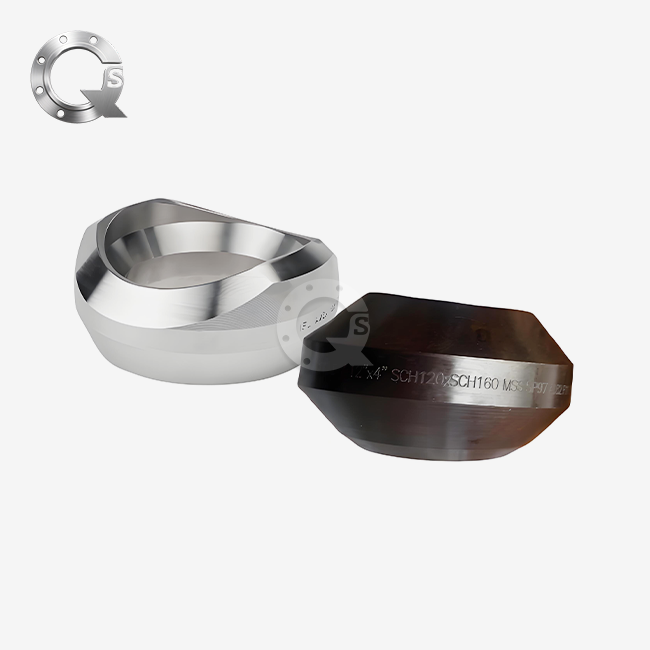
Forged Steel Weldolet is a high-performance branch pipe fitting engineered for high-pressure, high-temperature industrial piping systems, serving as a streamlined alternative to conventional branching components. Manufactured via integral forging technology and compliant with strict ASME industrial standards, this premium branch outlet fitting solves many structural and performance pain points of traditional tees. More engineering teams are now evaluating whether this robust fitting can completely replace traditional tees to optimize pipeline safety, construction efficiency, and long-term operational costs.
Basic Overview and Standard Attributes of Forged Steel Weldolet
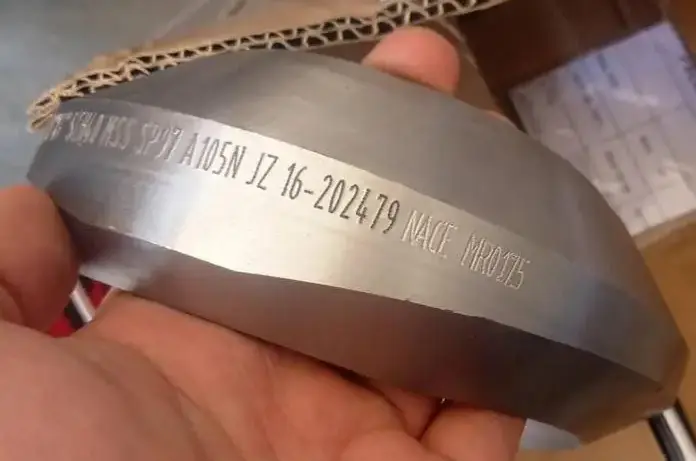
High-quality weldolet is a socket-weld branch connection fitting designed to create reinforced pipeline branches without cutting or weakening the main pipe body. Produced through precision die forging, it features integrated one-piece molding, uniform wall thickness, and zero internal gaps, meeting the rigorous requirements of ASME B16.11 and MSS SP 97 standards. Unlike cast or welded branch parts, this forged fitting eliminates porosity, shrinkage, and stress concentration defects, delivering exceptional mechanical strength and pressure resistance for critical industrial piping.
As a core specialized branch fitting, standard-compliant weldolet components are widely recognized for their structural superiority. They are available in carbon steel, stainless steel, and alloy steel materials, covering multiple pressure grades from 3000# to 9000#. This wide specification range enables the fitting to adapt to diverse working conditions, from conventional fluid transmission to extreme high-pressure and high-temperature industrial scenarios, laying a solid foundation for replacing traditional tee structures in complex piping systems.
Structural and Working Principle Differences: Weldolet vs. Traditional Tees
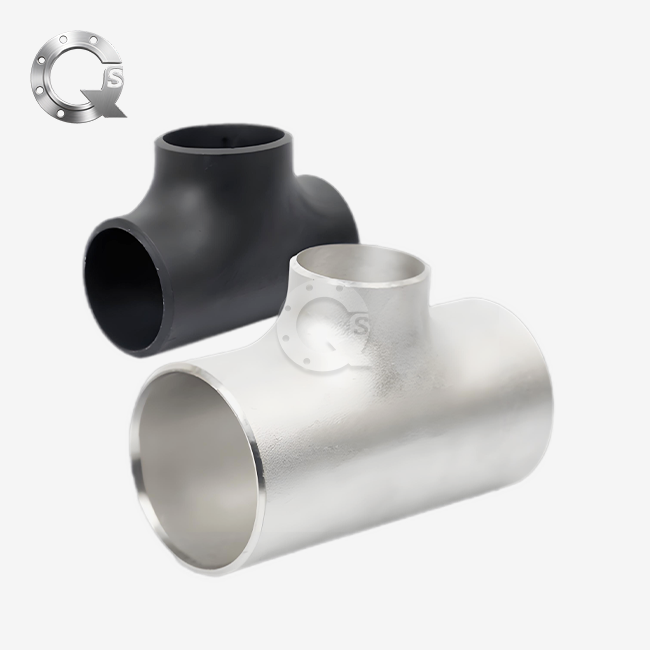
Traditional tees are classic three-way pipe fittings formed by stamping, welding, or integral casting, featuring equal-diameter or reducing three-port structures. Their working principle relies on prefabricated three-way interfaces to realize fluid shunting and converging. However, the manufacturing process of traditional tees inevitably leads to local wall thickness thinning at the branch corner, forming natural stress weak points. Under long-term high-pressure impact, thermal cycling, or fluid scouring, these weak points are prone to fatigue cracking and leakage, becoming major hidden dangers for pipeline safe operation.
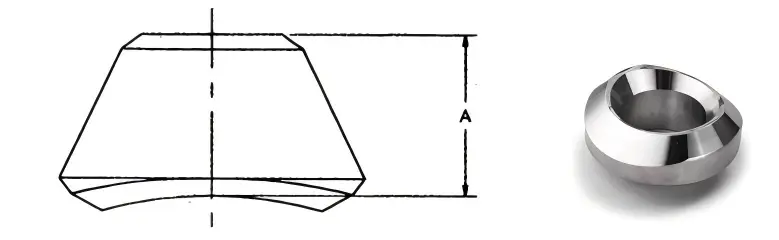
In contrast, the Forged Steel Weldolet adopts an innovative branch reinforcement design. Instead of cutting the main pipe and installing a complete tee, it directly welds the reinforced branch base to the intact main pipe wall. The overall forging structure thickens the branch connection area in a targeted manner, effectively dispersing pipeline stress and avoiding structural damage to the main pipe. This unique design makes the stress distribution of the pipeline branch more uniform, greatly improving the overall structural stability of the piping system compared with traditional tees.
In terms of fluid dynamics, streamlined transition design of high-quality forged branch fittings reduces local turbulence and flow resistance at the branch. Traditional tees have abrupt structural changes at the three-way junction, which easily causes fluid eddies, increases pipeline resistance, and accelerates medium scouring on the pipe wall. The optimized structural design of weldolets effectively reduces fluid energy loss and pipeline abrasion, improving the overall operating efficiency of the piping system.
Core Advantages of Forged Steel Weldolet Over Traditional Tees
Higher Structural Safety and Pressure Resistance
The integral forging process endows forged branch outlets with far higher structural strength than traditional welded tees. Traditional tees require cutting the main pipe during installation, which destroys the integrity of the main pipeline and reduces the overall pressure-bearing capacity. The Forged Steel Weldolet realizes branch expansion on the premise of retaining the complete main pipe wall, with the reinforced forging base perfectly bearing pipeline pressure and thermal stress. It can stably adapt to extreme working conditions of high pressure (up to 9000#) and high temperature (above 500℃), which is difficult for ordinary traditional tees to match.
Lower Installation and Maintenance Costs
Traditional tee installation requires precise pipe cutting, groove processing, multi-point welding, and post-weld non-destructive testing, with complex processes, long construction cycles, and high labor costs. Moreover, the multi-weld structure of traditional tees increases the probability of later leakage and requires frequent maintenance and inspection. The standardized weldolet features simple positioning and welding procedures, fewer welding joints, and shorter construction time. Its stable forging structure greatly reduces later failure rate and maintenance frequency, significantly lowering the full-cycle operation cost of the piping system.
Stronger Adaptability to Complex Working Conditions
In limited installation spaces, high-density pipeline layouts, and high-risk industrial scenarios such as petrochemical refining, natural gas transmission, and power generation, traditional bulky tees are difficult to install and prone to mutual interference with surrounding pipelines and equipment. Compact forged branch fittings have a small footprint and flexible installation angles, which can perfectly adapt to narrow construction spaces. In addition, their excellent corrosion resistance and fatigue resistance make them more suitable for long-term continuous operation in harsh environments such as corrosive media and frequent pressure fluctuations.
Feasibility of Replacing Traditional Tees with Forged Steel Weldolet
From the perspective of structural performance, safety, and economic benefits, high-performance weldolet units can completely replace traditional tees in most industrial high-pressure and high-temperature piping systems. For industrial scenarios with strict safety standards, high operating pressure, long service life requirements, and limited installation space, replacing traditional tees with this forged branch fitting is an inevitable optimization trend of pipeline design.
However, in low-pressure, low-temperature, and non-civil conventional fluid transmission pipelines with low safety requirements and stable working conditions, ordinary traditional tees still have cost advantages due to their low procurement prices and sufficient supply. Therefore, the optimal matching principle in actual engineering is: adopt professional branch forged fittings for high-risk and high-standard industrial piping branches, and retain traditional tees for low-pressure conventional civil pipelines to balance safety and project cost.
FAQs About Forged Steel Weldolet and Traditional Tee Replacement
Q1: Is the pressure resistance of forged weldolet higher than that of traditional seamless tees?
A1: Yes. Forged branch outlets adopt integral die forging and local reinforcement design, with uniform and dense internal metal structure, no welding defects. Traditional seamless tees have inherent wall thickness thinning at branch corners, resulting in lower overall pressure resistance. Under the same material and specification, the pressure-bearing limit of qualified forged weldolets is 30%-50% higher than that of traditional tees, with stronger anti-fatigue and anti-leakage capabilities.
Q2: Does replacing traditional tees with weldolets increase overall project cost?
A2: Short-term procurement cost is slightly higher, but the full-cycle cost is lower. Although the unit price of high-quality forged branch fittings is higher than ordinary tees, they save a lot of welding, testing, and construction time, and greatly reduce later maintenance, shutdown repair, and leakage loss costs. For long-term operating industrial pipelines, the economic benefit of replacing traditional tees is very significant.
Q3: What working conditions are suitable for replacing traditional tees with forged weldolets?
A3: It is highly recommended for high-pressure steam pipelines, petrochemical reaction pipelines, natural gas long-distance transmission pipelines, power plant auxiliary pipelines, and corrosive medium transmission systems. For low-pressure water pipelines, low-pressure gas pipelines and other conventional civil piping systems, traditional tees can be retained to control costs.
Q4: Do weldolets need special welding and testing processes during installation?
A4: No special process is required. Qualified forged weldolets comply with universal ASME B16.11 and MSS SP 97 standards, supporting conventional socket welding processes. Conventional pipeline welding and non-destructive testing procedures can meet the installation quality requirements, without additional process transformation and technical training.
Contact QinSteel for Premium Forged Steel Weldolet Replacement Solutions
QinSteel is a professional manufacturer and supplier of high-standard forged pipeline branch fittings, with rich engineering experience in customized replacement solutions of Forged Steel Weldolet for traditional tee structures. We provide full-specification forged branch products covering carbon steel, stainless steel, alloy steel and other materials, with complete pressure grades (3000#, 6000#, 9000#) to meet the replacement needs of various industrial piping systems.
All our products strictly comply with MSS SP 97, ASME B16.11 and international industrial piping standards, adopting one-piece forging molding and full-process quality inspection to ensure stable structural performance, precise dimensional tolerance and zero leakage risk. Our professional technical team can provide targeted piping optimization schemes according to your actual working conditions, helping you reasonably replace traditional tees, improve pipeline safety and reduce operating costs.
For product parameter consultation, sample verification, customized processing and bulk order cooperation, please contact our professional team via email: info@sxqinsteel.com. We will reply to your inquiry within 24 hours and provide competitive factory prices and one-stop after-sales service.
References
[1] MSS SP-97-2021, Standard Practice for Integrally Reinforced Forged Branch Outlet Fittings
[2] ASME B16.11-2009, Forged Steel Fittings, Socket-Welding and Threaded
[3] ASME B31.3-2022, Process Piping Industrial Design Standard
[4] API 1104-2020, Welding of Pipeline and Related Facilities
[5] Industrial Piping Branch Fitting Selection and Application Technical Manual, International Standardization Organization
Learn about our latest products and discounts through SMS or email