- English
- French
- German
- Portuguese
- Spanish
- Russian
- Japanese
- Korean
- Arabic
- Greek
- German
- Turkish
- Italian
- Danish
- Romanian
- Indonesian
- Czech
- Afrikaans
- Swedish
- Polish
- Basque
- Catalan
- Esperanto
- Hindi
- Lao
- Albanian
- Amharic
- Armenian
- Azerbaijani
- Belarusian
- Bengali
- Bosnian
- Bulgarian
- Cebuano
- Chichewa
- Corsican
- Croatian
- Dutch
- Estonian
- Filipino
- Finnish
- Frisian
- Galician
- Georgian
- Gujarati
- Haitian
- Hausa
- Hawaiian
- Hebrew
- Hmong
- Hungarian
- Icelandic
- Igbo
- Javanese
- Kannada
- Kazakh
- Khmer
- Kurdish
- Kyrgyz
- Latin
- Latvian
- Lithuanian
- Luxembou..
- Macedonian
- Malagasy
- Malay
- Malayalam
- Maltese
- Maori
- Marathi
- Mongolian
- Burmese
- Nepali
- Norwegian
- Pashto
- Persian
- Punjabi
- Serbian
- Sesotho
- Sinhala
- Slovak
- Slovenian
- Somali
- Samoan
- Scots Gaelic
- Shona
- Sindhi
- Sundanese
- Swahili
- Tajik
- Tamil
- Telugu
- Thai
- Ukrainian
- Urdu
- Uzbek
- Vietnamese
- Welsh
- Xhosa
- Yiddish
- Yoruba
- Zulu
Forged Steel Sockolet vs Weldolet: Key Differences and Application Selection Guide for Industrial Piping
Aug 19 2026
Forged Steel Sockolet is a mainstream forged branch outlet fitting widely used in industrial socket-weld piping systems, often compared and matched with weldolet fittings in pipeline branch design. Both belong to standard integral forged branch connectors compliant with MSS SP 97 and ASME B16.11, yet they differ significantly in connection mode, pressure tolerance, installation process, and applicable scenarios. Distinguishing their core differences helps engineering teams select the right branch fitting to improve piping safety, construction efficiency, and long-term operational stability.
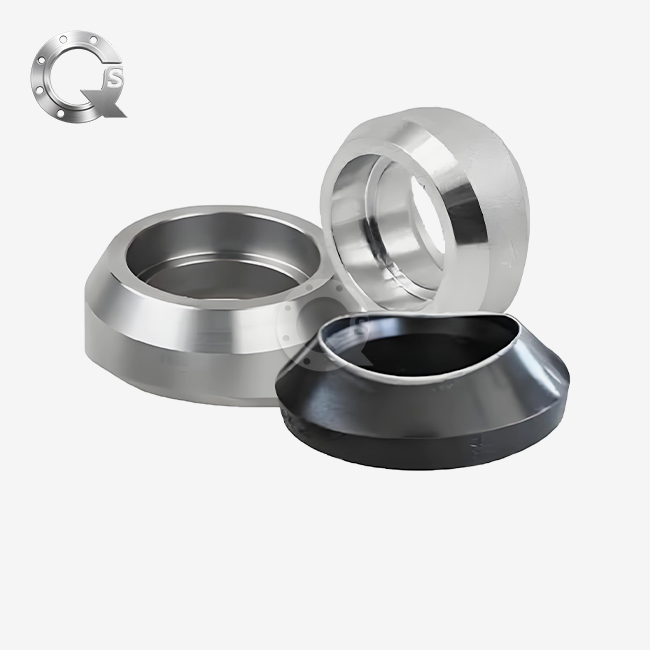
Basic Definition and Standard Compliance of Forged Steel Sockolet and Weldolet
Industrial forged branch fittings are core components for creating safe and reliable branch connections without cutting or damaging the main pipe. As a standard socket-type branch fitting, this forged socket outlet features a socket welding end design, which allows branch pipes to be inserted into the fitting socket for welding fixation. Manufactured through integral die forging, it eliminates internal defects such as porosity and shrinkage, delivering stable mechanical performance and tight sealing. It is mainly available in 3000# and 6000# pressure grades, covering most medium and high-pressure industrial piping scenarios.
A weldolet is a butt-weld branch outlet fitting with a straight and flat welding end, designed for butt welding connection with branch pipes. Sharing the same MSS SP 97 manufacturing standard as socket branch fittings, it adopts an integrated reinforced forging structure to disperse pipeline stress concentration at branch points. With higher pressure grade adaptability up to 9000#, it is more suitable for ultra-high-pressure and high-temperature harsh working conditions. Both fittings replace traditional tees to optimize pipeline stress distribution, but their structural design determines their respective application boundaries.
Core Structural and Connection Mode Differences
The most intuitive difference between the two forged branch components lies in their terminal connection structure and welding method. This socket-style forged fitting adopts a socket groove structure at the branch end. During installation, the branch pipe is directly inserted into the reserved socket, and welding is performed on the outer wall of the socket. This structure does not require precise pipe end cutting and groove processing, with low requirements for pipe fitting precision and assembly clearance. The socket structure can effectively offset minor installation errors and ensure stable assembly sealing.
In contrast, the weldolet adopts a flat butt-weld end face with no reserved socket groove. Installation requires precise cutting and polishing of the branch pipe end to ensure a flat and seamless butt joint with the fitting end face, followed by full-circle butt welding. The butt-weld structure realizes integrated fusion of the main pipe, branch fitting, and branch pipe, achieving consistent wall thickness and smooth internal pipeline transition. This structural feature makes butt-weld branch fittings have better overall structural integrity than socket-type fittings.
In terms of structural stress performance, the socket design of Forged Steel Sockolet forms a local thick-wall reinforcement at the connection position, which can resist conventional pressure impact and mechanical vibration. However, due to the gap between the socket and the inserted pipe wall, tiny stress gaps may exist under extreme high-temperature and high-pressure cyclic load. The fully fused butt-weld structure of weldolets completely eliminates assembly gaps, realizing uniform stress distribution and stronger structural stability under long-term extreme working conditions.
Working Performance and Pressure Grade Adaptability
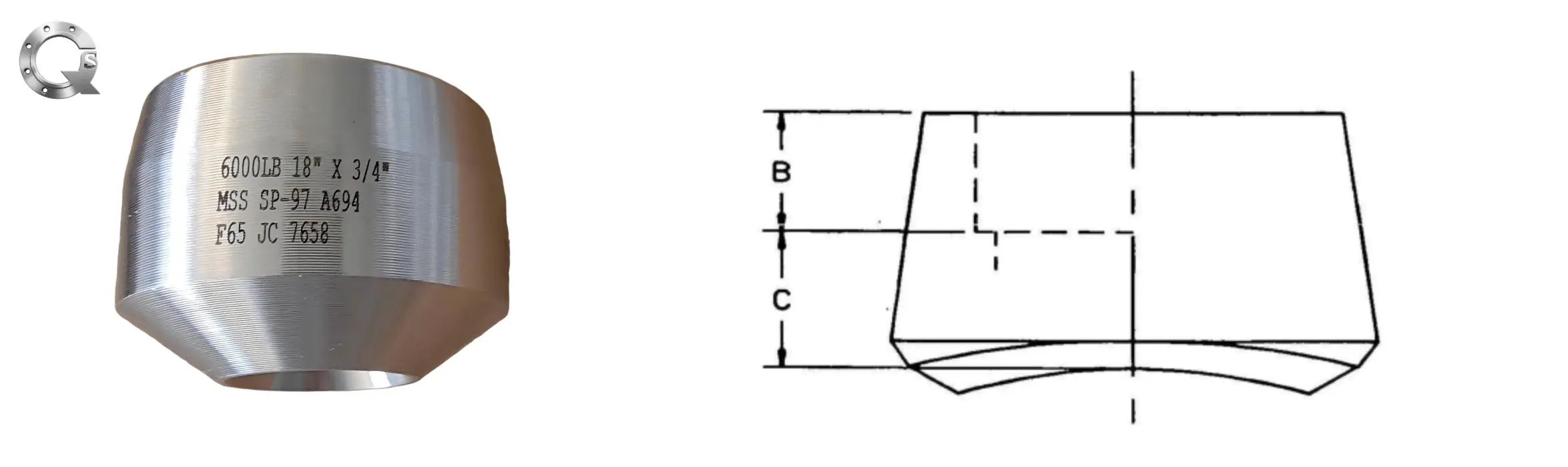
Performance differences are the key basis for engineering selection of the two forged branch fittings. This socket forged fitting is limited by its socket welding structure, with mainstream applicable pressure grades of 3000# and 6000#. It performs stably in medium-high pressure and normal-temperature or medium-temperature piping systems, with excellent vibration resistance and sealing stability. It is not suitable for ultra-high-pressure, ultra-high-temperature, or frequent thermal cycling working conditions, as socket gaps may cause thermal expansion and contraction displacement, affecting long-term sealing performance.
Weldolet fittings support full-range pressure grades from 3000# to 9000# and can adapt to working temperatures above 550℃. The integrated butt-weld fusion structure ensures synchronous thermal expansion and contraction of the pipeline and fittings, with no assembly gaps. It effectively resists high-pressure impact, high-temperature oxidation, and fatigue damage, making it the preferred fitting for high-risk core pipelines such as petrochemical high-pressure reaction pipelines, power plant boiler auxiliary pipelines, and natural gas high-pressure transmission trunk lines.
In terms of fluid delivery efficiency, the internal cavity of weldolets is smooth and flat with no structural protrusions, which will not cause fluid turbulence and effectively reduces pipeline resistance and medium scouring. The socket structure of socket branch fittings has a slight step at the connection position, which may generate minor fluid eddies. For long-distance high-flow fluid transmission pipelines, butt-weld branch fittings have more obvious advantages in reducing pipeline energy consumption and extending pipeline service life.
Installation Process and Construction Efficiency Comparison
This high-quality socket branch fitting boasts simpler and more efficient installation procedures. The socket welding process does not require strict pipe end flattening and groove making. Workers only need to clean the pipe end, insert the branch pipe into the socket in place, and complete outer-circle welding. The construction threshold is low, the operation cycle is short, and it is suitable for rapid construction and later pipeline renovation and expansion projects. In addition, the socket structure allows slight axial displacement of the pipeline, with better tolerance for on-site installation errors.
Weldolet installation has higher process requirements. The butt-weld connection requires precise cutting, leveling, and groove processing of the branch pipe end to ensure zero-gap docking. The welding process requires full penetration welding, and post-weld non-destructive testing such as RT and UT is mandatory for high-standard projects. The overall construction cycle is longer and the labor cost is higher, but the welding quality and structural stability are more reliable, meeting the strict safety inspection standards of high-end industrial projects.
Applicable Scenarios and Engineering Selection Principles
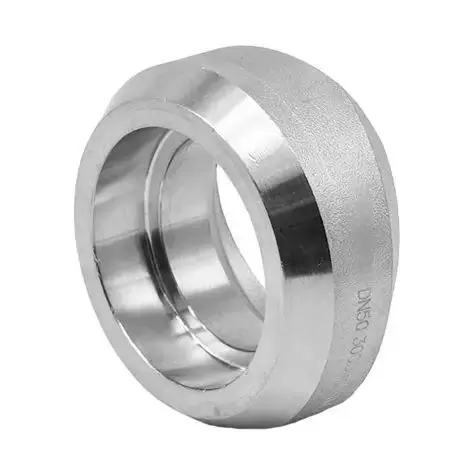
Reasonable selection of forged branch fittings based on working conditions can balance project safety and economic benefits. Forged Steel Sockolet is ideal for medium-pressure, medium-temperature, and low-vibration industrial piping systems. Typical applicable scenarios include general petrochemical auxiliary pipelines, industrial water and gas transmission pipelines, mechanical equipment supporting pipelines, and pipeline renovation and branch expansion projects. Its low construction cost and high efficiency make it cost-effective for conventional industrial piping projects.
Weldolet is targeted at high-standard and high-risk core piping systems. It is widely used in ultra-high-pressure chemical pipelines, high-temperature steam pipelines, long-distance natural gas transmission pipelines, and nuclear power and power generation supporting pipelines that require zero leakage and long-term stable operation. For projects with strict safety assessment standards and long service life requirements, butt-weld branch fittings are the only reliable choice.
The unified selection principle in engineering is: prioritize socket branch fittings for conventional medium-pressure pipelines with low vibration and convenient construction requirements; adopt butt-weld branch fittings for high-pressure, high-temperature, high-flow, and high-risk core pipelines to ensure overall system safety.
FAQs About Forged Steel Sockolet and Weldolet Selection
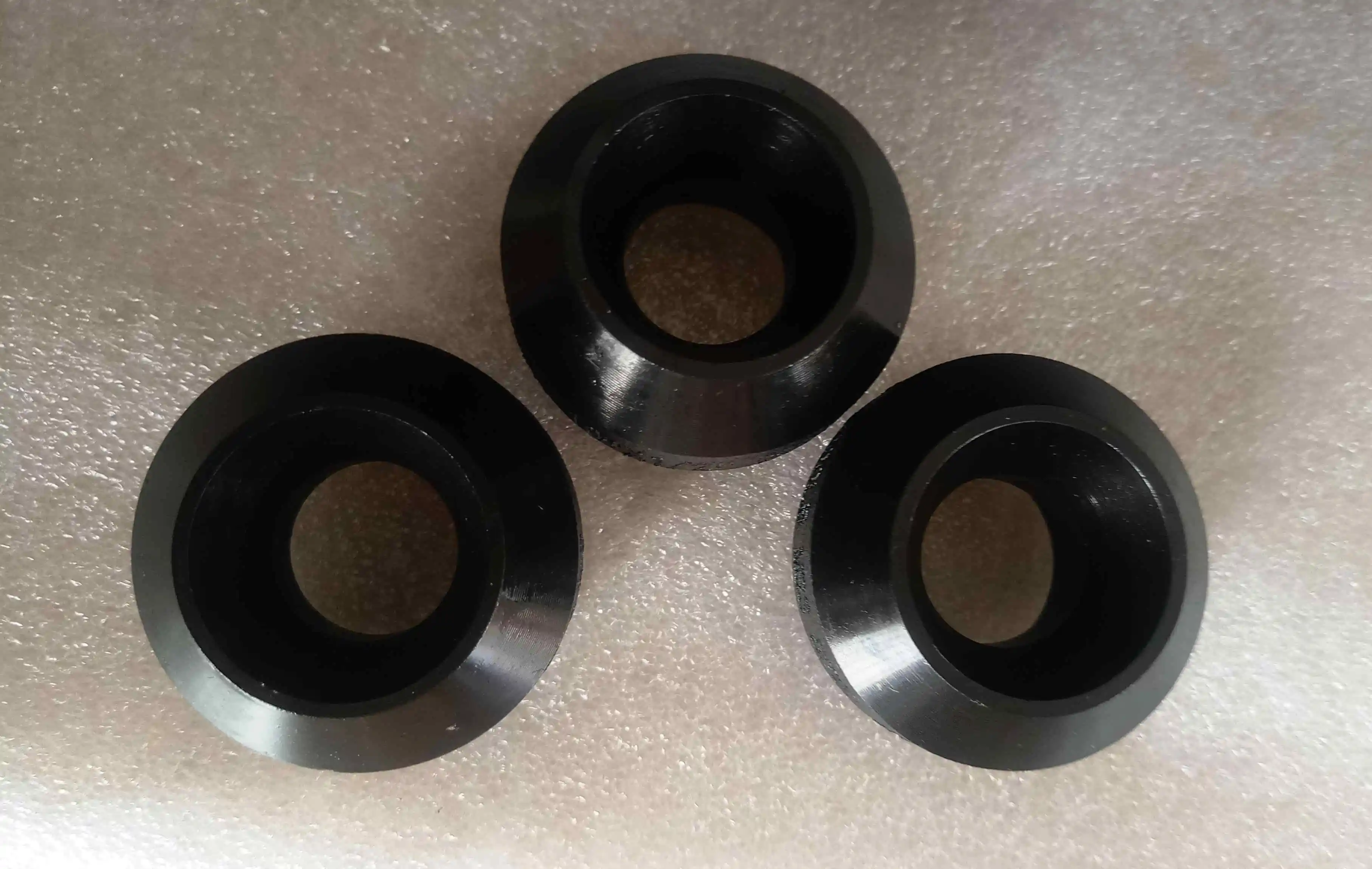
Q1: Can socket forged fittings replace weldolet in high-temperature piping systems?
A1: No. The socket assembly gap of socket branch fittings will produce thermal displacement under long-term high-temperature working conditions, which may lead to loose sealing and pipeline leakage. Only fully fused butt-weld weldolet fittings can adapt to high-temperature thermal cycling environments and ensure long-term stable operation.
Q2: Are the standard specifications of the two forged branch fittings universal?
A2: Yes. Both comply with MSS SP 97 and ASME B16.11 standards, with unified dimensional tolerance and material specifications. The main differences lie in connection mode and pressure-temperature rating, and they can be matched with the same series of pipeline flanges and valves.
Q3: Which fitting is more suitable for later pipeline maintenance and replacement?
A3: Forged Steel Sockolet is more maintenance-friendly. Its socket welding structure is easy to disassemble and replace, with low maintenance cost. The fully welded weldolet is tightly fused with the pipeline, requiring cutting and re-welding for replacement, which is more complicated and costly for later maintenance.
Q4: Is there a difference in service life between the two fittings under conventional working conditions?
A4: Basically no difference. Under matched medium-pressure and normal-temperature working conditions, both forged fittings have stable performance and long service life. The service life gap only appears in extreme working conditions, where weldolet shows stronger durability and anti-fatigue performance.
Contact QinSteel for Custom Forged Steel Sockolet and Weldolet Matching Solutions
QinSteel is a professional manufacturer of standard forged branch pipeline fittings, providing one-stop selection, customization and supporting services for Forged Steel Sockolet and weldolet products. We supply full-specification socket and butt-weld branch fittings covering carbon steel, stainless steel, and alloy steel materials, with complete 3000#, 6000#, and 9000# pressure grades to meet diverse industrial piping engineering needs.
All our products strictly follow MSS SP 97 and ASME B16.11 international standards, adopting integral forging molding and full-process quality inspection to ensure precise dimensions, stable pressure resistance, and zero leakage risk. Our professional technical team can provide accurate fitting selection suggestions according to your project’s working pressure, temperature, medium characteristics and construction conditions, helping you optimize pipeline design and control project costs.
For product parameter consultation, sample testing, customized processing and bulk order cooperation, please feel free to contact our professional team via email: info@sxqinsteel.com. We will reply to your inquiry within 24 hours and provide competitive factory prices and reliable after-sales guarantee.
References
[1] MSS SP-97-2021, Standard Practice for Integrally Reinforced Forged Branch Outlet Fittings
[2] ASME B16.11-2009, Forged Steel Fittings, Socket-Welding and Threaded
[3] ASME B31.3-2022, Process Piping Industrial Design Specification
[4] API 607-2020, Fire Test for Valve and Pipeline Fittings
[5] Industrial Forged Branch Fitting Selection & Construction Technical Manual, Global Piping Standard Association
Learn about our latest products and discounts through SMS or email