- English
- French
- German
- Portuguese
- Spanish
- Russian
- Japanese
- Korean
- Arabic
- Greek
- German
- Turkish
- Italian
- Danish
- Romanian
- Indonesian
- Czech
- Afrikaans
- Swedish
- Polish
- Basque
- Catalan
- Esperanto
- Hindi
- Lao
- Albanian
- Amharic
- Armenian
- Azerbaijani
- Belarusian
- Bengali
- Bosnian
- Bulgarian
- Cebuano
- Chichewa
- Corsican
- Croatian
- Dutch
- Estonian
- Filipino
- Finnish
- Frisian
- Galician
- Georgian
- Gujarati
- Haitian
- Hausa
- Hawaiian
- Hebrew
- Hmong
- Hungarian
- Icelandic
- Igbo
- Javanese
- Kannada
- Kazakh
- Khmer
- Kurdish
- Kyrgyz
- Latin
- Latvian
- Lithuanian
- Luxembou..
- Macedonian
- Malagasy
- Malay
- Malayalam
- Maltese
- Maori
- Marathi
- Mongolian
- Burmese
- Nepali
- Norwegian
- Pashto
- Persian
- Punjabi
- Serbian
- Sesotho
- Sinhala
- Slovak
- Slovenian
- Somali
- Samoan
- Scots Gaelic
- Shona
- Sindhi
- Sundanese
- Swahili
- Tajik
- Tamil
- Telugu
- Thai
- Ukrainian
- Urdu
- Uzbek
- Vietnamese
- Welsh
- Xhosa
- Yiddish
- Yoruba
- Zulu
ASTM A105 vs. Stainless Steel 316: Ultimate Material Selection Guide for Forged Steel Threadolet in High-Temperature Service
Aug 20 2026
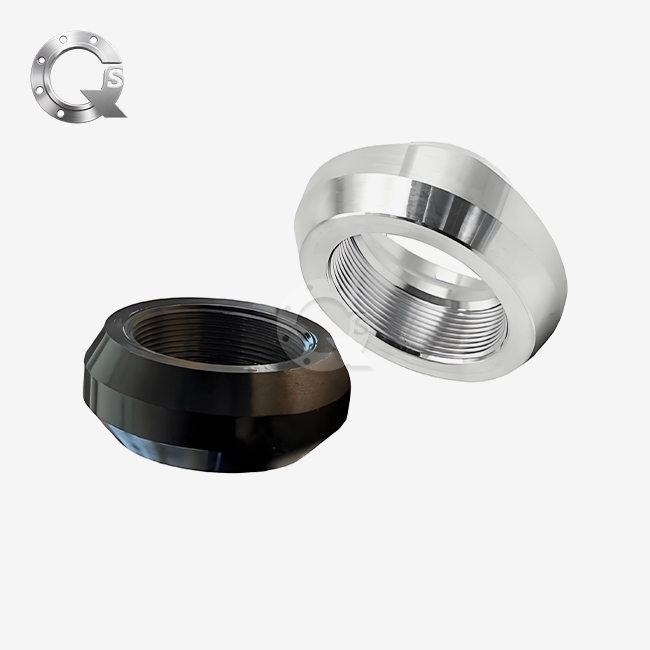
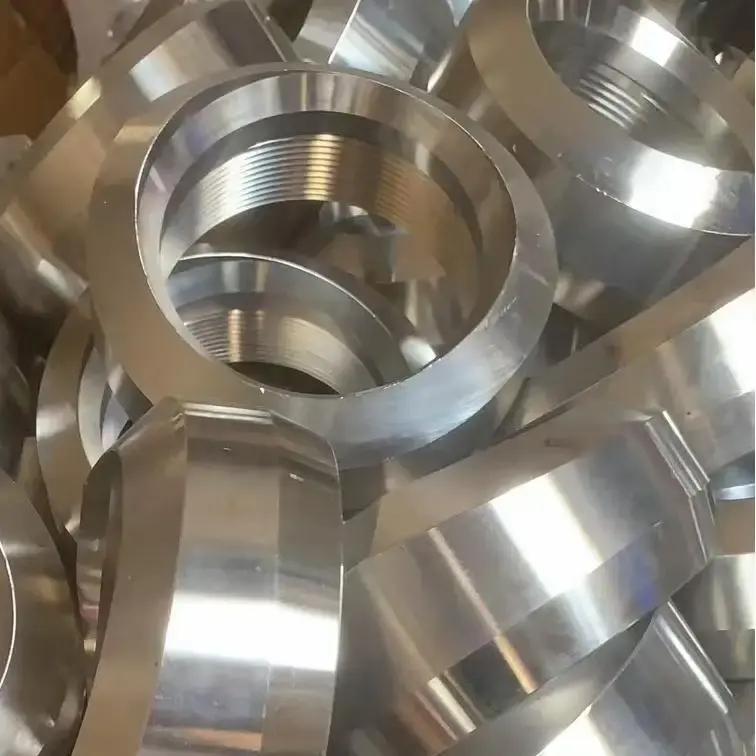
Forged Steel Threadolet is a critical branch pipe fitting widely used in high-temperature and high-pressure piping systems for oil, gas, chemical, and power generation industries. In high-temperature service environments, the material grade of this pipe fitting directly determines system safety, service life, and operational stability, making the choice between ASTM A105 carbon steel and Stainless Steel 316 a core decision for engineering designers and project managers. This guide comprehensively compares the two mainstream materials, analyzing their high-temperature performance, mechanical properties, corrosion resistance, and application scenarios to help industries select the optimal material for high-temperature piping branch connections.
Core Functions and Application Value of Threaded Branch Fittings
Threaded branch fittings serve as essential transition components for pipeline branch connections, enabling safe and reliable tapping, sampling, and instrument installation on main pressure pipelines without complex cutting and welding modifications. Unlike traditional welded branch fittings, forged branch connectors feature integrated forging molding, uniform internal structure, and no internal pores or cracks, delivering excellent pressure resistance and structural stability. In continuous high-temperature operating conditions, ordinary cast pipe fittings are prone to thermal deformation, stress concentration, and structural failure, while high-quality forged connectors can maintain stable mechanical performance for a long time. Reasonable material selection for these fittings can effectively reduce pipeline maintenance costs, avoid unplanned shutdowns, and improve the overall operational safety factor of industrial piping systems.
Basic Material Specifications and Structural Characteristics
ASTM A105 Carbon Steel Overview
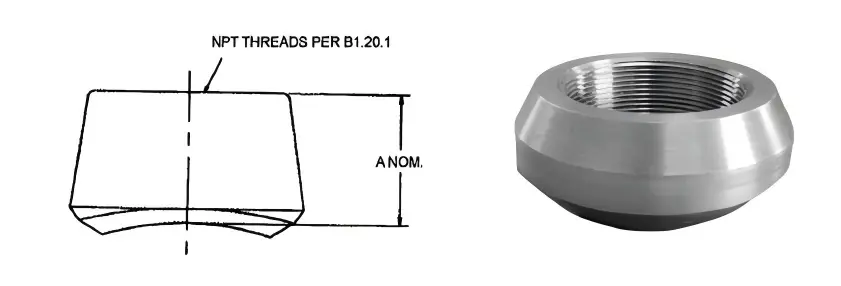
ASTM A105 is the most widely used standard for carbon steel forgings for piping components, covering forged flanges, pipe fittings, and pressure parts for ambient and medium-high temperature industrial service. This material features low carbon content, stable chemical composition, and excellent hot forging and machining performance. With a minimum tensile strength of 485MPa and yield strength of 250MPa, ASTM A105 forgings exhibit outstanding toughness and structural rigidity under normal pressure and temperature conditions. Its maximum continuous service temperature reaches 425°C, meeting the high-temperature operation requirements of most conventional thermal power, petrochemical, and heating pipeline systems. In addition, carbon steel forged components have superior weldability and cost-effectiveness, making them the preferred material for general industrial high-temperature piping branch fittings.
Stainless Steel 316 Overview
Stainless Steel 316 (ASTM A182 F316) is a molybdenum-containing austenitic stainless steel designed for harsh industrial environments. The addition of 2-3% molybdenum element significantly enhances its resistance to pitting corrosion, crevice corrosion, and high-temperature oxidation compared with 304 stainless steel. This material maintains stable metallographic structure and mechanical properties at temperatures up to 600°C, with excellent high-temperature creep resistance and thermal fatigue resistance. Moreover, Stainless Steel 316 features outstanding corrosion resistance in acidic, alkaline, and humid corrosive media, solving the problem of rapid oxidation and rusting of carbon steel materials in high-temperature and corrosive coupled environments. It is an ideal material for manufacturing high-temperature resistant forged pipeline connectors for chemical, marine, and offshore engineering piping systems.
High-Temperature Performance Comparison in Industrial Service
Temperature Resistance and Thermal Stability
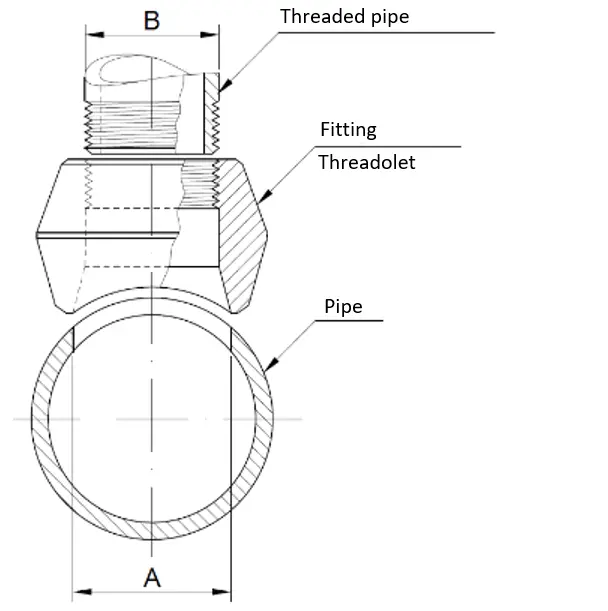
High-temperature thermal stability is the primary indicator for selecting branch connection fittings for high-temperature service. ASTM A105 carbon steel performs stably in the temperature range of -20°C to 425°C, with uniform thermal expansion coefficient and no obvious strength attenuation in medium-high temperature environments. However, when the service temperature exceeds 425°C for a long time, A105 material will undergo gradual graphitization, resulting in reduced toughness and increased brittleness, which easily causes structural cracking under pressure impact. In contrast, Stainless Steel 316 can sustain long-term stable operation at temperatures up to 600°C, with minimal strength loss and excellent thermal deformation resistance. For industrial scenarios with fluctuating high temperatures and long-term ultra-high temperature operation, 316 stainless steel forged fittings show more reliable high-temperature adaptability.
High-Temperature Mechanical Strength and Pressure Resistance
In medium-temperature environments (below 400°C), ASTM A105 forged fittings maintain high structural strength and pressure bearing capacity, fully meeting the working pressure requirements of Class 150 to Class 3000 piping systems. Its compact forged structure avoids structural defects such as porosity and shrinkage cavity, ensuring stable pressure resistance during long-term high-temperature operation. As a high-alloy stainless steel material, Stainless Steel 316 retains excellent tensile strength and yield strength at ultra-high temperatures, and its stress resistance is far superior to carbon steel materials under high-temperature and high-pressure coupling conditions. It is worth noting that the thermal expansion rate of 316 stainless steel is slightly higher than that of A105 carbon steel, so auxiliary thermal stress relief measures need to be matched in pipeline system design to avoid connection stress concentration.
Corrosion Resistance and Service Life Analysis
High-temperature service environments are often accompanied by medium corrosion, which is a key factor leading to premature failure of pipeline branch fittings. ASTM A105 carbon steel has almost no corrosion resistance in humid, acidic, or saline environments. Under high-temperature conditions, the oxidation rate of carbon steel accelerates significantly, forming loose oxide layers on the surface that are easy to peel off, resulting in continuous thinning of the fitting wall and reduced service life. It can only be used in dry, non-corrosive high-temperature medium environments and requires regular anti-corrosion maintenance and thickness detection.
Stainless Steel 316 relies on the dense chromium oxide passive film formed on its surface to achieve excellent anti-corrosion performance. The addition of molybdenum element enables it to resist chloride ion corrosion and high-temperature oxidation corrosion effectively. In high-temperature corrosive media such as sulfur-containing flue gas, acid liquid, and seawater, 316 stainless steel forged branch fittings can maintain complete structural integrity for a long time, with a service life 3-5 times that of A105 carbon steel fittings under the same harsh conditions. For high-temperature service scenarios with complex media, this type of forged pipeline connector is a more durable and low-maintenance choice.
Cost Benefit and Application Scenario Matching
Material cost and scenario adaptability are key factors for engineering material selection. ASTM A105 carbon steel forged fittings have lower raw material and processing costs, with high cost performance, and are suitable for conventional high-temperature service scenarios such as thermal power plant auxiliary pipelines, urban heating pipelines, and ordinary petrochemical non-corrosive medium pipelines. For conventional industrial projects pursuing cost control and stable medium-temperature operation, A105 is the most cost-effective solution.
Although Stainless Steel 316 has higher material and processing costs, its excellent high-temperature resistance and corrosion resistance greatly reduce later maintenance, replacement, and shutdown loss costs. It is widely used in high-end harsh working conditions, including chemical reaction pipelines, offshore oil and gas platform pipelines, high-temperature corrosive fluid delivery systems, and pharmaceutical and food high-temperature sterile pipelines. In high-risk and high-standard high-temperature service projects, the comprehensive economic benefit of 316 stainless steel fittings is far better than carbon steel products.
FAQs
1. Which material is better for long-term 400°C high-temperature service?
For stable long-term operation at 400°C without corrosive media, ASTM A105 carbon steel fully meets the requirements and has higher cost performance. If the pipeline contains trace corrosive components or has frequent temperature fluctuations, Stainless Steel 316 is recommended to avoid material aging and local corrosion failure.
2. Can A105 and 316 threaded branch fittings be used interchangeably?
They cannot be interchanged arbitrarily. The two materials have different thermal expansion coefficients, hardness, and corrosion resistance. Mixed use will cause thermal stress mismatch and electrochemical corrosion at the connection, leading to pipeline leakage and structural damage. Material replacement must be carried out in accordance with pipeline design standards and working condition parameters.
3. What are the key inspection standards for high-temperature resistant threaded branch fittings?
High-temperature service fittings need to comply with ASME B16.11 and ASME B16.48 standards, and undergo strict non-destructive testing (UT/MT/PT), high-temperature pressure resistance testing, and chemical composition analysis. Forged products must have uniform forging texture without cracks, pores, and other defects to ensure high-temperature operational safety.
4. How to extend the service life of high-temperature forged branch fittings?
Select matching materials according to working conditions, avoid over-temperature and over-pressure operation regularly, conduct regular anti-corrosion detection and stress inspection for carbon steel fittings, and clean surface oxide scales regularly. For stainless steel fittings, avoid chloride ion enrichment in high-temperature environments to prevent pitting corrosion.
Contact QinSteel for Custom Forged Steel Threadolet High-Temperature Solution
As a professional manufacturer of high-pressure forged pipe fittings focusing on high-temperature industrial service, QinSteel has rich production and customization experience in Forged Steel Threadolet of ASTM A105 and Stainless Steel 316 grades. We strictly implement ASTM and ASME international standards in raw material selection, forging processing, precision threading, and quality testing, ensuring that all products have stable high-temperature resistance, excellent pressure bearing capacity, and reliable structural stability. Our products are widely exported to Europe, America, Southeast Asia, and other regions, serving oil and gas, chemical, power, and marine engineering high-temperature pipeline projects.
We support customized specifications of various calibers, pressure levels, and thread types (NPT, BSP) to meet differentiated high-temperature service needs of different industries. Whether you need conventional carbon steel cost-effective products or high-corrosion-resistant stainless steel high-end fittings, we can provide one-stop material selection consultation, product customization, and technical after-sales services. For product parameters, bulk quotation, and high-temperature working condition matching solutions, please send your demand details to our official email: info@sxqinsteel.com. Our professional technical team will reply within 24 hours to provide accurate and professional service support.
References
1. ASTM International. ASTM A105/A105M-23, Standard Specification for Carbon Steel Forgings for Piping Applications[S]. 2023.
2. ASTM International. ASTM A182/A182M-24, Standard Specification for Forged or Rolled Alloy and Stainless Steel Pipe Flanges, Forged Fittings, and Valves and Parts for High-Temperature Service[S]. 2024.
3. ASME B16.11-2021, Forged Fittings, Socket-Welding and Threaded[S]. The American Society of Mechanical Engineers, 2021.
4. ASME B16.48-2020, Spectacle Blinds, Spacers and Line Blinds[S]. The American Society of Mechanical Engineers, 2020.
5. Industrial High-Temperature Pipeline Material Selection Manual, National Association of Corrosion Engineers (NACE), 2022.
6. High-Performance Forged Steel Fitting Performance Research for Extreme Temperature Industrial Systems, Journal of Pipeline Engineering, 2023.
Learn about our latest products and discounts through SMS or email