- English
- French
- German
- Portuguese
- Spanish
- Russian
- Japanese
- Korean
- Arabic
- Greek
- German
- Turkish
- Italian
- Danish
- Romanian
- Indonesian
- Czech
- Afrikaans
- Swedish
- Polish
- Basque
- Catalan
- Esperanto
- Hindi
- Lao
- Albanian
- Amharic
- Armenian
- Azerbaijani
- Belarusian
- Bengali
- Bosnian
- Bulgarian
- Cebuano
- Chichewa
- Corsican
- Croatian
- Dutch
- Estonian
- Filipino
- Finnish
- Frisian
- Galician
- Georgian
- Gujarati
- Haitian
- Hausa
- Hawaiian
- Hebrew
- Hmong
- Hungarian
- Icelandic
- Igbo
- Javanese
- Kannada
- Kazakh
- Khmer
- Kurdish
- Kyrgyz
- Latin
- Latvian
- Lithuanian
- Luxembou..
- Macedonian
- Malagasy
- Malay
- Malayalam
- Maltese
- Maori
- Marathi
- Mongolian
- Burmese
- Nepali
- Norwegian
- Pashto
- Persian
- Punjabi
- Serbian
- Sesotho
- Sinhala
- Slovak
- Slovenian
- Somali
- Samoan
- Scots Gaelic
- Shona
- Sindhi
- Sundanese
- Swahili
- Tajik
- Tamil
- Telugu
- Thai
- Ukrainian
- Urdu
- Uzbek
- Vietnamese
- Welsh
- Xhosa
- Yiddish
- Yoruba
- Zulu
Flange Slip On ANSI B16.5 in Water, Air and Utility Piping
Oct 13 2026
Utility piping is where a Flange Slip On ANSI B16.5 earns its place. The pressures are low, the temperatures are unremarkable, the pipe is thin walled and the joint is assembled once and left alone for years. In that environment the pattern is cheaper to buy, quicker to weld and easier to line up than a weld neck, and there is nothing in the service that punishes the fillet welded joint. What follows is how the pattern behaves across the utility services we supply most often.
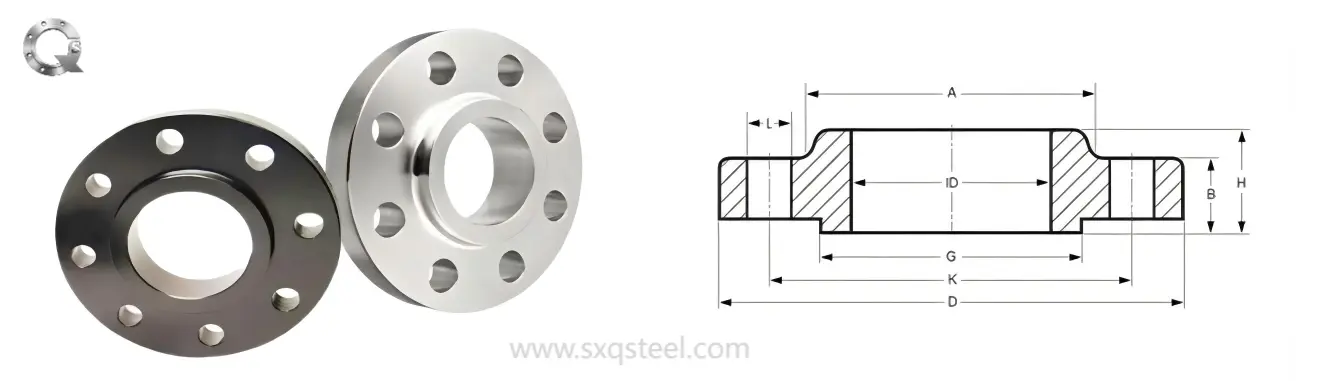
Why Utility Lines Suit the Pattern
Water, air and general plant services run at pressures where a class 150 flange has margin to spare, and the pipe wall is thin enough that the outer fillet is a modest weld. There is no significant thermal cycling in a cold water line and no vibration in a compressed air header, so the fatigue weakness of the pattern is never tested. Flange Slip On ANSI B16.5 is the natural choice for utility piping, where the pressure is low and the joint is assembled once and left alone.
The fabrication advantage is real as well. A slip-on flange can be slid along the pipe to set the face position and rotated to align the bolt holes, which means a spool does not have to be cut to a precise length. On a plant where spools are fabricated on site and offered up between existing connections, that freedom saves hours on every tie-in.
Water Services and Potable Approval
Cold and warm water services are the largest single application. The flange is usually galvanized or coated for corrosion protection, and where the water is potable the coating and the gasket both have to be approved for contact with drinking water on the network in question. A Flange Slip On ANSI B16.5 can be slid and rotated on the pipe before welding, which removes the need to cut a spool to a precise length.
The detail that causes trouble is the bore. Galvanizing covers the bore as well as the outside, and zinc inside the bore interferes with the fillet weld if it is not removed locally. We mask the bore on galvanized orders, or leave it uncoated, because a coating that has to be ground off on site is a coating that will be ground off badly. Where the water is aggressive or the plant is coastal, the coating choice matters more than the flange pattern, and a coated flange with a poor coating will fail sooner than an uncoated one that has good drainage around it.
Compressed Air and Instrument Air
Compressed air lines are usually dry and clean, and the slip-on pattern is entirely adequate. Where the air is instrument quality, the joint has to be clean inside, which argues for an inner weld where the bore allows and for a gasket material that does not shed particles into the line. Galvanizing on a Flange Slip On ANSI B16.5 must be kept out of the bore, because zinc interferes with the fillet weld.
The pressure in a compressed air system is modest but the stored energy is not, and a joint failure on an air receiver connection is a serious event. That is why receiver nozzles and other high consequence connections are often specified as weld neck even though the pressure would permit a slip-on. The pattern choice follows the consequence, not only the pressure.
Low Pressure Steam and Condensate
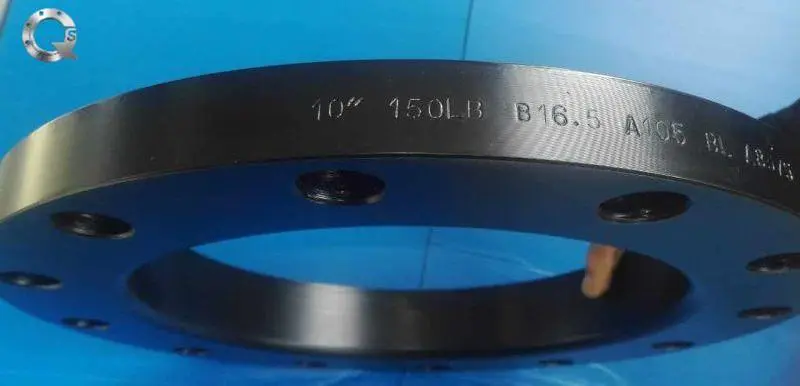
Steam at low pressure is a reasonable application provided the line does not cycle appreciably. The concern is thermal movement: a steam line that heats and cools daily moves the pipe and loads the flange joint in bending, and the fillet welded slip-on has less reserve for that than a butt welded flange. Compressed air carries little pressure and a great deal of stored energy, so a Flange Slip On ANSI B16.5 is often set aside for receiver connections.
Condensate is more demanding than the steam it came from, because it is often acidic and it collects at the low points where flanges tend to sit. On condensate duty the material and the gasket matter more than the flange pattern, and a coated or stainless flange with a suitable gasket will outlast an uncoated one by a wide margin. The practical answer on a cycling steam line is to keep this pattern for the straight runs and use weld necks at the connections where the pipe is restrained, since that is where the bending load is highest.
Buried and Chamber Installations
A buried slip-on joint cannot be inspected and cannot be tightened without excavation, so it deserves more care at installation than an accessible one. The coating has to be continuous across the joint, the gasket should be one that will not take a permanent set, and the studs should be protected because they are the part that corrodes first. Low pressure steam suits a Flange Slip On ANSI B16.5 provided the line does not cycle enough to load the fillet weld in bending.
In a valve chamber the joint is reachable but the environment is damp. Flanges there are normally galvanized, gaskets are replaced whenever the chamber is opened, and the studs are usually the first item to be replaced rather than reused. Supplying studs with the flange rather than as a separate order is what makes that practice possible.
Spares, Standardisation and the Store
A utility plant holds a small range of sizes in one class and expects them to fit whatever arrives. That argues for a specification that names the class and the facing and does not change them for individual lines without a reason, and for marking that a storeman can read without a drawing. A buried Flange Slip On ANSI B16.5 joint cannot be inspected, so coating continuity and a gasket that recovers both matter more below ground.
There is a commercial consequence too. A plant standardised on one class and one facing can hold one gasket size per pipe size, one stud length and one set of flanges. Every variation added to the specification multiplies the storeholding and reduces the chance that the right part is on the shelf when a line goes down at the weekend.
Bolting, Gaskets and Joint Fit-Up
We supply gaskets and studs with utility flanges as a set, because a chamber that is opened for a repair needs both and a store that has to order them separately usually reuses them.
Certification, Traceability and Goods-In Checks
Certificates carry the class, the facing and the material heat, which is what a municipal or industrial inspector checks before a joint is buried.
Packing, Coating and Export Logistics
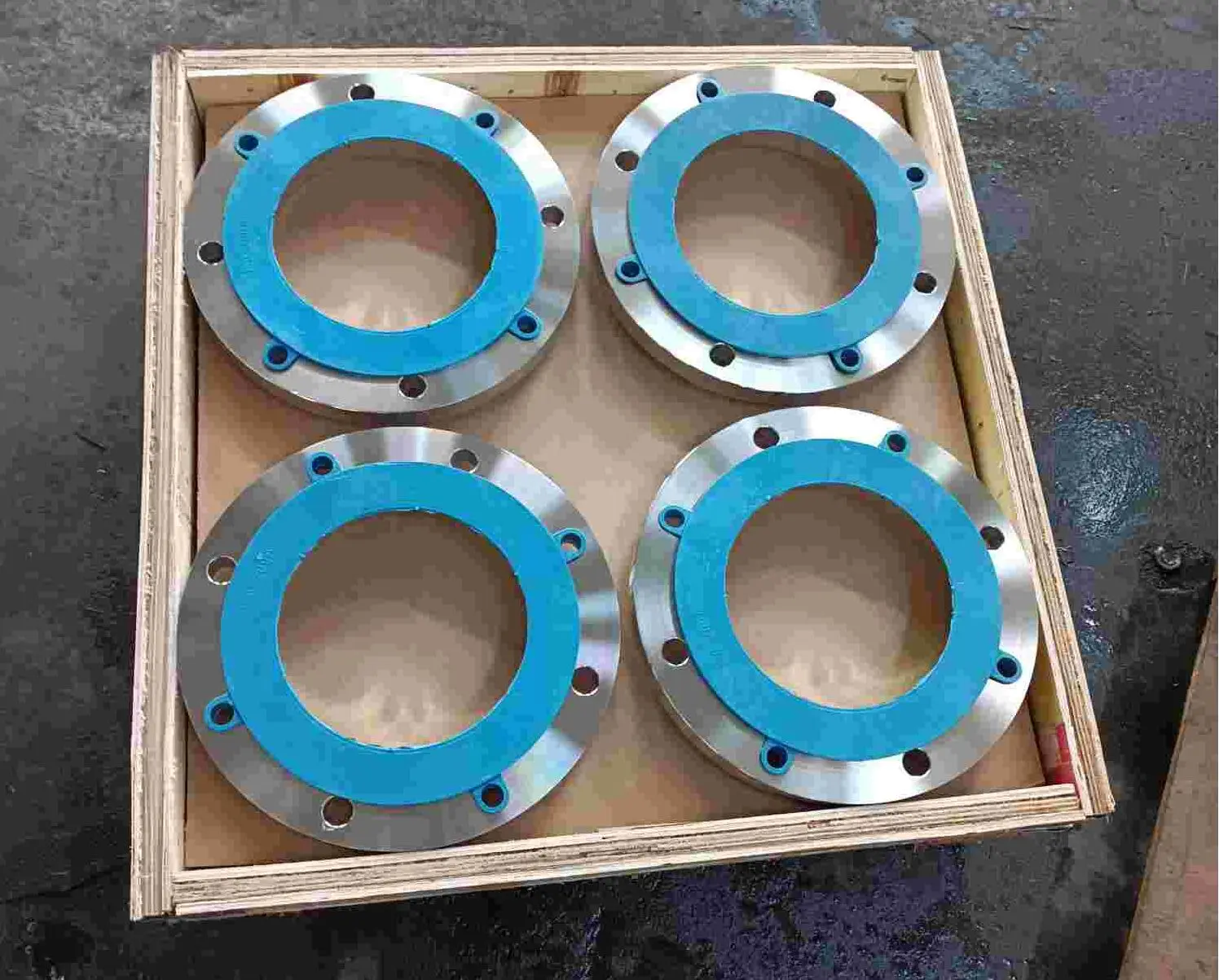
Coating is applied to the outside and kept out of the bore and off the face, so the flange arrives ready to weld rather than needing preparation on site.
Stock, Repeat Orders and Phased Release
Common sizes in class 150 are held in stock and released against a maintenance schedule, which suits a utility working through a list rather than ordering a full set.
How We Confirm the Specification Before We Cut
Before quoting we ask whether the joint will be buried, in a chamber or indoors, because the coating and the gasket both change with the exposure.
Utility Specification Notes
Four lines cover most utility specifications: class 150 raised face for general services, flat face with a full face gasket where the joint meets cast iron or plastic, galvanized for outdoor and buried work, and studs supplied with each flange. Adding the pipe schedule removes the remaining uncertainty about the bore.
It is worth naming the services where the pattern is not acceptable, even in a short specification. Air receiver nozzles, pump discharges and any connection subject to vibration are the usual exceptions, and writing them down prevents the exception being discovered by a failure rather than by a drawing.
Why Choose Xi'an QinSteel for Flange Slip On ANSI B16.5 Supply
We ask where the joint will sit, buried, in a chamber or indoors, because the coating and the gasket both change with the exposure and neither can be changed after the joint is made. An exposure named at the quotation stage costs nothing at all, and a coating changed after manufacture costs the whole batch and the delivery date along with it.
We keep coating out of the bore and off the face on galvanized orders, since a coating that has to be ground off before welding is a coating that will be ground off badly on site. The two surfaces that must stay bare are the two that decide whether the joint can be assembled correctly at all, on site and at the first attempt.
We supply the gasket and the studs with the flange on utility work, because a chamber opened for a repair needs all three and a store that has to order them separately simply reuses what it has. Write to info@sxqinsteel.com or open www.sxqsteel.com. The consumables are where utility joints fail, and they should be ordered as consumables rather than as once a year spares that nobody remembers ordering.
| Service | Usual class | Facing and gasket | Notes |
|---|---|---|---|
| Cold water | 150 | Raised face, ring sheet | Galvanized for outdoor runs |
| Potable water | 150 | Raised face, approved sheet | Coating and gasket both need approval |
| Compressed air | 150 | Raised face, ring sheet | Weld neck at receiver connections |
| Instrument air | 150 | Raised face, clean sheet | Inner weld where the bore allows |
| Low pressure steam | 150 to 300 | Raised face, spiral wound | Avoid on cycling lines |
| Condensate | 150 | Raised face, corrosion resistant | Material matters more than the pattern |
| Buried water main | 150 | Flat face, full face sheet | Coating continuity across the joint |
Frequently Asked Questions
1.Is a slip-on flange suitable for a compressed air line?
Generally yes on the pipework. The exception is a receiver connection, where the stored energy makes the consequence of a leak more serious than the pressure suggests, and many specifications call for a weld neck there.
2.Why should galvanizing be kept out of the bore?
Because the fillet weld runs against the bore. Zinc in the weld zone causes porosity and poor fusion, and it has to be removed before welding. Leaving the bore uncoated or masked at the works is quicker and more reliable than grinding it on site.
3.What gasket suits a buried water joint?
One that will not take a permanent set and that suits the water chemistry, usually a compressed sheet approved for the service. A full face sheet suits a flat face buried joint because it is located by the bolts and cannot be blown out.
Contact Xi'an QinSteel for Flange Slip On ANSI B16.5 Solutions
The first question we ask about a utility joint is where it will sit, because buried, chamber and indoor locations each call for a different coating and a different gasket. One line to info@sxqinsteel.com answers it. Utility notes covering water, air and steam duty for Flange Slip On ANSI B16.5 orders are at www.sxqsteel.com.
References
- ASME B16.5 - Pipe flanges and flanged fittings, NPS 1/2 through NPS 24.
- ASME B16.47 - Large diameter steel flanges, NPS 26 through NPS 60.
- ASME B31.3 - Process piping, including the welding requirements for slip-on flanges.
- ASME BPVC Section II Part D - Properties, including pressure temperature ratings.
- ASME PCC-1 - Guidelines for pressure boundary bolted flange joint assembly.
- ASTM A105 / A105M - Carbon steel forgings for piping applications.
- ASTM A182 / A182M - Forged or rolled alloy and stainless steel pipe flanges.
- EN 10204 - Metallic products, types of inspection documents.
Learn about our latest products and discounts through SMS or email