- English
- French
- German
- Portuguese
- Spanish
- Russian
- Japanese
- Korean
- Arabic
- Greek
- German
- Turkish
- Italian
- Danish
- Romanian
- Indonesian
- Czech
- Afrikaans
- Swedish
- Polish
- Basque
- Catalan
- Esperanto
- Hindi
- Lao
- Albanian
- Amharic
- Armenian
- Azerbaijani
- Belarusian
- Bengali
- Bosnian
- Bulgarian
- Cebuano
- Chichewa
- Corsican
- Croatian
- Dutch
- Estonian
- Filipino
- Finnish
- Frisian
- Galician
- Georgian
- Gujarati
- Haitian
- Hausa
- Hawaiian
- Hebrew
- Hmong
- Hungarian
- Icelandic
- Igbo
- Javanese
- Kannada
- Kazakh
- Khmer
- Kurdish
- Kyrgyz
- Latin
- Latvian
- Lithuanian
- Luxembou..
- Macedonian
- Malagasy
- Malay
- Malayalam
- Maltese
- Maori
- Marathi
- Mongolian
- Burmese
- Nepali
- Norwegian
- Pashto
- Persian
- Punjabi
- Serbian
- Sesotho
- Sinhala
- Slovak
- Slovenian
- Somali
- Samoan
- Scots Gaelic
- Shona
- Sindhi
- Sundanese
- Swahili
- Tajik
- Tamil
- Telugu
- Thai
- Ukrainian
- Urdu
- Uzbek
- Vietnamese
- Welsh
- Xhosa
- Yiddish
- Yoruba
- Zulu
Carbon Steel Pipe Flange Dimensions and Standards: A Map of the Drilling Systems
Oct 8 2026
Carbon Steel Pipe Flange exists in a dozen drilling systems, and the bolt circle is the one thing that decides whether two discs mate, so knowing the standards is the first step to a correct order. We keep a map of them. In this piece we compare the major systems and show how we at Xi'an QinSteel confirm the right one.

ASME B16.5 and B16.47
Carbon Steel Pipe Flange cover the US class system, B16.5 to NPS 24 and B16.47 above. The class sets thickness and the bolt circle. We confirm the standard and the class from the dwg. A B16.5 disc will not bolt to a B16.47 spool at large size.
A buyer mixed B16.5 and B16.47 on one order and we split the drilling so each bolted.
EN1092 and DIN
Carbon Steel Pipe Flange are the European PN systems, with PN bands and a European circle that partly overlaps DIN. We machine to the EN drilling and confirm it. A DIN disc may or may not bolt to an EN spool by size.
A Southeast Asia plant kept both EN and DIN and we tagged each to avoid a rack mix.
JIS, BS, AWWA
Carbon Steel Pipe Flange are the regional systems: JIS K ratings for Japanese plant, BS4504/BS 3293 for British legacy, AWWA C207 for US waterworks. We keep each drilling alive. A wrong region is a wrong circle.
A Pacific utility ran JIS and a US water scheme ran AWWA; we kept both templates.
The Bolt Circle Is the Decider
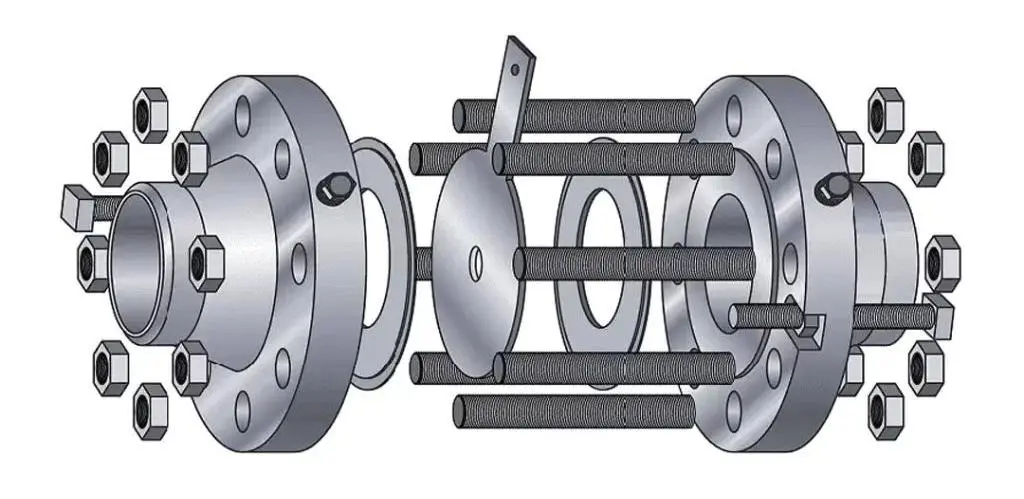
carbon steel pipe flanges between every system, because the sizes and classes can look alike while the holes do not. We measure or read the drawing before cutting. A wrong circle is scrap, not a reface.
We keep a go/no-go template for the common combinations so the circle is verified on the bench.
Thickness Follows the Rating
carbon steel flange within each system, rising with class or PN. We confirm the rating and machine the thickness. A wrong rating is the usual leak cause.
We list the class or PN and the allowable on the quote so the buyer sees the pressure story.
Tagging Prevents Mix-Ups
CS pipe flange because discs of the same size from different systems look alike. We stamp the standard and rating on the pad. A blank with no tag is a mystery at turnaround.
We colour-tag the standard on mixed orders so goods-in sorts by eye before reading the stamp.
Bolting, Gaskets and Joint Fit-Up
Bolting matters as much as the disc: we confirm the stud length and the gasket type so the joint is complete on arrival. A carbon steel flange that ships without the right studs is half a joint, and the fitter ends up hunting a thread across three crates.
A sample-first approach suits a new standard or a new buyer: we cut one carbon steel part, ship it, and confirm it bolts before the balance is released. A trial piece is cheaper than a container of near-misses, and it settles the dimension question for good.
Certification, Traceability and Goods-In Checks
We stamp the heat on the pad and issue 3.1 on request, so your quality record traces the steel back to the melt. A part that cannot be traced is a liability at audit, and the stamp plus cert is the line that keeps a project moving.
For sour or cold duty we confirm the NACE level or the impact temperature before we forge, because the grade is decided upstream of the machine. A carbon steel part that misses the test is a failure mode, not a cost saving, and we certify it up front.
For export we handle the commercial invoice, the packing list, and the mill cert in one pack so Customs and your goods-in get the same story. A carbon steel shipment with mismatched papers is a hold, and the aligned documents are the step that clears the port.
Packing, Coating and Export Logistics
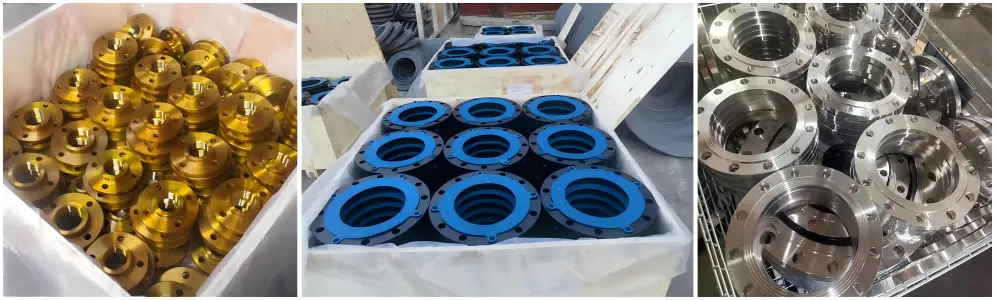
Crating and weight tagging suit the disc, and we photograph the pack so you see condition before it sails.
Logistics for export matter as much as the steel. We crate to survive a container, a crane, and a Customs hold, and we photograph the pack so you can see the condition before it sails. A carbon steel part that stains in transit is a rejected part, not a saving.
Coating the machined face before it leaves the bay is the cheap insurance against a stain that weeps on the first reopen. A carbon steel face that arrives bare in a coastal store is a rejected part, and a quick coat on the line costs less than the rework call.
Storage at the destination decides whether the coat survives, so we wrap the machined face and tag the crate for the store. A part that rusts on a humid rack is a write-off, and the wrap plus tag is the step that keeps it clean until the weld.
Communication during the build is part of the product: we send a photo of the pack and a copy of the cert so you see the part before it sails. A buyer who can see the condition avoids the dispute, and the photo is the proof that earns the trust.
For offshore or remote sites we crate to the lift plan and mark the unit mass so the crane is sized before arrival, not after a failed lift. A carbon steel part that surprises the crew on a platform is a delay no one budgets for.
We photograph the finished part and the pack so the condition is visible at every handover, from our bay to your store. A carbon steel disc that arrives with a dent has a photo to answer the question of where it happened, and that ends the argument.
The crane and the crate are part of the delivery: we size both to the part so it arrives in one piece. A carbon steel disc dropped in handling is a lost day and a re-order, and the plan that prevents it is written before the steel moves.
Stock, Repeat Orders and Phased Release
For a one-off diameter we quote from plate and confirm the delivery window before you commit, because a vague lead time is worse than an honest long one. A carbon steel disc cut from plate is only as good as the window we give you to plan the weld.
We hold common sizes on the shelf and cut the odd ones from plate, so the long pole is rarely the flange. A carbon steel part pulled from stock ships in days, while a cut one is quoted honestly with a window you can plan around.
We keep the drilling template for the common standards so every repeat order is cut to the same circle, not a fresh guess. A carbon steel part that matches the last one is the part your fitter expects, and consistency is what keeps a store honest.
How We Confirm the Specification Before We Cut
Email info@sxqinsteel.com with the dwg and we return a confirmation the same business day. For cut-from-plate we quote and confirm the window.
The documentation pack we send names the standard, the class, the facing, and the grade in one row, so the confirmation is a single glance, not a search. We have found that a clean sheet prevents most of the field calls we used to get on mixed orders.
When you send a line list, include the mating flange class and the facing, not just the size, because the two together decide the thickness and the gasket. A missing facing is the most common cause of a part that will not seat, and we return a sheet that lists both.
We run a pre-order check that lists the standard, the class, the facing, and the grade, and we send it back before cutting so a mismatch is caught on paper, not in the field. A carbon steel order confirmed in writing is an order we can stand behind.
Tagging the isolated or the spare point so the next crew knows what it is, not just that it exists, is the small step that pays back at turnaround. A carbon steel disc with no tag is a mystery, and mysteries cost the schedule far more than the tag did.
A clean confirmation sheet that names the standard, the class, and the facing in one row prevents most of the field calls we used to get. A carbon steel order that is clear on paper is an order we can ship without a pause, and clarity is the cheapest speed.
Why Choose Xi'an QinSteel for Carbon Steel Pipe Flange
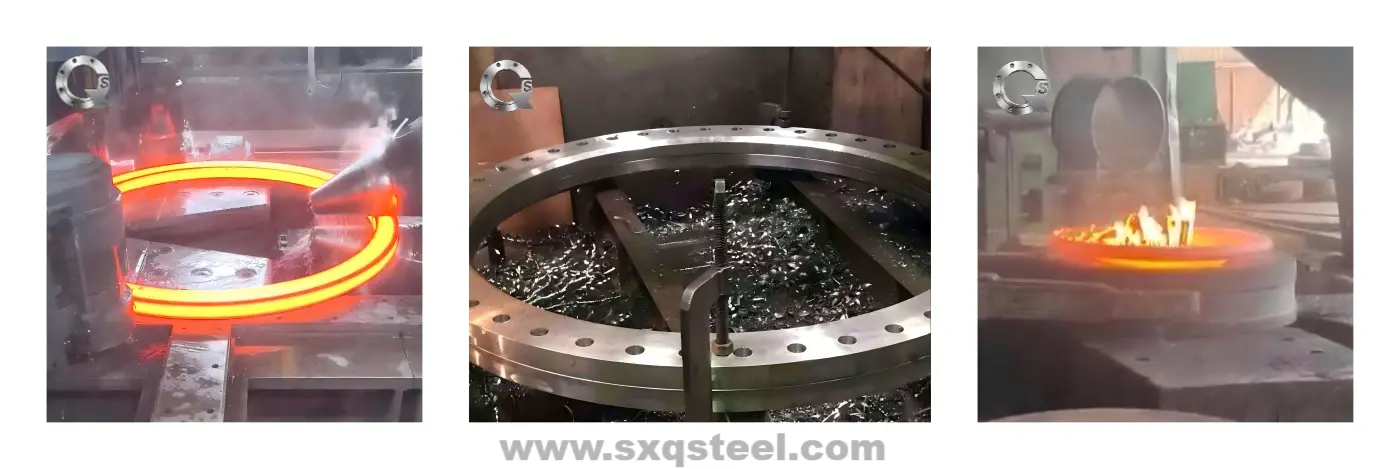
We keep every drilling template so repeat spares stay consistent, and we release against your dates. A store fed late is a unit down.
We confirm the drilling system from your drawing and machine to it, tagging the standard and rating so spares match the rack. Our pre-order sheet lists standard, rating, facing, and drilling in one row. We confirm the facing groove or the RF height with a gauge rather than by eye, because a few thousandths has leaked before. A carbon steel face that is cut to the gauge seats the gasket without a torque drama, and the gauge is the check we never skip.
We match the flange wall to the pipe schedule so the joint looks right, not just the bore, because a stub that sticks out is a reface. A carbon steel part that follows the line wall seats without a shim, and the weld reads true on the radiograph. We bundle the studs, the gasket, and the disc where the job allows, so the joint is complete on arrival rather than assembled from three crates. A carbon steel set that travels together is a fitter who is not hunting a thread across the yard.
| System | Rating | Region |
|---|---|---|
| B16.5/47 | Class | US/global |
| EN1092 | PN | Europe |
| DIN | PN | German legacy |
| JIS B2220 | K | Japan/Asia |
| BS4504/3293 | PN/class | UK legacy |
| AWWA C207 | Class | US water |
Frequently Asked Questions
1.Which standard do I use?
Follow the existing spool drilling; the bolt circle decides.
2.Do PN and class match?
No, read the table for each system; do not assume equality.
3.How do I confirm the drilling?
From the drawing or by measuring the existing flange; we verify before cutting.
Contact Xi'an QinSteel for Carbon Steel Pipe Flange Solutions
For pricing and lead time on Carbon Steel Pipe Flange stock or a made-to-order run, email info@sxqinsteel.com or open www.sxqsteel.com. Send the dwg with the standard, rating, facing, and drilling, and we machine the disc and tag the pattern so it bolts to the spool.
References
- ASME B16.5 / B16.47 - US class flanges.
- EN 1092-1 - European PN flanges.
- DIN 2573/2576 - German PN flanges.
- JIS B 2220 - Japanese flanges.
- BS 4504 / BS 3293 - British flanges.
- AWWA C207 - Waterworks flanges.
Learn about our latest products and discounts through SMS or email