- English
- French
- German
- Portuguese
- Spanish
- Russian
- Japanese
- Korean
- Arabic
- Greek
- German
- Turkish
- Italian
- Danish
- Romanian
- Indonesian
- Czech
- Afrikaans
- Swedish
- Polish
- Basque
- Catalan
- Esperanto
- Hindi
- Lao
- Albanian
- Amharic
- Armenian
- Azerbaijani
- Belarusian
- Bengali
- Bosnian
- Bulgarian
- Cebuano
- Chichewa
- Corsican
- Croatian
- Dutch
- Estonian
- Filipino
- Finnish
- Frisian
- Galician
- Georgian
- Gujarati
- Haitian
- Hausa
- Hawaiian
- Hebrew
- Hmong
- Hungarian
- Icelandic
- Igbo
- Javanese
- Kannada
- Kazakh
- Khmer
- Kurdish
- Kyrgyz
- Latin
- Latvian
- Lithuanian
- Luxembou..
- Macedonian
- Malagasy
- Malay
- Malayalam
- Maltese
- Maori
- Marathi
- Mongolian
- Burmese
- Nepali
- Norwegian
- Pashto
- Persian
- Punjabi
- Serbian
- Sesotho
- Sinhala
- Slovak
- Slovenian
- Somali
- Samoan
- Scots Gaelic
- Shona
- Sindhi
- Sundanese
- Swahili
- Tajik
- Tamil
- Telugu
- Thai
- Ukrainian
- Urdu
- Uzbek
- Vietnamese
- Welsh
- Xhosa
- Yiddish
- Yoruba
- Zulu
Cost-Effective Fastening Solutions: Strategic Specification of Mild Steel Plain Washers in Structural Projects
Aug 25 2026
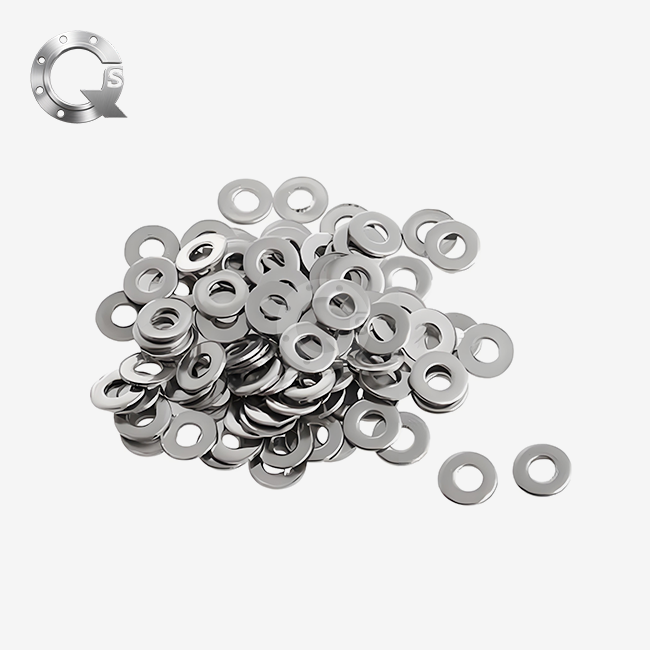
Mild Steel Plain Washers serve as the unsung heroes of the fastening industry, providing essential load distribution and surface protection at a fraction of the cost of exotic alloys. In the realm of structural engineering and general construction, the relentless pursuit of efficiency often clashes with the absolute necessity of safety and durability. For project managers and procurement specialists, the challenge lies in identifying components that satisfy rigorous mechanical requirements without inflating the project budget. While high-tensile and corrosion-resistant fasteners often grab the spotlight, the humble carbon steel washer remains the backbone of cost-effective assembly. This article explores the technical justification for specifying mild steel washers in structural applications, examining their mechanical properties, standard compliance, and economic advantages.
The Economic Imperative in Modern Construction
In large-scale infrastructure projects, cost overruns are a constant threat. Every component, from the primary steel beams to the smallest fastener, is scrutinized for value. Mild steel plain washers represent a category where significant savings can be realized without compromising structural integrity, provided they are applied correctly. Unlike stainless steel or specialized alloy washers, which command a premium due to raw material costs and complex manufacturing processes, mild steel offers a highly accessible and malleable alternative.
The economic advantage extends beyond the unit price. The ease of fabrication means that lead times are generally shorter, and supply chain disruptions are less likely to impact availability. For non-critical applications or environments where corrosion is managed through other means—such as galvanization or controlled indoor environments—specifying mild steel is not just a budgetary decision; it is a logistical one. By reducing the reliance on expensive materials for general spacing and load distribution, project stakeholders can reallocate funds to critical path items that demand higher performance specifications.
Mechanical Properties and Material Composition
To understand why mild steel is suitable for structural applications, one must look at its metallurgical profile. "Mild steel" generally refers to low-carbon steel, typically containing between 0.05% to 0.25% carbon. This low carbon content is the defining factor that grants the material its distinct advantages: ductility and weldability.
Ductility and Load Distribution
In a bolted joint, the primary function of a washer is to distribute the clamping force of the nut or bolt head over a larger area. This prevents damage to the connected material and reduces the risk of the fastener pulling through under load. The ductility of mild steel allows the washer to deform slightly under high compressive loads. This plastic deformation helps to seat the fastener assembly firmly, accommodating minor imperfections in the surface of the connected parts.
While high-strength hardened washers are required for structural bolting assemblies (such as ASTM F436) to prevent deformation under extreme tension, standard plain washers made of mild steel are perfectly engineered for general structural purposes where the load is static and the primary goal is spacing or surface protection.
Weldability
Another critical mechanical property is weldability. In many structural frameworks, washers may need to be tack-welded to a beam or column to hold them in place during the assembly process. High-carbon steels or certain hardened alloys are prone to cracking when welded due to their microstructure. Mild steel, conversely, can be welded easily without special precautions, making it highly versatile during the installation phase.
Navigating International Standards: ASTM F844 and DIN 125
When specifying fasteners for global projects, adherence to recognized standards is non-negotiable. It ensures that the component will perform as expected and fit the corresponding bolts and nuts.
ASTM F844: The US Standard
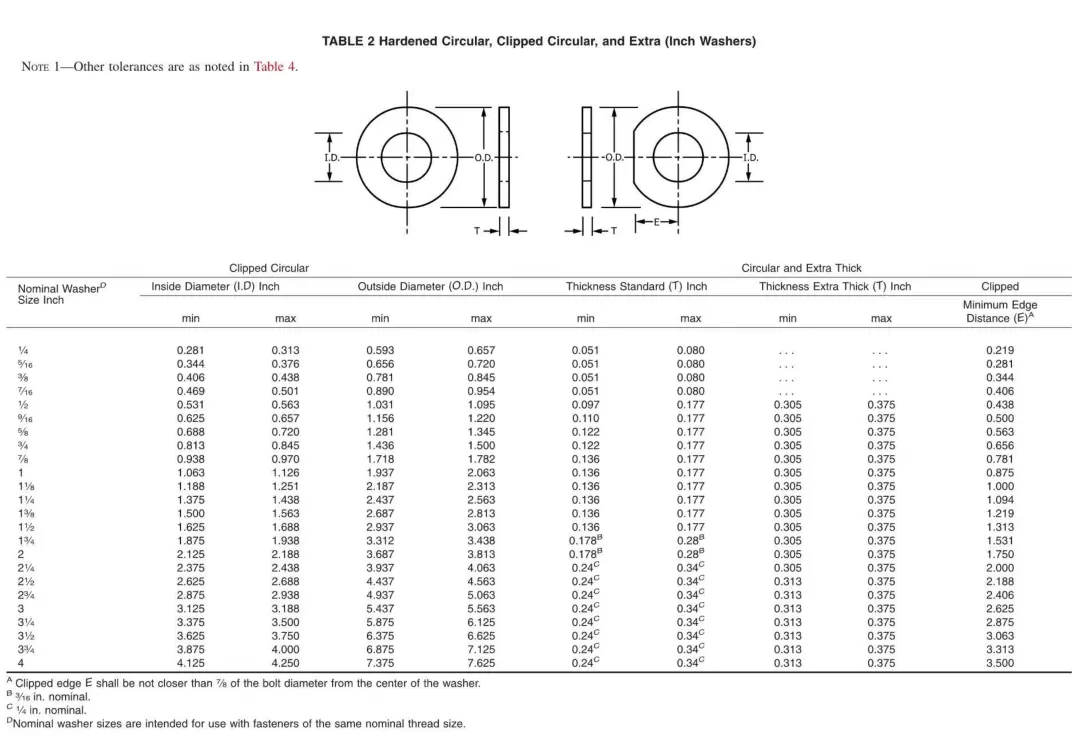
In the United States, the governing specification for standard flat washers is ASTM F844. This standard covers the requirements for unhardened steel washers used in general applications. It is crucial to note that ASTM F844 washers are not intended for use in structural bolting assemblies where hardened washers are specified (like ASTM F436).
ASTM F844 outlines specific dimensions for:
· Inside Diameter (ID): Must be large enough to fit over the bolt thread without binding.
· Outside Diameter (OD): Must be wide enough to provide adequate bearing surface.
· Thickness: Varies based on the nominal size of the washer.
The standard allows for certain tolerances in thickness and flatness, acknowledging that these are commercial quality washers rather than precision-machined aerospace components.
DIN 125 and ISO 7089: The Metric Standard
For projects in Europe, Asia, or other regions utilizing the metric system, DIN 125 (and its international counterpart ISO 7089) is the benchmark. These standards define the form A (normal series) and form B (large series) washers. Similar to the ASTM standard, DIN 125 washers made of steel (often grade 100HV or 140HV) are designed for general purpose use. They provide a standardized interface that ensures compatibility with metric hex bolts and nuts, facilitating smooth international trade and construction.
Surface Treatments and Corrosion Resistance
A common misconception is that mild steel is unsuitable for outdoor use due to rust. While raw mild steel will oxidize when exposed to moisture, the industry has developed robust surface treatment methods that extend the life of plain washers significantly, making them viable for a wide range of environments.
· Hot-Dip Galvanizing (HDG): This process involves immersing the washer in molten zinc. It provides a thick, durable coating that offers excellent corrosion resistance. HDG washers are ideal for outdoor structural projects, fencing, and utility poles. Note that the galvanizing process adds thickness, so the nuts must be tapped oversize to fit.
· Zinc Plating (Electroplating): For indoor applications or mild environments, zinc plating offers a thinner, aesthetically pleasing finish. It provides basic protection against rust and is often cheaper than hot-dip galvanizing.
· Geomet and Dacromet: These are advanced coating systems that provide high corrosion resistance without the hydrogen embrittlement risks associated with some electroplating processes. They are increasingly popular in the automotive and wind energy sectors.
By pairing mild steel washers with the appropriate surface treatment, engineers can achieve a service life comparable to more expensive materials at a lower cost.
Installation Best Practices and Common Pitfalls
Even the highest quality washer can fail if installed incorrectly. Ensuring the longevity of a structural connection requires adherence to best practices during assembly.
1. Orientation: While plain washers are generally symmetrical, some may have a slight radius or burr from the manufacturing process. Best practice dictates placing the smoother side against the surface being protected to prevent scratching or marring.
2. Torque Tensioning: When tightening a bolt, the washer rotates. If the washer is not flat or has inconsistent thickness, it can introduce variation in the clamp load. Ensuring that the washers meet the flatness tolerances of ASTM F844 is vital for consistent torque-tension relationships.
3. Avoiding Galvanic Corrosion: When using galvanized mild steel washers with stainless steel bolts, or vice versa, engineers must be aware of galvanic corrosion. The potential difference between the two metals can accelerate the corrosion of the more anodic metal (usually the zinc or the steel). In such cases, isolation or material matching is required.
Comparative Analysis: Mild Steel vs. Hardened and Stainless Washers
To make an informed specification, one must understand where mild steel fits in the hierarchy of washer materials.
|
Feature |
Mild Steel (ASTM F844) |
Hardened Steel (ASTM F436) |
Stainless Steel (18-8/316) |
|
Hardness |
Low (Unhardened) |
High (Rockwell C 33-38) |
Medium (Work Hardenable) |
|
Primary Use |
General spacing, load distribution |
Structural bolting, high tension |
Corrosive environments |
|
Cost |
Low |
Moderate |
High |
|
Ductility |
High |
Low |
Medium |
As the table illustrates, mild steel plain washers occupy the "general purpose" niche. They are not designed to bridge oversized holes in structural steel connections (which requires the hardness of F436), nor are they intended for submersion in seawater (which requires Stainless 316). However, for the vast majority of indoor construction, machinery assembly, and protected outdoor structures, they offer the optimal balance of performance and price.
Contact QinSteel for Expert Fastener Solutions
Navigating the complexities of fastener specifications requires a partner who understands both the metallurgy and the market. At QinSteel, we specialize in providing high-quality fastening solutions tailored to your project's specific needs. Whether you require standard ASTM F844 washers for a general construction project or specialized components with unique coatings, our team is equipped to deliver.
We understand that supply chain reliability is just as important as product quality. Our rigorous quality control processes ensure that every washer meets the necessary dimensional and mechanical tolerances. Do not compromise your project's integrity or your budget. Reach out to us today to discuss your requirements and discover how we can optimize your procurement strategy.
Email: info@sxqinsteel.com
FAQs
Q1: Can mild steel plain washers be used with high-strength structural bolts?
A1: Generally, no. High-strength structural bolts (such as ASTM A325 or A490) require hardened washers (ASTM F436) to prevent the washer from deforming under the high pre-load tension. Mild steel washers are too soft and may crush, leading to a loss of clamp load. However, mild steel washers can be used under the nut if the nut bears on a sloped surface, provided the washer is hardened, or for general non-structural spacing.
Q2: What is the difference between ASTM F844 Type 1 and Type 3?
A2: ASTM F844 Type 1 washers are made from carbon steel, which is the standard "mild steel" discussed in this article. Type 3 washers are made from weathering steel, which has enhanced atmospheric corrosion resistance similar to ASTM A242 or A588 structural steel. Type 3 is used when the washer needs to match the corrosion resistance of weathering steel structures.
Q3: How do I prevent rust on mild steel washers for outdoor use?
A3: The most effective method is Hot-Dip Galvanizing (HDG). This coats the washer in a thick layer of zinc that protects the underlying steel from moisture and oxidation. For less aggressive environments, zinc plating or painting can also provide adequate protection.
Q4: Are mild steel washers magnetic?
A4: Yes, because mild steel is a ferrous metal (containing iron), it is magnetic. This distinguishes it from austenitic stainless steels (like the 300 series), which are generally non-magnetic or only slightly magnetic.
References
1. ASTM International. (2023). ASTM F844-23: Standard Specification for Washers, Steel, Plain (Flat), Unhardened for General Use. West Conshohocken, PA: ASTM International.
2. DIN Deutsches Institut für Normung e.V. (2019). DIN 125-1: Flat washers - Form A - Product grade C. Berlin: Beuth Verlag.
3. Bickford, J. H. (1995). An Introduction to the Design and Behavior of Bolted Joints. Marcel Dekker, Inc.
4. Industrial Fasteners Institute (IFI). (2020). Inch Fastener Standards. 8th Edition. Cleveland, Ohio.
5. European Committee for Standardization (CEN). (2015). EN ISO 7089: Plain washers — Nominal series — Product grade A. Brussels: CEN.


Learn about our latest products and discounts through SMS or email