- English
- French
- German
- Portuguese
- Spanish
- Russian
- Japanese
- Korean
- Arabic
- Greek
- German
- Turkish
- Italian
- Danish
- Romanian
- Indonesian
- Czech
- Afrikaans
- Swedish
- Polish
- Basque
- Catalan
- Esperanto
- Hindi
- Lao
- Albanian
- Amharic
- Armenian
- Azerbaijani
- Belarusian
- Bengali
- Bosnian
- Bulgarian
- Cebuano
- Chichewa
- Corsican
- Croatian
- Dutch
- Estonian
- Filipino
- Finnish
- Frisian
- Galician
- Georgian
- Gujarati
- Haitian
- Hausa
- Hawaiian
- Hebrew
- Hmong
- Hungarian
- Icelandic
- Igbo
- Javanese
- Kannada
- Kazakh
- Khmer
- Kurdish
- Kyrgyz
- Latin
- Latvian
- Lithuanian
- Luxembou..
- Macedonian
- Malagasy
- Malay
- Malayalam
- Maltese
- Maori
- Marathi
- Mongolian
- Burmese
- Nepali
- Norwegian
- Pashto
- Persian
- Punjabi
- Serbian
- Sesotho
- Sinhala
- Slovak
- Slovenian
- Somali
- Samoan
- Scots Gaelic
- Shona
- Sindhi
- Sundanese
- Swahili
- Tajik
- Tamil
- Telugu
- Thai
- Ukrainian
- Urdu
- Uzbek
- Vietnamese
- Welsh
- Xhosa
- Yiddish
- Yoruba
- Zulu
Butt Weld 90 Degree Elbow in Power Plant Boiler Piping
Jul 24 2026
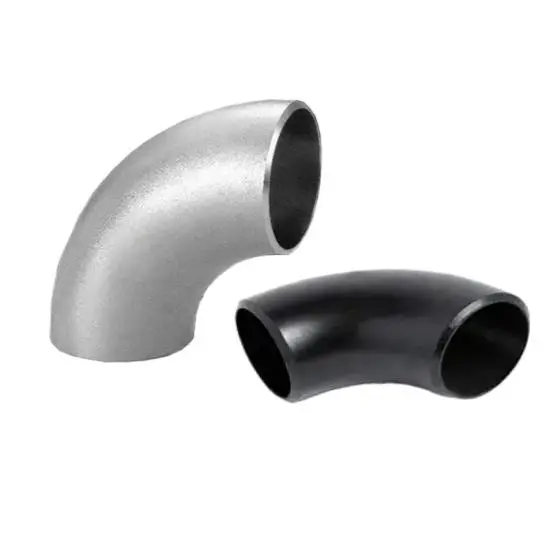
Boiler pipe systems in power plants need to be very reliable and precise, which is why butt weld 90 degree elbows are so important in these dangerous places. These special pipe fittings change the flow of fluid at a 90-degree angle while keeping the structure strong in harsh conditions like temperatures above 1000°F and pressures of up to 6000 PSI. Butt weld configurations, unlike threaded or socket weld connections, allow seamless integration with neighboring piping. This gets rid of stress concentration points that could hurt system performance. The welded joint makes a continuous wall thickness that fits the connecting pipe. This makes sure that the flow is optimal and that the system lasts as long as possible in demanding boiler applications where system failure is not an option.

Understanding Butt Weld 90 Degree Elbows in Boiler Piping
Critical Role in Power Plant Operations
Butt weld pipe fittings are the most important part of modern power plant infrastructure. They allow for complicated routing configurations while keeping the mechanical properties of the whole network of pipes. These parts move steam, condensate, and cooling fluids through precise angle changes without causing turbulence or pressure drops that could make the system work less efficiently as a whole. The threaded or flanged connections often have weak spots, but the seamless welded connection doesn't have those. This makes them essential for situations where reliability directly affects power production capacity.
Power plant boilers are harsh environments that put pipe parts through thermal cycling, mechanical stress, and corrosive conditions that quickly wear out cheap fittings. The parts of modern power plants need to be able to handle these problems and keep their leak-proof purity for the whole time they are working, which is usually decades.
Material Specifications and Standards
Materials used in power plants need to be able to handle harsh working conditions while still staying stable in size and not rusting. For general boiler uses, carbon steel types like A234 WPB offer great strength-to-cost ratios. Alloy steels like A234 WP5, WP9, and WP11, on the other hand, perform better at high temperatures for superheater and reheater circuits. Different types of stainless steel, such as A403 WP304 and WP316, are better at resisting rust in systems that handle condensate, where changes in the water's chemistry could speed up the breakdown of materials.
Advanced duplex stainless steels, like UNS 31803; combine the strength of ferritic steels with the resistance to corrosion of austenitic grades. This makes them perfect for power plants near the coast, where salt air exposure causes extra environmental problems. In cooling water systems where temperatures below zero need higher impact toughness, low-temperature carbon steel A420 WPL6 is used for specific tasks.
Dimensional Standards and Pressure Ratings
ASME B16.9 sets the size requirements for welding fittings that are used in pressure piping systems. This makes sure that products from different makers and projects can work together. This standard lists schedules for wall thickness that go from Schedule 5S to XXS. Each number corresponds to a different level of pressure control. Standard wall elbows (Schedule 40) can usually handle pressures of up to 1500 PSI. Extra strong elbows (Schedule 80) can handle 3000 PSI, which is common in high-pressure boiler systems.
Long radius 90° butt weld elbows have a centerline radius that is 1.5 times the standard pipe diameter. This makes the flow transitions smoother, which lowers the risk of erosion and pressure loss. Short radius options with centerline radii equal to the pipe diameter have small installation footprints that are useful when room is limited and routing options are limited. However, they may cause higher pressure drops in high-velocity applications.
Installation and Welding of Butt Weld 90 Degree Elbows in Power Plants
Preparation and Alignment Procedures
Carefully cleaning both the elbow and connecting pipe surfaces is the first step to a successful fitting. To get square faces perpendicular to the central axis, pipe ends need to be precisely cut. This is usually done with mechanical cutting methods instead of torch cutting, which creates heat-affected zones. The beveled sides need to be machined at certain angles, usually 37.5 degrees from the pipe face. This makes a total angle of 75 degrees when the two pieces are put together to be welded.
In power plants, where even small misalignments can cause stress concentrations that cause early failure under thermal cycle conditions, proper alignment is very important. During the first few passes of welding, internal lineup clamps keep the pieces precisely in place, and external fixings stop them from moving during the thermal expansion and contraction cycles that are normal to the process.
Welding Techniques and Quality Assurance
Gas tungsten arc welding (GTAW) gives you the accuracy and control you need for root pass applications. It makes clean, full-penetration joints that don't have any inclusion flaws that could affect their long-term dependability. Usually, shielded metal arc welding (SMAW) or gas metal arc welding (GMAW) are used to finish the fill and cap passes. This adds thickness to the wall and keeps the joint's mechanical features.
The preheat temperatures needed depend on the type of material and the thickness of the section. For example, carbon steel uses usually need 300–400°F preheat temperatures to stop hydrogen cracking and make sure the right fusion characteristics. Post-weld heat treatment is now required for many uses in power plants. It reduces leftover stresses and makes the microstructure more reliable for long-term use.
Advantages in High-Stress Applications
It is especially clear in power plants where thermal expansion causes a lot of mechanical stress on the pipes that butt welded joints are better because of how they are designed. Because the wall thickness is continuous, there are no stress concentration places like there are in socket-welded or threaded connections. Instead, loads are spread evenly around the whole joint. This quality is very important in situations where the temperature changes a lot, because frequent stretching and shrinking can cause fatigue cracks to form at geometric breaks.
The best leak protection is reached by using a full-penetration weld joint, which makes a uniform connection between the parts. Welded joints, on the other hand, don't need gaskets or thread compound to seal. Instead, they provide lasting connections that don't need to be tightened or maintained on a regular basis.
Comparison and Decision-Making for Selecting 90 Degree Elbows
Butt Weld versus Socket Weld Performance Analysis
When deciding between butt weld and socket weld configurations, there are a lot of performance factors to think about, such as the required long-term reliability, installation difficulty, and pressure rating. Because socket weld fittings are easier to install and don't need to be fitted perfectly, they are good for smaller diameter applications where access to welding operations is limited by room. However, the socket design creates a natural crack that can trap contaminants and act as a starting point for rust in places where controlling the water chemistry is hard.
These worries are taken away by butt-welded connections, which have a smooth inside profile that fits the joining pipe bore perfectly. This trait is especially useful in power plants, where flow-accelerated corrosion can quickly wear away material from places where there is turbulence or stalling. Butt-welded fittings usually pay for themselves in the long run by requiring less upkeep and lasting longer, even though they cost more to install at first.
Material Selection Considerations
For general boiler uses that work below 800°F, carbon steel grades have good mechanical properties and are a cost-effective choice. Their thermal expansion characteristics are very similar to those of carbon steel pipe systems. Stainless steel alternatives are better at resisting corrosion, but they need to be carefully thought out because of changes in thermal expansion that can cause extra stresses where they meet carbon steel parts.
When choosing between seamless and 90° butt weld elbow manufacturing, the original cost and performance needs must be weighed. Seamless elbows are better for the toughest jobs because they don't have the weak spot that longitudinal seam welds can make. On the other hand, soldered elbows made to ASTM standards work well enough for many power plant uses and are cheaper, which can be a big deal for big projects.
Schedule Rating Impact on Performance
The choice of wall thickness has a direct effect on both the ability to handle pressure and the ability to fight thermal stress. Heavier schedules offer larger safety margins, but they come at the cost of higher material costs and more thermal mass. The Schedule 40 wall thickness is strong enough for many boiler uses while minimizing thermal stress during the start-up and shut-down processes. When there is a lot of pressure, extra-heavy wall plans are needed, but they may need extra thought to account for thermal expansion.
The amount of heat treatment needed depends a lot on how thick the wall is. Sections with thick walls need more complex thermal processing to make sure that the qualities are the same all the way through. This factor affects both the initial cost and the delivery plan, especially for custom sizes that need different heat treatment cycles.
Procurement and Supply Chain Insights for Butt Weld 90 Degree Elbows
Supplier Verification and Compliance Standards
To successfully buy important boiler parts, you need to carefully check the skills of the suppliers, such as their manufacturing facilities, quality systems, and ability to follow certification requirements. Companies with a good reputation keep their quality management systems up to date with ISO 9001 and other certifications, like ASME Section II material specifications and NACE MR0175 compliance for sour service uses.
Material traceability is very important in power plant uses where a broken part could cause long power outages and big financial losses. Quality suppliers offer full documentation packages that include material test results, dimensional inspection certificates, and records of non-destructive testing. This makes it possible to fully track the product from where the raw materials came from to where they are installed.
Custom Manufacturing and Bulk Ordering Benefits
CNC manufacturing lets exact creation of non-standard sizes that work best with certain boiler designs in terms of fit and performance. Custom solutions are often more cost-effective in the long run than trying to change standard parts during installation. This is especially true when many identical units are needed for a job. The perfection that can be reached with CNC forming makes sure that the wall thickness is evenly distributed and that the dimensions are correct. This has a direct effect on how well the welding goes and how long the product lasts.
Strategies for buying in bulk can cut unit costs by a lot while still making sure that the product is available during planned maintenance periods, when sticking to the schedule becomes very important. Suppliers with a lot of experience keep strategic stock levels of common sizes and can speed up production for urgent needs that come up during unplanned maintenance.
Global Supply Chain Considerations
When you buy something from another country, you need to carefully consider the details involved, such as the packaging options that will keep the parts safe during long shipping times. When you package things properly, in wooden crates that have been treated to resist corrosion, you keep them from getting damaged by water and mechanical impact before you place them.
Different countries have different export paperwork needs, but most of the time, they need material certificates, dimensional inspection reports, and statements that the goods meet the requirements of any pressure vessel codes that apply. Exporters with a lot of experience know what these rules are and can put together full documentation packages that make customs clearance and project plans go more quickly.
QinSteel: Your Trusted Partner for Premium Butt Weld 90 Degree Elbows
Manufacturing Excellence and Quality Commitment
With two decades of specialized experience in pipe fitting manufacturing, QinSteel has established itself as a leading provider of high-performance 90° butt weld elbows designed specifically for demanding power plant applications. Our state-of-the-art manufacturing facility utilizes advanced CNC forming equipment that maintains dimensional tolerances within ±0.5mm, ensuring precise fit-up and optimal welding conditions for every component we produce.
Our comprehensive product range spans sizes from 1/2" through 48" diameter, accommodating everything from small auxiliary systems to main steam lines in the largest power generation facilities. Both seamless and welded construction methods are available, with material options including carbon steel grades A234 WPB through WP22, low-temperature carbon steel A420 WPL6, and stainless steel variants from A403 WP304 through super duplex UNS 32750.
Customization Capabilities and Technical Support
Understanding that power plant projects often require specialized solutions, QinSteel offers comprehensive OEM and ODM services that can deliver custom configurations within 15-20 days of order confirmation. Our experienced engineering team collaborates directly with project engineers to optimize component specifications for specific applications, whether addressing unique space constraints, special material requirements, or non-standard pressure ratings.
Sample services enable thorough evaluation before committing to large-scale procurement, allowing quality assurance teams to verify compliance with project specifications and welding procedure qualifications. This approach has proven particularly valuable for international projects where local inspection and verification might otherwise create schedule delays.
Global Reach and Customer Support
QinSteel maintains strategic inventory levels exceeding 50,000 units across our most popular configurations, enabling immediate shipment for urgent requirements without compromising quality or documentation completeness. Our robust packaging protocols using wooden crates with specialized anti-corrosion treatments ensure component integrity during global transit, while comprehensive export documentation facilitates smooth customs processing in destination countries.
Direct factory pricing eliminates distributor markups that can significantly impact project costs, typically providing savings of 25% or more compared to regional suppliers. Combined with our commitment to on-time delivery and technical support throughout the procurement and installation process, QinSteel offers the reliability and value that power plant projects demand.
Conclusion
Selecting the right butt weld 90 degree elbow for power plant boiler piping requires careful consideration of multiple factors including material compatibility, pressure ratings, and long-term reliability requirements. The seamless integration and superior mechanical properties of butt welded connections make them the preferred choice for demanding applications where system reliability directly impacts power generation capacity. Proper installation techniques and quality assurance procedures ensure these components deliver decades of trouble-free service in the challenging environment of modern power plants.
FAQ
What are the key differences between butt weld and socket weld elbows for boiler applications?
Butt weld elbows provide superior performance through their seamless internal profile that eliminates crevices where corrosion could initiate, while socket weld alternatives offer simpler installation but create potential stagnation areas that may accumulate contaminants in power plant water systems.
Which material grades are most suitable for high-temperature boiler piping?
A234 WP11 and WP22 alloy steel grades offer excellent high-temperature strength for superheater applications, while A403 WP316 stainless steel provides superior corrosion resistance in condensate systems where water chemistry variations create challenging conditions.
Can custom-sized elbows be manufactured for specialized power plant projects?
Advanced CNC manufacturing capabilities enable fabrication of non-standard sizes with precise dimensional control, typically delivered within 15-20 days for urgent project requirements while maintaining full compliance with ASME B16.9 specifications.
Partner with QinSteel for Reliable Butt Weld 90 Degree Elbow Solutions
QinSteel stands ready to support your power plant projects with precision-engineered butt weld 90 degree elbows that deliver uncompromising reliability and performance. As a trusted butt weld 90 degree elbow supplier, we combine advanced manufacturing capabilities with comprehensive quality assurance to ensure every component meets the demanding requirements of modern power generation facilities. Contact our technical team at info@sxqinsteel.com to discuss your specific requirements and discover how our expertise can enhance your boiler system reliability while optimizing project costs and delivery schedules.

References
American Society of Mechanical Engineers. ASME B16.9-2018: Factory-Made Wrought Buttwelding Fittings. New York: ASME Press, 2018.
Harvey, John F. Theory and Design of Pressure Vessels. 2nd ed. New York: Van Nostrand Reinhold Company, 1985.
Mohitpour, M., H. Golshan, and A. Murray. Pipeline Design & Construction: A Practical Approach. 3rd ed. New York: ASME Press, 2007.
Nayyar, Mohinder L., ed. Piping Handbook. 8th ed. New York: McGraw-Hill Education, 2019.
Singh, Karan P. Mechanical Engineer's Handbook: Power Plant Engineering. Academic Press, 2001.
Escoe, A. Keith. Piping and Pipeline Assessment Guide. Gulf Professional Publishing, 2006.
Learn about our latest products and discounts through SMS or email