- English
- French
- German
- Portuguese
- Spanish
- Russian
- Japanese
- Korean
- Arabic
- Greek
- German
- Turkish
- Italian
- Danish
- Romanian
- Indonesian
- Czech
- Afrikaans
- Swedish
- Polish
- Basque
- Catalan
- Esperanto
- Hindi
- Lao
- Albanian
- Amharic
- Armenian
- Azerbaijani
- Belarusian
- Bengali
- Bosnian
- Bulgarian
- Cebuano
- Chichewa
- Corsican
- Croatian
- Dutch
- Estonian
- Filipino
- Finnish
- Frisian
- Galician
- Georgian
- Gujarati
- Haitian
- Hausa
- Hawaiian
- Hebrew
- Hmong
- Hungarian
- Icelandic
- Igbo
- Javanese
- Kannada
- Kazakh
- Khmer
- Kurdish
- Kyrgyz
- Latin
- Latvian
- Lithuanian
- Luxembou..
- Macedonian
- Malagasy
- Malay
- Malayalam
- Maltese
- Maori
- Marathi
- Mongolian
- Burmese
- Nepali
- Norwegian
- Pashto
- Persian
- Punjabi
- Serbian
- Sesotho
- Sinhala
- Slovak
- Slovenian
- Somali
- Samoan
- Scots Gaelic
- Shona
- Sindhi
- Sundanese
- Swahili
- Tajik
- Tamil
- Telugu
- Thai
- Ukrainian
- Urdu
- Uzbek
- Vietnamese
- Welsh
- Xhosa
- Yiddish
- Yoruba
- Zulu
Common Applications of MSS SP 95 Swage Nipples in Piping Systems
Jul 27 2026
Swage nipples MSS SP 95 are important parts of modern pipe systems because they let pipes of different diameters join without any problems. The Manufacturers Standardization Society specs were used to make these precision-engineered fittings, which work very well in a wide range of industrial settings, such as oil and gas, petrochemical processing, power generation, and water treatment facilities. The swage nipple MSS SP 95 standard makes sure that the dimensions are correct, the material is intact, and the pressure resistance is high enough to meet the strict needs of the industry for safe and effective pipeline operations.
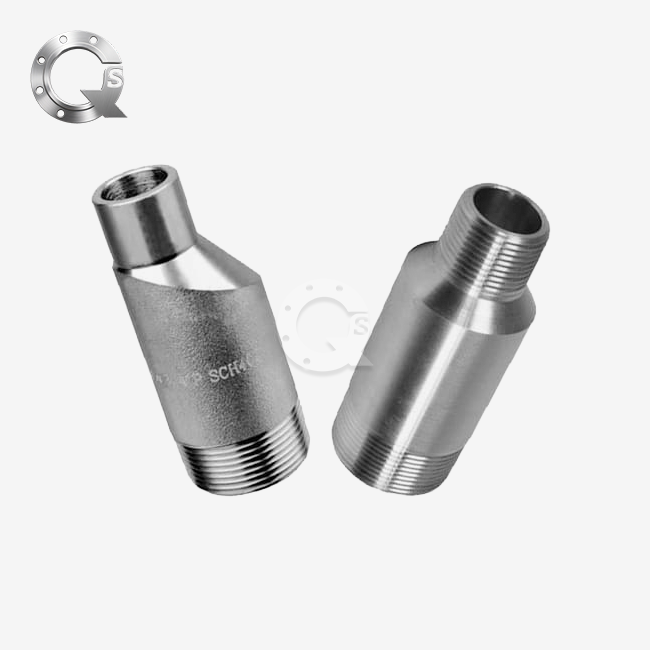
Understanding MSS SP 95 Swage Nipples
The MSS SP 95 design has detailed rules for swage nipples that are used in industrial pipe networks. It sets exact requirements for the types of materials used, the tolerances for size, and the ways they are made. This standard includes both concentric and eccentric configurations. Eccentric designs provide even flow, while important applications need to avoid air pockets forming with concentric designs.
Technical Specifications and Standard Requirements
MSS SP 95 swage nipples have specific material standards that make sure they can work in environments with high pressure and corrosion. The standard lists materials that can be used, such as ASTM A105 carbon steel for general uses, A350 LF2 for low-temperature work, and A312 TP 304/316 stainless steel grades for better resistance to corrosion. These materials are put through a lot of tests to make sure they meet set standards for mechanical properties, chemical composition, and dimensional accuracy.
The standard calls for precise control of dimensions across all sizes, from 1/8" to 12" (DN 6 to DN 300), and for wall thicknesses ranging from Schedule 5S to XXS. Manufacturing tolerances make sure that standard pipe parts fit together correctly and that the structure stays strong even when it's under a lot of stress. Butt-welded end connections make the joint stronger and get rid of the leak paths that can happen with threaded connections.
Distinguishing MSS SP 95 from Related Standards
Understanding the differences between MSS SP 95 and related standards like MSS SP 97 helps people who work in buying choose the right parts for each job. MSS SP 97 is about integrally reinforced forged branch outlet fittings that are made for different connection shapes, while MSS SP 95 is about swage nipples that have standard size requirements. These technical differences have a direct effect on how the system is designed, how it is installed, and how it needs to be maintained over time.
The MSS SP 95 standard works with the ASME B16.11 standards for forged steel fittings, making sure that the fittings' dimensions and pressure-temperature ratings are compatible with larger piping system needs. This integration makes it easier to create systems that work well together and follow all the rules and codes that are used in different industries.
Common Applications of MSS SP 95 Swage Nipples in Industrial Piping
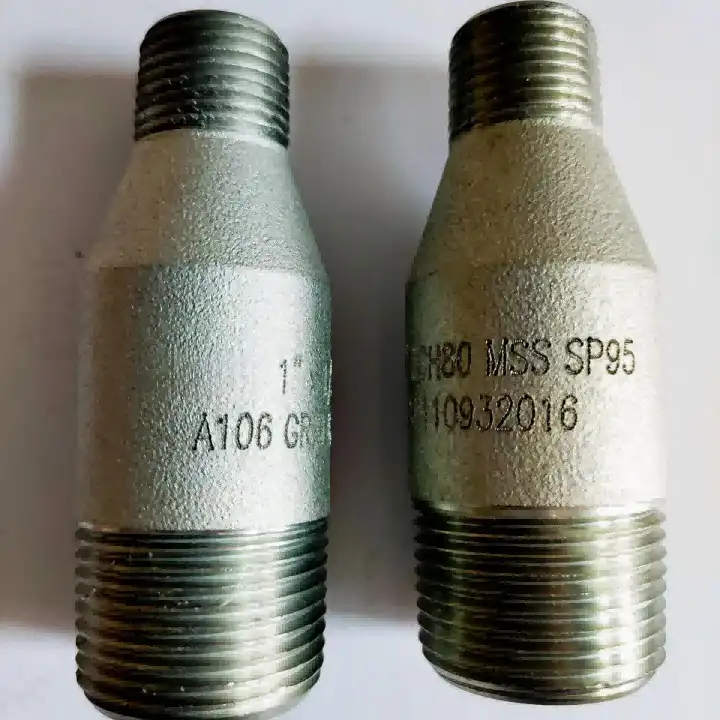
MSS SP 95 swage nipples are used by industrial facilities in a variety of industries to solve particular piping problems and keep systems reliable and running efficiently. These parts work great in situations where they need to change diameters, improve flow, and make sure connections are safe while under tough service conditions.
Oil and Gas Industry Applications
Swage nipples are used a lot in upstream, midstream, and downstream oil and gas activities to change the diameter of pipelines and connect equipment. In upstream drilling, eccentric swage nipples keep gas from building up in pump suction lines. This keeps fluid flow steady and keeps expensive equipment from being damaged by cavitation. Concentric configurations improve the flow characteristics in transmission pipes, where lowering turbulence has a direct effect on how well they work and how much energy they use.
For use in refineries, swage nipples must be made from special metals that can handle harsh temperatures and hydrocarbons that are corrosive. Stainless steel types A312 TP 316 and duplex steel S31803 are better at withstanding sulfur compounds and chlorides that are common in processing plants. These materials keep the structure strong and don't allow stress corrosion, splitting, or pitting corrosion, which can make the system less safe.
Petrochemical and Chemical Processing
Chemical processing plants need swage nipples that are very resistant to chemicals and have very accurate measurements so they can work with harsh media and keep the purity of the products they make. Eccentric swage nipples make it possible for all the water to drain out of the bottom lines of the reactor. This keeps the product from getting dirty and lets the reactor be cleaned completely between production runs. The smooth inside shape cuts down on dead spots where contaminants could gather, which meets strict quality control standards.
Because of the ammonia and temperature changes that happen in fertilizer production areas, they pose special problems. The A350 LF2 material used to make MSS SP 95 swage nipples works reliably at low temperatures and doesn't break down when exposed to ammonia. These parts go through special heat treatment methods to improve their grain structure and mechanical properties so they last longer in tough environments.
Power Generation and Energy Systems
Swage nipples are used in boiler feedwater systems, steam distribution networks, and cooling water circuits in thermal power plants. Their reliable performance has a direct effect on the safety and operation of the plant. For use in high-temperature situations, materials must be able to keep their power and resistance to corrosion even when they are under constant thermal stress. Chromium-molybdenum alloy swage nipples have great qualities at high temperatures and don't oxidize or change shape over time.
To meet regulatory standards, nuclear facilities need parts that can be fully traced back to their original materials and come with a lot of paperwork to back it up. For nuclear uses, MSS SP 95 swage nipples go through extra tests like impact testing at service temperatures, grain size verification, and full chemical analysis to make sure that the material qualities stay the same across the whole cross-section of the part.
Comparing MSS SP 95 Swage Nipples for Procurement Decisions
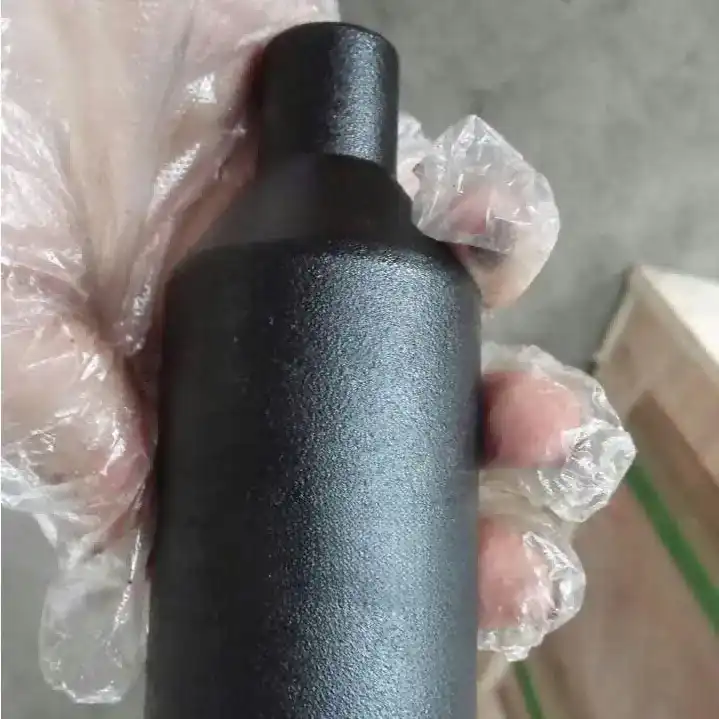
To get the best performance and value from swage nipples, you need to carefully consider the properties of the materials, the quality of the manufacturing, and the supplier's skills. When you know how the choice of material affects how it works, you can make smart choices that balance the cost at the start with the reliability and upkeep needs over time.
Material Selection Considerations
Carbon steel swage nipples made from A105 material are a cheap way to handle applications with mild pressure and temperature in places that don't corrode. These parts are very easy to weld and have good mechanical properties that make them perfect for use in water systems, compressed air systems, and other industrial settings. Carbon steel materials are cheap, which makes them a good choice for buying in bulk while still performing well enough for the right work conditions.
Some types of stainless steel, like A312 TP 304 and 316 grades, are better at resisting corrosion. They cost more at first, but they last longer and can be used in harsh settings. The chromium and nickel in these metals create an oxide layer that protects against most organic and inorganic chemicals used in manufacturing. When looking at the total cost of ownership, stainless steel swage nipples are often a better deal because they need less upkeep and can be replaced more often.
Specialty alloys, like duplex stainless steel S31803 (SS32205), take the best qualities of carbon steel and austenitic stainless steels and mix them. These materials work really well in places with a lot of salt and under a lot of pressure, where regular stainless steels might crack from stress corrosion. Because the material is stronger, the walls can be made thinner, which could make up for the higher cost of the material by making it lighter and easier to handle.
Supplier Evaluation and Quality Assurance
Reliable suppliers show consistent quality by having thorough methods for managing quality and clear ways of making things. Certification to ISO 9001 standards shows that quality control is done in a planned way, and other certifications, like API and NACE, show that the company has the right skills for important jobs. Material test results, dimensional inspection records, and documentation of pressure tests are all objective ways to show that a component meets the requirements.
The quality and consistency of a product are directly affected by the manufacturing capabilities that include heat treatment facilities, accurate machining, and testing tools. When compared to operations that depend on outside subcontractors, suppliers who do their own material processing, machining, and testing have better control over quality and delivery schedules. Modern inspection methods, like 3D scanning and automatic dimensional verification, make sure that all production runs are accurate in terms of dimensions.
Choosing the Right MSS SP 95 Swage Nipple: Expert Criteria
When professionals choose MSS SP 95 swage nipples, they have to carefully look at technical needs, quality standards, and the supplier's abilities to make sure they get the best performance and dependability. By knowing the important selection factors, buying teams can choose the right parts without over-specifying, which drives up costs needlessly.
Pressure and Temperature Ratings
According to the ASME B31.3 piping code, the pressure values for MSS SP 95 swage nipples depend on the properties of the material, the thickness of the wall, and the temperature at which they are used. A105 carbon steel parts can usually withstand up to 6000 PSI of pressure at room temperature. However, these values drop as the temperature rises because the material becomes less strong. To make sure there are enough safety margins, the highest operating pressure and temperature combinations must be carefully studied before they are used.
It's important to think about more than just strength loss when it comes to temperature. Thermal shock and effects on growth are also things to think about. When temperatures rise unevenly, eccentric swage nipples may experience extra stress at connection places. This means that support and restraint systems need to be carefully thought out. When choosing materials, you need to think about both the constant working temperature and the possible excursion conditions during startup, shutdown, and upset.
Dimensional Compatibility and Installation Requirements
Accurate measurements make sure that the new system fits properly with existing pipe systems and cut down on the time needed for installation and the preparation work needed for welding. MSS SP 95 sets tolerances for sizes that allow enough room for welding while still keeping the structure strong under operational loads. To make sure that the goods are available and the prices are fair, the specs for purchases should include standard sizes instead of custom ones.
Accessibility for welding, inspection needs, and the possibility of future repair activities are all things to think about when installing something. To work right, eccentric swage nipples need to be oriented correctly. For drainage purposes, the flat side should be at the bottom, and for air removal, it should be at the top. Clear installation directions and the right markings make sure that the job is done right and avoid costly rework or performance problems.
Certification and Documentation Requirements
Full documentation packages help with following the rules and allow tracking throughout the lives of a component. Material test reports confirm the chemical make-up and mechanical properties of a substance, while dimensional inspection reports confirm that the substance meets the standards of a specification. Pressure testing papers show that the structure is solid and doesn't leak under certain test conditions.
You can be sure that the reliability and performance of a component is good with quality assurance documentation like manufacturing processes, inspection records, and final acceptance testing. Third-party inspection and testing by reputable agencies gives suppliers' promises more weight and provides independent proof that they meet all standards and requirements.
QinSteel: Your Trusted Partner for MSS SP 95 Swage Nipple Solutions
QinSteel has been making precision-engineered swage nipples for over 20 years, and they are used in a wide range of difficult industrial settings around the world. Our GMP-certified factories use cutting-edge production technology and strict quality control systems to make parts that are better than MSS SP 95 requirements and also offer great value and dependability.
Comprehensive Product Range and Customization Capabilities
Through our large product collection, we offer both concentric and eccentric swage nipple configurations in all sizes, from 1/8" to 12" (DN 6 to DN 300). For general uses, standard materials come in carbon steel grades A105, A106 B, and A53 GR.B. For harsh service needs, stainless steel grades A312 TP 304/316 and duplex steel S31803 are available. Specialized materials, like A350 LF2 for low-temperature uses and A234 WPB for high-temperature use, make sure that the best performance is achieved in all kinds of working conditions.
There are different wall thickness choices from Schedule 5S to XXS to meet the needs of different types of pressure systems, from low-pressure utility systems to high-pressure process applications with a rating of up to 10,000 PSI. Precision butt-welding of the ends makes sure that the changes are smooth and that the connections are strong, while reducing pressure drop and turbulence. Our responsive engineering and production skills allow us to deliver custom configurations within 72 hours. These can include non-standard sizes, materials, and end preparations.
Quality Assurance and Global Supply Chain Excellence
Every swage nipple MSS SP 95 goes through a lot of tests, such as laser scanning to check the dimensions, hydrostatic pressure testing at 1.5 times the maximum pressure, and spectrometry to figure out what the material is made of. Our quality management system keeps its ISO 9001 certification, and other certifications, like API and NACE, confirm that it can handle important tasks in oil and gas service.
Customers in the Americas, Africa, Europe, and Southeast Asia can count on reliable service thanks to global logistics. Our large inventory of more than 500,000 standard parts allows us to ship within 48 hours for pressing needs, and faster shipping through DHL and FedEx gets packages anywhere in the world within 5 to 7 days. Secure packaging, such as crates that absorb shock and are treated to resist corrosion, keeps parts safe while they're being shipped, and ISO-compliant labeling makes it easier to keep track of and handle inventory.
Conclusion
MSS SP 95 swage nipples represent essential components in modern industrial piping systems, providing reliable diameter transitions and flow optimization across diverse applications. From upstream oil and gas operations to chemical processing facilities and power generation plants, these precision-engineered components deliver consistent performance under demanding service conditions. Understanding the technical requirements, material options, and quality standards enables procurement professionals to select optimal components that balance performance requirements with cost considerations while ensuring long-term reliability and safety.
FAQ
What distinguishes MSS SP 95 from other MSS standards for pipe fittings?
MSS SP 95 specifically addresses swage nipples used for diameter transitions in piping systems, focusing on dimensional accuracy and material requirements for both concentric and eccentric configurations. Unlike MSS SP 97 which covers integrally reinforced forged branch outlet fittings, MSS SP 95 emphasizes straight-through flow characteristics and standardized end connections for seamless integration with existing piping systems.
How do I ensure compatibility between MSS SP 95 swage nipples and existing installations?
Compatibility requires verification of dimensional standards, pressure ratings, and material specifications against existing system requirements. MSS SP 95 components coordinate with ASME B16.11 and ANSI standards for dimensional compatibility, while material selection must consider corrosion resistance and pressure-temperature ratings appropriate for service conditions. Consulting with qualified engineers ensures proper specification and installation procedures.
What factors influence pricing and delivery timelines for MSS SP 95 swage nipples?
Material selection significantly impacts pricing, with carbon steel options providing lowest cost while specialty alloys command premium pricing due to raw material costs and specialized processing requirements. Order quantity, customization requirements, and delivery location affect both pricing and lead times. Standard configurations from established inventory typically ship within 48 hours, while custom specifications may require 2-4 weeks depending on complexity and material availability.https://www.sxqsteel.com/forged-steel-fitting/swage-nipple-mss-sp-95
Partner with QinSteel for Premium MSS SP 95 Swage Nipple Solutions
QinSteel stands ready to support your industrial piping requirements with our comprehensive range of MSS SP 95 certified swage nipples backed by two decades of manufacturing excellence. Our experienced technical team provides expert consultation on material selection, dimensional specifications, and application requirements to ensure optimal component performance. Contact us at info@sxqinsteel.com to discuss your specific needs and request detailed quotations from a trusted swage nipple MSS SP 95 manufacturer committed to quality, reliability, and customer satisfaction.
References
Manufacturers Standardization Society of the Valve and Fittings Industry. "Standard Practice SP-95: Swage Nipples." MSS Standards, 2019.
American Society of Mechanical Engineers. "Process Piping Code ASME B31.3." ASME International, 2020.
ASTM International. "Standard Specification for Carbon Steel Forgings for Piping Applications - ASTM A105." Annual Book of Standards, 2021.
American Petroleum Institute. "Specification for Line Pipe - API 5L." API Standards, 2018.
National Association of Corrosion Engineers. "Material Requirements for Sulfide Stress Cracking Resistant Metallic Materials - NACE MR0175." NACE International, 2020.
International Organization for Standardization. "Quality Management Systems Requirements - ISO 9001." ISO Standards Catalogue, 2015.
Learn about our latest products and discounts through SMS or email