- English
- French
- German
- Portuguese
- Spanish
- Russian
- Japanese
- Korean
- Arabic
- Greek
- German
- Turkish
- Italian
- Danish
- Romanian
- Indonesian
- Czech
- Afrikaans
- Swedish
- Polish
- Basque
- Catalan
- Esperanto
- Hindi
- Lao
- Albanian
- Amharic
- Armenian
- Azerbaijani
- Belarusian
- Bengali
- Bosnian
- Bulgarian
- Cebuano
- Chichewa
- Corsican
- Croatian
- Dutch
- Estonian
- Filipino
- Finnish
- Frisian
- Galician
- Georgian
- Gujarati
- Haitian
- Hausa
- Hawaiian
- Hebrew
- Hmong
- Hungarian
- Icelandic
- Igbo
- Javanese
- Kannada
- Kazakh
- Khmer
- Kurdish
- Kyrgyz
- Latin
- Latvian
- Lithuanian
- Luxembou..
- Macedonian
- Malagasy
- Malay
- Malayalam
- Maltese
- Maori
- Marathi
- Mongolian
- Burmese
- Nepali
- Norwegian
- Pashto
- Persian
- Punjabi
- Serbian
- Sesotho
- Sinhala
- Slovak
- Slovenian
- Somali
- Samoan
- Scots Gaelic
- Shona
- Sindhi
- Sundanese
- Swahili
- Tajik
- Tamil
- Telugu
- Thai
- Ukrainian
- Urdu
- Uzbek
- Vietnamese
- Welsh
- Xhosa
- Yiddish
- Yoruba
- Zulu
ASTM A105 Steel Flanges: Chemical Composition & Mechanical Properties
Jan 8 2026
ASTM A105 steel flanges are the building blocks of industrial pipe systems. They work very well in oil and gas, petroleum, and power generation settings. The exact chemical makeup of these carbon steel flanges gives them the best tensile strength, resistance to rust, and longevity in harsh working conditions. When purchasing flanges for important infrastructure projects that need to meet ASME B16.5 compliance and API certification standards, procurement professionals can make smart choices by learning about the specific chemical elements, such as the carbon content, which must be no more than 0.35%, the manganese levels, and the controlled phosphorus and sulfur percentages.

Understanding ASTM A105 Steel Flanges: Chemical Composition and Standards
It is the chemicals that make up carbon steel flanges that determine how well they work in harsh industrial settings. The ASTM A105 standard spells out specific chemical requirements that have a direct effect on the dependability and operating life of the flange.
Chemical Element Breakdown and Performance Impact
When carbon steel flanges are made according to ASTM A105 standards, they have carefully controlled chemical elements that decide their mechanical traits and how well they work in certain situations. The highest amount of carbon in these flanges is 0.35%. This makes them strong and easy to weld, making them perfect for high-pressure pipe systems in industrial and refinery plants. Manganese content, which is usually between 0.60% and 1.05%, makes the metal harder and stronger while keeping its flexibility, which is important for forged joint uses.
The highest amounts of phosphorus and sulfur are tightly controlled at 0.035% each. This gives the material great resistance to contact and stops it from becoming rigid, which could weaken the flange under heat cycle conditions. Keeping the silicon level between 0.15% and 0.40% helps remove oxygen during the making process, which raises the quality of the material as a whole.
ASME and ASTM Compliance Standards
Following the ASME B16.5 standards makes sure that the dimensions and pressure values are correct, which is important for safe pipeline operations. For welding neck, slip-on, socket welding, blind, threaded, and lapped joint designs, these guidelines spell out exact requirements. They cover pressure classes from 150lb to 2500lb. ASME measurement standards and ASTM A105 material requirements work together to make a complete framework for choosing and buying flanges.
Heat treatment rules that improve grain structure and mechanical qualities must be followed during manufacturing. Normalizing temperatures between 1600°F and 1700°F keeps the microstructure constant, and controlling the rate of cooling keeps leftover pressures from building up that could affect performance in the long run.
Material Identification and Traceability Protocols
To correctly identify cast carbon steel flanges, you need a lot of paperwork, like Material Test Certificates (MTCs) that include full chemical analysis and mechanical property proof. For full tracking along the entire supply chain, each flange must have fixed marks that show the material grade, pressure class, maker name, and heat number.
As part of quality assurance procedures, handheld spectrometers are used for Positive Material Identification (PMI) tests to check the chemical makeup on-site. This process of checking is especially helpful for buying teams working on big projects where the safety and performance standards are directly affected by the validity of materials.
Mechanical Properties and Performance Metrics of ASTM A105 Flanges
The dynamic properties of carbon steel flanges show what kinds of industry uses and working situations they are best for. By knowing these qualities, engineers and buying workers can choose the right flanges for the job while also making sure they are safe to use.
Strength and Durability Characteristics
Tensile strength standards for ASTM A105 steel flanges material are between 70,000 and 95,000 psi. This makes it a great choice for high-pressure uses where load-bearing is important. Minimum yield strength requirements of 36,000 psi ensure enough safety gaps when working normally, while also stopping lasting damage during pressure tests or operational events.
The material's elongation qualities, which must be at least 22% in 2 inches, show that it can absorb energy and avoid rigid failure modes. For example, this flexibility is very important in places where heat expands and contracts, like steam systems in power plants or hot process lines in chemical plants.
Specifications for hardness, usually kept below 187 HB (Brinell), make sure that the part can be machined for changes in the field and has enough wear protection for long-term use. These mechanical qualities come from controlled casting methods and heat treatment techniques that make the grain structure better and get rid of internal stresses.
Temperature and Pressure Performance Ratings
ASME B16.5 rules say that carbon steel flanges can only be used at temperatures between -20°F and 650°F. This range covers most industry uses in oil and gas handling. Pressure values go down as temperature goes up, so it's important to be careful when designing the system to make sure there are enough safety factors.
To get the material to work well in bad service settings with lots of hydrogen sulfide, it needs to be heat treated to reduce its stiffness and relieve stress. To keep sulfur stress cracks from happening and to make sure long-term dependability in upstream oil and gas uses, strict obedience to NACE MR0175 standards is needed.
Manufacturing Process Impact on Performance
Forging methods have a big effect on the final mechanical qualities of carbon steel flanges by improving internal strength and optimizing grain flow. Hot forging methods, which are done at temperatures between 2100°F and 2250°F, make sure that the material flows properly and get rid of any holes inside that could make it harder to control pressure.
Heat treatment procedures, which include leveling and stress release operations, improve the consistency of the microstructure and get rid of any remaining stress. When pipes in factories are loaded and unloaded many times, these processes have a direct effect on their impact resistance, wear life, and general dependability.
During the production process, quality control measures include ultrasound testing to make sure the inside is sound, liquid penetrant testing to look for flaws on the outside, and using coordinate measuring machines to check the sizes. These checking procedures make sure that the quality of the products is always the same and that they meet foreign standards.
Comparison & Decision-Making: ASTM A105 Flanges vs. Alternatives
Choosing the right flange materials takes a thorough analysis of the materials' performance, cost, and the needs of the particular application. In different industries, carbon steel flanges fight with different options, each of which has its own benefits based on the working conditions.
ASTM A105 vs. ASTM A350 LF2 Material Comparison
As required by impact tests, ASTM A350 LF2 flanges work better at low temperatures than normal A105 material. They can be used at temperatures as low as -50°F. Controlled chemistry and required Charpy V-notch tests give A350 LF2 its higher toughness, which makes it suitable for cryogenic uses and installations in cold climates.
Cost factors make ASTM A105 flanges the better choice for normal temperature uses. This is because A350 LF2 material costs 15-20% more to buy because it needs to be processed in more ways. But the better performance makes the extra cost worth it for uses where brittleness at low temperatures could cause problems.
Chemical changes include less carbon in A350 LF2 material and fixed grain size standards that make it more resistant to impact. These changes make the tensile strength a little lower but the cutting hardness a lot higher at lower temperatures.
Carbon Steel vs. Stainless Steel Performance Analysis
Stainless steel flanges, especially A182 F304 and F316 types, are better at resisting rust in harsh chemical conditions, but they cost a lot more to make. When compared to carbon steel options, the price difference is often more than 300%, so each application needs a careful cost-benefit study.
Stainless steel's corrosion resistance is most noticeable in chloride-containing locations, high-purity water systems, and food preparation settings where worries about product contamination are more important than cost. However, carbon steel flanges with the right protective coats often offer good rust protection at a lot lower cost.
Different materials for ASTM A105 steel flanges behave very differently at high temperatures. Stainless steel stays strong at high temperatures, while carbon steel weakens. For uses above 650°F, stainless steel or alloy steel are usually better options, even though they cost more to buy.
ASME B16.5 Standards Integration
Dimensional uniformity under ASME B16.5 makes sure that parts made by different companies can be used interchangeably and makes it easier to keep track of supplies for upkeep work. All material grades will have the same bolt circle sizes, seal fitting areas, and pressure-temperature values after this uniformity.
International support of ASME standards makes it easier to buy things around the world and cuts down on the need for engineering reviews for projects that involve more than one country. A lot of companies are using these standards, which makes the seller market competitive. This helps buying groups get better prices and more options.
Strategic Procurement Guide for ASTM A105 Steel Flanges
To make good purchasing plans for carbon steel flanges, you need to know how the market works, what suppliers can do, and how to handle logistics that could affect the project's success. Creating all-encompassing buying strategies guarantees the best cost management while keeping quality and service performance at a high level.
Pricing Factors and Market Dynamics
The price of a flange depends on its size, pressure class, and surface finish standards. Because they are harder to make, bigger diameter and higher-pressure parts cost more. Standard sizes from 1/2" to 12" can usually keep their prices low by being made in big quantities, but sizes up to 60" need special making skills.
Some things to think about when geographically sourcing are the need for domestic content for certain projects, the cost of shipping heavy parts, and how changes in currency affect international suppliers. North American manufacturers often offer advantages for projects that need to meet ASTM standards and need quick delivery, while international suppliers may offer cost advantages for large-volume needs with longer lead times.
Certification requirements have a big effect on prices; extra testing and paperwork raises base material costs by 5–10%. However, these certifications are necessary for important uses where material traceability and performance verification are important, so the extra money is well spent.
Supplier Evaluation and Selection Criteria
When evaluating a manufacturer, you need to look at their quality management systems, the scope of their certifications, and their production capabilities in relation to the needs of the project. ISO 9001 certification provides basic quality assurance, while industry-specific certifications like API Q1 or PED compliance show that they have the right skills for tough jobs.
When you look at a supplier's production capacity, you should look at their forging, machining, and testing facilities to make sure that the quality of their products is always the same. Suppliers that do all of these things in-house usually have better quality control and shorter lead times than businesses that use a lot of different subcontractors.
For complicated projects that need engineering help, custom designs, or advice that is specific to the application, technical support becomes very important. Suppliers with experienced technical teams can give helpful advice during the design phase and fix problems that come up during installation or commissioning.
Logistics and Supply Chain Management
To plan for lead times, you need to know about standard production schedules. Standard configurations usually take between 6 and 12 weeks, while custom designs or large sizes can take between 12 and 16 weeks. Rush orders can be accommodated with higher prices, but planning ahead ensures the best cost management and delivery performance.
Minimum order quantities for ASTM A105 steel flanges depend on the manufacturer and the configuration of the product. Standard sizes are usually available in single-piece quantities, but specialty items may need minimum orders of 5–10 pieces. Knowing these requirements helps you plan your inventory better and find ways to save money.
Export rules and paperwork needs affect international sourcing choices, especially for projects in regulated industries or countries with strict import rules. Working with suppliers who are experienced in international trade makes sure that the right paperwork is done and that all the rules are followed.
QinSteel: Your Trusted ASTM A105 Steel Flanges Partner
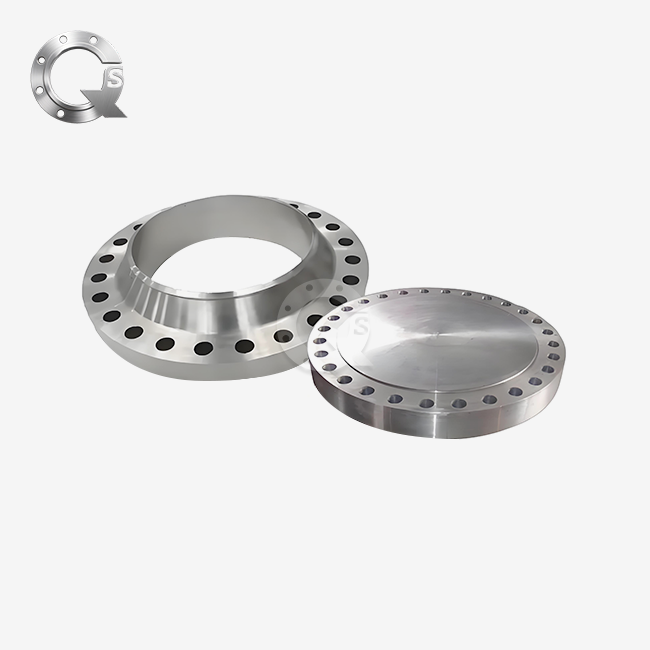
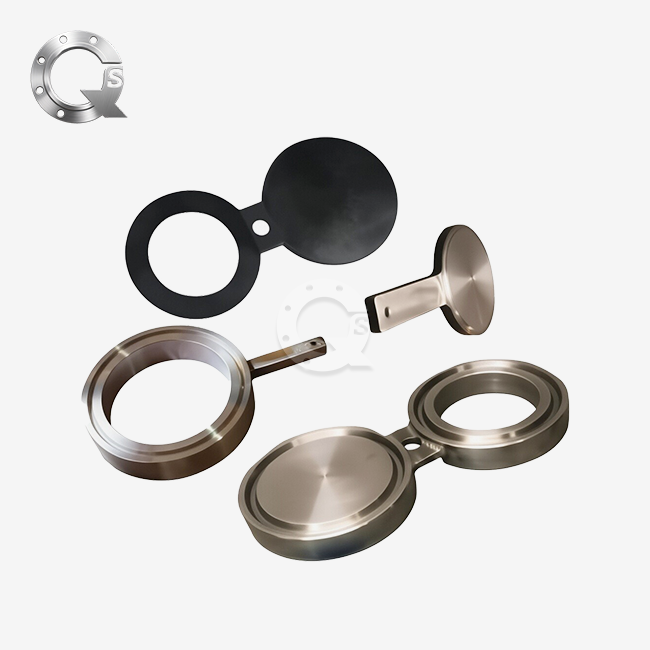
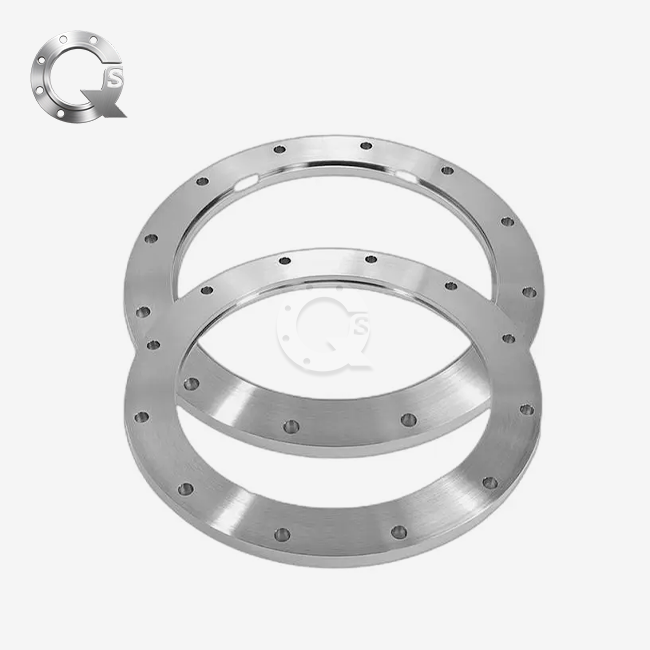
As a leading manufacturer and global supplier of high-quality carbon steel flanges, Xi'an QinSteel Trading Co., Ltd. provides the global market with a wide range of product solutions that are specifically designed to meet the needs of different industries. Our manufacturing capabilities cover all flange types, such as welding neck, slip-on, socket welding, blind, threaded, lapped, spectacle blind, and orifice configurations.
Comprehensive Product Range and Customization Services
Our manufacturing experience includes sizes from 1/2" to 60" (DN15-DN1500) and pressure ratings from 150lb to 2500lb, so we can cover almost any industrial application. We offer different thickness options, from Sch5s to XXS, to meet specific design needs, and we offer different flange facing options, such as RF, FF, RTJ, M&F, and T&G, to meet different sealing and installation needs.
This wide range of materials goes beyond the standard ASTM A105 and includes premium alloys like A182 F304, F316, F51, F53, and F55 for specific corrosion resistance needs, as well as A350 LF2 for low-temperature service and A36 for structural applications. This means that complex projects with a lot of different service conditions can be bought from a single source.
Customization services for OEM/ODM projects meet specific needs with engineered solutions created with the help of our technical team. Within 10 to 15 days, custom bore sizes, special facings, and changed dimensions can be made, meeting tight project deadlines while maintaining quality standards.
Quality Assurance and International Certifications
As part of our dedication to quality excellence, we use strict testing methods such as Charpy impact testing, ultrasonic inspection, hardness verification, and hydrostatic pressure testing. Each flange also goes through a full set of quality control steps that make sure it meets ASME B16.5, API 6A, PED 2014/68/EU, and ISO 9001 standards.
Material traceability includes full documentation, such as Material Test Certificates that include heat numbers, chemical analyses, and verifications of mechanical properties. Positive Material Identification testing using advanced spectrometric equipment makes sure that chemical compositions are correct, and non-destructive examinations like liquid penetrant and radiographic testing get rid of concerns about defects.
Pre-certification for major international markets like the GCC (Qatar CQC), the EU (PED), and ASEAN regions speeds up the procurement process and cuts down on the time it takes to approve projects. These certifications show that we understand global compliance requirements and are committed to international quality standards.
Conclusion
For demanding industrial uses in the oil and gas, petrochemical, and power generation sectors, ASTM A105 steel flanges are a reliable and cost-effective solution. The carefully controlled chemical composition and mechanical properties ensure optimal performance under high-pressure and elevated temperature conditions while maintaining excellent value compared to premium alloy alternatives. Knowing the technical specifications, performance characteristics, and procurement considerations helps you make decisions that improve operational performance and project economics. With the right supplier selection and quality verification protocols, these flanges provide long-term reliability that supports critical infrastructure operations around the world.
FAQs
What kinds of jobs do ASTM A105 steel flanges work best for?
Carbon steel flanges work great in high-pressure piping systems in oil and gas refineries, petrochemical plants, power plants, and water treatment infrastructure. They can handle temperatures from -20°F to 650°F and pressures up to 2500lb, which makes them perfect for steam systems, process piping, and pipeline connections where moderate corrosion resistance meets tough mechanical needs.
How can I be sure of the chemistry make-up and mechanical properties?
Material verification needs a lot of paperwork, like Material Test Certificates with full chemical analyses and mechanical property test results. Positive Material Identification testing with portable spectrometers is used for on-site verification to confirm chemical composition, and hardness testing and dimensional inspection make sure that the material meets ASME B16.5 requirements. Reliable suppliers provide full traceability with heat numbers and certification paperwork.
What affects the price and wait time of ASTM A105 flanges?
Prices are based on the size of the flange, the pressure class, the surface finish requirements, and the certification needs. Larger diameters and higher pressure ratings come with higher prices. Lead times are usually between 6 and 12 weeks for standard configurations and 12 to 16 weeks for custom designs. Prices and delivery times are also affected by market conditions, the cost of raw materials, and how much capacity is being used in the factory.
Which ASTM A105 flanges are better than those made of stainless steel?
While stainless steel is better at resisting corrosion, carbon steel flanges work just as well and cost a lot less—often 300% less than stainless alternatives. Carbon steel flanges are the best choice for applications where the temperature and corrosion resistance of ASTM A105 material are enough. Stainless steel is only needed when harsh chemical environments or high temperatures make carbon steel inadequate.
What kinds of safety standards should I ask providers to give me?
Some important certifications are ISO 9001 for quality management systems, ASME B16.5 compliance for dimensional standards, and PED certification for European markets. Certifications that are specific to an industry, like API Q1, show that the company has certain skills. Material certifications, like MTCs with chemical analysis and mechanical testing, give companies the technical information they need. For important applications, third-party inspection services can add to the quality assurance.
Partner with QinSteel for Premium ASTM A105 Steel Flanges
QinSteel offers great value for money because we can make all kinds of ASTM A105 steel flanges. We have 20 years of international experience working with clients in the Americas, Africa, Europe, and Southeast Asia. We have a ready-to-ship inventory of 15,000+ flanges, so we can get them to you right away for urgent projects, and our advanced CNC machining guarantees ±0.01mm dimensional accuracy for leak-proof performance. Contact our technical team at info@sxqinsteel.com to talk about your needs and see why leading companies choose QinSteel as their trusted carbon steel flange supplier for important industrial applications.

References
ASTM International. "ASTM A105/A105M Standard Specification for Carbon Steel Forgings for Piping Applications." Annual Book of ASTM Standards, Volume 01.01.
American Society of Mechanical Engineers. "ASME B16.5 Pipe Flanges and Flanged Fittings: NPS 1/2 through NPS 24 Metric/Inch Standard." ASME Press.
Boyer, Howard E. "Atlas of Stress-Strain Curves, Second Edition." ASM International Materials Properties Database.
Davis, Joseph R. "Carbon and Alloy Steels: Heat Treatment and Properties." ASM International Handbook Committee.
National Association of Corrosion Engineers. "NACE MR0175/ISO 15156 Petroleum and Natural Gas Industries Materials for Use in H2S-Containing Environments." NACE International.
Pressure Equipment Directive Committee. "PED 2014/68/EU Compliance Guide for Pressure Equipment Manufacturing and Testing." European Commission Industrial Standards Publication.
Learn about our latest products and discounts through SMS or email