- English
- French
- German
- Portuguese
- Spanish
- Russian
- Japanese
- Korean
- Arabic
- Greek
- German
- Turkish
- Italian
- Danish
- Romanian
- Indonesian
- Czech
- Afrikaans
- Swedish
- Polish
- Basque
- Catalan
- Esperanto
- Hindi
- Lao
- Albanian
- Amharic
- Armenian
- Azerbaijani
- Belarusian
- Bengali
- Bosnian
- Bulgarian
- Cebuano
- Chichewa
- Corsican
- Croatian
- Dutch
- Estonian
- Filipino
- Finnish
- Frisian
- Galician
- Georgian
- Gujarati
- Haitian
- Hausa
- Hawaiian
- Hebrew
- Hmong
- Hungarian
- Icelandic
- Igbo
- Javanese
- Kannada
- Kazakh
- Khmer
- Kurdish
- Kyrgyz
- Latin
- Latvian
- Lithuanian
- Luxembou..
- Macedonian
- Malagasy
- Malay
- Malayalam
- Maltese
- Maori
- Marathi
- Mongolian
- Burmese
- Nepali
- Norwegian
- Pashto
- Persian
- Punjabi
- Serbian
- Sesotho
- Sinhala
- Slovak
- Slovenian
- Somali
- Samoan
- Scots Gaelic
- Shona
- Sindhi
- Sundanese
- Swahili
- Tajik
- Tamil
- Telugu
- Thai
- Ukrainian
- Urdu
- Uzbek
- Vietnamese
- Welsh
- Xhosa
- Yiddish
- Yoruba
- Zulu
ASME B16.11 Half Coupling vs Full Coupling: Key Differences
Jul 21 2026
Understanding the basic differences between ASME B16.11 half coupling and full coupling options is important for successful procurement when choosing piping parts for important industrial uses. Half couplings have one threaded or socket-weld end, which makes them perfect for branch connections and installing instruments. Full couplings, on the other hand, have two ends that can be connected to join two pipes of the same diameter. In the oil and gas, petrochemical, and power generation industries, these forged steel fittings are used for a variety of operational reasons. Half couplings are useful for saving room, while full couplings provide strong straight connections.

Understanding ASME B16.11 Half Couplings and Full Couplings
Design Characteristics and Material Composition
ASME B16.11 half couplings are threaded or socket weld joints that are designed to connect one end of a pipe system to another under high pressure. The stated pressure ratings for these small parts range from 3000LB to 9000LB, and they are usually used as branch connection points, instrument takeoffs, or repair fittings. The design with only one end makes good use of room and keeps the structure strong even in tough operational conditions.
In contrast, full couplings use two-ended connections to keep two pipe pieces engaged all the way through. On both ends of these fittings, there are internal threading or socket weld preparations that let you connect pipes in a straight line without having to change the width. The symmetrical design spreads stress loads evenly across the connection interface. This makes them good for main pipeline uses where flow lines need to stay uninterrupted.
Material Specifications and Standards Compliance
The choice of material is very important for connection performance in a variety of industrial settings. Carbon steel types like A105 and A105N are very strong and can be used for a wide range of tasks. Low-temperature service materials like A350 LF2 keep their toughness in freezing temperatures. There are types of high-yield steel, like A694 F65, that work better in sour gas settings where hydrogen sulfide corrosion is a big problem.
Different types of stainless steel, especially A182 F304 and F316 grades, are better at resisting corrosion in chemical processing and naval settings. These austenitic materials keep their mechanical features at temperatures ranging from -29°C to 538°C and can't be damaged by many corrosive substances. Manufacturing standards make sure that measurements are accurate within a range of ±0.5 mm, which helps with accurate fit-up during installation.
Key Differences Between Half Coupling and Full Coupling
Structural and Dimensional Distinctions
The main fundamental difference between these types of coupling is how the connections are set up and how the whole structure is shaped. Half couplings have one end that connects to another part and has either external threading or socket weld preparation. The back end is solid and supports and seals the connection. This uneven design makes a small profile that works well for installations with limited room and branch connection tasks.
Full couplings keep the layout symmetrical by making the connection preparations on both ends the same. This lets pipes connect to each other in straight lines. Due to the need for two ends, full couplings usually have a larger internal volume than half couplings. This changes the flow characteristics and pressure drop estimates used in system design.
Material Considerations and Performance Impact
Processes used in manufacturing have a big effect on how well both types of linking work. Forged building methods produce better grain structure and mechanical properties than cast alternatives. This is especially important for high-pressure uses that go beyond 6000LB service ratings. The forging process gets rid of holes in the material and makes it denser, which makes it more resistant to wear and better at holding pressure.
When it comes to surface finish, socket weld and threaded configurations have different needs. For socket weld preparations, exact bore dimensions and surface roughness standards are needed. Threaded connections need precise thread form and pitch tolerances to make sure they engage and close properly. These manufacturing factors have a direct effect on how to install, how often to maintain, and how reliable the service will be in the long run.
Functional Applications and Performance Analysis
There are big differences between half-coupling and full-coupling uses in the business world. B16.11 half couplings are great for connecting instruments, installing gauges, and branch takeoffs where there isn't much room for other fittings. The single-ended design makes installation easier and provides safe attachment points for monitoring tools and secondary piping systems.
Full couplings are mostly used for straight-line links that need strong joining methods that don't involve welding. These fittings meet the needs for thermal expansion, vibration resistance, and easy repair access that are common in systems with process pipes. Different types of couplings require different levels of installation difficulty. For example, half couplings need careful alignment and support, while full couplings need exact pipe preparation and threading.
How to Choose Between ASME B16.11 Half Coupling and Full Coupling?

Critical Selection Criteria for Industrial Applications
Different couplings are chosen based on their pressure grade needs. There are 3000LB, 6000LB, and 9000LB service classes to choose from. The running pressures of the system must stay within safe limits, which are usually found to be 25% of the hydrostatic test pressure for carbon steel materials. Conditions in the environment, such as changing temperatures, vibrations, and touch with corrosive media, affect the choice of material grade and connection type.
When thinking about size compatibility, nominal pipe sizes run from 1/8" to 4", and custom fabrication can go up to 6" diameters for certain uses. To make sure the system works right, the pipe wall thickness, thread engagement length, and socket weld depth must all match the system's standards.
Cost Analysis and Supplier Evaluation
Different types of couplings have different pricing systems that are based on the grades of materials, the difficulty of production, and the certification needs. Half couplings usually have lower unit prices because they use less material and are easier to make. On the other hand, specialized metals and exotic materials make all coupling configurations much more expensive.
Qualitative certification compliance, delivery history, and technical help abilities are some of the things that determine how reliable a supplier is. Reputable manufacturers keep their ISO 9001, PED, and NACE certifications up to date and provide mill test certificates and detailed paperwork for material traceability. When it comes to lead times, they range from 48 hours for normal inventory items to 15 to 30 days for custom OEM needs.
Quality Assurance and Compliance Standards
To tell the difference between OEM and aftermarket providers, you need to carefully look at how they control quality and make sure they follow certification rules. Original equipment makers usually have stricter controls over tolerances and more thorough testing protocols, such as procedures for verifying dimensions and testing under 100% hydrostatic pressure.
Through selective sourcing and inspection procedures, third-party suppliers may be able to offer lower prices while still meeting quality standards. When it comes to important service applications, where failure of a component can have very bad results, procurement professionals have to balance cost concerns with quality assurance needs.
Installation, Maintenance, and Best Practices
Proper Installation Procedures
A successful B16.11 half coupling assembly starts with properly preparing the pipe by cleaning, deburring, and checking the dimensions. For socket weld jobs, you need to precisely control the depth of the pipe placement and keep the gaps between the pieces clean so that the welding shrinkage and thermal expansion effects can be taken into account. Threaded connections need to be carefully watched to make sure the threads don't get too tight and cause stress concentration problems.
Installation torque requirements change based on the size, grade of the material, and design of the thread type. Different types of threads—NPT, BSPP, and BSPT—need different ways to contact and seal. The pipe thread compound you choose affects both how easy it is to install and how well it seals in the long term. Stress loads that can weaken joints over time can be avoided by making sure they are properly supported and aligned during installation.
Maintenance Protocols and Performance Monitoring
Routine inspection routines focus on looking for signs of corrosion, cracking, or leakage that could mean a part is breaking down. Ultrasonic thickness measurements help keep an eye on the rate of corrosion in harsh work environments, and regular pressure tests make sure that the structure stays strong while it's being used.
Some ways to stop corrosion are to make sure there is good drainage, use cathodic protection, and put on protective coatings when the setting calls for extra safety measures. To fix common problems, you have to carefully look at how the parts were installed, make sure they work with each other, and make sure the working conditions are in line with the manufacturer's instructions.
Xi'an QinSteel Trading Co., Ltd - Your Trusted Industrial Partner
Xi'an QinSteel Trading Co., Ltd stands as a leading manufacturer and trusted global supplier of ASME B16.11 half and full couplings, backed by 20 years of industry expertise serving clients across the Americas, Africa, Europe, and Southeast Asia. Our wide range of products includes both standard and custom-made couplings. We have strict quality certifications, such as ASME, ISO 9001, PED, and NACE standards, that make sure we meet foreign standards.
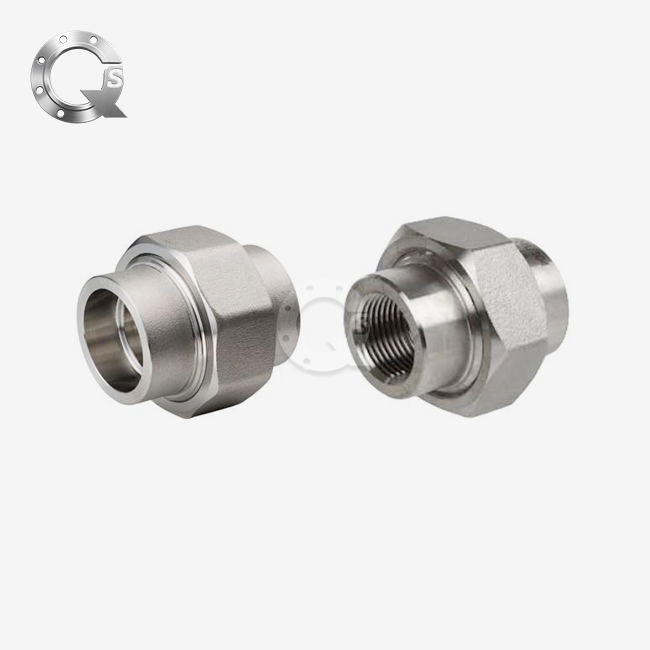
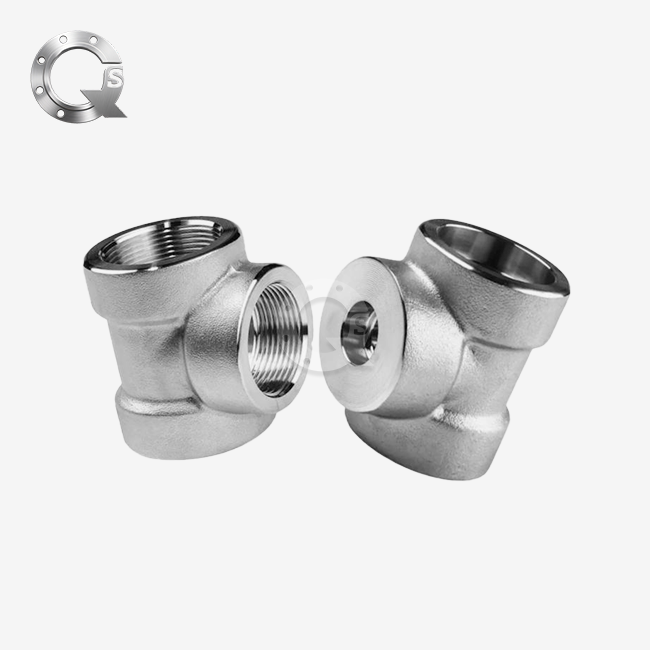
We have ASME B16.11 half couplings in stock that are socket weld and threaded, and they are made of carbon steel A105 and stainless steel A182 F304/316. Pressure ratings range from 3000LB to 9000LB for sizes ranging from 1/8" to 4", and custom fabrication is possible for alloys that aren't commonly used and sizes that aren't normal. For quality control, every part goes through a lot of steps, such as 100% hydrostatic testing, dimensional verification, and full material traceability paperwork.
Because we promise on-time delivery and personalized expert support, we are a valuable partner in industrial procurement in a wide range of fields, such as oil and gas, petrochemicals, power generation, and marine engineering. Customer service teams are dedicated to giving each customer personalized advice on choosing materials, application engineering, and the needs of their unique projects. Samples of our goods can be used to check their quality, which builds trust in our manufacturing skills and product performance standards.
Conclusion
Selecting between ASME B16.11 half couplings and full couplings requires careful consideration of application requirements, installation constraints, and operational performance expectations. Half couplings provide space-efficient solutions for branch connections and instrumentation applications, while full couplings deliver robust straight-line joining capabilities for main pipeline systems. Material selection, pressure ratings, and environmental conditions significantly influence coupling performance and service life across diverse industrial applications.
Procurement success depends on understanding these fundamental differences while partnering with experienced suppliers who provide comprehensive technical support and quality assurance. Proper installation practices and maintenance protocols ensure optimal performance throughout the component lifecycle, supporting operational reliability and safety objectives in critical industrial systems.
FAQ
What pressure ratings are available for ASME B16.11 half couplings?
ASME B16.11 half couplings are manufactured in three primary pressure ratings: 3000LB, 6000LB, and 9000LB service classes. These ratings correspond to different wall thickness and material strength requirements, with 9000LB versions suitable for extreme pressure applications in oil & gas drilling and high-pressure processing systems.
Can half couplings substitute for full couplings in high-pressure applications?
Half couplings and full couplings serve different functional purposes and cannot be directly substituted. Half couplings provide single-end connections for branch applications, while full couplings enable straight-line pipe joining. The selection depends on specific installation requirements rather than pressure rating compatibility alone.
What are typical lead times for custom ASME B16.11 coupling orders?
Standard inventory items typically ship within 48 hours, while custom fabrication orders require 15-30 days depending on material specifications and quantity requirements. Exotic alloys and non-standard sizes may extend lead times due to raw material procurement and specialized manufacturing processes.
Which thread types are available for threaded coupling configurations?
Common thread types include NPT (National Pipe Thread), BSPP (British Standard Pipe Parallel), and BSPT (British Standard Pipe Tapered) configurations. Thread selection depends on system compatibility and regional standards requirements, with proper thread compound application essential for sealing performance.
Partner with QinSteel for Premium ASME B16.11 Half Coupling Solutions
QinSteel delivers exceptional value through our comprehensive ASME B16.11 half coupling inventory, featuring premium materials from A105 carbon steel to F316 stainless steel grades across all pressure ratings. Our experienced engineering team provides personalized consultation for material selection and application optimization, ensuring optimal performance for your specific operational requirements.
Connect with our technical specialists at info@sxqinsteel.com to discuss your project specifications and receive detailed quotations tailored to your procurement objectives. As a leading ASME B16.11 half coupling manufacturer, we offer sample evaluation services and custom engineering solutions that support successful project implementation.

References
American Society of Mechanical Engineers. "ASME B16.11 Forged Fittings, Socket-Welding and Threaded." ASME International, 2018.
Nayyar, Mohinder L. "Piping Handbook, Seventh Edition." McGraw-Hill Education, 2019.
American Petroleum Institute. "API 5L Specification for Line Pipe." API Publishing Services, 2020.
Smith, Philip R. "Industrial Piping and Equipment Estimation Manual." Gulf Professional Publishing, 2017.
International Organization for Standardization. "ISO 3183 Petroleum and Natural Gas Industries - Steel Pipe for Pipeline Transportation Systems." ISO Publications, 2019.
Escoe, Keith A. "Piping and Pipeline Assessment Guide." Gulf Professional Publishing, 2016.
Learn about our latest products and discounts through SMS or email