- English
- French
- German
- Portuguese
- Spanish
- Russian
- Japanese
- Korean
- Arabic
- Greek
- German
- Turkish
- Italian
- Danish
- Romanian
- Indonesian
- Czech
- Afrikaans
- Swedish
- Polish
- Basque
- Catalan
- Esperanto
- Hindi
- Lao
- Albanian
- Amharic
- Armenian
- Azerbaijani
- Belarusian
- Bengali
- Bosnian
- Bulgarian
- Cebuano
- Chichewa
- Corsican
- Croatian
- Dutch
- Estonian
- Filipino
- Finnish
- Frisian
- Galician
- Georgian
- Gujarati
- Haitian
- Hausa
- Hawaiian
- Hebrew
- Hmong
- Hungarian
- Icelandic
- Igbo
- Javanese
- Kannada
- Kazakh
- Khmer
- Kurdish
- Kyrgyz
- Latin
- Latvian
- Lithuanian
- Luxembou..
- Macedonian
- Malagasy
- Malay
- Malayalam
- Maltese
- Maori
- Marathi
- Mongolian
- Burmese
- Nepali
- Norwegian
- Pashto
- Persian
- Punjabi
- Serbian
- Sesotho
- Sinhala
- Slovak
- Slovenian
- Somali
- Samoan
- Scots Gaelic
- Shona
- Sindhi
- Sundanese
- Swahili
- Tajik
- Tamil
- Telugu
- Thai
- Ukrainian
- Urdu
- Uzbek
- Vietnamese
- Welsh
- Xhosa
- Yiddish
- Yoruba
- Zulu
What Surface Coatings Are Available for ASME B18.31.1M Bolt? Complete Industrial Guide
Aug 21 2026
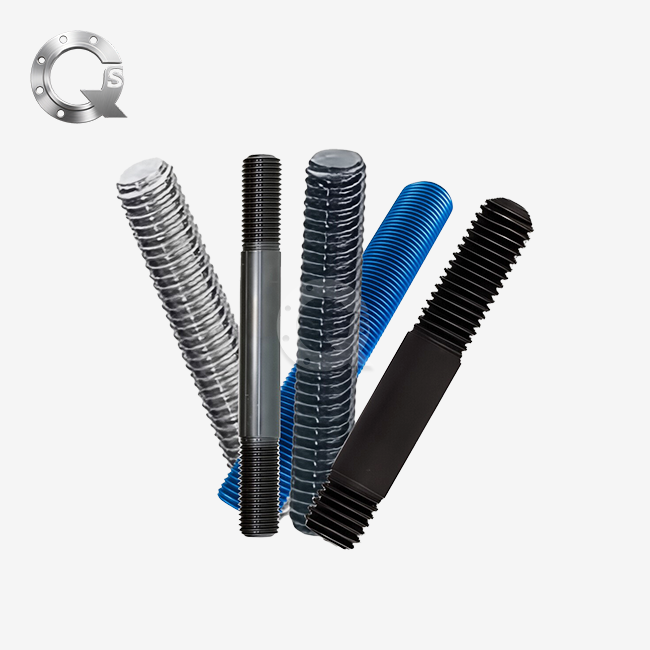
ASME B18.31.1M Bolt is a standardized metric fastener widely adopted in mechanical assembly, structural engineering, and industrial equipment manufacturing, with strict dimensional tolerance and mechanical performance specifications. Suitable for high-precision clamping and connection scenarios, this standard stud bolt requires customized surface coatings to adapt to different working environments, enhance durability, and extend service life. This article comprehensively introduces all applicable surface coating solutions for the fastener, analyzing their performance characteristics, applicable scenarios, and selection principles to provide reliable technical references for industrial procurement and engineering design.
Overview of ASME B18.31.1M Bolt Standard Characteristics
Before selecting surface treatments, it is necessary to clarify the basic attributes of this standard fastener. The ASME B18.31.1M specification governs metric continuous-thread studs and clamping-type stud bolts, defining unified thread dimensions, mechanical property grades, and structural tolerance requirements. Fasteners manufactured per this standard feature precise thread matching, stable load-bearing capacity, and excellent assembly compatibility, making them ideal for precision mechanical equipment, pipeline support systems, and industrial structural connections.
Different from ordinary non-standard bolts, standard metric stud bolts have stricter requirements for surface treatment uniformity and coating thickness. Excessively thick coatings may affect thread assembly accuracy, while uneven coating will lead to local corrosion and performance attenuation. Therefore, all surface coating processes for this type of fastener must meet the standard’s dimensional deviation requirements to ensure no impact on product assembly and mechanical performance.
Common Industrial Surface Coatings for Standard Metric Stud Bolts
Multiple mature surface treatment processes are applicable to standardized metric stud fasteners, covering conventional anti-rust coatings, high-corrosion-resistant coatings, and special functional coatings. Each coating has unique advantages in anti-corrosion performance, surface hardness, assembly adaptability and cost, matching different industrial working conditions and project budgets. Reasonable coating selection can effectively solve the problems of rusting, oxidation, wear and thread jamming of industrial bolts in long-term service.
Black Oxide Coating
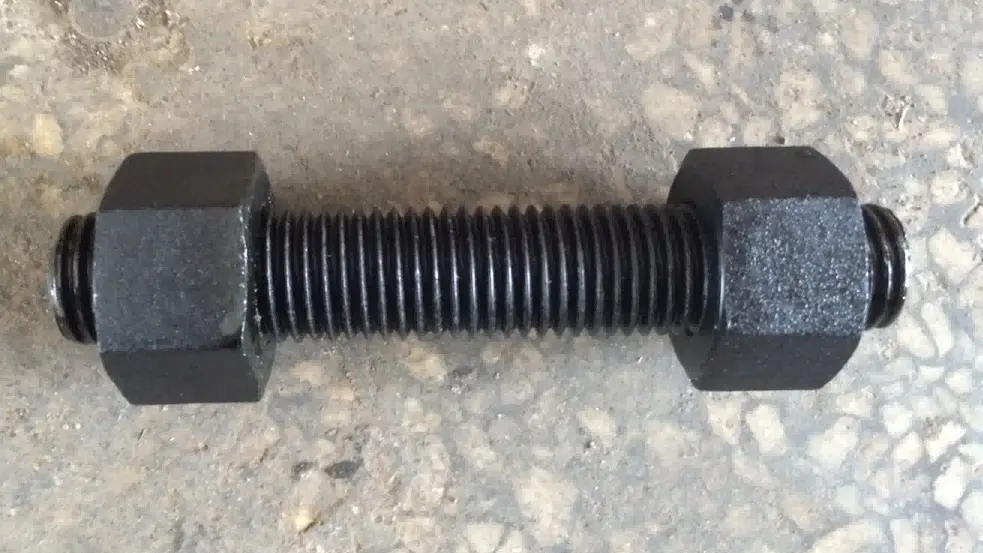
Black oxide finishing is one of the most economical and widely used surface treatments for this standard metric stud fastener. This chemical conversion treatment forms a uniform black oxide film on the steel surface through alkaline oxidation reaction, with ultra-thin coating thickness that will not change the bolt’s dimensional tolerance and thread matching accuracy. The processed surface has good lubricity, which can effectively avoid thread friction and jamming during installation and disassembly.
This coating is suitable for indoor dry working environments and conventional mechanical assembly scenarios. It provides basic anti-rust and anti-oxidation protection, improves the surface texture of the fastener, and will not cause coating peeling or deformation under normal temperature working conditions. With low processing cost and high production efficiency, black oxide treatment is the preferred conventional coating solution for general industrial fastener projects.
Zinc Plating Coating (Electro-galvanizing & Hot-dip Galvanizing)
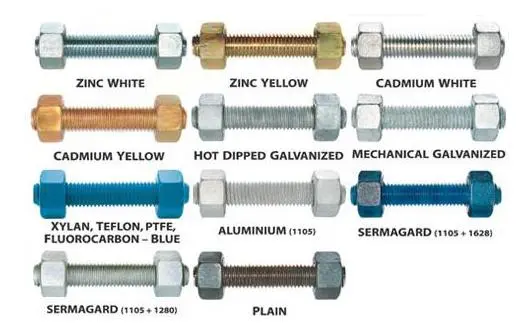
Zinc plating treatment is divided into electro-galvanizing and hot-dip galvanizing, two mainstream anti-corrosion processes suitable for standard metric stud bolts. Electro-galvanizing forms a thin and uniform zinc layer on the bolt surface, with smooth appearance and precise size control, perfectly adapting to the assembly precision requirements of standard fasteners. It can effectively resist mild atmospheric corrosion and indoor humid environments, meeting the daily anti-rust needs of most industrial equipment.
Hot-dip galvanizing features thicker zinc coating and stronger anti-corrosion performance. After high-temperature dipping treatment, the bolt surface forms a dense zinc-iron alloy layer, which can resist outdoor wind and rain erosion, weak acid and alkali corrosion, and is suitable for outdoor engineering, municipal facilities and marine atmospheric environments. It is worth noting that hot-dip galvanizing has a slightly larger coating thickness, which requires standardized thread finishing to ensure the normal assembly of this standard fastener.
Phosphate Coating
Phosphate treatment is a functional surface coating commonly used for high-strength industrial fasteners, including standard metric stud bolts. The phosphating film formed on the bolt surface has excellent adhesion and oil absorption, which can cooperate with anti-rust oil to form a composite protective layer, significantly improving the anti-rust and wear resistance of the fastener. The coating has no impact on the mechanical properties and dimensional accuracy of the bolt, with stable performance and strong environmental adaptability.
This coating is widely used in mechanical manufacturing, automobile industry and equipment assembly scenarios with frequent disassembly and vibration. It can reduce thread wear during repeated assembly, avoid fastener loosening caused by vibration, and maintain long-term structural stability of equipment connection. With moderate cost and reliable performance, phosphating treatment is a cost-effective intermediate anti-corrosion solution for industrial fasteners.
High-Performance Functional Coatings
For extreme industrial environments such as high temperature, high pressure, strong corrosion and long-term salt spray erosion, high-performance special coatings are required for standard stud fasteners. PTFE (Teflon) coating and Xylan coating are the most representative high-end treatments. PTFE coating has excellent high temperature resistance, low friction coefficient and super anti-corrosion performance, which can resist chemical corrosion, salt spray and high-temperature oxidation, suitable for petrochemical, energy and high-end mechanical equipment scenarios.
Xylan composite coating, represented by Xylan 1070 and Xylan 1424, combines the advantages of zinc substrate and fluoropolymer topcoat, with ultra-long salt spray resistance life and stable low-temperature and high-temperature performance. It can maintain intact protective performance in extreme environments from -195℃ to 260℃, and is the optimal coating choice for high-standard industrial projects with strict environmental resistance requirements. Fasteners adopting this high-performance coating solution can fully meet the extreme working condition needs of high-end industrial fields.
Coating Selection Guidelines for Different Working Conditions
To maximize the service life of standard metric stud fasteners, enterprises need to select targeted coatings according to actual working environments. For indoor dry, low-load and ordinary assembly scenarios, black oxide or phosphate coating is recommended to balance cost and basic protection performance. For outdoor humid, atmospheric corrosion and municipal engineering scenarios, electro-galvanizing and hot-dip galvanizing are the best choices to enhance outdoor anti-rust ability.
For petrochemical, marine, high-temperature and high-pressure extreme scenarios with strong corrosion, PTFE or Xylan high-performance coatings must be selected. Although the processing cost is higher, it can effectively avoid frequent replacement and maintenance of fasteners caused by environmental corrosion, reducing the overall operation cost of the project. In addition, engineering design specifications and project acceptance standards should be prioritized to ensure that the selected coating meets industrial standard requirements.

FAQs
Q1: Which coating is the most cost-effective for conventional indoor use of standard metric stud bolts?
A1: Black oxide coating is the most cost-effective option for indoor dry working conditions. It has low processing cost, does not affect bolt assembly accuracy, and provides basic anti-rust and anti-oxidation protection, fully meeting the use needs of ordinary indoor mechanical assembly and structural fixation.
Q2: Does hot-dip galvanizing affect the thread assembly accuracy of ASME standard stud bolts?
A2: Standard hot-dip galvanizing processing will properly control the coating thickness and conduct thread finishing after treatment, which will not affect normal assembly. Customized thickness control can be carried out according to standard requirements to ensure that the fastener dimensional tolerance complies with ASME specifications.
Q3: What is the service life advantage of PTFE coating compared with ordinary zinc plating?
A3: PTFE coating has far stronger corrosion resistance, salt spray resistance and high and low temperature resistance than ordinary zinc plating. It can resist strong chemical corrosion and long-term extreme environmental erosion, with a service life 3-5 times that of ordinary galvanized bolts, suitable for high-standard extreme industrial scenarios.
Q4: Can multiple composite coatings be customized for industrial standard stud bolts?
A4: Yes. Professional fastener manufacturers support composite coating customization, such as zinc plating + anti-rust oil, phosphating + lubricating coating, zinc-nickel alloy + Xylan topcoat, to further improve the comprehensive protection performance of fasteners and meet personalized engineering scenario needs.
Contact QinSteel for Custom ASME B18.31.1M Bolt Coating Solutions
QinSteel is a professional manufacturer and exporter of standard industrial fasteners, focusing on the production, customization and surface treatment of high-standard metric and American standard bolts. We provide full-range coating processing services for ASME B18.31.1M Bolt products, including black oxide, electro-galvanizing, hot-dip galvanizing, phosphating, PTFE and Xylan composite coatings, all implemented in strict accordance with international industrial standards.
We support personalized coating customization according to customer working conditions, project standards and budget requirements, ensuring that each batch of fasteners has stable surface protection performance, accurate dimensional tolerance and excellent assembly compatibility. With complete production lines, strict quality inspection system and efficient supply chain, we can provide global customers with one-stop fastener procurement and surface treatment solutions.
If you have product procurement, coating customization, technical consultation and bulk order demands, please feel free to contact our professional service team via email: info@sxqinsteel.com. We will provide you with tailored high-quality industrial fastener solutions and cost-effective service schemes.
References
1. ASME B18.31.1M Standard Specification for Metric Continuous-Thread Studs and Clamping-Type Stud Bolts
2. ASTM B117 Standard Practice for Operating Salt Spray (Fog) Apparatus for Coating Performance Testing
3. ISO 9227 Corrosion Tests in Artificial Atmospheres - Salt Spray Testing for Industrial Fastener Coatings
4. Industrial Fastener Surface Treatment Technology Manual, Mechanical Industry Technical Press
5. Technical Specification for Fluoropolymer Coatings on High-Strength Steel Fasteners, Global Industrial Engineering Journal, 2025
Learn about our latest products and discounts through SMS or email