- English
- French
- German
- Portuguese
- Spanish
- Russian
- Japanese
- Korean
- Arabic
- Greek
- German
- Turkish
- Italian
- Danish
- Romanian
- Indonesian
- Czech
- Afrikaans
- Swedish
- Polish
- Basque
- Catalan
- Esperanto
- Hindi
- Lao
- Albanian
- Amharic
- Armenian
- Azerbaijani
- Belarusian
- Bengali
- Bosnian
- Bulgarian
- Cebuano
- Chichewa
- Corsican
- Croatian
- Dutch
- Estonian
- Filipino
- Finnish
- Frisian
- Galician
- Georgian
- Gujarati
- Haitian
- Hausa
- Hawaiian
- Hebrew
- Hmong
- Hungarian
- Icelandic
- Igbo
- Javanese
- Kannada
- Kazakh
- Khmer
- Kurdish
- Kyrgyz
- Latin
- Latvian
- Lithuanian
- Luxembou..
- Macedonian
- Malagasy
- Malay
- Malayalam
- Maltese
- Maori
- Marathi
- Mongolian
- Burmese
- Nepali
- Norwegian
- Pashto
- Persian
- Punjabi
- Serbian
- Sesotho
- Sinhala
- Slovak
- Slovenian
- Somali
- Samoan
- Scots Gaelic
- Shona
- Sindhi
- Sundanese
- Swahili
- Tajik
- Tamil
- Telugu
- Thai
- Ukrainian
- Urdu
- Uzbek
- Vietnamese
- Welsh
- Xhosa
- Yiddish
- Yoruba
- Zulu
Can 8.8 Grade High Tensile Bolt Replace ASTM A193 B7? Professional Industrial Application Analysis
Aug 21 2026
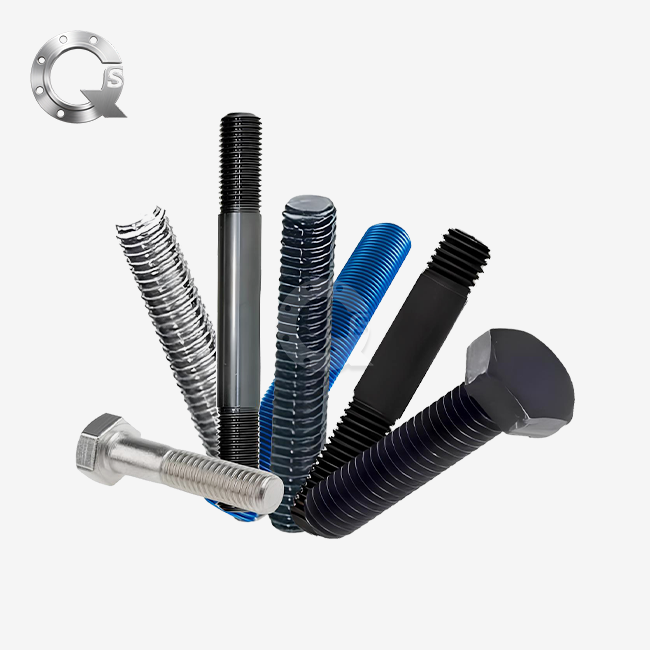
8.8 Grade High Tensile Bolt is a widely used high-strength carbon steel fastener in general industrial construction and mechanical assembly, often compared with ASTM A193 B7 alloy steel bolts in engineering procurement and design work. Many industrial designers and purchasers struggle to confirm whether these two fasteners can be universally substituted, as incorrect replacement may lead to equipment failure, structural safety risks and non-compliant engineering acceptance. This article conducts an in-depth comparison of material properties, application scenarios, standard specifications and substitution feasibility to provide authoritative guidance for industrial fastening selection.
Basic Definition and Core Standard Attributes
To clarify the substitution relationship between the two fasteners, it is essential to start with their fundamental formulation and industry standards. The 8.8 Grade High Tensile Bolt follows ISO and GB/T 3098 series performance standards, belonging to medium-strength carbon steel fasteners with standardized heat treatment processes including quenching and tempering. Its core mechanical parameters are fixed by industry norms, with a nominal tensile strength of 800MPa and a yield strength of 640MPa, featuring stable comprehensive mechanical properties for conventional heavy-load fastening scenarios.
In contrast, ASTM A193 B7 is a high-grade alloy steel fastener formulated under the American Society for Testing and Materials standard, made of 4140 chromium-molybdenum steel with strict high-temperature tempering treatment. Different from conventional carbon steel high-strength bolts, B7 bolts are specially designed for high-temperature, high-pressure and extreme industrial environments, with excellent high-temperature creep resistance, lasting structural stability and fatigue resistance under long-term extreme working conditions. The two products belong to different material systems and standard categories, resulting in essential differences in application boundaries.
Mechanical Performance and Material Difference Comparison
The performance gap between carbon steel high-strength fasteners and B7 alloy bolts directly determines their substitution feasibility. In terms of room-temperature conventional mechanical properties, premium grade-8.8 fastening hardware can meet the basic tensile and yield strength requirements of most ordinary industrial projects, with good toughness and impact resistance, and are not prone to brittle fracture under normal temperature and conventional load conditions. For room-temperature static load structures, its mechanical performance is sufficient to support long-term stable operation.
However, ASTM A193 B7 bolts show overwhelming advantages in extreme environmental performance. This alloy steel fastener can maintain stable mechanical properties in the temperature range of -29℃ to 425℃, and will not produce plastic deformation or strength attenuation under continuous high temperature and high pressure. In terms of material corrosion resistance and fatigue resistance, B7 bolts also outperform ordinary high-strength carbon steel bolts, making them irreplaceable in special industrial equipment.
It is worth noting that this high-strength carbon steel fastener has obvious cost advantages while meeting conventional performance standards. Its carbon steel raw materials and mature processing technology greatly reduce production and procurement costs, with high cost performance for mass conventional engineering applications. In contrast, the alloy material and precision heat treatment process of A193 B7 bolts lead to higher procurement costs, which is unnecessary and wasteful for ordinary working condition scenarios.
Scenario-Based Substitution Feasibility Judgment

After sorting out performance differences, targeted substitution judgment can be carried out based on actual industrial scenarios. In conventional room-temperature industrial scenarios, including ordinary steel structure fixation, mechanical equipment assembly, municipal facility construction and general pipeline support fastening, high-strength carbon steel fasteners can completely replace ASTM A193 B7 bolts. These scenarios have no extreme temperature and pressure requirements, and conventional load and environmental conditions are fully compatible with standard grade-8.8 fastener performance.
In key special scenarios, substitution is strictly prohibited. Industrial environments such as petrochemical high-temperature pipelines, thermal power equipment, boiler supporting structures, high-pressure pressure vessel flanges and long-term vibration fatigue equipment must adopt standard ASTM A193 B7 alloy bolts. Using ordinary high-strength fasteners instead will cause potential safety hazards such as bolt loosening, strength decline and structural deformation under extreme working conditions, failing to meet industrial safety specifications.
In addition, engineering specification constraints need to be prioritized. For projects that clearly specify the use of ASTM-standard alloy bolts in design drawings and bidding documents, arbitrary substitution with carbon steel high-strength bolts is not allowed, which will affect project acceptance and subsequent equipment operation safety. Designers and purchasers need to flexibly select fasteners according to working conditions and specification requirements.
Key Limitations of Blind Bolt Substitution
Blindly replacing professional alloy bolts with conventional high-strength fasteners will bring multiple hidden risks to industrial projects. First, extreme environmental failure risk: carbon steel high-strength fasteners lack high-temperature resistance, and their structural strength will drop sharply in high-temperature working environments, easily causing bolt fracture and structural collapse. Second, fatigue life gap: alloy bolts have better anti-fatigue performance, suitable for long-term cyclic vibration working conditions, while carbon steel bolts are prone to aging and loosening after long-term operation.
Moreover, there are differences in standard matching and dimensional tolerance systems between the two products. ASTM A193 B7 bolts adopt American standard dimensional tolerance and thread standards, while conventional high-strength carbon steel bolts follow ISO and national standards. Blind substitution may lead to poor matching between bolts and nuts, unstable assembly structure and reduced equipment sealing performance, affecting the overall service life of industrial equipment.
FAQs
Q1: Can grade-8.8 high tensile carbon steel bolts replace A193 B7 bolts for outdoor conventional steel structure projects?
A1: Yes. For outdoor room-temperature steel structures, guardrail fixation and conventional mechanical assembly without high temperature, high pressure and strong corrosion conditions, high-strength carbon steel fasteners can fully replace ASTM A193 B7 bolts, ensuring stable performance and optimizing project procurement costs.
Q2: Is it safe to use carbon steel high tensile bolts instead of B7 bolts for petrochemical pipeline projects?
A2: Absolutely not. Petrochemical pipelines often face high temperature, high pressure and slight chemical corrosion environments. Only ASTM A193 B7 chromium-molybdenum alloy bolts can maintain long-term structural stability. Ordinary high-strength bolts will suffer from strength attenuation and rust deformation, causing serious safety hazards.
Q3: What is the core difference between grade-8.8 carbon steel fasteners and A193 B7 bolts?
A3: The core difference lies in material composition and extreme environmental adaptability. High-strength carbon steel fasteners are made of medium carbon steel, suitable for conventional room-temperature working conditions; A193 B7 is chromium-molybdenum alloy steel, specially designed for high-temperature and high-pressure extreme scenarios, with far better high-temperature resistance and fatigue resistance than carbon steel bolts.
Q4: How to choose between these two bolts for industrial procurement?
A4: It is necessary to judge according to working environment and design specifications. Conventional room-temperature, normal-pressure and non-corrosive scenarios prioritize cost-effective carbon steel high-strength bolts; high-temperature, high-pressure, fatigue vibration and standard-specified special scenarios must adopt ASTM A193 B7 alloy bolts.
Contact QinSteel for Premium 8.8 Grade High Tensile Bolt Solutions
QinSteel is a professional manufacturer and exporter of high-strength industrial fasteners, with rich production experience in standard and customized 8.8 Grade High Tensile Bolt products and ASTM-standard alloy bolts. We strictly implement ISO 3098 and ASTM industry standards for all products, with complete quality inspection procedures from raw material screening, heat treatment processing to finished product testing, ensuring that each batch of fasteners has stable mechanical performance, accurate size and reliable quality.
Our product portfolio covers full-specification conventional high-strength carbon steel bolts and complete ASTM A193 series alloy bolts, supporting bulk wholesale, customized size processing and one-stop industrial fastener matching services. We have a complete supply chain and efficient logistics system to ensure on-time delivery for global customers, and provide professional fastener selection consultation and engineering substitution guidance.
If you have fastener procurement, customized processing or technical consultation needs for industrial projects, please contact our professional team via email: info@sxqinsteel.com. We will provide you with tailored high-quality fastening solutions and cost-effective procurement schemes.
References
1. ASTM A193/A193M Standard Specification for Alloy-Steel and Stainless Steel Bolting Materials for High-Temperature or High-Pressure Service
2. GB/T 3098.1-2010 Mechanical Properties of Fasteners - Bolts, Screws and Studs
3. ISO 898-1 Mechanical properties of metallic fasteners with carbon and alloy steel
4. Industrial Fastener Application and Substitution Design Manual, Mechanical Engineering Industry Press
5. Research on High-Temperature Mechanical Properties of Chromium-Molybdenum Alloy Fasteners, Global Industrial Engineering Journal, 2025
Learn about our latest products and discounts through SMS or email