- English
- French
- German
- Portuguese
- Spanish
- Russian
- Japanese
- Korean
- Arabic
- Greek
- German
- Turkish
- Italian
- Danish
- Romanian
- Indonesian
- Czech
- Afrikaans
- Swedish
- Polish
- Basque
- Catalan
- Esperanto
- Hindi
- Lao
- Albanian
- Amharic
- Armenian
- Azerbaijani
- Belarusian
- Bengali
- Bosnian
- Bulgarian
- Cebuano
- Chichewa
- Corsican
- Croatian
- Dutch
- Estonian
- Filipino
- Finnish
- Frisian
- Galician
- Georgian
- Gujarati
- Haitian
- Hausa
- Hawaiian
- Hebrew
- Hmong
- Hungarian
- Icelandic
- Igbo
- Javanese
- Kannada
- Kazakh
- Khmer
- Kurdish
- Kyrgyz
- Latin
- Latvian
- Lithuanian
- Luxembou..
- Macedonian
- Malagasy
- Malay
- Malayalam
- Maltese
- Maori
- Marathi
- Mongolian
- Burmese
- Nepali
- Norwegian
- Pashto
- Persian
- Punjabi
- Serbian
- Sesotho
- Sinhala
- Slovak
- Slovenian
- Somali
- Samoan
- Scots Gaelic
- Shona
- Sindhi
- Sundanese
- Swahili
- Tajik
- Tamil
- Telugu
- Thai
- Ukrainian
- Urdu
- Uzbek
- Vietnamese
- Welsh
- Xhosa
- Yiddish
- Yoruba
- Zulu
Is ASTM A106 SMLS Nipple Mandatorily Seamless? Standard Requirements & Industrial Application Guide
Aug 17 2026
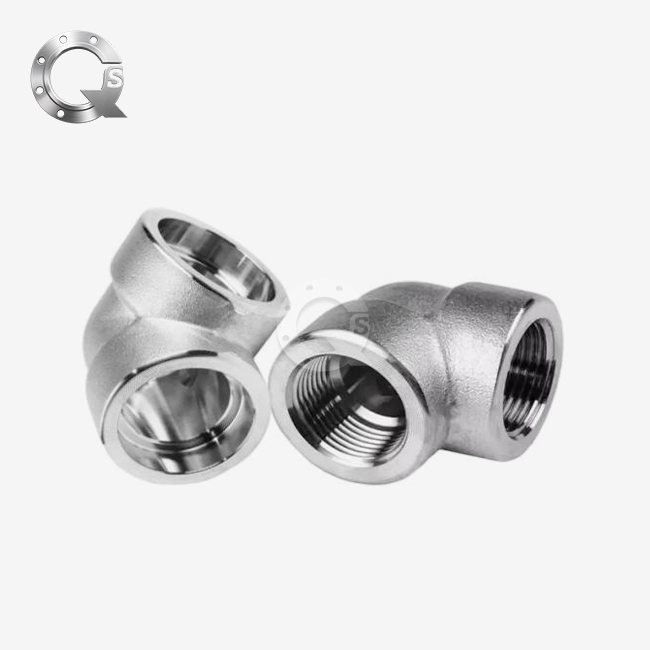
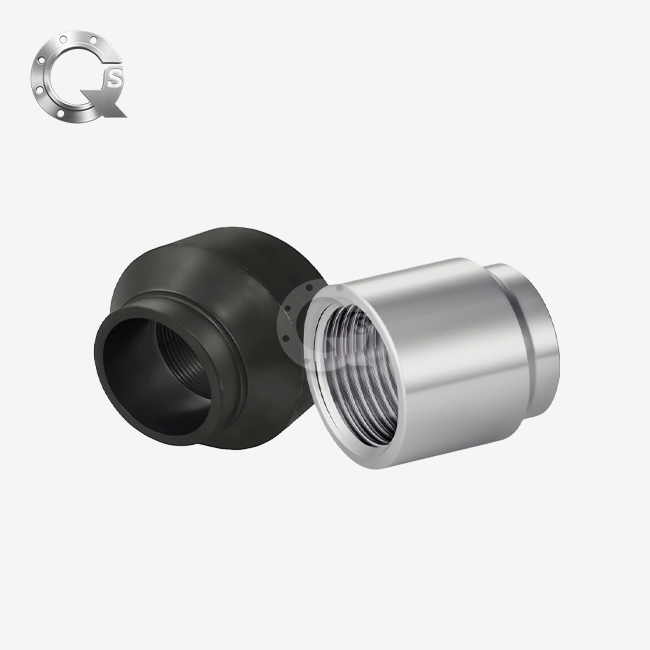
ASTM A106 SMLS Nipple refers to a premium carbon steel pipe nipple manufactured strictly in accordance with ASTM A106 seamless steel pipe specifications, widely adopted in high-temperature, high-pressure industrial piping systems worldwide. Many industrial purchasers and piping engineers often confuse the manufacturing requirements of this fitting, questioning whether it must adopt a seamless structure and whether welded alternatives can replace it in actual projects. This article will deeply interpret the official standard specifications, structural advantages, application boundaries, and selection criteria of the product, helping users accurately match suitable pipe nipples for industrial piping construction and renovation projects.

Official Standard Definition: Does ASTM A106 Require Seamless Structure for Pipe Nipples?
To clarify the core question of structural requirements, we need to start with the official provisions of the ASTM A106 standard. The ASTM A106 specification is specially formulated for seamless carbon steel pipes used in high-temperature service, covering Grades A, B, and C with different mechanical property parameters. The abbreviation SMLS in ASTM A106 SMLS Nipple stands for seamless, which is not an optional processing technology but a standardized attribute defined by the product grade. According to ASTM International’s official documents, all fittings marked with A106 SMLS must be fabricated from authentic seamless carbon steel pipes, and welded pipe blanks are strictly prohibited for production.
In industrial piping standard classification, common carbon steel pipe nipples include seamless types and electric-resistance welded (ERW) types. Welded carbon steel nipples are usually manufactured under general pipe standards, suitable for low-pressure, normal-temperature, and non-critical fluid transmission scenarios. In contrast, the core positioning of A106-grade tubular connectors is high-temperature industrial working conditions, where welding seams become the weakest structural part of pipe fittings. Weld joints are prone to stress concentration, oxidation cracking, and leakage failure under long-term high-temperature and pressure cycling loads. Therefore, the official standard explicitly stipulates that qualified fittings of this grade must eliminate welding seams to ensure overall structural uniformity and operational safety.
It is worth noting that non-seamless carbon steel nipples can also meet basic connection functions, but they cannot be labeled or used as ASTM A106 SMLS Nipple in formal engineering projects. Any product using welded pipe blanks and falsely marked with the SMLS identifier will fail third-party industrial testing and project acceptance, bringing huge safety hazards and engineering losses to industrial piping systems. This mandatory seamless requirement is the core technical threshold that distinguishes high-standard high-temperature pipe nipples from ordinary civil pipe fittings.
Core Reasons Why Industrial High-Pressure Scenarios Mandate Seamless A106 Tubular Fittings

The mandatory seamless design of standard A106 tubular connectors is not an unnecessary technical restriction but a safety specification summarized based on long-term industrial operation experience. In thermal power plants, petrochemical refining, boiler piping, and high-pressure steam transmission systems, piping components need to withstand continuous high-temperature impact and alternating pressure loads. Welded pipe nipples have inherent microscopic defects in the weld area, including uneven material density, residual welding stress, and local grain structure changes. These defects will gradually expand under extreme working conditions, eventually causing pipeline leakage, cracking, and even safety accidents.
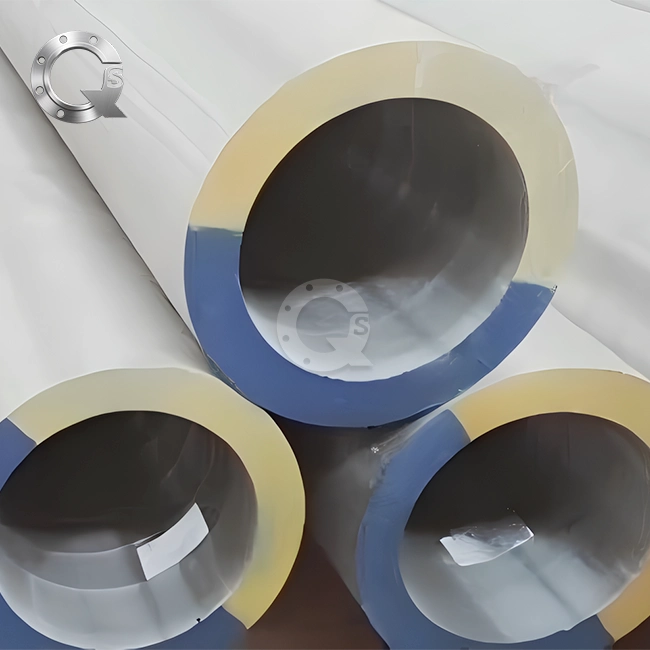
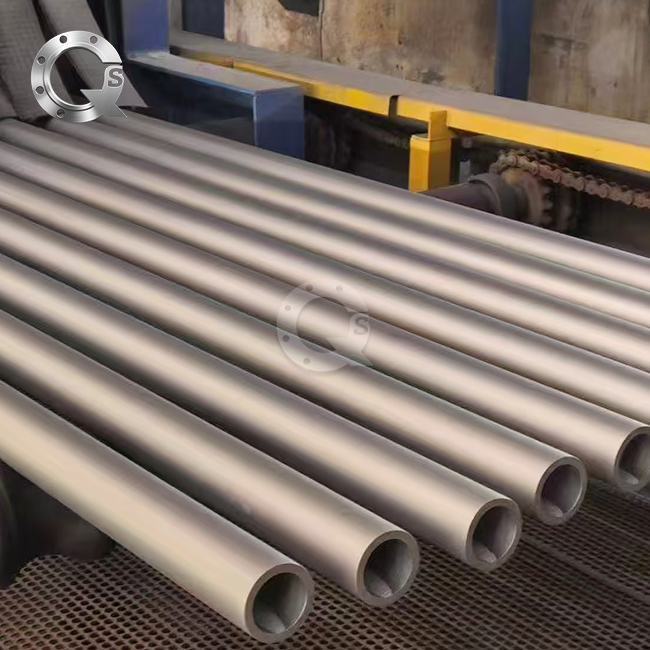
Seamless carbon steel pipe fittings processed via hot rolling and hot extrusion have an integrated metal structure without any weak welding areas. The mechanical strength, tensile resistance, and pressure bearing capacity of the entire pipe body are uniform and stable, fully meeting the long-term operational requirements of high-temperature industrial piping systems. Meanwhile, the inner wall of seamless tubular components is smoother with no welding slag or uneven welding traces, which effectively reduces fluid transmission resistance, avoids local turbulence and medium accumulation, and lowers the risk of pipeline scaling and corrosion.
For industrial projects with strict safety assessment standards, such as chemical high-temperature process pipelines and power plant auxiliary piping systems, engineering specifications clearly require the use of seamless high-grade pipe nipples. Ordinary welded pipe nipples can only be applied to low-risk scenarios such as conventional water supply and ventilation pipelines. This differentiated selection standard fully reflects the irreplaceable safety advantages of qualified seamless A106 pipe fittings in critical industrial scenarios.
Performance Differences Between Seamless and Welded A106-Style Pipe Nipples
Many users mistakenly believe that welded carbon steel pipe nipples with A106 material composition can replace seamless products, but there are essential differences in comprehensive performance between the two. First, in terms of pressure resistance, standard seamless tubular fittings can stably withstand pressure levels above Sch80, adapting to high-pressure working environments up to 42MPa, while welded pipe nipples can only bear low and medium pressure below 16MPa, and are prone to deformation and failure under high pressure.
Second, in terms of temperature adaptability, qualified seamless A106 pipe nipples can operate stably for a long time in high-temperature environments of -29℃ to 425℃, meeting the temperature fluctuation requirements of boiler steam and high-temperature process fluid transmission. Welded products will experience weld aging and performance attenuation when the temperature exceeds 300℃, greatly shortening the service life of pipeline components. In addition, seamless pipe fittings have better fatigue resistance and can adapt to frequent start-stop and pressure fluctuation working conditions of industrial equipment, while welded fittings are easy to produce fatigue cracks after repeated load changes.
In terms of later maintenance cost, seamless high-grade tubular components have a service life of more than 20 years under normal working conditions, with extremely low failure rates. Welded pipe nipples need regular inspection and replacement of weld parts, resulting in higher long-term operation and maintenance costs for enterprises. Therefore, although seamless products have a slightly higher one-time procurement cost, they have higher comprehensive cost performance in long-term industrial operation.
Correct Selection Scenarios for ASTM A106 SMLS Nipple
As a high-standard seamless pipe fitting, ASTM A106 SMLS Nipple has clear and targeted application scenarios, mainly covering all industrial piping systems with high temperature, high pressure, and high safety requirements. In the petrochemical industry, it is widely used in crude oil heating pipelines, chemical reaction kettle connecting pipelines, and high-temperature medium transmission pipelines, effectively avoiding pipeline failure caused by high temperature and pressure.
In thermal power and heating engineering, this seamless fitting serves boiler auxiliary piping, steam transmission pipelines, and thermal circulation systems, ensuring the stable and safe operation of high-temperature steam transmission. In addition, it is also the preferred fitting for industrial equipment such as high-pressure hydraulic systems, compressed air transmission systems, and industrial furnace piping, providing reliable structural guarantee for the normal operation of industrial equipment.
For conventional low-risk scenarios such as building water supply, ordinary ventilation, and low-pressure fluid transmission, users can choose ordinary welded carbon steel pipe nipples to save project costs. Reasonable selection according to working condition standards can not only ensure project safety but also optimize engineering cost allocation, realizing the best balance between safety and economy.
FAQs
Q1: Can welded pipe nipples be used to replace seamless ASTM A106 fittings in low-pressure projects?
A1: Technically, ordinary welded carbon steel pipe nipples can meet the connection needs of low-pressure and normal-temperature projects, but they cannot be marked as standard seamless A106 products. If the project has clear standard acceptance requirements, welded substitutes will lead to unqualified acceptance. It is recommended to select matching fittings according to project design specifications.
Q2: What are the grade differences of seamless A106 pipe nipples?
A2: Standard seamless pipe fittings are divided into Gr.A, Gr.B, and Gr.C. Gr.B is the most widely used grade with balanced mechanical properties and temperature resistance, suitable for most high-temperature industrial scenarios. Gr.A is suitable for low-pressure conventional high-temperature environments, while Gr.C has higher strength and is used for ultra-high-pressure working conditions.
Q3: How to quickly identify genuine seamless A106 pipe nipples and fake seamless products?
A3: Genuine seamless fittings have no weld traces on both inner and outer walls, with uniform pipe wall thickness and smooth surface. Fake seamless products made by polishing welded pipes will have hidden weld lines and uneven wall thickness. Meanwhile, formal suppliers can provide complete material test reports and standard certification documents for verification.
Q4: Do seamless A106 pipe nipples support customized sizes and threads?
A4: Yes. Qualified industrial seamless tubular fittings support customized calibers, wall thicknesses, lengths, and thread types including NPT and BSP, which can match various industrial piping system standards and meet personalized project construction needs.
Contact QinSteel for Premium ASTM A106 SMLS Nipple Solutions
If you are looking for standard-compliant, high-quality ASTM A106 SMLS Nipple for your industrial piping projects, QinSteel is your trustworthy professional manufacturer and supplier. We focus on the production and customization of high-standard carbon steel pipe fittings for many years, strictly implementing ASTM international standard production processes. All our seamless pipe nipples are made of genuine A106 grade seamless pipe blanks, with no welded structure, stable mechanical performance, and 100% compliant with industrial high-temperature and high-pressure engineering requirements.
We provide full-spec standard products and personalized customized processing services, covering complete specifications from conventional sizes to special non-standard models. Our professional technical team can provide standard consultation, product selection guidance, and project solution optimization services for global customers. To obtain product quotations, factory test reports, and technical support, please send your detailed project requirements to our official email: info@sxqinsteel.com. We will reply to your inquiry within 24 hours and provide cost-effective industrial piping fitting solutions.

References
[1] ASTM International. ASTM A106/A106M-23, Standard Specification for Seamless Carbon Steel Pipe for High-Temperature Service[S]. West Conshohocken: ASTM International, 2023.
[2] ASME B16.11, Forged Steel Fittings, Socket-Welding and Threaded[S]. American Society of Mechanical Engineers, 2022.
[3] API RP 1102, Recommended Practice for Steel Pipeline Inspection and Maintenance[S]. American Petroleum Institute, 2021.
[4] Industrial Piping Design Handbook for High-Temperature and High-Pressure Systems, Mechanical Industry Press, 2025.
Learn about our latest products and discounts through SMS or email