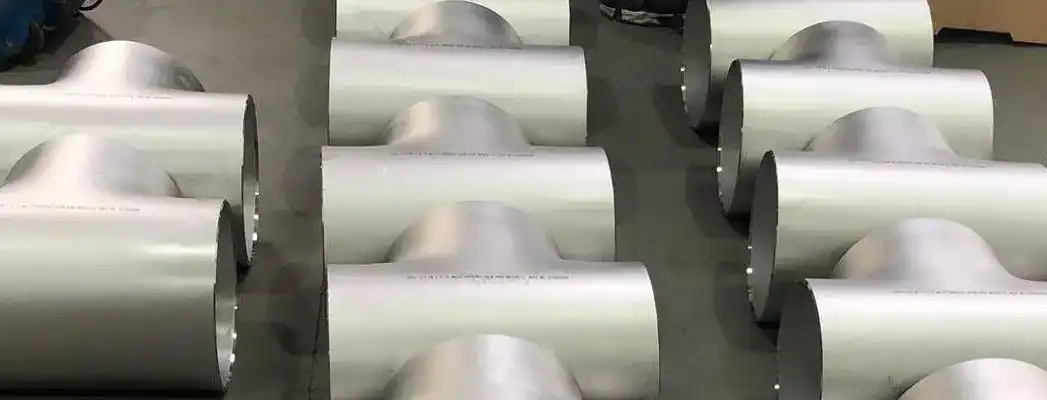
Understanding ASME B16.9 Tee Specifications and Tolerances
Overview of ASME B16.9 Standard
The ASME B16.9 standard provides detailed specifications for the manufacturing of butt-welding fittings such as tees, elbows, reducers, and caps. It establishes uniform guidelines that ensure compatibility, quality, and safety across manufacturers and applications. The standard defines material requirements, dimensional parameters, and testing procedures, helping engineers maintain design consistency in complex piping systems. By following ASME B16.9, manufacturers can guarantee that fittings meet stringent mechanical and dimensional criteria, ensuring reliable performance under diverse pressure and temperature conditions.
Key Dimensions and Tolerances for ASME B16.9 Tees
ASME B16.9 tees must conform to strict dimensional tolerances to guarantee proper alignment and performance. Critical dimensions include:
- Nominal Pipe Size (NPS) - defines connection compatibility.
- Outside Diameter (OD) - ensures consistent pipe matching.
- Wall Thickness - determines pressure and strength capacity.
- Center-to-End Dimensions - affects branch placement accuracy.
- Branch Angle - maintains proper fluid direction and system symmetry.
Tolerances typically fall within ±1/32 inch (0.8 mm), ensuring reliable integration and preventing misalignment or leakage issues.
Importance of Precise Tolerances in Piping Systems
Precise dimensional tolerances are fundamental to maintaining the structural and operational efficiency of piping systems. Accurate dimensions ensure:
- Improved fit-up during installation for faster assembly.
- Reduced stress on welded joints and connected components.
- Enhanced flow performance with minimal turbulence or pressure loss.
- Higher system efficiency and reduced downtime.
- Extended service life through consistent, secure connections.
By maintaining these tolerances, manufacturers deliver tees that enhance the reliability, safety, and longevity of complex industrial piping networks.
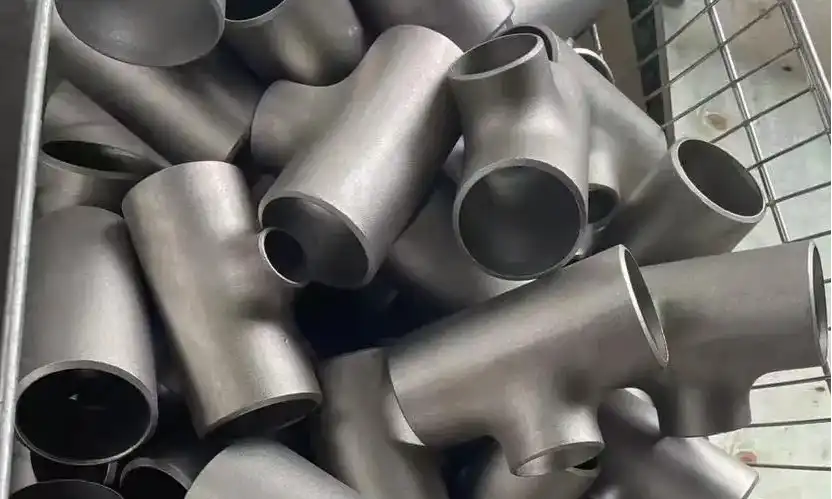
Manufacturing Processes and Quality Control for ASME B16.9 Tees
Advanced Manufacturing Techniques
To achieve the high level of precision required by ASME B16.9, manufacturers employ advanced manufacturing techniques. These may include:
- Computer Numerical Control (CNC) machining
- Automated welding processes
- Precision forging
- 3D modeling and simulation
These modern manufacturing methods allow for consistent production of tees with tight tolerances, reducing the likelihood of dimensional variations that could lead to problems during installation or operation.
Quality Control Measures
Rigorous quality control processes are essential to ensure that ASME B16.9 tees meet the required dimensional tolerances. Some common quality control measures include:
- In-process dimensional checks
- Non-destructive testing (NDT) techniques
- Statistical process control (SPC)
- Third-party inspections
These measures help manufacturers identify and address any deviations from the specified tolerances before the tees leave the production facility, ensuring that only high-quality, dimensionally accurate products reach the end-users.
Material Selection and Its Impact on Dimensional Stability
The choice of materials for ASME B16.9 tees can significantly impact their dimensional stability and ability to maintain tight tolerances. Factors to consider include:
- Thermal expansion properties
- Corrosion resistance
- Mechanical strength
- Weldability
By selecting appropriate materials that exhibit good dimensional stability under various operating conditions, manufacturers can ensure that ASME B16.9 tees maintain their precise tolerances throughout their service life.
Benefits and Applications of Precise ASME B16.9 Tees
Improved System Performance and Reliability
The precise dimensional tolerances of ASME B16.9 tees contribute significantly to the overall performance and reliability of piping systems. Some key benefits include:
- Reduced pressure drops and turbulence
- Improved flow characteristics
- Enhanced system efficiency
- Lower risk of leaks and failures
These advantages translate into more reliable operations, reduced downtime, and lower maintenance costs for industrial facilities and infrastructure projects that utilize ASME B16.9 tees.
Ease of Installation and Maintenance
The tight dimensional tolerances of ASME B16.9 tees offer several advantages during installation and maintenance:
- Simplified alignment and fit-up procedures
- Reduced need for field modifications
- Easier replacement of components during maintenance
- Improved interchangeability between different manufacturers
These factors contribute to faster installation times, lower labor costs, and reduced complexity in maintenance operations, making ASME B16.9 tees a preferred choice for many engineering and construction projects.
Wide Range of Industrial Applications
The precise dimensional tolerances and reliability of ASME B16.9 tees make them suitable for a wide range of industrial applications, including:
- Oil and gas production and transportation
- Chemical processing plants
- Power generation facilities
- Water treatment and distribution systems
- HVAC systems in large commercial buildings
In these diverse applications, the consistent quality and dimensional accuracy of ASME B16.9 tees contribute to the overall safety, efficiency, and longevity of critical infrastructure and industrial processes.
Conclusion
The dimensional tolerance of ASME B16.9 tees is remarkably precise, typically within ±1/32 inch (0.8 mm) for most dimensions. This high level of accuracy is achieved through advanced manufacturing techniques, rigorous quality control measures, and careful material selection. The benefits of such precision include improved system performance, easier installation and maintenance, and wide applicability across various industries. As piping systems continue to play a crucial role in modern infrastructure and industrial processes, the importance of dimensionally accurate components like ASME B16.9 tees cannot be overstated.
FAQs
What materials are commonly used for ASME B16.9 tees?
ASME B16.9 tees are typically made from materials such as carbon steel, stainless steel, and alloy steel, depending on the specific application requirements.
How do ASME B16.9 tees contribute to smooth medium flow?
The precise dimensional tolerances of ASME B16.9 tees ensure consistent pipe diameters and accurate branch angles, which help reduce turbulence and pressure drops, resulting in smoother medium flow throughout the piping system.
Expert ASME B16.9 Tee Supplier | QinSteel
At QinSteel, we are a leading manufacturer and supplier of high-quality ASME B16.9 tees. With 20 years of industry expertise, we provide precision-engineered products that meet international standards and exceed customer expectations. Our comprehensive range of tees is suitable for various applications in oil & gas, water supply, and industrial sectors. For reliable, dimensionally accurate ASME B16.9 tees and expert guidance, contact us at info@sxqinsteel.com.
References
ASME B16.9-2018: Factory-Made Wrought Buttwelding Fittings. American Society of Mechanical Engineers, 2018.
Nayyar, M. L. Piping Handbook, 7th Edition. McGraw-Hill Education, 2000.
Smith, P. and Zappe, R. W. Valve Selection Handbook: Engineering Fundamentals for Selecting the Right Valve Design for Every Industrial Flow Application. Elsevier, 2004.
Antaki, G. A. Piping and Pipeline Engineering: Design, Construction, Maintenance, Integrity, and Repair. CRC Press, 2003.
Chasis, D. L. Plastic Piping Systems, 2nd Edition. Industrial Press, Inc., 1988.
American Petroleum Institute. API Standard 5L: Specification for Line Pipe, 46th Edition. API Publishing Services, 2018.