- English
- French
- German
- Portuguese
- Spanish
- Russian
- Japanese
- Korean
- Arabic
- Greek
- German
- Turkish
- Italian
- Danish
- Romanian
- Indonesian
- Czech
- Afrikaans
- Swedish
- Polish
- Basque
- Catalan
- Esperanto
- Hindi
- Lao
- Albanian
- Amharic
- Armenian
- Azerbaijani
- Belarusian
- Bengali
- Bosnian
- Bulgarian
- Cebuano
- Chichewa
- Corsican
- Croatian
- Dutch
- Estonian
- Filipino
- Finnish
- Frisian
- Galician
- Georgian
- Gujarati
- Haitian
- Hausa
- Hawaiian
- Hebrew
- Hmong
- Hungarian
- Icelandic
- Igbo
- Javanese
- Kannada
- Kazakh
- Khmer
- Kurdish
- Kyrgyz
- Latin
- Latvian
- Lithuanian
- Luxembou..
- Macedonian
- Malagasy
- Malay
- Malayalam
- Maltese
- Maori
- Marathi
- Mongolian
- Burmese
- Nepali
- Norwegian
- Pashto
- Persian
- Punjabi
- Serbian
- Sesotho
- Sinhala
- Slovak
- Slovenian
- Somali
- Samoan
- Scots Gaelic
- Shona
- Sindhi
- Sundanese
- Swahili
- Tajik
- Tamil
- Telugu
- Thai
- Ukrainian
- Urdu
- Uzbek
- Vietnamese
- Welsh
- Xhosa
- Yiddish
- Yoruba
- Zulu
Color Coding Decoded: Identifying Materials in an ASME B16.20 Gasket Standard
Aug 26 2026
An ASME B16.20 gasket serves as a critical component in ensuring the integrity of piping systems, specifically designed to cover the face of flanges within high-pressure industrial environments. These metallic gaskets, which include ring joint and spiral wound types, are manufactured to withstand extreme temperatures and pressures found in the oil, gas, and petrochemical sectors. However, the effectiveness of these sealing solutions relies heavily on the correct material selection. To prevent catastrophic failures and ensure safety, the industry relies on a standardized system of color coding. This guide decodes those colors, helping engineers and procurement specialists identify materials accurately and maintain system reliability.
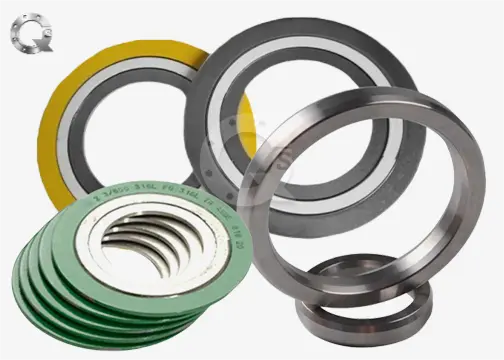
The Critical Role of Material Identification in Piping Systems
In the complex ecosystem of industrial piping, the gasket is often the weakest link if not properly specified. The American Society of Mechanical Engineers (ASME) provides the framework for these components, but the physical identification of the material is what prevents installation errors on the ground. When a flange connection is subjected to high pressure, the metallurgical properties of the gasket must match or exceed the requirements of the flange faces.
Using the wrong material can lead to galvanic corrosion, galling, or catastrophic blowouts. Therefore, understanding the visual cues—specifically the paint colors applied to the gaskets—is not just a matter of convenience; it is a mandatory safety protocol. The ASME B16.20 standard dictates not only the dimensions and tolerances but also references the material specifications (ASTM) that correspond to specific color codes. This ensures that a worker on a rig or in a refinery can instantly verify that the Soft Iron gasket they are holding is indeed Soft Iron and not Stainless Steel, simply by looking at the color mark.
Understanding Ring Joint Gaskets (RTJ)
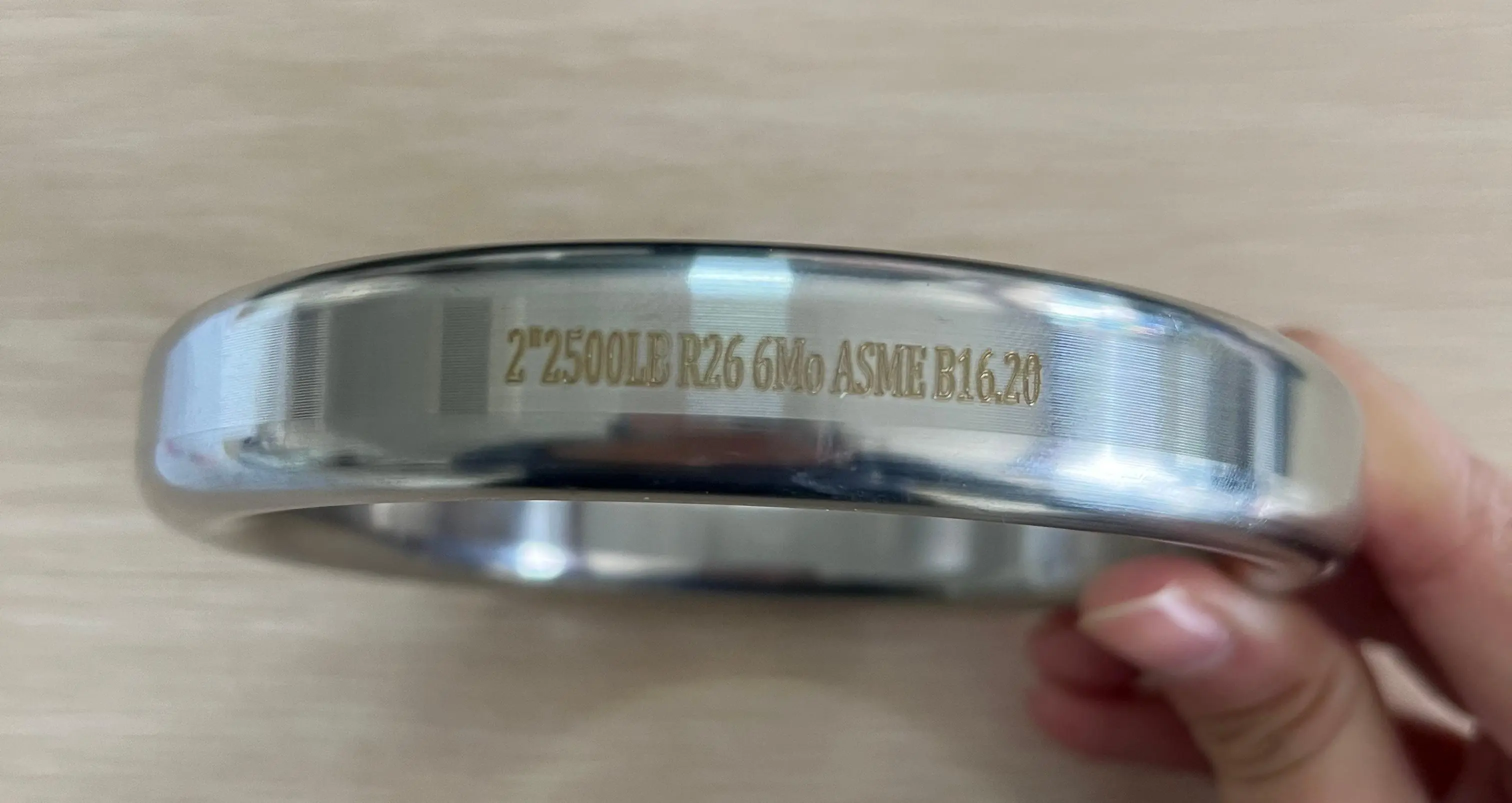
Ring Type Joint (RTJ) gaskets are solid metal rings designed to seal by deforming into the micro-finish of the flange groove. Under the ASME B16.20 gasket specification, these are categorized by their cross-sectional shapes, primarily Oval and Octagonal.
The Octagonal ring is more commonly used today because its flat sealing surfaces transfer higher sealing stress. The "flat" parts of the octagon contact the flange groove, creating a seal. The Oval ring, while older, is still found in legacy systems. Both types rely on the gasket material being softer than the flange material. This ensures that the gasket deforms to fill imperfections in the flange groove without damaging the flange itself. If the gasket is harder than the flange, the expensive flange faces can be ruined, leading to leaks.
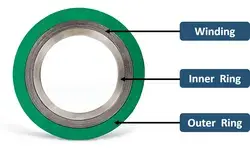
Spiral wound gaskets are another major category covered by this standard. They consist of a V-shaped metal strip wound together with a softer filler material. While RTJ gaskets are solid metal, spiral wound gaskets offer resilience and are excellent for handling thermal cycling. The identification of the outer metal winding is just as crucial as it is for RTJ rings, and the color coding system applies here as well to identify the outer ring material (usually Carbon Steel or Stainless Steel).
The ASME B16.20 Color Code Chart
The most efficient way to identify the material grade of a metallic gasket is through the color code painted on the side or edge of the ring. This system allows for rapid visual inspection. Below is the detailed breakdown of the standard color codes associated with common ASTM material specifications used in gasket manufacturing.
· Soft Iron (ASTM A105 / ASTM A266): White
Soft iron is the most basic material, used for low-pressure applications or where the flange material is also mild steel. It is highly malleable.
· Low Carbon Steel (ASTM A181): Yellow
This material offers better strength than soft iron and is used in general service applications.
· Stainless Steel 304/304L (ASTM A182 F304/F304L): Light Blue
The most common stainless steel grade, offering excellent corrosion resistance in a wide range of environments. It is the "workhorse" of the chemical industry.
· Stainless Steel 316/316L (ASTM A182 F316/F316L): Red
containing Molybdenum, Grade 316 provides superior resistance to pitting and crevice corrosion, making it ideal for marine environments or chloride-heavy processes.
· Stainless Steel 321 (ASTM A182 F321): Orange
Stabilized with Titanium, this grade is used for high-temperature applications to prevent carbide precipitation.
· Stainless Steel 347 (ASTM A182 F347): Brown
Similar to 321, stabilized with Niobium, used for high-temperature and corrosive environments.
· Monel 400 (ASTM B127 / SB127): Dark Blue
A nickel-copper alloy with high strength and excellent corrosion resistance in seawater and hydrofluoric acid.
· Inconel 600 (ASTM B166 / SB166): Yellow (with distinct marking or specific variation)
A nickel-chromium alloy used for high-temperature resistance and oxidation resistance.
· Inconel 825 (ASTM B425 / SB425): Purple
A nickel-iron-chromium alloy with copper and molybdenum, offering exceptional resistance to reducing and oxidizing acids.
· Hastelloy C276 (ASTM B575 / SB575): Green
A superalloy designed for severe corrosive environments, resisting pitting, crevice corrosion, and stress corrosion cracking.
· F5 / F11 / F22 (Chrome Moly): Often uncolored or specific manufacturer code (verify spec)
These alloy steels are used for high-temperature service. While not always strictly color-coded in the same universal manner as SS, they are often marked to distinguish them from carbon steel.
Decoding the Chemistry: Why Material Matters
Understanding the color code is step one; understanding why specific materials are chosen is step two. An ASME B16.20 gasket is not a "one size fits all" component. The chemical composition of the alloy dictates its performance.
For instance, the difference between the Light Blue (304) and Red (316) codes is the addition of Molybdenum in the 316 alloy. In a petrochemical plant processing fluids with high chloride content, using a 304 gasket could lead to stress corrosion cracking. The visual check of the "Red" paint confirms the presence of Molybdenum, ensuring the gasket can survive the chemical attack.
Similarly, the distinction between Soft Iron (White) and Low Carbon Steel (Yellow) is vital. Soft iron has a very low yield strength. If a Soft Iron gasket is used in a high-pressure line intended for steel, it might deform too easily or extrude out of the groove. Conversely, using a hard alloy gasket on a soft flange will damage the flange. The color code is the first line of defense in Quality Assurance/Quality Control (QA/QC) protocols.
Spiral Wound Gaskets: Filler Materials and Colors
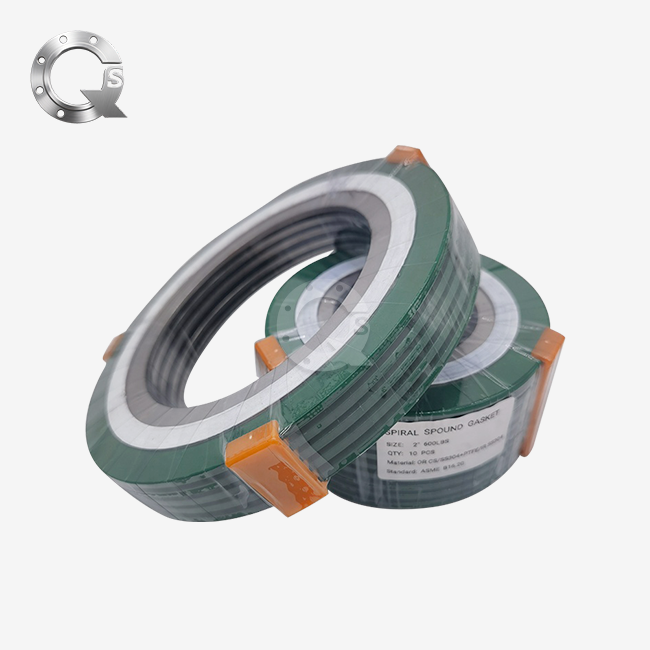
While the outer ring color identifies the metal winding, spiral wound gaskets also utilize filler materials that are crucial for sealing. The ASME B16.20 standard covers these composite gaskets as well. The filler is usually Graphite or PTFE (Teflon).
· Graphite: usually appears black. It is excellent for high temperatures and general service.
· PTFE: usually appears white. It is used for highly corrosive chemicals but has lower temperature limits than graphite.
When inspecting a spiral wound gasket, the technician looks at the outer ring color (e.g., Light Blue for 304 winding) and the visible filler color to ensure the gasket matches the P&ID (Piping and Instrumentation Diagram) specifications.
Installation Best Practices for Metallic Gaskets
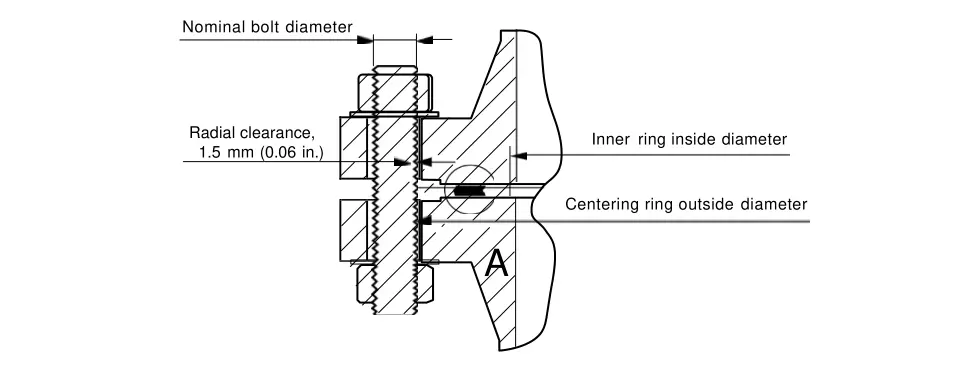
Even with the correct ASME B16.20 gasket identified by its color code, improper installation can cause leaks. RTJ gaskets, in particular, require specific handling.
1. Cleanliness: The flange groove and the gasket must be free of oil, grease, and debris. A radial scratch on the gasket sealing surface can create a leak path.
2. No Reuse: RTJ gaskets are designed to deform. Once compressed, they take the shape of the groove. Reusing a compressed gasket is a primary cause of flange leaks.
3. Lubrication: Bolt threads should be lubricated to ensure accurate torque application. Uneven torque can warp the flange, breaking the seal on the gasket.
4. Verification: Always verify the color code against the material test reports (MTRs) before installation.
Contact QinSteel for Expert ASME B16.20 Gasket Solutions
Navigating the complexities of material grades, pressure classes, and color codes requires a partner with deep industry knowledge. At QinSteel, we specialize in manufacturing and supplying high-quality piping components that meet rigorous international standards.
Whether you require Ring Type Joint gaskets, Spiral Wound gaskets, or other flange accessories, our inventory is meticulously organized and color-coded to ensure you receive exactly what your project demands. We understand that in your industry, precision is not optional—it is essential.
For inquiries regarding specifications, custom sizes, or bulk orders, please reach out to our technical sales team. We are committed to providing solutions that ensure the safety and efficiency of your piping systems.
Email: info@sxqinsteel.com
FAQs
Q: Can I paint the color code on the gasket myself if it wears off?
A: It is not recommended. The color coding is applied during manufacturing to ensure traceability. If a code is illegible, the material should be verified using Positive Material Identification (PMI) testing (XRF gun) rather than guessing or repainting, to ensure safety compliance.
Q: What is the difference between ASME B16.20 and ASME B16.21?
A: ASME B16.20 covers metallic gaskets (Ring Joint and Spiral Wound) for high-pressure and high-temperature applications. ASME B16.21 covers non-metallic and composite gaskets (like rubber or fiber) typically used for lower pressure classes (Flat Face and Raised Face flanges).
Q: Are the color codes universal?
A: The color codes listed in ASME B16.20 are the industry standard in the US and many international markets. However, some specific client specifications or European standards might have slight variations. Always consult the specific project specification or the manufacturer's catalog to confirm.
Q: What happens if I use a Stainless Steel gasket on a Carbon Steel flange?
A: Generally, the gasket material should be softer than the flange material to prevent damage to the flange faces. However, in corrosive services, a harder stainless steel gasket might be specified to resist chemical attack, provided the flange coating or material is compatible. This requires careful engineering review.
References
1. ASME B16.20-2017: Metallic Gaskets for Pipe Flanges - Ring-Joint, Spiral-Wound, and Metal Jacketed.
2. ASTM A182/A182M: Standard Specification for Forged or Rolled Alloy and Stainless Steel Pipe Flanges, Forged Fittings, and Valves and Parts for High-Temperature Service.
3. ASTM A105/A105M: Standard Specification for Carbon Steel Forgings for Piping Applications.
4. MSS SP-43: Wrought Stainless Steel Butt-Welding Fittings.
Learn about our latest products and discounts through SMS or email