- English
- French
- German
- Portuguese
- Spanish
- Russian
- Japanese
- Korean
- Arabic
- Greek
- German
- Turkish
- Italian
- Danish
- Romanian
- Indonesian
- Czech
- Afrikaans
- Swedish
- Polish
- Basque
- Catalan
- Esperanto
- Hindi
- Lao
- Albanian
- Amharic
- Armenian
- Azerbaijani
- Belarusian
- Bengali
- Bosnian
- Bulgarian
- Cebuano
- Chichewa
- Corsican
- Croatian
- Dutch
- Estonian
- Filipino
- Finnish
- Frisian
- Galician
- Georgian
- Gujarati
- Haitian
- Hausa
- Hawaiian
- Hebrew
- Hmong
- Hungarian
- Icelandic
- Igbo
- Javanese
- Kannada
- Kazakh
- Khmer
- Kurdish
- Kyrgyz
- Latin
- Latvian
- Lithuanian
- Luxembou..
- Macedonian
- Malagasy
- Malay
- Malayalam
- Maltese
- Maori
- Marathi
- Mongolian
- Burmese
- Nepali
- Norwegian
- Pashto
- Persian
- Punjabi
- Serbian
- Sesotho
- Sinhala
- Slovak
- Slovenian
- Somali
- Samoan
- Scots Gaelic
- Shona
- Sindhi
- Sundanese
- Swahili
- Tajik
- Tamil
- Telugu
- Thai
- Ukrainian
- Urdu
- Uzbek
- Vietnamese
- Welsh
- Xhosa
- Yiddish
- Yoruba
- Zulu
A350 LF2 Pipe Flanges: The Ultimate Guide to Low-Temperature Toughness & ASME Standards
Aug 28 2026
A350 LF2 Pipe Flanges represent the industry standard for carbon steel piping components designed specifically for low-temperature service. In sectors ranging from liquefied natural gas (LNG) processing to arctic oil extraction, the ability of a material to withstand extreme cold without fracturing is not just a specification—it is a critical safety requirement. Unlike standard carbon steel materials that may become brittle in freezing conditions, ASTM A350 Grade LF2 is engineered to maintain ductility and toughness at temperatures as low as -46°C (-50°F). This technical guide explores the metallurgical properties, manufacturing standards, and application benefits of these flanges, providing engineers and procurement specialists with the essential knowledge to ensure system integrity in cryogenic environments.

The Metallurgy of Low-Temperature Toughness
The primary distinction between ASTM A350 LF2 and standard carbon steel (such as A105) lies in the chemical composition and the resulting microstructure. To achieve the necessary impact resistance at sub-zero temperatures, the steel must be "killed" (deoxidized) and fine-grain practiced.
The Role of Alloying Elements
The chemical composition of A350 LF2 is tightly controlled to enhance toughness. While it remains a carbon-manganese steel, specific limits are placed on elements that could induce brittleness.
· Carbon (C): Restricted to a maximum of 0.30% to ensure weldability and toughness.
· Manganese (Mn): Ranges between 0.60% and 1.35%, providing strength.
· Nickel (Ni): While not strictly mandatory in all variations, nickel is often added (typically up to 0.40% or more in LF2 Class 1) to significantly improve low-temperature impact properties.
· Nitrogen and Aluminum: The use of aluminum (minimum 0.02%) or other nitride-forming elements is required to ensure a fine austenitic grain size, which is crucial for preventing crack propagation.
Charpy V-Notch Impact Testing
The defining characteristic of A350 LF2 forged flanges is their performance in impact testing. Every heat of steel must undergo Charpy V-Notch (CVN) testing at -46°C.
· Requirement: The material must demonstrate a minimum lateral expansion or absorbed energy value (typically 20 Joules average for three specimens).
· Significance: This test confirms that the material can absorb energy during a sudden impact at freezing temperatures, preventing catastrophic brittle fracture.
Manufacturing: The Superiority of Forging
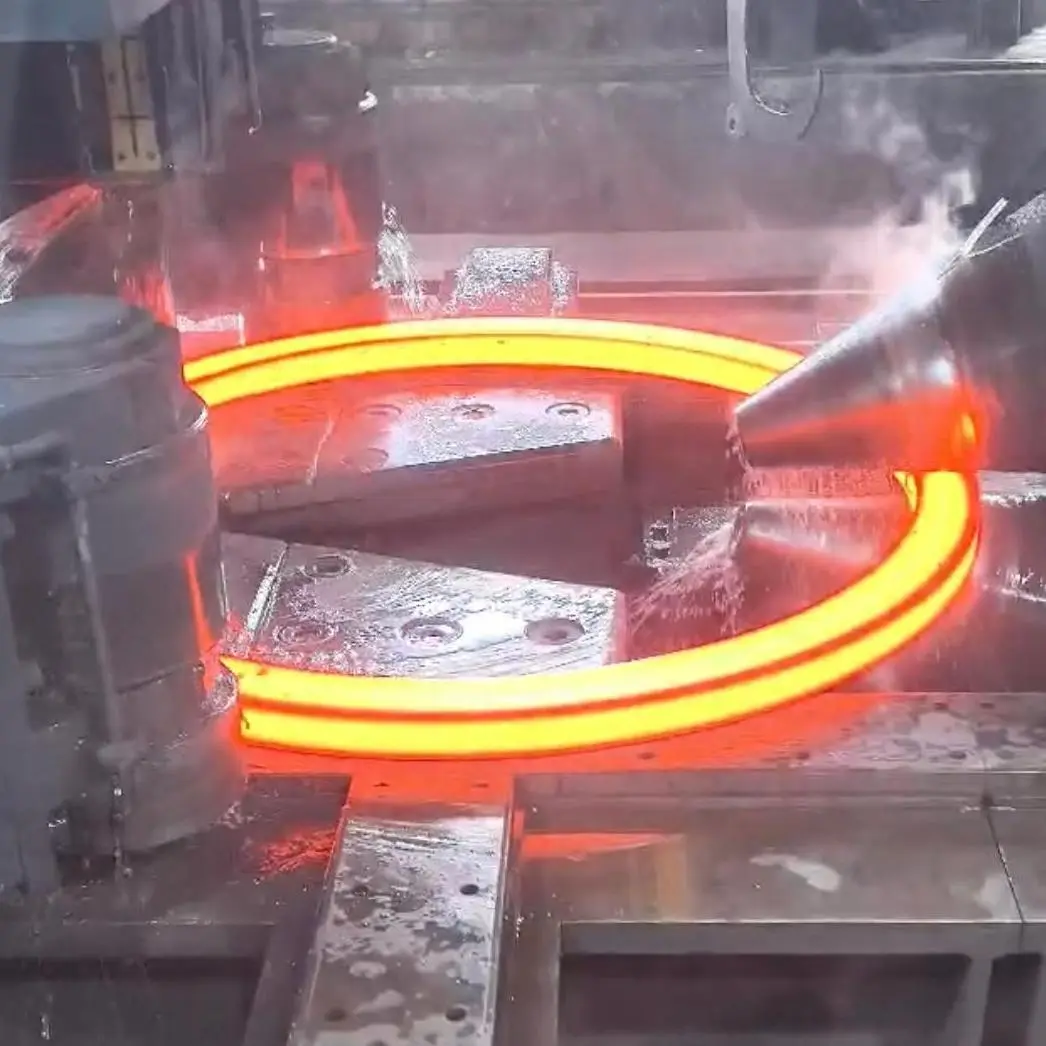
ASTM A350 LF2 components are almost exclusively produced via the forging process. Forging involves shaping metal using localized compressive forces, usually delivered by a hammer or die. This manufacturing method offers distinct advantages over casting, particularly for high-pressure and low-temperature applications.
Grain Flow and Structural Integrity
During the forging process, the internal grain structure of the steel is manipulated to follow the general shape of the flange. This continuous grain flow creates a part that is stronger and more reliable than one cut from bar stock or cast in a mold.
· Elimination of Defects: Forging breaks up and eliminates gas pockets and shrinkage voids common in castings.
· Anisotropy: Forged flanges exhibit superior mechanical properties in all directions, ensuring that the flange face, hub, and weld neck can withstand the complex stresses of a piping system.
Mechanical Properties and Pressure Ratings
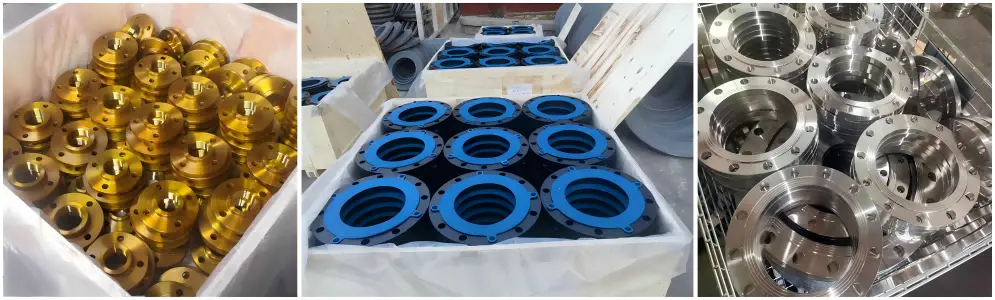
Understanding the mechanical limits of ASTM A350 LF2 piping flanges is essential for proper system design. These flanges are designed to operate in conjunction with ASME B16.5 (for sizes NPS 1/2 through 24) and ASME B16.47 (for larger diameters).
Tensile and Yield Strength
The mechanical properties of A350 LF2 are robust, ensuring the flange can handle high internal pressures.
· Tensile Strength: 60,000 to 85,000 psi (415 to 585 MPa).
· Yield Strength: Minimum 36,000 psi (250 MPa).
· Elongation: Minimum 22%, indicating good ductility.
Pressure-Temperature Ratings
The pressure rating of a flange is not static; it decreases as the temperature increases. However, at low temperatures, A350 LF2 maintains its full pressure rating capability.
· Class 150 to Class 2500: A350 LF2 flanges are available in all standard ASME pressure classes.
· Cryogenic Stability: Unlike austenitic stainless steels which may suffer from stress corrosion cracking in certain environments, or standard carbon steels which shatter, A350 LF2 remains stable, allowing engineers to use the standard ASME B16.5 pressure-temperature tables down to -46°C without derating for material weakness.
Critical Applications in Cryogenic Industries
The unique properties of A350 LF2 flanges make them the material of choice for industries dealing with liquefied gases and sub-zero environments.
Liquefied Natural Gas (LNG)
In the LNG industry, natural gas is cooled to approximately -162°C to become a liquid. While the coldest sections of the piping often require 9% Nickel steel or Stainless Steel (A350 LF2 is often used in the "warm" sections of the process, such as pre-cooling stages or auxiliary piping where temperatures hover around -29°C to -46°C.
Petrochemical and Refining
Refineries often have processes involving refrigerated propane, ethylene, or ammonia. A350 LF2 flanges provide a cost-effective solution for these low-temperature lines compared to high-alloy stainless steels.
Offshore and Arctic Drilling
In offshore platforms and arctic drilling sites, ambient air temperatures can drop well below freezing. Structural piping and fire-water systems exposed to these elements require the impact resistance of A350 LF2 to ensure they remain operational during emergency scenarios.
Welding and Fabrication Considerations
While A350 LF2 is known for good weldability, specific procedures must be followed to maintain the low-temperature properties of the Heat Affected Zone (HAZ).
Preheating and Interpass Temperature
To prevent hydrogen-induced cracking and ensure a sound weld:
· Preheating: Generally, preheating is not required for thinner sections, but for heavy-wall flanges, a preheat of roughly 100°C to 200°C may be necessary depending on the carbon equivalent (CE).
· Filler Metal Selection: It is critical to use low-temperature rated filler metals (such as AWS A5.5 E7016 or E7018) that match the impact properties of the base metal. Using standard carbon steel electrodes can result in a weld that is brittle at low temperatures, creating a weak point in the system.
Post-Weld Heat Treatment (PWHT)
If PWHT is required by the design code, it must be performed carefully. Excessive temperatures can degrade the toughness achieved during the forging and normalizing process.
Quality Control and Testing Standards
To ensure compliance with ASTM A350, rigorous quality control measures are implemented during the manufacturing of A350 LF2 forged flanges.
Non-Destructive Examination (NDE)
· Ultrasonic Testing (UT): Per ASTM A388/A388M, this is used to detect internal flaws such as laminations or voids that could compromise the flange's integrity.
· Magnetic Particle Testing (MT): Per ASTM E709, this surface examination method detects surface and near-surface discontinuities, ensuring the flange face and sealing surfaces are free of cracks.
Documentation and Traceability
Every batch of A350 LF2 flanges must be accompanied by a Mill Test Report (MTR) according to EN 10204 3.1. This document certifies the chemical composition, mechanical properties, and impact test results, providing full traceability back to the original steel melt.
FAQs: Common Questions About A350 LF2 Flanges
What is the maximum temperature limit for A350 LF2?
While A350 LF2 is designed for low temperatures, it can be used at temperatures up to roughly 343°C (650°F). However, for prolonged service above roughly 425°C, the carbide phase of the carbon steel may convert to graphite, so it is primarily specified for its low-temperature capabilities.
Can A350 LF2 be used interchangeably with A105?
Not automatically. While they share similar pressure ratings at ambient temperatures, A105 is not impact-tested for low temperatures. Substituting A105 for A350 LF2 in a cryogenic system is dangerous and violates ASME codes. Conversely, A350 LF2 can often replace A105, but it may come at a higher cost.
What is the difference between LF2 Class 1 and Class 3?
The main difference is the Carbon Equivalent (CE) and the impact testing requirements. Class 3 generally has stricter chemical controls and often requires impact testing at lower temperatures or higher energy absorption values, making it suitable for more severe service conditions.
Contact QinSteel for Expert A350 LF2 Pipe Flanges Solutions
Navigating the complexities of low-temperature piping materials requires a partner with deep technical expertise and a commitment to quality. At QinSteel, we specialize in supplying high-performance piping components that meet the rigorous demands of the global energy and processing industries.
Whether you require standard ASME B16.5 flanges or custom-forged components for a specialized cryogenic application, our team is ready to assist. We ensure full traceability, rigorous NDE testing, and timely delivery for all our A350 LF2 Pipe Flanges.
For quotes, technical datasheets, or consultation on material selection, please contact us at:
Email: info@sxqinsteel.com
References
1. ASTM A350/A350M: Standard Specification for Carbon and Low-Alloy Steel Forgings, Requiring Notch Toughness Testing for Piping Components.
2. ASME B16.5: Pipe Flanges and Flanged Fittings NPS 1/2 Through NPS 24 Metric/Inch Standard.
3. ASME B31.3: Process Piping Code.
4. API 6A: Specification for Wellhead and Christmas Tree Equipment.
Learn about our latest products and discounts through SMS or email