- English
- French
- German
- Portuguese
- Spanish
- Russian
- Japanese
- Korean
- Arabic
- Greek
- German
- Turkish
- Italian
- Danish
- Romanian
- Indonesian
- Czech
- Afrikaans
- Swedish
- Polish
- Basque
- Catalan
- Esperanto
- Hindi
- Lao
- Albanian
- Amharic
- Armenian
- Azerbaijani
- Belarusian
- Bengali
- Bosnian
- Bulgarian
- Cebuano
- Chichewa
- Corsican
- Croatian
- Dutch
- Estonian
- Filipino
- Finnish
- Frisian
- Galician
- Georgian
- Gujarati
- Haitian
- Hausa
- Hawaiian
- Hebrew
- Hmong
- Hungarian
- Icelandic
- Igbo
- Javanese
- Kannada
- Kazakh
- Khmer
- Kurdish
- Kyrgyz
- Latin
- Latvian
- Lithuanian
- Luxembou..
- Macedonian
- Malagasy
- Malay
- Malayalam
- Maltese
- Maori
- Marathi
- Mongolian
- Burmese
- Nepali
- Norwegian
- Pashto
- Persian
- Punjabi
- Serbian
- Sesotho
- Sinhala
- Slovak
- Slovenian
- Somali
- Samoan
- Scots Gaelic
- Shona
- Sindhi
- Sundanese
- Swahili
- Tajik
- Tamil
- Telugu
- Thai
- Ukrainian
- Urdu
- Uzbek
- Vietnamese
- Welsh
- Xhosa
- Yiddish
- Yoruba
- Zulu
What Is an AWWA C207 Pipe Flange and When Does a Water Main Need One?
Oct 4 2026
AWWA C207 Pipe Flange is the steel flange written specifically for waterworks, with its own pressure classes and its own bolt circle that does not match ASME B16.5, so a treatment plant or a transmission main gets the right part only when the drawing names C207. We supply them for municipal water, pump stations, and desalination feed lines. This piece covers what the standard is, the classes it offers, and when it earns its place over a process flange.
What the Standard Covers
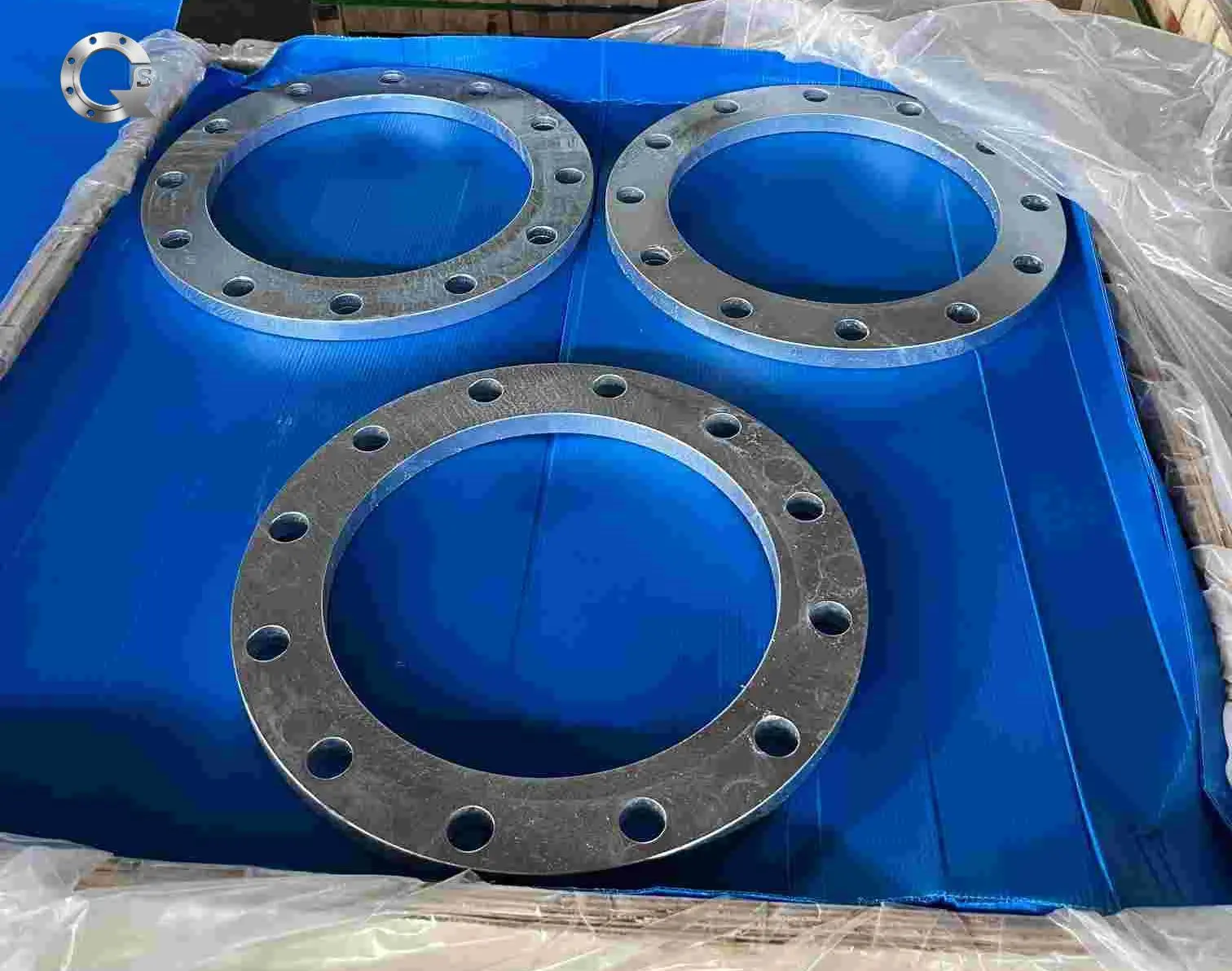
AWWA C207 Pipe Flange is steel flanges for waterworks service, sized from small bores up to large mains, in Classes B, D, E, and F. It sets the thickness for water duty and its own drilling, so a C207 disc will not bolt to a B16.5 spool at the same size. We confirm the class and the circle from the drawing before we cut.
A water authority sent us a B16.5 flange list for a C207 main, and the holes missed by a few millimetres; we recut to the C207 circle and it bolted first time.
The standard is a waterworks document, not a process one, so the thickness is tuned for water pressure rather than hydrocarbon or steam. That is why it looks light next to a B16.5 part of the same nominal size.
Where It Belongs
AWWA C207 Pipe Flange is on treated water, raw water, and brine lines at treatment plants, pump stations, reservoirs, and desalination feed, where the medium is benign and the pressure is moderate. It is the natural flange for a municipal main. We keep the common classes in our drilling set for repeat orders.
A Gulf desalination feed line ran C207 throughout, and the flanges bolted to the existing main without a trial fit.
On a Southeast Asia treatment upgrade we supplied the C207 blanks and the ring flanges against the install schedule, releasing in lots so the site yard stayed clear.
Where It Does Not Belong
AWWA C207 Pipe Flange is on hydrocarbon, steam, or high-pressure process duty, where an ASME class flange is the correct part. The lighter water thickness is not built for that load. We steer a buyer to B16.5 when the medium is not water, rather than force a C207 fit.
A buyer tried a C207 disc on a steam header and we flagged the duty; the correct part was a Class 300 B16.5 flange.
We ask the medium and the pressure first, because the standard follows the service, not the size.
The Classes at a Glance
AWWA C207 flange runs from the light Class B ring to the heavy Class F hub, with D and E covering most municipal mains, and the class sets the thickness for the water pressure. We list the class against the allowable so the buyer can see the rating. A class picked by size alone is the usual under-rating.
The four classes are not interchangeable on a main, because each is rated for a different pressure band, and the disc thickness follows the class.
We keep the class drilling templates so a repeat order lands on the same part, which is what keeps a store honest across a long maintenance programme.
Material and Coating for Water
AWWA C207 pipe flanges is carbon steel, usually A105, with a coating for the wet environment and a flat face for a full-face gasket. The grade is fine for treated and raw water, and we certify the heat on request. A bare face in a wet pit stains and weeps.
For potable and buried duty we coat with fusion-bonded epoxy to the spec, and for above-ground plant zinc or paint is enough.
We confirm the coating system and the facing on the pre-order sheet, so the water part is ready to seal rather than a bare disc that needs a field coat.
How to Confirm the Right Part
C207 pipe flange means reading the class, the drilling, and the facing off the drawing rather than matching the size, and asking for a photo when the drawing is silent. We confirm all three before we cut. A missing facing is the most common cause of a part that will not seat.
When a buyer sends only a size, we ask for the class and the facing, because the two together decide the joint and the thickness.
We return a confirmation sheet that lists the class, the drilling, the facing, and the coating in one row, so the buyer can check the whole order at a glance.
Certification, Traceability and Goods-In Checks
Goods-in inspection is quick when the heat number is stamped and the cert is in the box, because your inspector signs off without a chase. A water part with no traceability is a query, and a query stops the main until someone finds the paper, which is the cost a clean record pack avoids.
Packing, Coating and Export Logistics
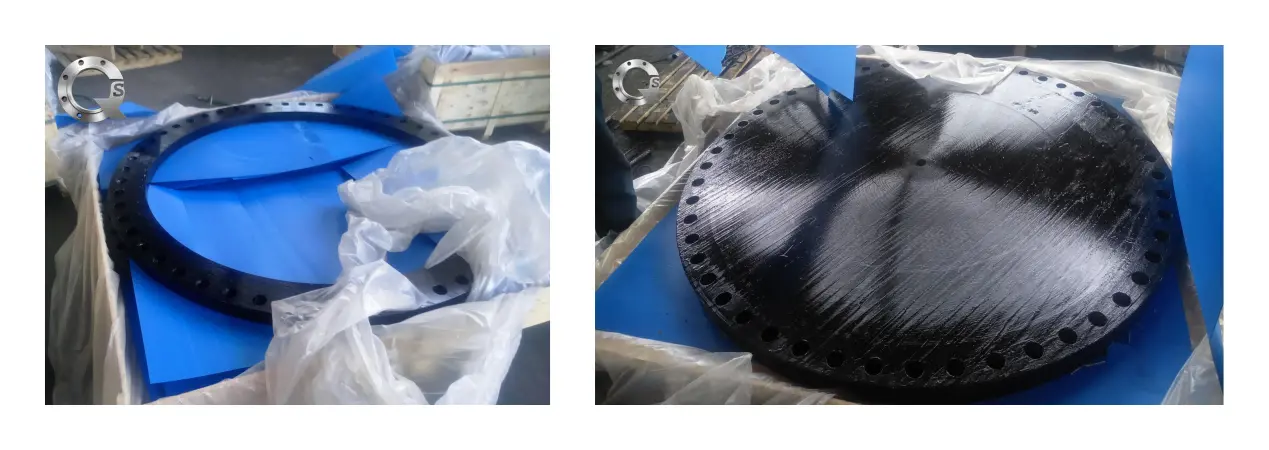
We crate to survive a container, a crane, and a Customs hold, and we photograph the pack so you see the condition before it sails. A water flange that stains in transit is a rejected part, and the photo is the proof at handover.
Coating the machined face before it leaves the bay is cheap insurance against a stain that weeps on the first reopen. A face that arrives bare in a coastal store is a rejected part, and a quick coat costs less than the rework call.
Logistics for export matter as much as the steel. We crate to survive a container, a crane, and a Customs hold, and we photograph the pack so you see the condition before it sails. A water flange that stains in transit is a rejected part at the gate, not a saving on the invoice.
Coating the machined face before it leaves the bay is the cheap insurance against a stain that weeps on the first reopen. A face that arrives bare in a coastal store is a rejected part, and a quick coat on the line costs far less than the rework call it prevents.
Stock, Repeat Orders and Phased Release
On a phased build we release flanges in lots against your install dates, which keeps cash free and the yard honest. A buyer who takes a full container of spares ties up money on parts he may not use for a year.
On a phased build we release flanges in lots against your install dates, which keeps cash free and the site yard honest. A buyer who takes a full container of spares ties up money on parts he may not use for a year, and the release plan avoids that trap on a municipal schedule.
For a one-off diameter we quote from plate and confirm the delivery window before you commit, because a vague lead time is worse than an honest long one. A water disc cut from plate is only as good as the window we give you to plan the tie-in and the test.
How We Confirm the Specification Before We Cut
We machine AWWA C207 flanges to the waterworks drilling from your drawing and tag the class so spares match the rack. Our pre-order sheet lists standard, class, size, facing, coating, and drilling in one row for a single glance.
Email info@sxqinsteel.com with the line list and we return a confirmation the same business day for stock sizes. For a one-off diameter we quote from plate and confirm the window before you commit.
When you send a line list, include the mating flange class and the facing, not just the size, because the two together decide the thickness and the gasket. A missing facing is the most common cause of a part that will not seat.
The documentation pack we send names the class, the drilling, the facing, and the coating in one row, so the confirmation is a single glance rather than a search through drawings. We have found that a clean sheet prevents most of the field calls we used to get on water jobs.
When you send a line list, include the mating flange class and the facing, not just the size, because the two together decide the thickness and the gasket. A missing facing is the most common cause of a water part that will not seat, and we return a sheet that lists both.
Why Choose Xi'an QinSteel for AWWA C207 Pipe Flange
We stamp the heat on the pad and issue 3.1 on request, so your quality record traces the steel back to the melt. A part that cannot be traced is a query at goods-in, and the stamp plus cert is the line that keeps the line moving.
We keep the water main drawing on file against your project number so a repeat order pulls the same class and drilling without a re-confirm. A spare that matches the last one is the spare your crew expects, and we would rather check twice than ship a near-miss that leaves a street dry.
We keep common C207 sizes on the shelf and cut the odd ones from plate, so the flange is rarely the long pole on a water job. A stock disc ships in days, while a cut one is quoted with an honest window you can plan around. We hold common water sizes on the shelf and cut the odd ones from plate, so the flange is rarely the long pole on a maintenance programme. A stock disc ships in days, while a cut one is quoted honestly with a window you can plan the crew around.
| Parameter | AWWA C207 | ASME B16.5 |
|---|---|---|
| Service | Waterworks | Process/piping |
| Classes | B, D, E, F | 150-2500 |
| Drilling | C207 own | ASME |
| Thickness | Water duty | Process duty |
| Facing | FF/RF | RF/RTJ |
| Interchange | Not with B16.5 | Not with C207 |
Frequently Asked Questions
1.Is AWWA C207 the same as B16.5?
No, it has its own classes and bolt circle; a C207 disc will not bolt to a B16.5 spool at the same size.
2.Where is it used?
Treated water, raw water, and brine lines at treatment plants, pump stations, and desalination feed.
3.Which class do I need?
Class D for common mains, E or F for higher pressure; confirm from the main spec.
Contact Xi'an QinSteel for AWWA C207 Pipe Flange Solutions
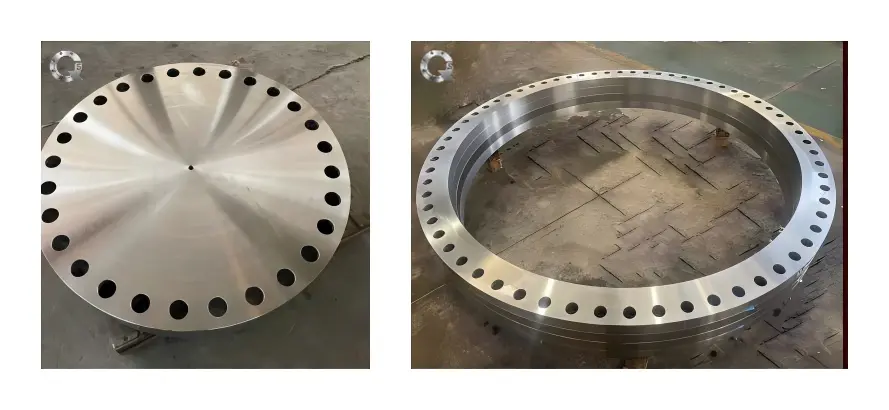
For pricing and lead time on AWWA C207 Pipe Flange stock or a made-to-order run, email info@sxqinsteel.com or open www.sxqsteel.com. Send the water main drawing with class, size, facing, and coating, and we confirm the C207 drilling before cutting so it bolts up first time.
References
- AWWA C207 - Steel Pipe Flanges for Waterworks Service.
- AWWA C200 - Steel Water Pipe, 6 in and larger.
- ASME B16.5 - Pipe Flanges and Flanged Fittings.
- ASTM A105 - Carbon Steel Forgings for Piping Components.
- AWWA C218 / C213 - Coating systems for steel water pipe.
- ISO 10474 / EN 10204 - Inspection documents, 3.1 certificates.
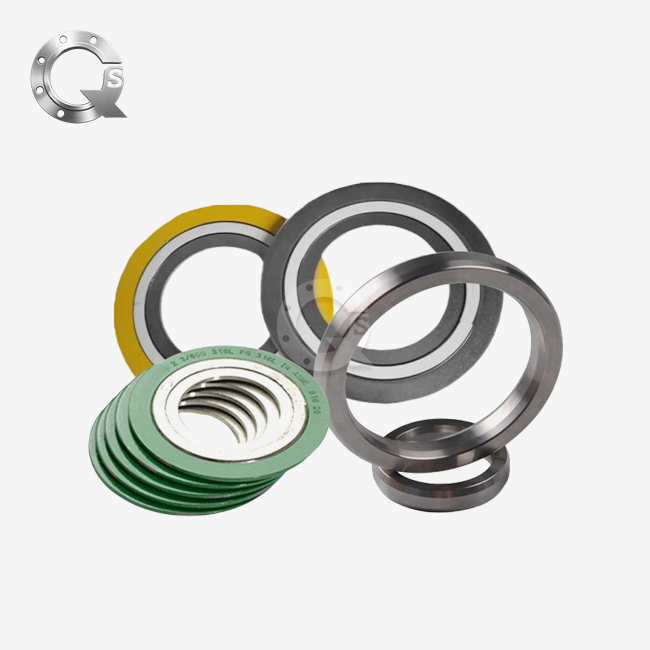
Learn about our latest products and discounts through SMS or email