- English
- French
- German
- Portuguese
- Spanish
- Russian
- Japanese
- Korean
- Arabic
- Greek
- German
- Turkish
- Italian
- Danish
- Romanian
- Indonesian
- Czech
- Afrikaans
- Swedish
- Polish
- Basque
- Catalan
- Esperanto
- Hindi
- Lao
- Albanian
- Amharic
- Armenian
- Azerbaijani
- Belarusian
- Bengali
- Bosnian
- Bulgarian
- Cebuano
- Chichewa
- Corsican
- Croatian
- Dutch
- Estonian
- Filipino
- Finnish
- Frisian
- Galician
- Georgian
- Gujarati
- Haitian
- Hausa
- Hawaiian
- Hebrew
- Hmong
- Hungarian
- Icelandic
- Igbo
- Javanese
- Kannada
- Kazakh
- Khmer
- Kurdish
- Kyrgyz
- Latin
- Latvian
- Lithuanian
- Luxembou..
- Macedonian
- Malagasy
- Malay
- Malayalam
- Maltese
- Maori
- Marathi
- Mongolian
- Burmese
- Nepali
- Norwegian
- Pashto
- Persian
- Punjabi
- Serbian
- Sesotho
- Sinhala
- Slovak
- Slovenian
- Somali
- Samoan
- Scots Gaelic
- Shona
- Sindhi
- Sundanese
- Swahili
- Tajik
- Tamil
- Telugu
- Thai
- Ukrainian
- Urdu
- Uzbek
- Vietnamese
- Welsh
- Xhosa
- Yiddish
- Yoruba
- Zulu
Grade B7 Hex Bolt vs Grade B7 Stud Bolt: Scenario-Based Selection Guide for Industrial Flange Fastening Systems
Aug 20 2026
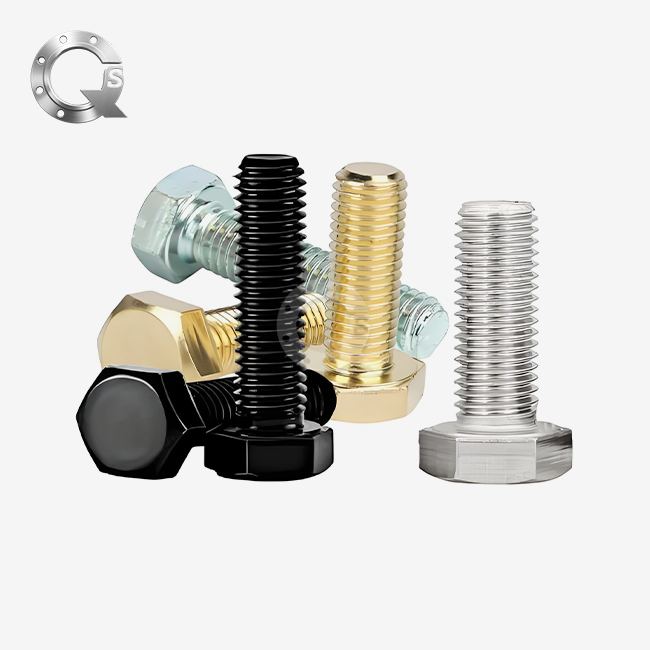
Grade B7 Hex Bolt is a high-strength chromium-molybdenum alloy steel fastener engineered per ASTM A193 standards, widely adopted for reliable flange connection and mechanical fastening in high-temperature and medium-to-high pressure industrial systems. Paired with the equally popular Grade B7 stud bolt, these two premium fastener types dominate industrial flange assembly projects, yet their structural differences lead to distinct applicable working scenarios. This professional guide clarifies the core differences between the two fasteners, analyzing their structural traits, performance advantages, and exclusive application conditions for flange fastening, helping engineers make precise and compliant fastener selections.
Core Structural Differences Between B7 Fastener Types
To accurately match fasteners for flange assembly, it is critical to distinguish the inherent structural design differences between hex head fasteners and stud bolts. A standard Grade B7 Hex Bolt features an integrated hexagonal head and threaded shank structure, with partial or full thread design. The hexagonal head provides a stable stress-bearing surface for wrench tightening, enabling convenient single-sided installation and disassembly. Its integrated molding structure ensures excellent overall rigidity and tensile strength, suitable for most conventional flange connection scenarios with accessible operating space.
In contrast, a Grade B7 stud bolt is a double-ended threaded fastener without a bolt head, featuring threaded sections at both ends and a smooth middle shank. This structural design eliminates the height limitation of the bolt head, allowing it to penetrate flange holes and achieve double-sided nut locking. Unlike hex head fasteners that rely on the head for positioning and compression, stud bolts deliver uniform stress distribution across the entire flange surface, avoiding local stress concentration caused by bolt head extrusion. These structural distinctions lay the foundation for their differentiated application in industrial flange systems.
Applicable Scenarios for Grade B7 Hex Bolt in Flange Fastening
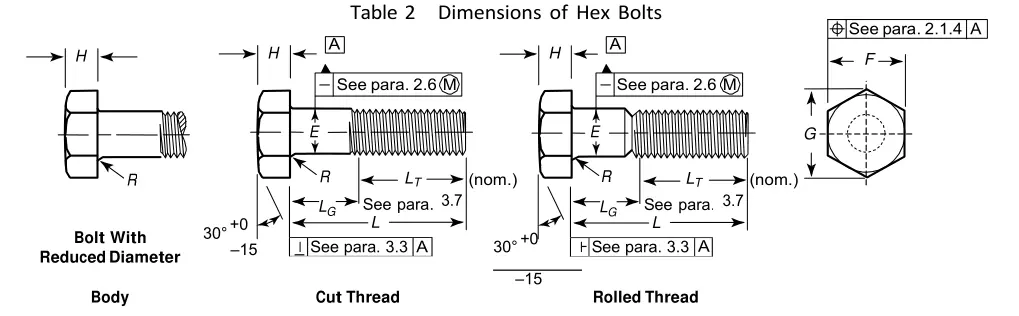
The unique structural advantages of this hexagon-headed alloy fastener make it the preferred choice for conventional flange assembly with open operating conditions. It is most suitable for low-to-medium pressure flange connections with sufficient lateral operating space, including ordinary industrial water pipelines, low-pressure steam pipelines, and general mechanical equipment flange joints. In these scenarios, the single-sided tightening feature greatly improves installation and maintenance efficiency, supporting quick disassembly for equipment inspection and pipeline maintenance.
Another key application scenario for this hexagon-headed fastener is temporary flange connection and frequent commissioning equipment. For industrial facilities that require regular debugging, testing, and disassembly, the easy-to-operate hex head structure effectively reduces construction difficulty and shortens working cycles. Additionally, this fastener performs stably in normal and medium-temperature environments below 425°C, with qualified tensile strength and anti-fatigue properties, fully meeting the fastening safety standards of conventional industrial flange systems. Its standardized size and wide market availability also reduce procurement costs and cycle times for general projects.
Applicable Scenarios for Grade B7 Stud Bolt in Flange Fastening

Headless double-threaded stud fasteners excel in extreme working conditions where hex head fasteners cannot adapt, serving as the core fastening solution for high-standard industrial flanges. First, they are indispensable for high-pressure and ultra-high-temperature flange connections, including petrochemical reaction vessel flanges, high-temperature steam main pipeline flanges, and power generation unit pressure-bearing equipment connections. The uniform stress distribution of stud bolts effectively resists high-temperature creep deformation and high-pressure impact, preventing flange leakage caused by uneven fastening force.
Second, these stud fasteners are ideal for flange assemblies with limited operating space and blocked single-sided working surfaces. In confined installation environments such as equipment interior pipelines, compact container piping, and closed system flanges, there is no room for wrench rotation required by hex head fasteners. The double-sided nut locking mode of stud bolts enables smooth installation and fastening from both sides, solving the installation bottleneck of narrow-space flange connections. Moreover, for large-diameter heavy-duty flanges and long-term uninterrupted operating industrial systems, stud bolt assemblies offer higher connection stability and longer service life, reducing hidden dangers of loose fastening and medium leakage.
Performance Matching Principles for Flange Working Conditions
In actual industrial flange engineering, fastener selection must comprehensively consider pressure grade, operating temperature, installation space, and maintenance frequency. For conventional Class150-Class300 low-medium pressure flanges, normal temperature working conditions, and frequently maintained equipment, hexagon-headed alloy fasteners are more cost-effective and practical. Their convenient operation and stable performance can fully meet daily production and operation needs while controlling project costs.
For Class600 and above high-pressure flanges, long-term high-temperature service above 400°C, and non-maintenance closed pipeline systems, stud bolt assemblies are mandatory for compliance. The headless structure avoids thermal stress concentration at the bolt head, and multi-point uniform fastening ensures flange sealing stability under extreme working conditions. It is worth noting that both types of B7-grade fasteners adopt chromium-molybdenum alloy steel heat treatment process, with excellent low-temperature toughness and fatigue resistance, and can adapt to -29°C low-temperature industrial environments, covering most conventional industrial working condition ranges.
Common Selection Mistakes in Flange Fastener Application
Many engineering projects face hidden safety hazards due to unreasonable fastener matching. A typical mistake is using hex head fasteners for high-pressure narrow-space flanges, which easily leads to insufficient tightening torque, uneven stress, and long-term medium leakage. Another common error is blindly applying stud bolt assemblies for conventional low-pressure flanges, resulting in unnecessary cost waste and reduced construction efficiency.
In addition, some teams ignore the structural compatibility of fasteners and flange gaskets. The local compression of hex head fasteners may damage soft gaskets in high-precision sealing systems, while stud bolts can protect gasket integrity through uniform pressure transmission. Standardized selection based on working condition parameters is the key to ensuring long-term safe and stable operation of flange systems.
FAQs
Can Grade B7 Hex Bolt and B7 stud bolt be used interchangeably on the same flange?
Interchangeable use is not recommended. The two fasteners have different stress transmission modes and tightening characteristics. Mixed use will cause uneven flange stress, leading to sealing gaps and medium leakage. Flange fastening must adopt a unified fastener type to ensure consistent fastening force and overall structural stability.
Which fastener is more suitable for high-temperature steam pipeline flanges?
For long-term high-temperature steam pipeline flanges (temperature close to 425°C and above), B7 stud bolts are more suitable. They can avoid thermal deformation and stress concentration of bolt heads, maintain uniform flange sealing pressure, and effectively prevent high-temperature steam leakage caused by fastener aging and deformation.
What working conditions are suitable for hexagon-headed B7 fasteners?
They are mainly applicable to low-medium pressure (Class150-Class300) flanges, normal-medium temperature environments, flanges with sufficient operating space, and equipment that requires regular disassembly, inspection, and maintenance. They feature convenient construction and high cost performance for conventional industrial scenarios.
Do both fasteners have the same temperature and pressure resistance?
The base material temperature and pressure resistance is consistent, both supporting -29°C to 425°C operating temperature and matching high-pressure industrial standards. The difference lies in structural stress performance: stud bolts have more stable comprehensive performance under extreme high pressure and confined space conditions, while hex head fasteners have advantages in construction efficiency.
Contact QinSteel for Reliable Grade B7 Hex Bolt and Flange Fastening Solutions
QinSteel is a professional manufacturer and supplier of high-grade ASTM A193 alloy steel fasteners, focusing on customized and standardized flange fastening solutions for petrochemical, power generation, marine engineering, and pressure vessel industries. We provide qualified Grade B7 Hex Bolt and supporting B7 stud bolt products, all strictly manufactured in accordance with international standards, with complete heat treatment processing and precision thread machining. Every batch of products undergoes tensile testing, hardness detection, and non-destructive inspection to ensure stable performance in various flange working conditions.
We support customized specifications of multiple thread standards, sizes, and surface anti-corrosion treatments, providing professional one-on-one fastener selection guidance according to customers’ actual flange pressure grade, temperature parameters, and installation environments. Our products are exported globally and widely recognized for stable quality and compliant performance. For product quotation, sample testing, technical consultation, and bulk customization services, please send your detailed project requirements to our official email: info@sxqinsteel.com. Our professional technical team will reply within 24 hours to provide accurate and reliable industrial fastening solutions.
References
1. ASTM International. ASTM A193/A193M-24, Standard Specification for Alloy-Steel and Stainless Steel Bolting Materials for High-Temperature or High-Pressure Service[S]. 2024.
2. ASME B31.3-2022, Process Industrial Piping Standard, The American Society of Mechanical Engineers, 2022.
3. ASME PCC-1-2019, Guidelines for Pressure Boundary Bolted Flange Joint Assembly[S]. 2019.
4. Industrial Flange Fastener Selection and Installation Specification, National Industrial Fastener Association, 2023.
5. High-Temperature Alloy Steel Fastener Structural Performance and Application Research, Journal of Pipeline Engineering, 2024.
Learn about our latest products and discounts through SMS or email