- English
- French
- German
- Portuguese
- Spanish
- Russian
- Japanese
- Korean
- Arabic
- Greek
- German
- Turkish
- Italian
- Danish
- Romanian
- Indonesian
- Czech
- Afrikaans
- Swedish
- Polish
- Basque
- Catalan
- Esperanto
- Hindi
- Lao
- Albanian
- Amharic
- Armenian
- Azerbaijani
- Belarusian
- Bengali
- Bosnian
- Bulgarian
- Cebuano
- Chichewa
- Corsican
- Croatian
- Dutch
- Estonian
- Filipino
- Finnish
- Frisian
- Galician
- Georgian
- Gujarati
- Haitian
- Hausa
- Hawaiian
- Hebrew
- Hmong
- Hungarian
- Icelandic
- Igbo
- Javanese
- Kannada
- Kazakh
- Khmer
- Kurdish
- Kyrgyz
- Latin
- Latvian
- Lithuanian
- Luxembou..
- Macedonian
- Malagasy
- Malay
- Malayalam
- Maltese
- Maori
- Marathi
- Mongolian
- Burmese
- Nepali
- Norwegian
- Pashto
- Persian
- Punjabi
- Serbian
- Sesotho
- Sinhala
- Slovak
- Slovenian
- Somali
- Samoan
- Scots Gaelic
- Shona
- Sindhi
- Sundanese
- Swahili
- Tajik
- Tamil
- Telugu
- Thai
- Ukrainian
- Urdu
- Uzbek
- Vietnamese
- Welsh
- Xhosa
- Yiddish
- Yoruba
- Zulu
ASME B16.5 Flanges Pressure-Temperature Ratings: Understanding Class 150 to 2500 Limits
Aug 27 2026
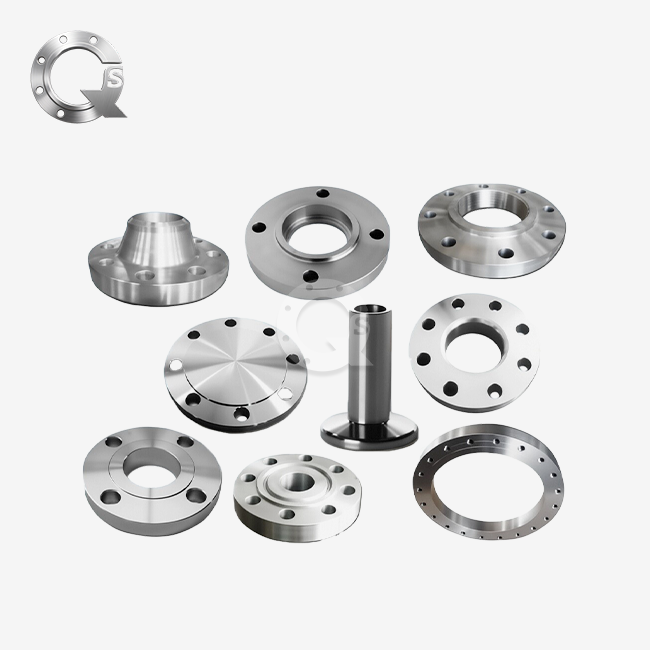
ASME B16.5 Flanges serve as the backbone of modern industrial piping systems, defining the dimensional standards and performance capabilities required for safe fluid transport. However, simply matching the Nominal Pipe Size (NPS) is insufficient for ensuring system integrity; engineers and procurement specialists must deeply understand the relationship between pressure class and operating temperature. This guide explores the critical pressure-temperature (P-T) ratings defined by the standard, helping you navigate the complexities of Class 150 through Class 2500 specifications to prevent catastrophic seal failures and ensure operational longevity.
The Physics of Pressure-Temperature Ratings
The "Class" of a flange (e.g., 150, 300, 600) is often misunderstood as a direct measurement of pressure in psi. In reality, it represents a pressure-temperature rating. The fundamental rule of metallurgy in piping is that as temperature increases, the tensile strength and yield strength of the material decrease. Consequently, the maximum allowable non-shock working pressure of the flange must be derated as the operating temperature rises.
The ASME B16.5 standard provides detailed tables that correlate specific materials—such as carbon steel (Group 1.1) or stainless steel (Group 2.1)—with their maximum allowable pressures at incremental temperatures. Ignoring these derating factors can lead to flange distortion, gasket blowout, or bolt failure, particularly in high-temperature steam or chemical processing applications.
Material Groups and Their Impact on Ratings
The pressure rating of B16.5 flanges is inextricably linked to the material group to which the flange belongs. ASME B16.5 categorizes materials into specific "Material Groups" (e.g., Group 1.1 for ASTM A105 carbon steel, Group 2.1 for ASTM A182 F304 stainless steel).
· Carbon Steel (Group 1.1): This is the most common material for general service. It maintains its rated pressure up to a certain temperature threshold (typically around 100°F to 200°F depending on the specific grade), after which the allowable pressure drops steadily.
· Stainless Steel (Group 2.x): Austenitic stainless steels generally retain their strength better at higher temperatures compared to carbon steel but have different derating curves.
· Alloy Steels (Group 1.2 - 1.9): High-performance alloys like F11, F22, or F91 are designed for high-temperature creep resistance, allowing them to maintain higher pressure ratings in extreme heat environments compared to standard carbon steel.
When selecting a flange, one must cross-reference the ASTM material specification with the corresponding Material Group table in the standard to determine the true working pressure limit.
Decoding Common Pressure Classes
The standard covers flange ratings from Class 150 to Class 2500. Understanding the application scope for each is vital for cost-effective and safe design.
Class 150 and Class 300: General Service
Class 150 flanges are the workhorses of low-pressure applications, such as cooling water, fire water lines, and low-pressure steam. However, they are not suitable for high-temperature services even if the pressure is low, as the flange stiffness may be compromised. Class 300 flanges offer a significant step up in pressure capability and are frequently used in oil and gas gathering lines and process piping where moderate pressures are encountered.
Class 600 and Class 900: High-Pressure Process
As we move into Class 600 and Class 900, the flange thickness and bolt circle dimensions increase substantially to handle the higher bolt loads required to maintain a seal. These classes are standard in refinery process lines, high-pressure steam headers, and feedwater systems. The gasket seating surface (Raised Face) geometry often changes or requires specific serration finishes to mate with spiral wound gaskets effectively.
Class 1500 and Class 2500: Critical Service
These classes represent the upper echelon of standard piping components. Used primarily in power generation (boiler feed pumps) and high-pressure hydrocarbon processing, Class 1500 and 2500 flanges are massive components. At these ratings, the pressure-temperature limits are strictly governed by the yield strength of the material. It is not uncommon for the maximum allowable pressure at ambient temperature to be significantly higher than the "Class" number suggests, but this advantage vanishes rapidly as temperatures approach 800°F (427°C) and above.
Flange Facings and Their Role in Sealing
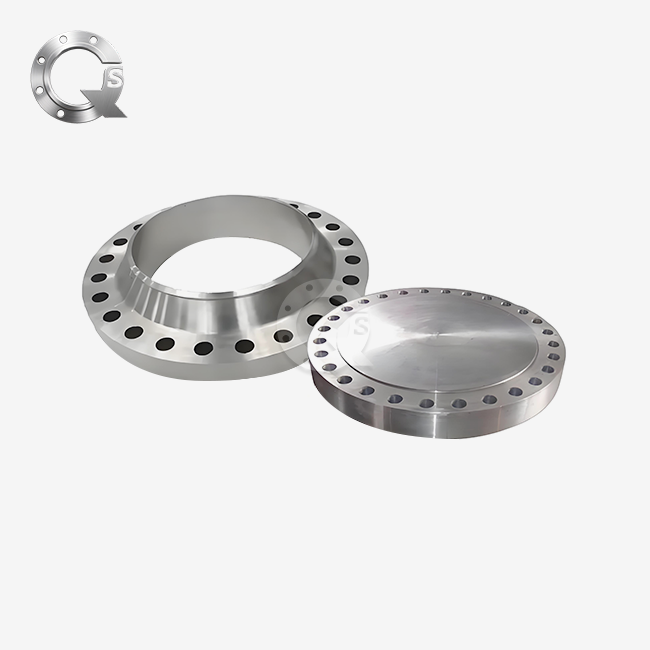
The ability of a flange to hold its pressure rating is also dependent on the facing type. The two most common facings defined in the standard are the Raised Face (RF) and the Ring Type Joint (RTJ).
· Raised Face (RF): Standard for Classes 150 through 2500. The height of the raised face (1/16 inch for Classes 150-300, 1/4 inch for Classes 400-2500) provides a concentrated area for gasket compression.
· Ring Type Joint (RTJ): Typically used for Classes 600 and higher, or in severe service conditions. An RTJ flange uses a metallic ring gasket seated in a machined groove. This metal-to-metal seal is capable of withstanding extreme pressures and temperatures that would crush a non-metallic gasket used on an RF flange.
Selecting the wrong facing for the pressure class can result in the inability to achieve the necessary gasket stress, leading to leaks regardless of the flange's theoretical pressure rating.
Navigating Dimensional Tolerances
While the pressure rating is a performance metric, it relies heavily on dimensional precision. The standard specifies strict tolerances for the flange bore, hub dimensions, and bolt hole alignment. Deviations in these dimensions can cause misalignment, inducing bending moments on the bolts that reduce the effective clamping force.
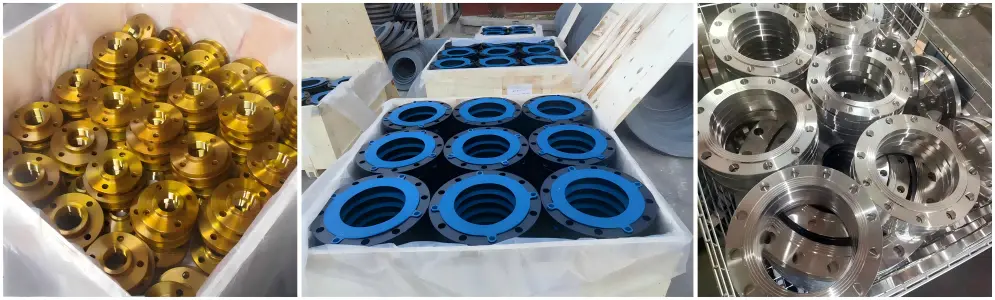
For high-pressure classes (900 and above), the tolerance for the flange thickness is critical. A flange that is under-tolerance may flex under bolt load, redistributing the gasket stress unevenly and creating leak paths. Therefore, sourcing ASME B16.5 Flanges from manufacturers who adhere strictly to these dimensional tolerances is as important as selecting the correct pressure class.
FAQs
Q: Can I use a Class 300 flange on a Class 150 line?
A: Yes, you can generally "up-class" a flange (use a higher pressure rating than required) provided the dimensions match the facing and bolt circle of the mating flange, or if you use an adapter. However, you cannot mix pressure classes directly without verifying bolt hole alignment and flange face compatibility.
Q: How does temperature affect the pressure rating of Carbon Steel flanges?
A: As temperature increases, the maximum allowable pressure decreases. For example, an ASTM A105 Class 150 flange might be rated for ~285 psi at 100°F, but that rating could drop to ~150 psi at 400°F. Always consult the P-T rating tables.
Q: What is the difference between Series A and Series B in ASME B16.5?
A: ASME B16.5 primarily follows the "Series A" dimensions (based on traditional US usage). "Series B" (often associated with ISO/EN standards) may have different outside diameters and bolt circle dimensions for the same Nominal Pipe Size. It is crucial to ensure mating flanges belong to the same series.
Contact QinSteel for Expert Piping Solutions
Navigating the complex tables of pressure-temperature ratings and ensuring material compliance can be challenging. At QinSteel, we specialize in supplying high-quality piping components that meet rigorous international standards. Whether you require standard carbon steel flanges or specialized alloys for corrosive environments, our team is equipped to assist you.
For technical inquiries, datasheets, or quotes, please reach out to us at info@sxqinsteel.com. We are committed to delivering precision-engineered solutions that ensure the safety and efficiency of your piping infrastructure.
References
1. ASME B16.5-2020: Pipe Flanges and Flanged Fittings NPS 1/2 Through NPS 24 Metric/Inch Standard.
2. ASME B31.3: Process Piping Code.
3. ASTM A105/A105M: Standard Specification for Carbon Steel Forgings for Piping Applications.
4. EN 1092-1: Flanges and their joints - Circular flanges for pipes, valves, fittings and accessories, PN designated - Part 1: Steel flanges.
Learn about our latest products and discounts through SMS or email